
In the contemporary landscape of household budgeting, the “streaming tax” has become a significant line item for the modern consumer. As cord-cutting transitioned from a rebellious trend to the industry standard, the financial simplicity of a single cable bill was replaced by a fragmented ecosystem of monthly subscriptions. Among the most prominent players in this space is Paramount+, a service that has undergone significant rebranding and pricing shifts since its inception. For the savvy consumer, understanding the cost of Paramount+ is not merely about knowing a single number; it is about analyzing the value proposition, the tiered pricing structures, and the long-term financial impact of adding another service to a digital portfolio.
Understanding the Tiered Pricing Structure
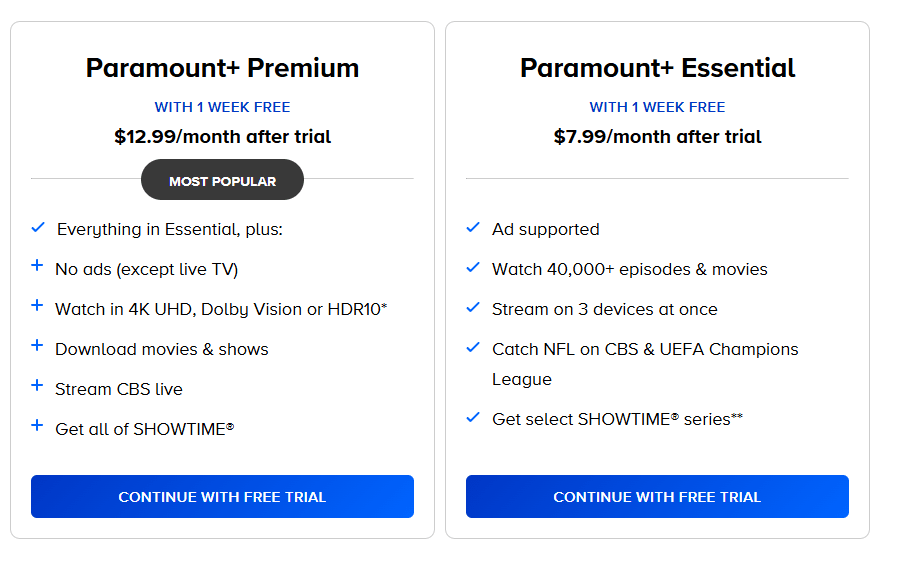
Paramount+ operates on a multi-tiered model, a strategy common in the digital economy designed to capture different segments of the market—from the budget-conscious viewer to the premium enthusiast. As of current market conditions, the service is divided into two primary categories, each offering a distinct relationship between cost and user experience.
The Paramount+ Essential Tier
The entry-point for the service is the “Essential” plan. Priced at a competitive monthly rate (typically around $5.99), this tier is designed for individuals who prioritize low monthly overhead. Financially, this plan represents the most accessible gateway to the platform’s library, though it comes with a “cost” that isn’t reflected in the dollar amount: advertising.
From a financial planning perspective, the Essential tier is an exercise in compromise. Users save several dollars per month in exchange for viewing limited commercial interruptions. For a household managing a strict entertainment budget, this tier offers the highest ROI (Return on Investment) in terms of content volume per dollar spent, though it lacks certain premium features like local live CBS station access and offline viewing capabilities.
Paramount+ with SHOWTIME
The premium tier, rebranded as “Paramount+ with SHOWTIME,” sits at a higher price point (typically around $11.99 per month). This tier represents a significant consolidation of assets. When Paramount merged its flagship streaming service with the SHOWTIME brand, it effectively increased the price but expanded the value of the “Money” niche within the subscription.
This tier is designed for the consumer who values time as much as money. By removing the majority of advertisements (excepting live TV and select shows), the service provides a more efficient viewing experience. Furthermore, it includes the live feed of local CBS affiliates and the ability to download content for offline viewing—a feature that provides indirect financial value to those who travel frequently and wish to avoid data overages on mobile plans.
Maximizing Value Through Strategic Subscriptions
Calculating the cost of Paramount+ requires looking beyond the monthly sticker price. Like many Software-as-a-Service (SaaS) products, there are financial levers consumers can pull to reduce their total annual expenditure.
Annual vs. Monthly Commitments
One of the most effective ways to lower the cost of Paramount+ is to shift from a monthly billing cycle to an annual one. Typically, Paramount offers an annual discount that equates to roughly two months of service for free. For example, an annual Essential plan might cost $59.99, compared to the $71.88 total of paying month-to-month.
For a household performing an annual financial audit, switching to yearly payments is a low-effort way to increase the “internal rate of return” on their entertainment spending. While it requires a larger upfront capital outlay, the long-term savings are mathematically undeniable.
Bundling and Third-Party Partnerships
In the current “streaming wars,” partnerships are a primary driver of customer acquisition. Paramount+ is frequently bundled with other services, which can effectively bring the “added cost” of the service down to zero. For instance, Walmart+ members often receive a Paramount+ Essential subscription as a complimentary benefit of their membership.
From a personal finance standpoint, consumers should always audit their existing memberships (credit cards, mobile carriers, retail memberships) before paying for Paramount+ out of pocket. If you are already paying for Walmart+ for grocery delivery, the “cost” of Paramount+ becomes a sunk cost already covered by a different utility, freeing up monthly cash flow for other investments or savings.
Comparative Cost Analysis: Paramount+ vs. The Competition
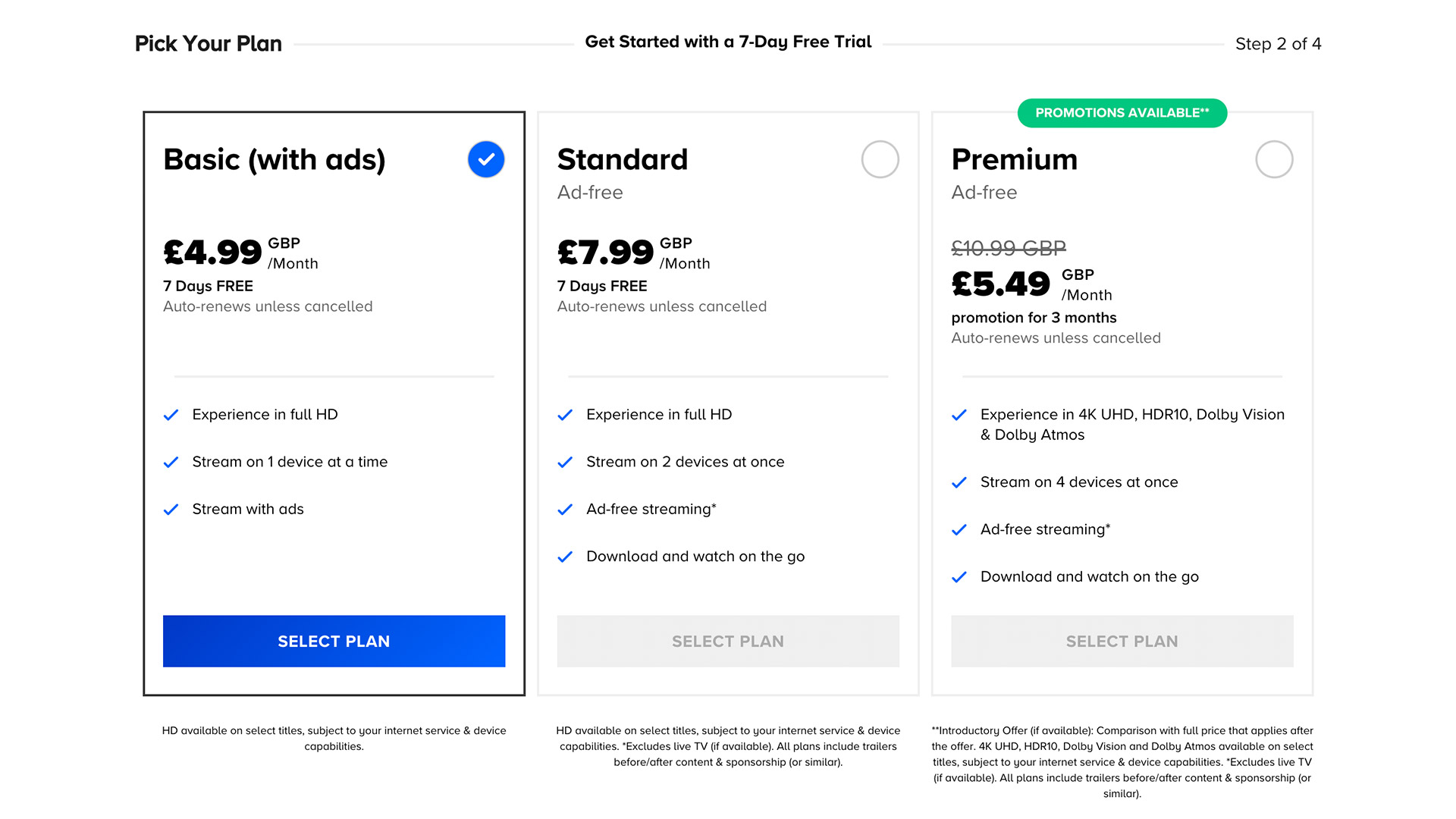
To truly understand if Paramount+ is “expensive,” one must view it through the lens of a comparative market analysis. In the broader context of Netflix, Disney+, Max (formerly HBO Max), and Hulu, Paramount+ positions itself as a mid-range financial commitment.
Price-per-Hour of Content
When evaluating a financial investment, professionals look at the yield. In streaming, “yield” can be defined as the volume of high-quality content available per dollar spent. Paramount+ boasts a massive library due to its ownership of CBS, MTV, Comedy Central, Nickelodeon, and Paramount Pictures.
When compared to a service like Netflix, which has a higher starting price for its ad-free tiers, Paramount+ often provides a better “cost-per-unit” of nostalgia and live sports (particularly the NFL on CBS). For sports fans, the cost of Paramount+ often offsets the need for more expensive cable packages or specialized sports streaming services, serving as a strategic financial hedge against rising sports broadcasting costs.
The Hidden Costs of Streaming Inflation
It is important to acknowledge that the cost of Paramount+ is not static. Over the past several years, the entire streaming industry has undergone a period of “subscription inflation.” As these companies move from a “growth at all costs” phase to a “profitability” phase, price hikes have become more frequent.
A disciplined financial approach involves monitoring these incremental increases. A $1 or $2 increase might seem negligible in isolation, but across five or six services, it can represent a $120 to $150 annual increase in household expenses. Paramount+ has demonstrated a willingness to adjust prices as they integrate more premium content (like the SHOWTIME merger), making it essential for consumers to periodically reassess the value they are receiving.
Corporate Financial Outlook and Future Pricing Trends
The question of “how much does it cost” is also tied to the corporate health of Paramount Global. As a publicly-traded entity, Paramount’s pricing strategy is dictated by the need to reach “Average Revenue Per User” (ARPU) targets and achieve profitability in their direct-to-consumer (DTC) segment.
Revenue Models and Ad-Supported Growth
Paramount has been a leader in the “Ad-Lite” model. From a business finance perspective, the Essential tier is often more profitable for the company than the premium tier because the recurring ad revenue per user can exceed the price difference between the tiers. This is a crucial insight for the consumer: the “cheaper” plan is cheaper for you, but potentially more lucrative for them. This creates a stable pricing floor for the Essential tier, as the company is incentivized to keep the entry price low to maintain a massive ad-reaching audience.
Projected Price Hikes and Market Consolidation
As the industry moves toward consolidation, there is a strong possibility that Paramount+ will undergo further pricing evolutions. Rumors of mergers or asset sales often lead to restructured subscription models. Investors and consumers alike should watch for “grandfathered” pricing opportunities. Often, those who remain on a plan during a transition are shielded from the initial brunt of a price hike, representing a “loyalty dividend” for long-term subscribers.

Conclusion: Is Paramount+ a Sound Financial Investment?
Determining the “cost” of Paramount+ is an exercise in personal finance management. At its base level, it is one of the more affordable major streaming services, especially when leveraged through annual plans or third-party bundles. However, the true cost is found in the opportunity cost of the monthly subscription fee.
For the consumer who utilizes the live sports, the deep archive of legacy television, and the premium film releases, the service offers a high value-to-cost ratio. For those who rarely engage with the CBS ecosystem, even the low cost of the Essential tier can represent “subscription leakage”—small, recurring expenses that drain a budget without providing utility.
In summary, Paramount+ currently costs between $5.99 and $11.99 per month, but its real price is determined by how effectively a household integrates it into their broader financial and entertainment strategy. By understanding the tiers, seeking out bundles, and opting for annual billing, consumers can ensure that their digital entertainment spend remains an asset rather than a liability.
aViewFromTheCave is a participant in the Amazon Services LLC Associates Program, an affiliate advertising program designed to provide a means for sites to earn advertising fees by advertising and linking to Amazon.com. Amazon, the Amazon logo, AmazonSupply, and the AmazonSupply logo are trademarks of Amazon.com, Inc. or its affiliates. As an Amazon Associate we earn affiliate commissions from qualifying purchases.