
As vaping has evolved from a niche alternative to traditional smoking into a global phenomenon, the technology designed to detect and deter it has undergone a similarly rapid transformation. For school administrators, facility managers, and business owners, the question “what does a vape detector look like?” is often the starting point for a deeper dive into modern environmental sensor technology.
While many expect a vape detector to mirror a traditional smoke alarm, the reality is far more sophisticated. These devices are sophisticated Internet of Things (IoT) gadgets that blend advanced chemistry, optical engineering, and data science. Understanding their physical form and the internal tech that drives them is essential for anyone looking to secure a digital or physical environment in the modern era.

The Anatomy of Detection: Physical Design and Aesthetics
To the untrained eye, a vape detector is designed to be unobtrusive. Its primary goal is to blend into the architectural environment while remaining functionally positioned to capture air samples. Because these devices are frequently installed in areas where privacy is paramount—such as bathrooms or locker rooms—they must function without the use of cameras, relying instead on physical housing that protects sensitive internal sensors.
The “Smoke Alarm” Camouflage
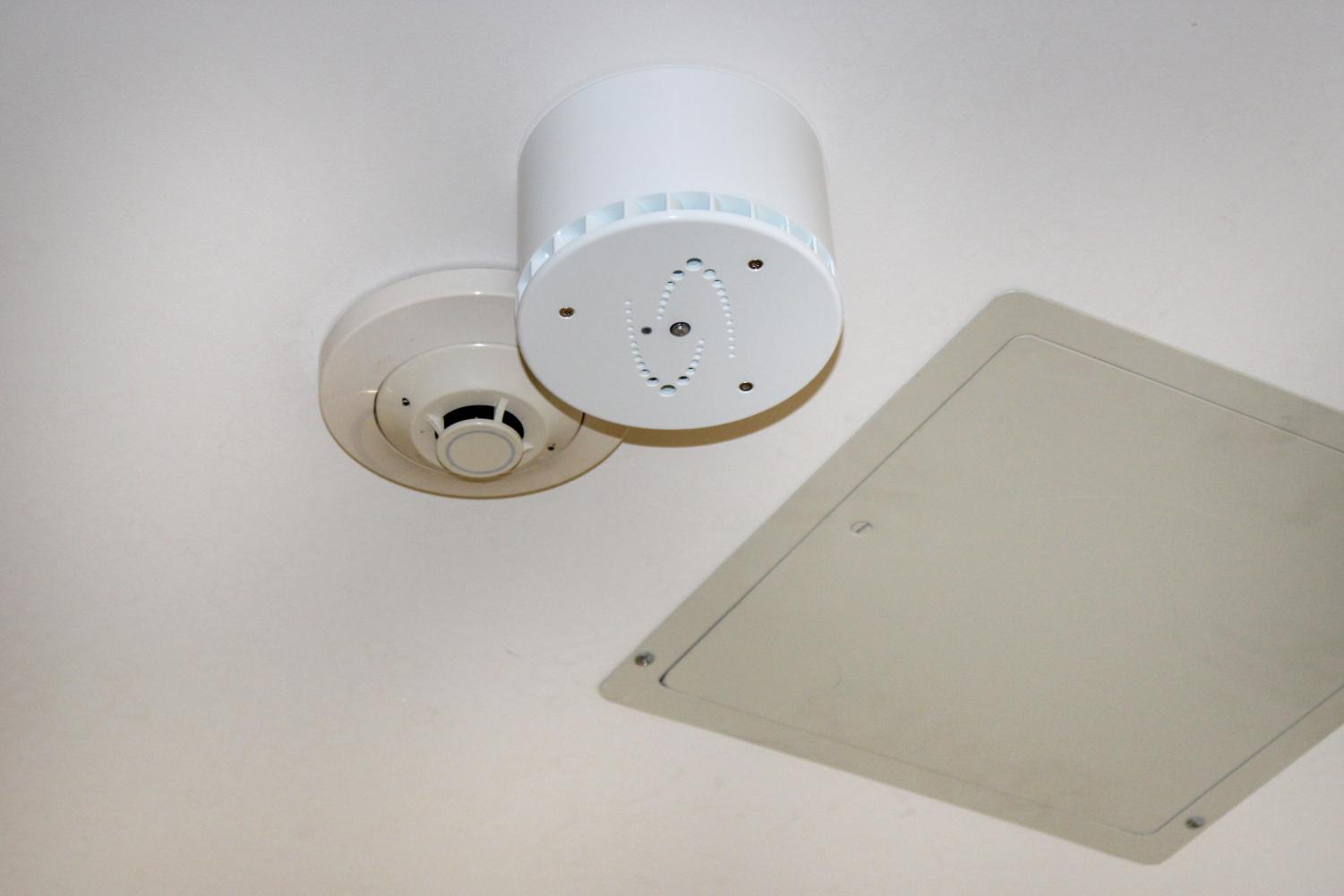
The most common form factor for a vape detector is a circular or square white plastic housing, roughly five to seven inches in diameter. This design mimics the appearance of a standard smoke detector or carbon monoxide sensor. By utilizing this familiar aesthetic, manufacturers ensure the device does not look out of place on a ceiling. However, unlike a smoke detector, which often has a visible “test” button and a blinking red LED, high-end vape detectors are frequently “dark” by design. They avoid visible lights to prevent users from knowing exactly when or if the device is active, serving as a psychological deterrent as much as a physical one.
Compact and Low-Profile Units
As the tech has matured, miniaturization has become a priority. Some of the latest models on the market are remarkably slim, protruding only an inch or two from the ceiling. These low-profile units often feature a sleek, modern finish, resembling high-end Wi-Fi access points or smart home hubs. The external casing is typically constructed from high-impact polycarbonate to withstand potential vandalism, featuring subtle vents or “gills” around the perimeter. These vents are strategically engineered to allow for maximum airflow into the internal sensor chamber without allowing dust or debris to clog the sensitive electronics.
Tamper-Resistant Industrial Casings
In high-traffic environments or areas prone to tampering, vape detectors take on a more “industrial” appearance. These models might feature metallic housings, reinforced mounting brackets, and security screws that require specialized tools to remove. Some units are even designed to be flush-mounted into the ceiling, with only a flat, perforated plate visible to the public. This design is particularly popular in correctional facilities or high-utility school settings where the hardware needs to be as resilient as it is smart.
Beyond the Surface: The Sensor Technology Within
While the exterior of a vape detector may seem simple, the technology hidden beneath the plastic shell is anything but. Unlike traditional smoke detectors that use ionization or basic photoelectric sensors to detect large carbon particles, vape detectors must identify a complex cocktail of chemicals and microscopic aerosols.
Laser Scattering and Optical Sensors
At the heart of many vape detectors is an optical sensor utilizing laser scattering technology. When a person vapes, they release an aerosol consisting of ultra-fine particles. Inside the detector, a laser beam is directed into a sensing chamber. When particles enter this chamber, they scatter the laser light. A high-sensitivity photodiode measures the intensity and pattern of this scattered light. By analyzing these patterns, the device’s internal processor can distinguish between the thick, heavy particles of a fire and the specific, micro-sized droplets found in vape clouds.
PM2.5 and Volatile Organic Compound (VOC) Monitoring
One of the key technical challenges of vape detection is that “vapor” is not actually smoke; it is an aerosol. To catch this, hardware developers integrate PM2.5 sensors, which measure particulate matter smaller than 2.5 micrometers. Furthermore, vape juice contains various chemicals such as propylene glycol, vegetable glycerin, and nicotine. Advanced detectors include Metal Oxide Semiconductor (MOS) sensors designed to detect Volatile Organic Compounds (VOCs). These sensors react to the chemical signature of the flavored “juice” used in vapes, allowing the device to trigger an alert even if the “cloud” isn’t dense enough to trigger the optical sensor.
Humidity and Temperature Compensation
Tech-forward vape detectors must also account for environmental variables to prevent false positives. Steam from a hot shower or a humid day can often trick basic sensors. To combat this, modern hardware includes integrated hygrometers (humidity sensors) and thermometers. The device’s onboard firmware uses these data points to cross-reference with particle detection. If the humidity spikes alongside a particle increase, the AI might determine the trigger was simply steam, thereby reducing the “noise” of false alarms for the end-user.
Connectivity and the IoT Ecosystem

A vape detector is rarely a standalone unit. Its value lies in its ability to communicate data back to a centralized network. This transition from “hardware alarm” to “IoT node” is what defines the current tech landscape in this sector.
Wi-Fi, PoE, and Cellular Integration
How these devices connect to the digital world varies based on the infrastructure. Power over Ethernet (PoE) is the gold standard for professional installations. This allows the device to receive power and transmit data over a single Cat6 cable, ensuring a stable, hardwired connection that is difficult to jam or interfere with. For older buildings where running cables is prohibitive, Wi-Fi-enabled models are common. Some cutting-edge industrial models even feature cellular backhaul (LTE/5G), allowing them to operate independently of the local IT network—a critical feature for high-security deployments.
Cloud-Based Management Platforms
When a detector “sees” a vape signature, the data doesn’t just sit there. It is immediately uploaded to a cloud-based management dashboard. These platforms provide a digital map of the facility, showing the status of every detector in real-time. From a technical perspective, these dashboards use REST APIs and webhooks to integrate with other security software. For example, a vape detection event in a hallway can automatically trigger a nearby security camera to bookmark the footage, creating a seamless tech-driven evidence chain.
Real-Time Alerts and Push Notifications
The software side of vape detection is focused on “Time to Alert.” Modern systems utilize push notification protocols and SMS gateways to alert administrators within seconds of detection. These alerts often include “heat maps” and “intensity graphs,” showing exactly how much vapor was detected and for how long. This level of data granularity allows IT and security teams to differentiate between a single “puff” and a sustained vaping session, helping them prioritize their response.
Advanced Features and AI Integration
The latest generation of vape detectors has moved beyond simple chemical sensing, incorporating artificial intelligence and acoustic monitoring to provide a holistic environmental security solution.
Acoustic Tamper Detection
Vape detectors are often targets for vandalism. To protect the hardware, developers have integrated acoustic sensors (microphones without recording capabilities) that use edge-based AI to identify specific sound patterns. If someone tries to cover the device with a plastic bag, spray it with hairspray, or hit it with a blunt object, the internal AI recognizes the “thud” or “crinkle” and sends an immediate tamper alert. This use of sound-as-data is a hallmark of modern smart-gadget design.
Machine Learning for False Positive Prevention
The most significant tech hurdle in detection is the “false positive.” In a school or office, everything from perfume to cleaning sprays can potentially trigger a chemical sensor. To solve this, manufacturers are employing Machine Learning (ML) models that run locally on the device’s microprocessor (Edge AI). These models are trained on thousands of data sets of “vape” vs. “non-vape” signatures. Over time, the firmware can be updated over-the-air (OTA) to recognize new types of synthetic nicotine or changing chemical compositions in e-liquids, making the hardware future-proof.
Environmental Mapping and Air Quality Indexing (AQI)
Because the hardware is already packed with sensors, many tech companies are rebranding vape detectors as “Multi-Sensors.” These devices monitor CO2 levels, total VOCs, and overall Air Quality Index (AQI). This turns a single-purpose security device into a valuable piece of “Smart Building” infrastructure. By analyzing CO2 levels, the tech can even estimate room occupancy, helping facilities optimize HVAC (Heating, Ventilation, and Air Conditioning) systems to save energy.
The Future of Vape Detection Hardware
As we look toward the next iteration of this technology, the trend is moving toward total invisibility and even deeper integration into the digital fabric of our buildings.
Miniaturization and Wearable Tech
We are already seeing the emergence of “micro-detectors” that are small enough to be integrated into other devices, such as smart lights or wall outlets. In the future, vape detection tech may not look like a “detector” at all; it may simply be a standard chip embedded in every LED fixture. There is also ongoing research into wearable detection tech for specialized environments, though this remains in the early R&D phases.
Smart Building and HVAC Integration
The ultimate goal for many tech developers is the “Automated Building Response.” Imagine a scenario where a vape detector identifies a high concentration of aerosols and instantly signals the HVAC system to increase fresh air intake in that specific zone while simultaneously notifying the security team. This level of machine-to-machine (M2M) communication represents the pinnacle of IoT integration, where the hardware doesn’t just report a problem—it actively works to mitigate it.
In conclusion, a vape detector is far more than a simple plastic box on a ceiling. It is a sophisticated piece of hardware that represents the intersection of chemical engineering, IoT connectivity, and artificial intelligence. Whether it takes the form of a familiar smoke alarm or a sleek, modern multi-sensor, the tech inside is constantly evolving to keep pace with the digital age. For those asking what these devices look like, the answer is simple: they look like the future of environmental monitoring.
aViewFromTheCave is a participant in the Amazon Services LLC Associates Program, an affiliate advertising program designed to provide a means for sites to earn advertising fees by advertising and linking to Amazon.com. Amazon, the Amazon logo, AmazonSupply, and the AmazonSupply logo are trademarks of Amazon.com, Inc. or its affiliates. As an Amazon Associate we earn affiliate commissions from qualifying purchases.