
In the modern financial landscape, the speed of capital movement is often as important as the capital itself. Cash App, developed by Block, Inc., has revolutionized the way individuals manage their personal finances, offering a seamless interface for peer-to-peer (P2P) payments, stock trading, and Bitcoin purchases. However, for many users, the primary utility of the app lies in its ability to move money from the digital ecosystem into a traditional bank account. While the platform offers a free “Standard” transfer option, the “Instant Transfer” feature is a popular choice for those requiring immediate liquidity. Understanding the fee structure associated with these transfers is essential for effective cash flow management and long-term financial health.

Breaking Down the Costs: The Mechanics of Cash App Fees
When you receive money on Cash App, the funds reside in your digital wallet. To move that money to a linked debit card or bank account immediately, you must opt for an Instant Transfer. This convenience, however, is not free.
The 1.5% Instant Transfer Fee Explained
As of the current fiscal period, Cash App charges a 1.5% fee for all Instant Transfers to a linked debit card. This is a percentage-based fee, meaning the more money you move, the higher the nominal cost. For example, if you are transferring $100, the fee will be $1.50, leaving you with $98.50 in your bank account. While 1.5% may seem negligible on a single small transaction, it represents a significant haircut on larger sums or frequent transfers. From a personal finance perspective, this is a “convenience tax” paid to bypass the standard banking clearing cycle.
Minimum and Maximum Fee Thresholds
Cash App imposes a minimum fee of $0.25 on Instant Transfers. This is a crucial detail for users who frequently move small amounts of money. If you attempt to transfer $10, the 1.5% rule would suggest a fee of $0.15; however, because of the $0.25 minimum, you will be charged the higher amount. Financially speaking, transferring very small amounts instantly is inefficient, as the effective percentage rate increases significantly. Conversely, there are internal limits on the maximum amount you can transfer instantly, which are often dictated by your account verification status and history with the platform.
Standard Deposits: The Zero-Fee Alternative
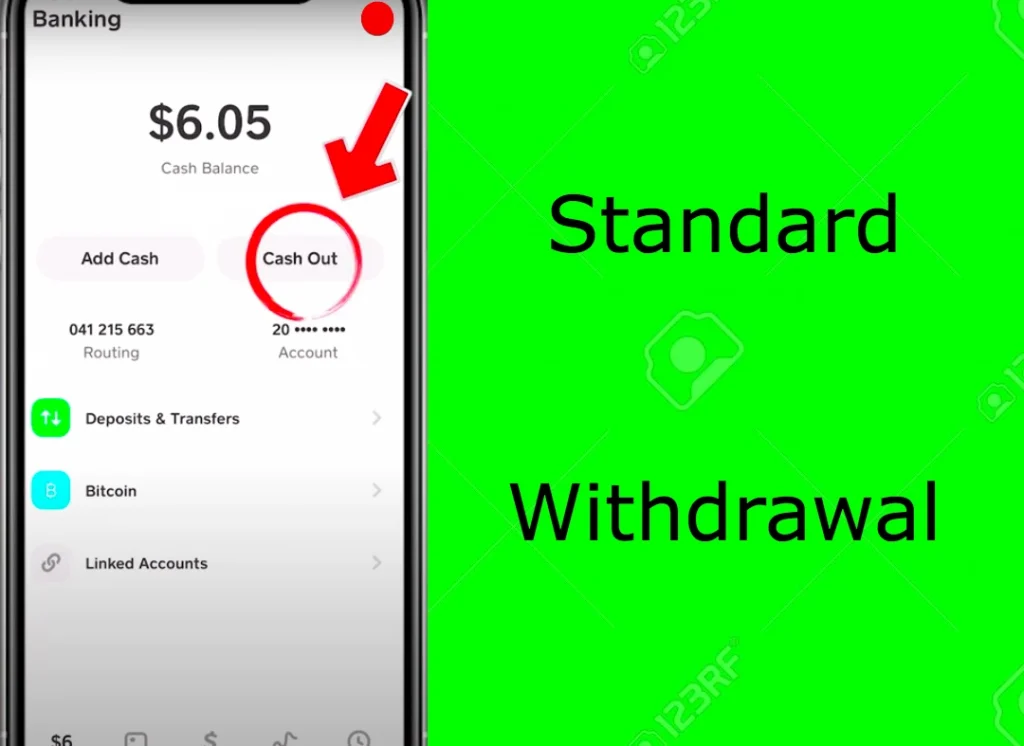
For the budget-conscious user, Cash App offers a “Standard” deposit option which carries a 0% fee. These transfers typically take one to three business days to arrive in your bank account. This service utilizes the Automated Clearing House (ACH) network, which is the standard system for moving money between financial institutions in the United States. Choosing the Standard option is the most effective way to preserve your capital, especially for non-urgent financial needs.
Instant vs. Standard Transfers: Evaluating the Opportunity Cost
In economics, opportunity cost represents the benefits an individual misses out on when choosing one alternative over another. When deciding between an Instant Transfer and a Standard Deposit, you are essentially weighing the value of time against a literal financial cost.
The Value of Liquidity in Personal Finance
Liquidity refers to how quickly an asset can be converted into cash without affecting its market price. For many Americans living paycheck to paycheck or managing tight margins, the liquidity provided by an Instant Transfer can be the difference between paying a bill on time or incurring a late fee. If a late fee on a utility bill is $25, paying a $1.50 fee to transfer $100 instantly is a sound financial decision. In this context, the Instant Transfer fee acts as a form of insurance against more expensive financial penalties.
When the 1.5% Fee Is Worth the Cost
There are specific scenarios where the 1.5% fee is a justifiable business or personal expense:
- Emergency Expenses: Medical bills, urgent car repairs, or unplanned travel often require immediate payment.
- Investment Opportunities: If you need to move capital into a brokerage account to catch a market dip, the potential gains may far outweigh the 1.5% entry cost.
- Avoiding Overdrafts: If your primary bank account is at risk of an overdraft fee (which can range from $30 to $35), paying the Instant Transfer fee is the mathematically superior choice.
Hidden Costs of Constant Instant Transfers
The danger of the Instant Transfer feature lies in its habit-forming nature. If a user transfers $500 every week via the instant method, they are paying $7.50 per week in fees. Over the course of a year, this totals $390. For many, $390 represents a monthly car payment, a contribution to an IRA, or a significant portion of a high-yield savings account. When viewed through a long-term lens, the “micro-leaks” of 1.5% fees can create a substantial drag on net worth accumulation.
Strategic Cash Flow Management Using Cash App

To master your personal finances, you must treat your digital wallet with the same scrutiny as a traditional investment portfolio. Cash App can be a powerful tool for cash flow management if used strategically.
Using Cash App for Side Hustles and Small Business
Many freelancers and gig economy workers use Cash App to receive payments for services. While it is convenient, business owners must account for the 1.5% fee as a cost of goods sold (COGS) or an operating expense. For those running thin margins, these fees should be factored into the pricing strategy. Furthermore, Cash App for Business accounts have a different fee structure—generally charging a flat 2.75% per transaction received—which is separate from the transfer fee. Understanding these layers of costs is vital for maintaining profitability.
Managing Daily Expenses and Budgeting
A sophisticated way to avoid transfer fees altogether is to use the “Cash Card,” a Visa debit card linked directly to your Cash App balance. By spending directly from the app, you eliminate the need to transfer funds to an external bank, thereby bypassing the 1.5% fee entirely. Additionally, the “Boost” feature on the Cash Card offers instant discounts at various retailers, which can actually result in a net gain for the user, turning a payment tool into a savings tool.
Integrating Cash App into Your Broader Banking Ecosystem
Cash App should not exist in a vacuum. To optimize your finances, link it to a high-yield savings account (HYSA). When you receive a payment that isn’t needed for immediate expenses, use the free Standard Transfer to move it to your HYSA. This allows your money to begin earning interest (currently around 4-5% APY in many digital banks) as soon as possible, offsetting any previous fees you may have paid on the platform.
Comparing Cash App Fees with Other P2P Financial Tools
To understand if Cash App is the right financial tool for you, it is necessary to compare its fee structure with other major players in the fintech space, such as Venmo, PayPal, and Zelle.
Cash App vs. Venmo: A Direct Cost Comparison
Venmo, owned by PayPal, operates on a nearly identical model to Cash App. Venmo also charges a 1.75% fee for instant transfers (slightly higher than Cash App’s 1.5%), with a minimum fee of $0.25 and a maximum fee of $25. From a pure cost-saving perspective, Cash App is marginally more affordable for large instant transfers due to the 0.25% difference in the rate. Both apps offer free standard transfers, making them essentially equal for users who can afford to wait.
Why Zelle Remains the “Free” King (and Its Limitations)
Zelle is a unique competitor because it is integrated directly into the apps of most major US banks. Transactions made via Zelle usually move from one bank account to another within minutes, and most banks do not charge a fee for this service. In the “Money” niche, Zelle is often recommended for its 0% fee structure for instant movement. However, Zelle lacks the “wallet” features of Cash App, such as the ability to hold a balance, invest in stocks, or use a dedicated debit card with rewards.
The Future of Digital Wallets and Transaction Costs
As the Federal Reserve rolls out the FedNow Service—a real-time payment system—the landscape of instant transfers is likely to change. Eventually, the “standard” for all bank transfers may become “instant.” When this occurs, the 1.5% fee model used by Cash App and Venmo will face significant pressure. For now, however, these platforms remain the primary way for the unbanked or underbanked to access immediate digital liquidity.
Tips for Reducing Financial Friction and Transaction Costs
Financial friction refers to the costs and hurdles associated with moving or spending money. Reducing this friction is a hallmark of intelligent financial planning.
Timing Your Transfers
If you know you have a recurring bill on the 15th of the month, initiate your Cash App transfer on the 11th or 12th. By using the free Standard Transfer three days in advance, you retain the 1.5% fee in your own pocket. This requires a level of proactive budgeting, but the cumulative savings are substantial.
Leveraging the Cash Card for Immediate Access
As mentioned previously, the Cash Card is the ultimate “loophole” for avoiding instant transfer fees. If you need money “instantly” to buy groceries or gas, don’t transfer the money to your bank account. Use the Cash Card at the point of sale. This keeps your capital intact and avoids the 1.5% erosion.
Setting Financial Boundaries for App Usage
To maintain disciplined personal finance, consider setting a rule for yourself: only use Instant Transfer for emergencies. By categorizing transfers as “Urgent” vs. “Non-Urgent,” you create a mental framework that prioritizes capital preservation. Over time, this disciplined approach to micro-transactions builds a stronger foundation for wealth accumulation, ensuring that your money is working for you, rather than being chipped away by convenience fees.
aViewFromTheCave is a participant in the Amazon Services LLC Associates Program, an affiliate advertising program designed to provide a means for sites to earn advertising fees by advertising and linking to Amazon.com. Amazon, the Amazon logo, AmazonSupply, and the AmazonSupply logo are trademarks of Amazon.com, Inc. or its affiliates. As an Amazon Associate we earn affiliate commissions from qualifying purchases.