
When we talk about a technology titan like Microsoft, the question of “how much cash” it possesses isn’t merely about counting physical banknotes. It delves into the sophisticated world of corporate finance, revealing insights into a company’s financial health, strategic flexibility, and future growth potential. For investors, analysts, and anyone interested in the dynamics of global commerce, understanding a company’s cash position goes far beyond a simple curiosity; it’s a critical indicator of strength and future direction.
Microsoft, as one of the world’s most valuable companies, consistently holds a formidable treasury. This isn’t just about having money in a bank account; it encompasses a complex array of liquid assets designed to support its vast global operations, fund ambitious strategic initiatives, and provide a buffer against economic uncertainties. To truly grasp “how much cash Microsoft has,” we must first demystify what corporate cash means and explore the intricate financial strategies that govern its accumulation and deployment.
Understanding Corporate Cash: More Than Just Bank Notes
The concept of “cash” for a multinational corporation like Microsoft extends far beyond the literal definition used in personal finance. It represents the most liquid assets available to the company, providing immediate purchasing power and financial flexibility. This figure is meticulously reported in the company’s financial statements and is a cornerstone of its overall financial health.
Defining “Cash and Cash Equivalents”
In corporate finance, the term “cash” is typically expanded to “cash and cash equivalents.” This category on the balance sheet includes not only physical currency and demand deposits (money in checking accounts) but also highly liquid, short-term investments that can be readily converted into cash with minimal risk of value change. These often include:
- Treasury bills: Short-term debt instruments issued by governments.
- Commercial paper: Unsecured, short-term debt instruments issued by corporations.
- Money market funds: Mutual funds that invest in short-term, low-risk debt instruments.
- Short-term government bonds and corporate bonds: Debt instruments with maturities typically less than three months.
The inclusion of equivalents is crucial because large corporations don’t keep billions in a checking account; they strategically invest these funds to earn a return while maintaining liquidity. These investments are so liquid that they are considered practically equivalent to cash for operational and strategic purposes.
The Importance of the Balance Sheet
The most accurate and up-to-date information regarding Microsoft’s cash and cash equivalents can always be found in its official financial reports. Publicly traded companies in the U.S. file these documents with the Securities and Exchange Commission (SEC). Key reports include:
- Form 10-K: The annual report, providing a comprehensive overview of the company’s financial performance and position.
- Form 10-Q: Quarterly reports, offering interim financial updates.
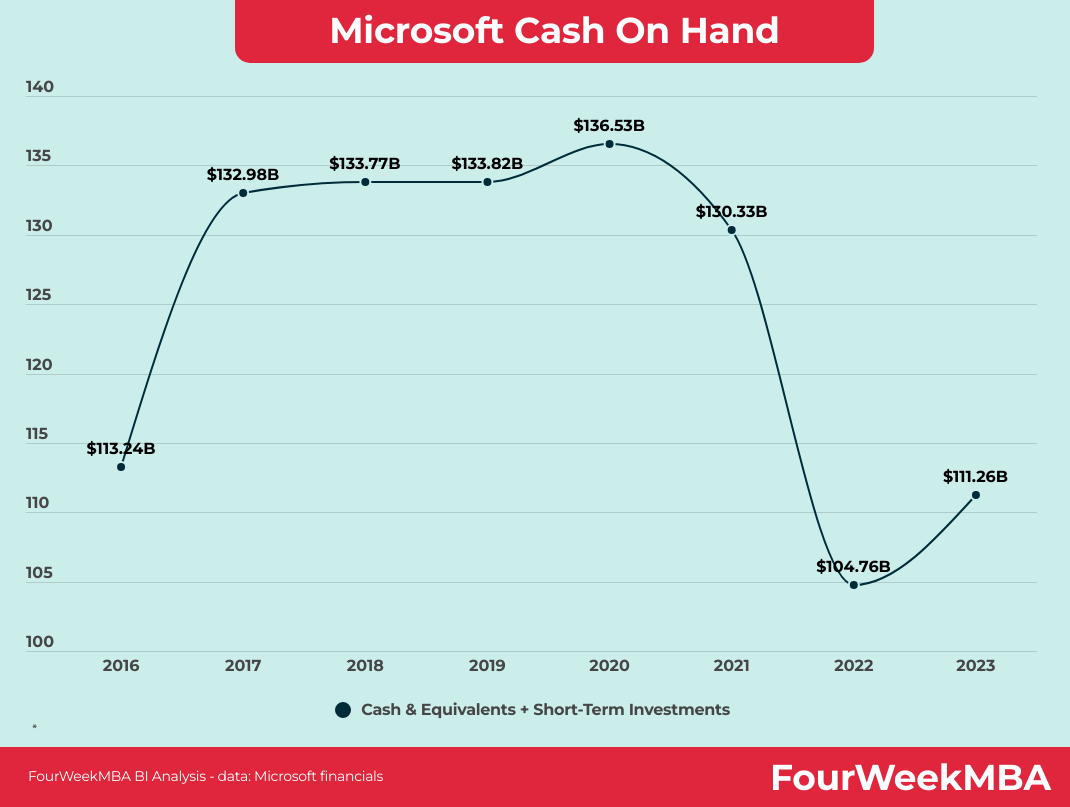
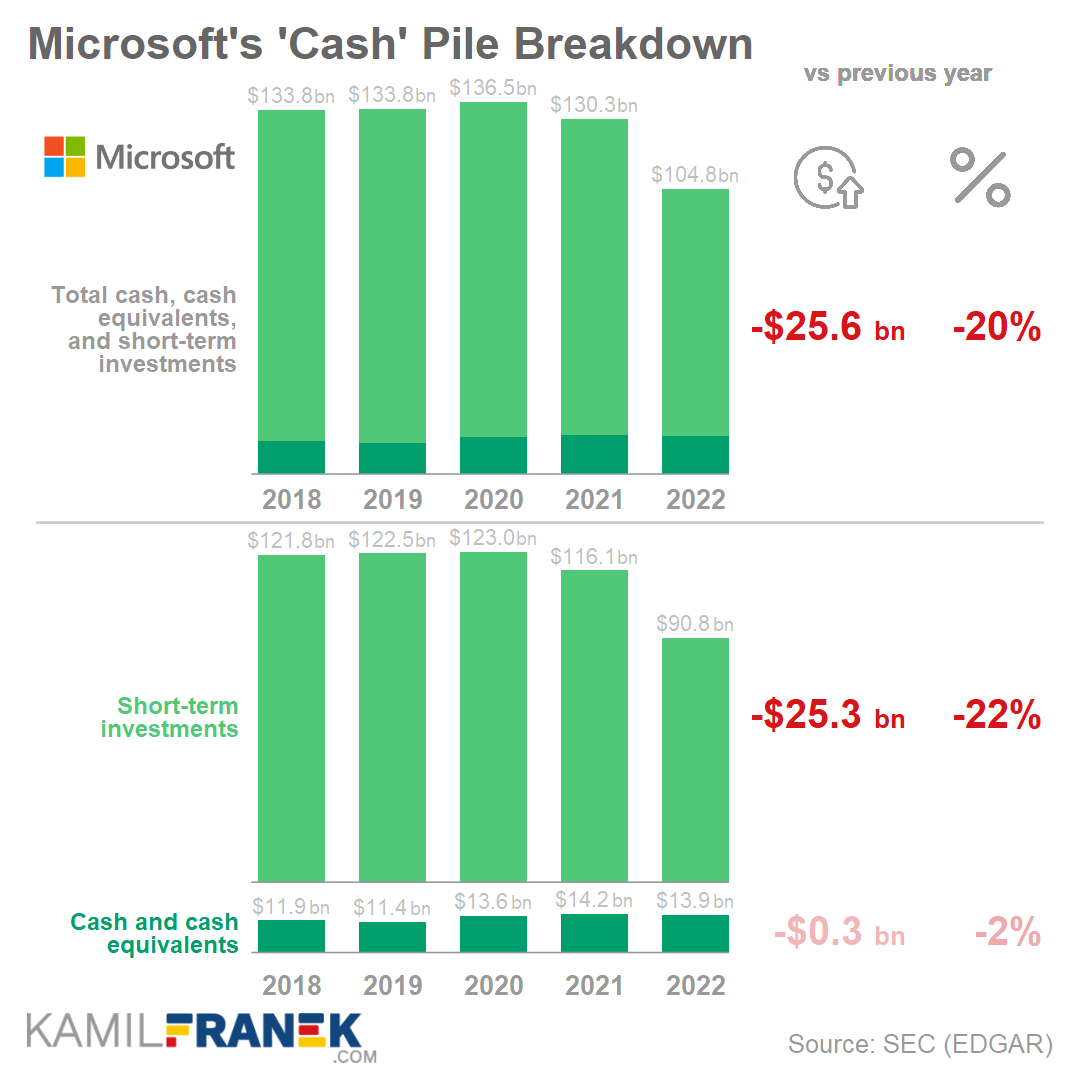
These documents contain the company’s balance sheet, which is a snapshot of its assets, liabilities, and shareholders’ equity at a specific point in time. The “cash and cash equivalents” line item is a direct indicator of its liquid financial strength. While specific figures fluctuate quarterly due to earnings, expenditures, investments, and distributions, Microsoft consistently reports tens of billions of dollars in this category, often topping $100 billion when considering all forms of highly liquid assets and short-term investments.
Distinguishing Operating Cash Flow from Cash Reserves
It’s important not to confuse a company’s cash reserves with its operating cash flow.
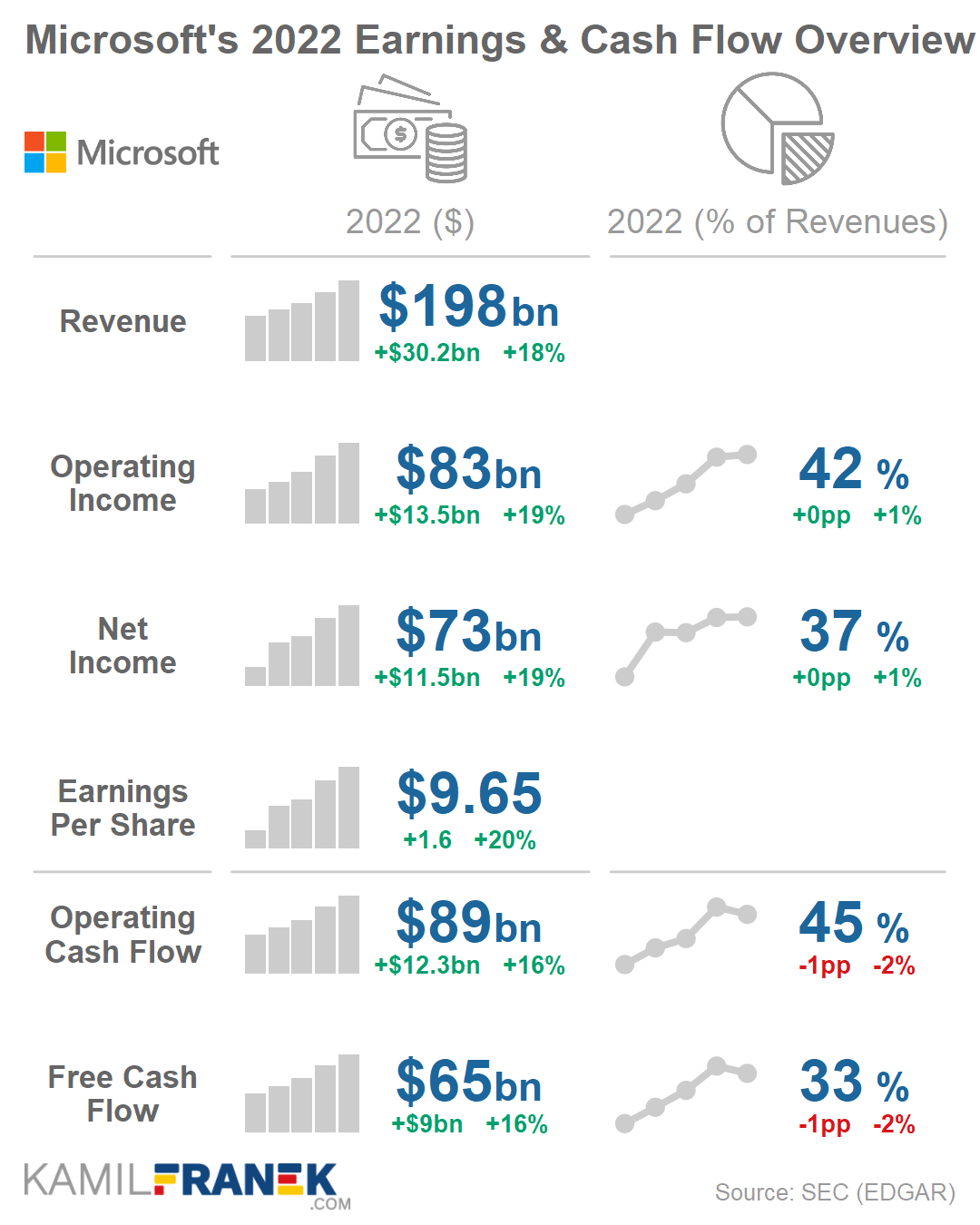
- Operating Cash Flow (OCF): This represents the cash generated from a company’s normal business operations within a specific period (e.g., a quarter or a year). It shows how much cash the core business is truly generating. Microsoft’s OCF is consistently massive, reflecting the profitability of its software, cloud, and gaming divisions.
- Cash Reserves (Cash and Cash Equivalents): This is the accumulated pool of cash and highly liquid investments held at a specific point in time. A healthy OCF typically contributes to growing cash reserves over time, after accounting for capital expenditures, debt payments, and shareholder distributions.
Microsoft’s ability to consistently generate substantial operating cash flow is the primary driver behind its impressive cash reserves, giving it immense financial firepower.
The Strategic Rationale Behind Microsoft’s Cash Hoard
Why does a company like Microsoft choose to hold such vast amounts of cash? It’s not merely for safekeeping; every dollar is a strategic asset, carefully managed to further the company’s long-term objectives and maximize shareholder value.
Fueling Innovation and Research & Development (R&D)
Innovation is the lifeblood of the tech industry, and Microsoft pours billions into research and development annually. A substantial cash reserve ensures that the company can:
- Invest heavily in future technologies: From advanced AI and quantum computing to new cloud infrastructure and gaming advancements, these initiatives require sustained, significant investment with often long payback periods.
- Attract top talent: Offering competitive compensation and investing in cutting-edge facilities is easier with robust liquidity.
- Navigate R&D cycles: Many projects fail or take years to mature, requiring a financial cushion to absorb losses and persist.
Strategic Mergers and Acquisitions (M&A) Prowess
Microsoft has a history of impactful acquisitions, from LinkedIn and GitHub to its largest-ever deal, the acquisition of Activision Blizzard. These multi-billion-dollar transactions are often partially or wholly financed through existing cash reserves. Holding a significant cash hoard allows Microsoft to:
- Act quickly on strategic opportunities: When a target company becomes available, having cash readily accessible avoids the delays and costs associated with securing external financing.
- Negotiate from a position of strength: Cash offers are often more attractive to sellers than stock-based deals or complex financing arrangements.
- Integrate new technologies and talent: Acquisitions bring new capabilities and market share, accelerating growth in key areas.
Shareholder Returns: Dividends and Share Buybacks
A core responsibility of a publicly traded company is to generate returns for its shareholders. Microsoft leverages its cash in two primary ways to achieve this:
- Dividends: Microsoft pays a consistent quarterly dividend, providing regular income to its investors. A strong cash position ensures the sustainability and potential growth of these payouts.
- Share Buybacks (Repurchases): The company frequently authorizes share repurchase programs, using cash to buy back its own stock from the open market. This reduces the number of outstanding shares, which typically boosts earnings per share (EPS) and can support the stock price, signaling management’s confidence in the company’s valuation.
A Robust Economic Buffer and Crisis Preparedness
The global economy is inherently cyclical, and unforeseen events, such as recessions, pandemics, or supply chain disruptions, can emerge unexpectedly. Microsoft’s substantial cash reserves act as a vital economic buffer, enabling the company to:
- Maintain operations during downturns: Cash provides the liquidity to cover operating expenses, even if revenues temporarily decline.
- Fund initiatives during tight credit markets: If borrowing becomes expensive or difficult, internal cash offers independence.
- Seize opportunities during crises: Financially strong companies can often acquire distressed assets or invest when others are pulling back.
Regulatory and Global Operational Needs
Operating across virtually every country in the world adds layers of complexity. Microsoft’s cash management must account for:
- Local liquidity requirements: Different countries may have regulations regarding minimum cash holdings or currency controls.
- Foreign exchange management: Holding cash in various currencies mitigates foreign exchange risks.
- Tax optimization: The location and repatriation of cash are critical components of a global tax strategy, influencing where and how cash can be most efficiently deployed.
The Financial Implications of Microsoft’s Cash Position
The sheer volume of Microsoft’s cash and cash equivalents sends several important signals to the market and has tangible financial implications for the company and its stakeholders.
Investor Confidence and Financial Stability
A large cash reserve is often seen as a hallmark of financial strength and stability. For investors, it signifies:
- Reduced risk: The company is well-equipped to handle economic shocks, competitive threats, or unexpected expenses without resorting to costly borrowing or diluting existing shares through new equity issuance.
- Reliable dividends: The ability to sustain and grow dividend payments is enhanced.
- Long-term viability: It suggests a company with the resources to invest in its future and maintain its market leadership for decades. This translates into greater investor confidence and often a higher valuation multiple.
Opportunity Cost: The Double-Edged Sword
While holding cash offers significant advantages, it also presents an “opportunity cost.” Cash that sits idle or earns minimal returns could potentially be invested in higher-yielding projects or acquisitions that accelerate growth.
- Inflation erosion: Cash’s purchasing power erodes over time due to inflation. While Microsoft invests its cash equivalents, the returns are typically conservative.
- Missed growth opportunities: Managers must constantly weigh the benefits of liquidity against the potential for higher returns if that cash were deployed more aggressively into capital expenditures, new ventures, or higher-return M&A. This makes capital allocation one of the most critical responsibilities of Microsoft’s leadership team.
Capital Allocation Decisions: A Continuous Balancing Act
Microsoft’s executive team and board of directors are constantly engaged in capital allocation decisions. They must decide how to best deploy their vast cash resources among competing priorities:
- Internal investments: R&D, new product development, cloud infrastructure expansion.
- External investments: Mergers and acquisitions.
- Shareholder returns: Dividends and share repurchases.
- Debt reduction: Although Microsoft typically carries a manageable amount of debt, cash can be used to pay it down.
- Building reserves: Maintaining an optimal level of liquidity for strategic flexibility.
The goal is to find the optimal balance that maximizes long-term shareholder value while maintaining financial resilience.
Microsoft’s Cash Management and Investment Strategies
Managing such an enormous treasury is a highly specialized and complex undertaking, involving sophisticated financial instruments and a global perspective.
Treasury Management Excellence
Microsoft employs a world-class treasury department responsible for the careful management of its cash. This involves:
- Liquidity management: Ensuring sufficient cash is available across all global operations at all times.
- Risk management: Mitigating risks associated with currency fluctuations, interest rate changes, and counterparty credit risk.
- Investment strategies: Deploying excess cash into low-risk, highly liquid securities to earn modest returns while preserving capital.
- Debt management: Issuing new debt when advantageous and managing existing debt obligations.
Diversified Investment Portfolio
While the primary goal for cash equivalents is liquidity and capital preservation, Microsoft diversifies its short-term investment portfolio to achieve these aims while earning some yield. This portfolio typically includes:
- Government securities: Highly secure debt issued by sovereign nations.
- Corporate bonds: Debt issued by other creditworthy corporations.
- Asset-backed securities: Investments backed by a pool of underlying assets.
- Bank deposits and money market instruments: For immediate liquidity needs.
The emphasis is always on stability and accessibility rather than aggressive growth, recognizing that these funds are primarily held for operational and strategic flexibility.
Repatriation and Global Tax Considerations
A significant portion of Microsoft’s earnings originate outside the United States. Historically, bringing these foreign-earned profits back to the U.S. (repatriation) could trigger substantial tax liabilities. While tax reforms have mitigated some of these issues, the location of cash (domestic vs. international) and the strategies for moving it remain critical considerations for maximizing after-tax returns and flexibility. Microsoft’s treasury team works closely with tax experts to optimize these movements.
A Snapshot in Time: Estimating Microsoft’s Cash Position and Its Future
Pinpointing an exact, real-time figure for “how much cash Microsoft has” is challenging because the number is constantly in flux. Every transaction, every dollar earned or spent, shifts the balance. However, we can use reported figures as strong indicators.
Interpreting Financial Statements
As of their most recent public filings (which would need to be checked for the absolute latest figures, often fluctuating in the tens of billions), Microsoft consistently maintains a robust cash and cash equivalents position, often supplemented by large amounts of short-term investments that are nearly as liquid. For instance, combining “Cash and cash equivalents” with “Short-term investments” often pushes their total liquid assets well over the $100 billion mark. These figures are subject to change based on major events like large acquisitions (e.g., the Activision Blizzard deal was a multi-billion dollar outlay) or significant share buyback programs.
The Dynamic Nature of Corporate Cash
The amount of cash Microsoft holds is a dynamic figure, influenced by several factors:
- Quarterly earnings: Strong earnings boost cash.
- Operating expenses: Payments for salaries, R&D, marketing reduce cash.
- Capital expenditures: Investments in data centers, property, and equipment consume cash.
- Acquisitions: Large deals significantly draw down cash reserves.
- Shareholder distributions: Dividends and buybacks reduce cash.
- Debt issuance or repayment: Affects overall liquidity.
What the Cash Enables: Future Growth and Innovation
Ultimately, Microsoft’s impressive cash position is a testament to its highly successful business model and its strategic foresight. This financial strength enables the company to:
- Continue leading in cloud computing (Azure): Investing in global infrastructure and AI capabilities.
- Drive innovation in AI: Funding cutting-edge research and integrating AI across its product portfolio.
- Expand its gaming empire (Xbox): Pursuing new content, services, and potentially further acquisitions.
- Maintain its dominance in productivity software (Office 365): Continuous development and subscription growth.
In essence, Microsoft’s cash is not just a pile of money; it’s a powerful strategic asset, representing a formidable war chest that underpins its current stability and fuels its ambitious vision for the future of technology and global commerce. It allows Microsoft to not just react to market changes, but to actively shape them.
aViewFromTheCave is a participant in the Amazon Services LLC Associates Program, an affiliate advertising program designed to provide a means for sites to earn advertising fees by advertising and linking to Amazon.com. Amazon, the Amazon logo, AmazonSupply, and the AmazonSupply logo are trademarks of Amazon.com, Inc. or its affiliates. As an Amazon Associate we earn affiliate commissions from qualifying purchases.