
For many Americans, the transition into retirement is no longer a binary switch from full-time employment to total leisure. Instead, it has become a “phased retirement,” where individuals choose to collect Social Security benefits while continuing to work part-time, consult, or manage a side business. However, the intersection of earned income and Social Security benefits is governed by a complex set of rules known as the Retirement Earnings Test. Understanding these limits is essential for anyone looking to maximize their financial health during their golden years.
If you are considering working while receiving benefits, the most critical factor is your age—specifically, how close you are to your Full Retirement Age (FRA). This guide explores the thresholds, the tax implications, and the strategic maneuvers necessary to ensure your extra income doesn’t result in an unexpected financial penalty.
Understanding the Social Security Earnings Test Limits
The Social Security Administration (SSA) does not strictly prohibit you from working while receiving benefits. However, if you have not yet reached your Full Retirement Age, there are annual limits on how much you can earn before your benefits are temporarily reduced. These limits are adjusted annually based on national average wage trends.
If You Are Under Full Retirement Age (FRA)
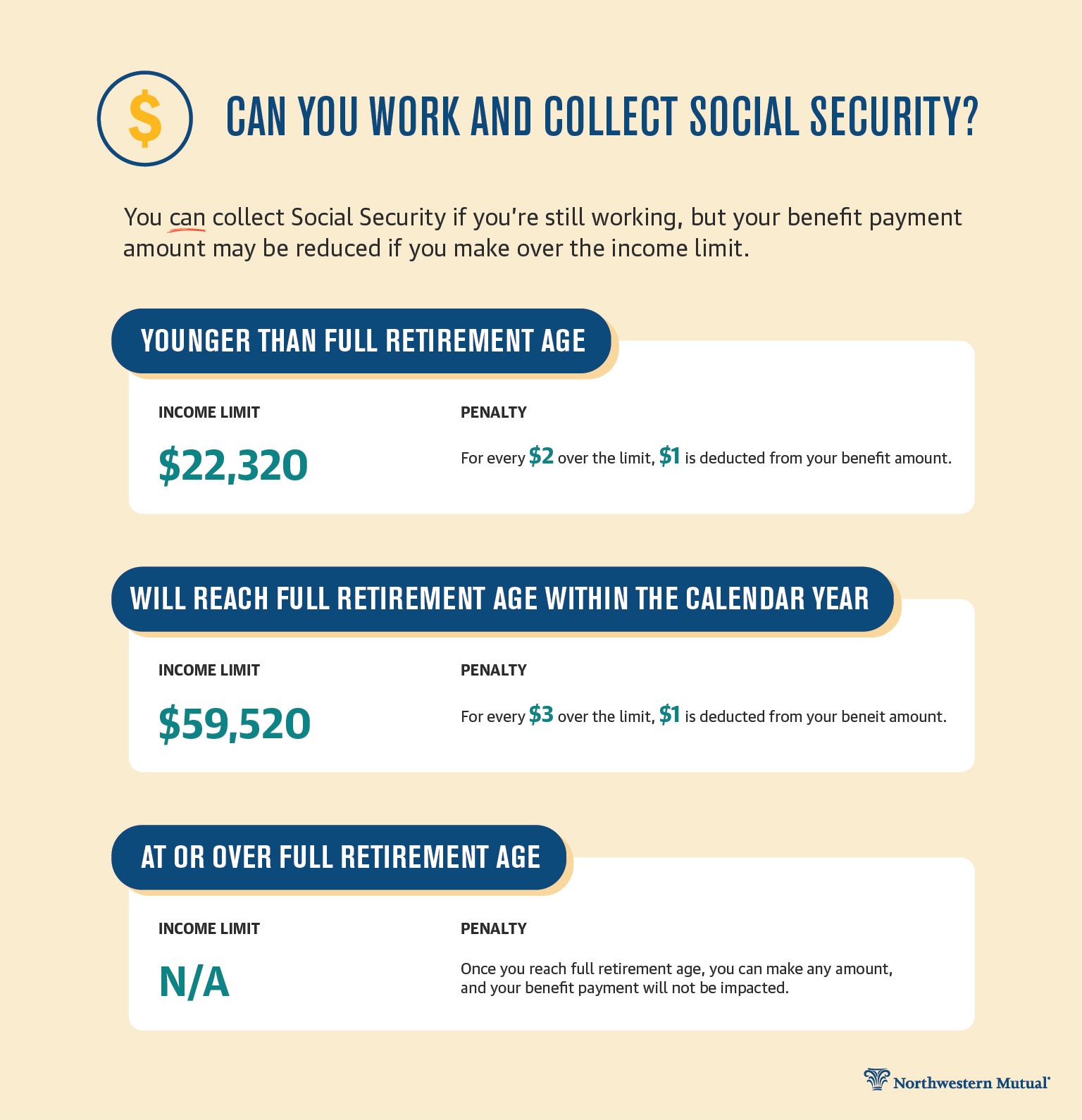
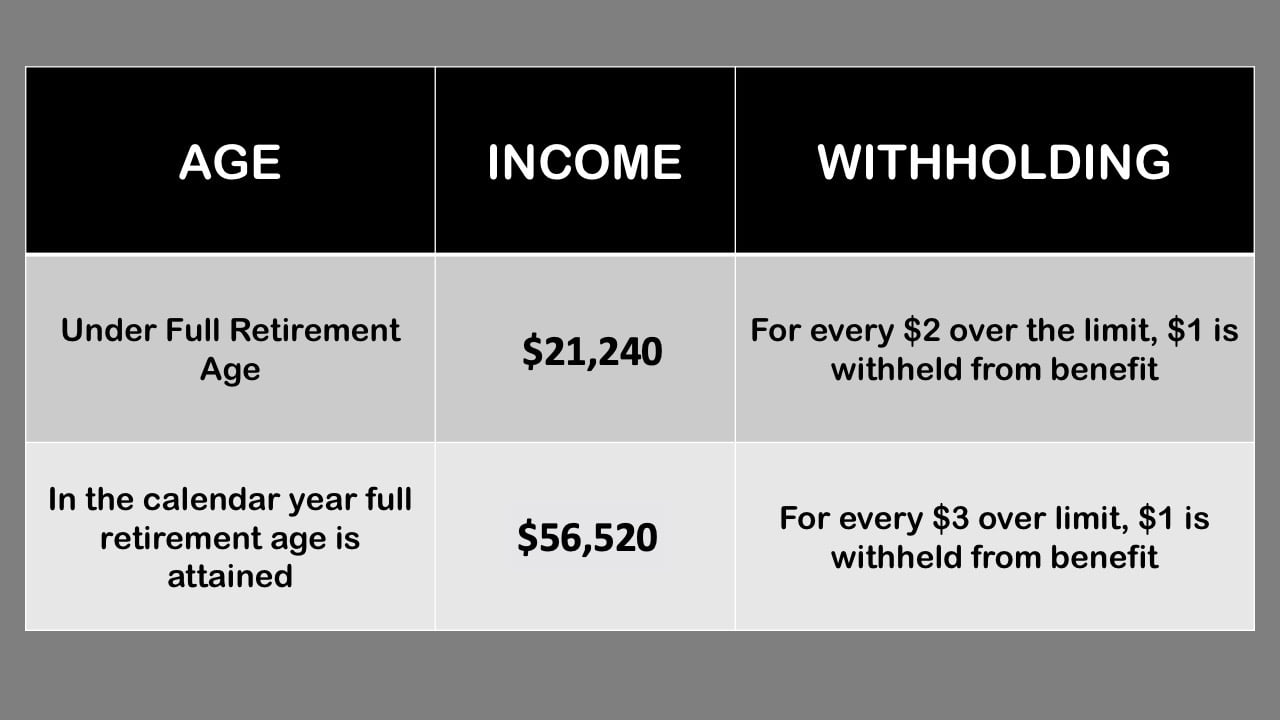
For those who claim benefits early (as early as age 62) but have not yet reached their FRA, the earnings limit is most restrictive. As of 2024, the annual earnings limit is $22,320. If your earned income exceeds this threshold, the SSA will deduct $1 from your benefit payments for every $2 you earn above the limit.
For example, if you earn $32,320 in a year ($10,000 over the limit), the SSA would withhold $5,000 of your Social Security benefits. It is important to note that these withheld benefits are not “lost” forever; once you reach your FRA, the SSA recalculates your monthly benefit amount upward to account for the months where benefits were withheld.
The Year You Reach Full Retirement Age
The rules become significantly more lenient during the calendar year you actually reach your Full Retirement Age. In this specific year, the earnings limit jumps substantially. For 2024, the limit is $59,520. Furthermore, the penalty is less severe: the SSA deducts $1 for every $3 you earn above the limit.
Crucially, this calculation only considers the money you earn in the months before the month of your birthday. Once the month of your FRA arrives, the earnings test disappears entirely.
Once You Reach Full Retirement Age
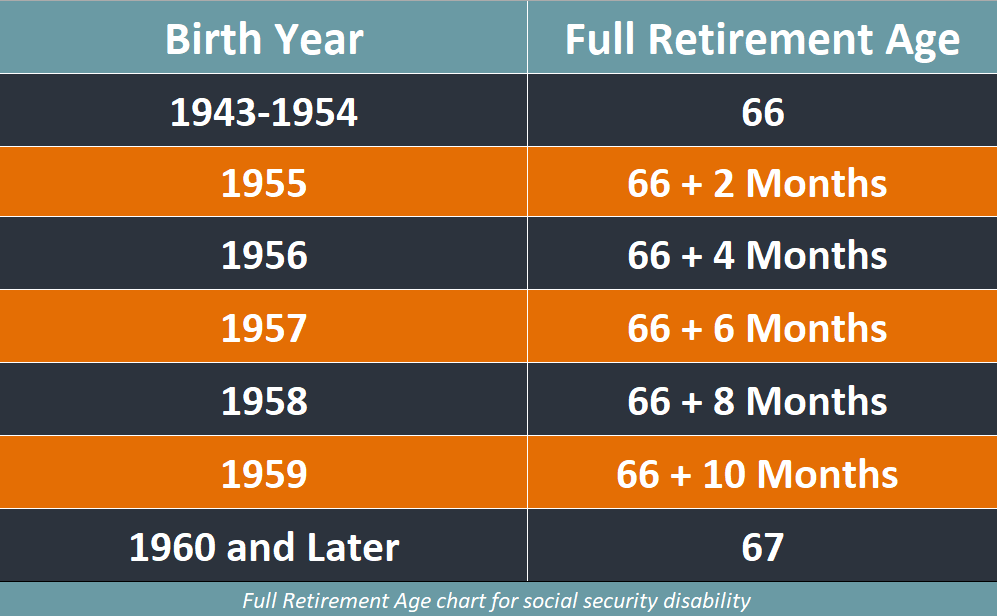
Upon reaching your FRA (which is between age 66 and 67 depending on your birth year), the earnings test is abolished. You can earn an unlimited amount of money through wages, self-employment, or business profits without any reduction in your Social Security benefits. This milestone represents a significant opportunity for high-earning professionals or business owners to “double dip” by receiving their full pension benefit alongside their professional income.
What Counts as Earnings? Defining Income for Social Security Purposes
A common point of confusion for retirees is what specific types of income trigger the Social Security earnings test. The SSA differentiates between “earned income” and “unearned income,” and only the former counts toward the annual limits.
Wages and Self-Employment Income
For the purposes of the earnings test, the SSA looks at your gross wages if you are an employee. This includes bonuses, commissions, and vacation pay. If you are self-employed, the SSA looks at your net earnings. This is your gross income from your business minus all allowable business expenses.
For entrepreneurs and consultants, this distinction is vital. Strategic reinvestment into a business or the utilization of legitimate tax deductions can lower your net earnings, potentially keeping you below the threshold and preserving your monthly Social Security check.
What Doesn’t Count: Passive Income and Pensions
The Retirement Earnings Test is designed to measure your “work effort.” Therefore, passive sources of income do not count toward the limit. You can receive an unlimited amount of income from the following sources without affecting your Social Security benefits:
- Investment Income: Interest, dividends, and capital gains from brokerage accounts.
- Pensions and Annuities: Payments from former employers or private insurance products.
- Rental Income: Income from real estate holdings, provided you are not a real estate professional whose primary work is managing these properties.
- IRA and 401(k) Distributions: Withdrawals from your retirement accounts are not considered earned income.
- Government Benefits: Veterans’ benefits or other disability payments.
By focusing on building these “unearned” income streams prior to retirement, you can significantly increase your cash flow without triggering any benefit reductions.
The Impact of Taxes on Your Social Security Benefits
While the earnings test measures whether your benefits will be withheld, the Internal Revenue Service (IRS) is concerned with whether your benefits will be taxed. Even if you are over your Full Retirement Age and no longer subject to the earnings test, your total income might make your Social Security benefits taxable.
The Combined Income Formula
The IRS uses a metric called “Combined Income” (also known as provisional income) to determine the taxability of your benefits. The formula is:
Adjusted Gross Income (AGI) + Tax-Exempt Interest + 50% of your Social Security Benefits = Combined Income.
The thresholds are as follows for individual filers:
- Below $25,000: You generally pay no federal income tax on your benefits.
- $25,000 to $34,000: You may have to pay income tax on up to 50% of your benefits.
- Above $34,000: Up to 85% of your benefits may be taxable.
For joint filers, the thresholds are $32,000 and $44,000, respectively. This “tax torpedo” can significantly reduce the net value of your Social Security checks if you are also earning a high salary or taking large RMDs (Required Minimum Distributions) from your 401(k).
State Tax Considerations
Beyond federal taxes, retirees must consider state-level taxation. While the majority of states do not tax Social Security benefits, several states still do, though many provide exemptions based on age or income level. When planning your retirement income strategy, it is essential to consult with a financial advisor regarding the specific tax laws in your state of residence to ensure you aren’t losing a significant portion of your income to local levies.
Strategic Planning: Maximizing Income Without Sacrificing Benefits
Navigating the rules of Social Security requires a proactive strategy. Instead of simply reacting to the limits, savvy investors can structure their income to maximize their total take-home pay.
Timing Your Claim for Maximum Payout
If you intend to continue working a high-paying job, the most effective strategy is often to delay claiming Social Security. For every year you delay claiming beyond your FRA (up until age 70), your benefit increases by approximately 8%. By waiting, you avoid the earnings test entirely and lock in a much higher monthly payment for the rest of your life. This effectively turns your “work years” into a tool for compounding your future guaranteed income.
Managing Side Hustles and Part-Time Work
If you choose to work part-time, keeping your “earned income” just below the annual threshold ($22,320 in 2024) allows you to receive your full Social Security benefit while still enjoying the extra cash flow from a job. This is particularly effective for those in the “bridge years” between ages 62 and 67.
Additionally, for those who are self-employed, timing the billing of clients or the payment of business expenses can help manage net income. By shifting income into a future year or accelerating expenses into the current year, you can stay under the threshold and maintain your benefit eligibility.
Long-Term Outlook: Is Working Longer Worth It?
From a purely financial perspective, working while collecting Social Security is almost always “worth it” in the long run, even if your benefits are temporarily reduced. Because the SSA recalculates your benefits at FRA to credit you for the withheld amounts, the “penalty” is more of a “forced savings” mechanism.
Furthermore, continuing to work can increase your Primary Insurance Amount (PIA). Social Security is calculated based on your 35 highest-earning years. If your current earnings are higher than some of your earlier years, your benefit amount will be adjusted upward permanently.
The decision to earn while collecting Social Security should be viewed through the lens of total wealth management. By balancing earned wages with passive investment income and understanding the nuances of the earnings test, retirees can create a robust financial floor that supports a comfortable and active lifestyle. In the modern economy, Social Security is not just a safety net—it is a flexible financial tool that, when used correctly, can enhance your earning potential well into your later years.
aViewFromTheCave is a participant in the Amazon Services LLC Associates Program, an affiliate advertising program designed to provide a means for sites to earn advertising fees by advertising and linking to Amazon.com. Amazon, the Amazon logo, AmazonSupply, and the AmazonSupply logo are trademarks of Amazon.com, Inc. or its affiliates. As an Amazon Associate we earn affiliate commissions from qualifying purchases.