
For millions of Americans, Social Security represents the most critical component of a retirement portfolio. Yet, despite its importance, the methodology used to determine the monthly check remains a mystery to many. Unlike a private savings account or a 401(k) where the balance is the primary metric, Social Security is a defined benefit program governed by a complex, multi-step mathematical formula.
Understanding how your benefits are calculated is not just an academic exercise; it is a fundamental pillar of strategic financial planning. By deconstructing the variables—ranging from your highest-earning years to the age at which you choose to stop working—you can make informed decisions that could potentially result in hundreds of thousands of dollars in additional lifetime income.

Step 1: Establishing the Foundation—AIME and the 35-Year Rule
The calculation of Social Security benefits begins with your work history. The Social Security Administration (SSA) does not look at your entire career as a single block; rather, it focuses on your “Average Indexed Monthly Earnings” (AIME).
The Power of the Top 35 Years
The SSA bases your benefit on your 35 highest-earning years. If you have worked for 40 years, the agency will simply discard the five years where you earned the least. However, the math becomes punitive if you have worked fewer than 35 years. In these cases, the SSA fills the remaining slots with “zeros.” For instance, if you only worked for 30 years, five years of $0 earnings will be averaged into your calculation, significantly dragging down your monthly benefit. From a financial planning perspective, if you are approaching retirement with 33 or 34 years of work history, staying in the workforce for just one or two more years can yield a disproportionately large increase in your eventual check.
Indexing for Inflation
A dollar earned in 1985 does not have the same purchasing power as a dollar earned in 2024. To account for this, the SSA uses “indexing.” They take your historical earnings and multiply them by an indexing factor based on the average wage growth across the national economy. This ensures that your contributions from decades ago are viewed through the lens of today’s economic reality. This indexing continues until age 60; earnings after age 60 are recorded at their actual nominal value.
The Taxable Earnings Cap
It is important to note that not all income is treated equally. Social Security taxes are only applied to earnings up to a certain limit—often referred to as the “taxable maximum.” In 2024, this cap is set at $168,600. Any income earned above this threshold is neither taxed for Social Security nor included in the benefit calculation. This creates a “ceiling” for the maximum possible Social Security benefit, ensuring the program remains a social safety net rather than an uncapped pension for high-income earners.
Step 2: From AIME to PIA—The “Bend Points” Formula
Once your AIME is established, the SSA applies a progressive formula to determine your Primary Insurance Amount (PIA). The PIA is the base amount you are entitled to receive if you claim benefits at exactly your Full Retirement Age (FRA).
Understanding the Progressive Nature
Social Security is designed to be “weighted” toward lower-income earners to ensure they have a livable floor in retirement. This is achieved through “bend points.” The SSA breaks your AIME into three distinct segments and applies a different percentage to each. For a worker reaching age 62 in 2024, the formula is as follows:
- 90% of the first $1,174 of AIME.
- 32% of AIME between $1,174 and $7,078.
- 15% of AIME above $7,078.
The Math in Action
Imagine a worker with an AIME of $8,000. Under this formula, they would receive 90% of the first chunk ($1,056.60), 32% of the second chunk ($1,889.28), and 15% of the remaining $922 ($138.30). Adding these together results in a PIA of roughly $3,084.18. This structure ensures that while high earners receive a larger total check, lower earners receive a higher “replacement rate” of their pre-retirement income.
Yearly Adjustments to Bend Points
The dollar amounts used for bend points are not static; they are adjusted annually based on the National Average Wage Index. This ensures that the formula stays relevant as the cost of living and average wages shift. However, once you reach age 62, the bend points in effect that year are “locked in” for your calculation, regardless of when you actually choose to start receiving checks.
Step 3: The Critical Impact of Retirement Timing
The PIA calculated in Step 2 is merely a baseline. The actual amount that hits your bank account is heavily influenced by when you choose to begin benefits. This is perhaps the most significant lever a retiree can pull to alter their financial future.
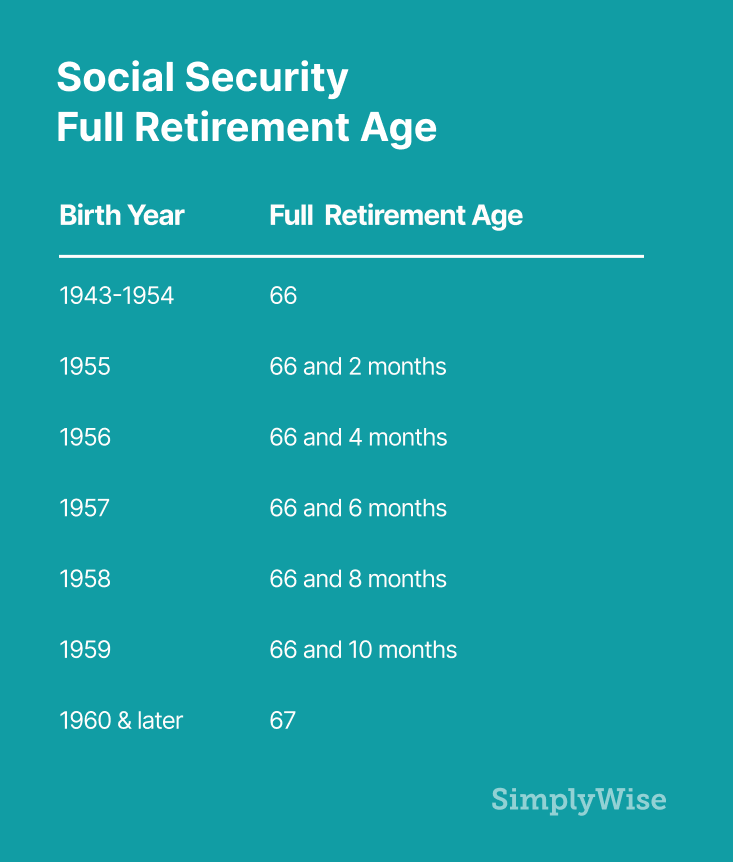
Defining Full Retirement Age (FRA)
For decades, the Full Retirement Age was 65. However, due to legislative changes designed to ensure the program’s solvency, the FRA has gradually increased. For anyone born in 1960 or later, the FRA is now 67. Claiming exactly at this age grants you 100% of your PIA.
The Cost of Claiming Early
You can claim Social Security as early as age 62, but there is a permanent financial penalty for doing so. If your FRA is 67 and you claim at 62, your monthly benefit is reduced by 30%. This reduction is calculated month-by-month: benefits are reduced by 5/9 of 1% for each month before FRA, up to 36 months, and 5/12 of 1% for each month beyond that. For many, the “early bird” approach is a necessity, but from a purely mathematical standpoint, it represents a significant lifetime loss in monthly cash flow.
The Reward of Waiting: Delayed Retirement Credits
Conversely, the SSA rewards those who can afford to wait. For every year you delay claiming beyond your FRA (up to age 70), your benefit increases by 8% per year. This is a guaranteed, simple interest return that is virtually unmatched by any low-risk investment product on the market. If your FRA is 67 and you wait until 70, you will receive 124% of your PIA. After age 70, there is no further incentive to delay, as the credits stop accumulating.
Step 4: External Factors and Adjustments
The calculation doesn’t end with your work history and age. Several external factors can modify the final figure, sometimes drastically.
Cost-of-Living Adjustments (COLA)
Once you begin receiving benefits (and even in the years between age 62 and when you claim), your benefit amount is subject to an annual Cost-of-Living Adjustment. These are based on the Consumer Price Index for Urban Wage Earners and Clerical Workers (CPI-W). In years of high inflation, COLA can provide a significant boost to monthly income, ensuring that the purchasing power of the benefit does not erode over time.
The Windfall Elimination Provision (WEP)
For those who have worked in “non-covered” employment—typically government jobs where they paid into a separate pension system instead of Social Security—the standard calculation formula may be altered. The WEP reduces the 90% factor in the first bend point, potentially lowering the PIA. This is designed to prevent workers who receive a substantial pension from also receiving the “weighted” benefit intended for low-wage workers.
Taxation of Benefits
A crucial aspect of the “net” benefit calculation is how much you keep after taxes. If your “combined income” (adjusted gross income + tax-exempt interest + half of your Social Security benefits) exceeds certain thresholds, up to 85% of your benefits may be subject to federal income tax. For individuals, this threshold starts at $25,000; for married couples filing jointly, it starts at $32,000. In a modern financial context, these thresholds are relatively low, meaning a significant portion of middle-class retirees will see their calculated benefit reduced by taxation.
Strategic Planning for Maximum Benefits
Understanding the mechanics of the Social Security calculation allows for more sophisticated wealth management. It transforms Social Security from a passive “pension” into a dynamic asset that can be optimized.
Swapping Low-Earning Years
Because the SSA uses a 35-year average, a worker in their late 50s or early 60s who is currently at their peak earning potential can “erase” low-earning years from their youth. Working just three additional years at a high salary to replace three years of minimum wage work from one’s teens can result in a measurable bump in the AIME, and subsequently, the monthly check.
Coordination for Couples
For married couples, the calculation becomes a game of strategy. It often makes sense for the higher-earning spouse to delay benefits until age 70. This not only maximizes their own monthly check but also locks in the highest possible survivor benefit for the remaining spouse. Because the survivor receives the higher of the two checks, maximizing the “primary” earner’s benefit acts as a form of life insurance.
The “Breakeven” Analysis
When deciding when to claim, many financial advisors use a “breakeven” analysis. This calculates the age at which the total cumulative benefits of waiting (the larger checks) surpass the total cumulative benefits of claiming early (more years of smaller checks). Generally, the breakeven point for waiting until 70 versus claiming at 62 is around age 80 to 82. If you expect to live well into your 80s or 90s, the math overwhelmingly favors delaying.

Conclusion
The Social Security benefit calculation is a rigorous process that rewards consistency, higher earnings, and, perhaps most importantly, patience. By understanding the interplay between the 35-year average, the progressive bend points, and the impact of the claiming age, you can move beyond guesswork. In the realm of personal finance, Social Security is one of the few variables where you have a significant degree of control. Treating it with the same scrutiny as a private investment portfolio is the key to a secure and predictable retirement.
aViewFromTheCave is a participant in the Amazon Services LLC Associates Program, an affiliate advertising program designed to provide a means for sites to earn advertising fees by advertising and linking to Amazon.com. Amazon, the Amazon logo, AmazonSupply, and the AmazonSupply logo are trademarks of Amazon.com, Inc. or its affiliates. As an Amazon Associate we earn affiliate commissions from qualifying purchases.