
Purchasing a vehicle is a significant financial decision, often representing one of the largest expenditures an individual will make after a home. The allure of a new car, with its fresh scent and advanced features, can be powerful, but stepping onto a dealership lot without a clear understanding of your financial limits is akin to sailing into unknown waters without a compass. The critical question isn’t just “What car do I want?” but rather, “How much auto loan can I truly afford?”
Affordability is a multifaceted concept that extends far beyond a palatable monthly payment. It encompasses your entire financial ecosystem, from your current income and expenses to your long-term financial goals. Rushing into an auto loan that strains your budget can lead to financial stress, delayed other goals, and even repossession in worst-case scenarios. This comprehensive guide will dissect the elements of auto loan affordability, providing you with the insights and tools to make a financially sound decision, ensuring your vehicle ownership journey is one of confidence and control, not regret.

1. Laying the Groundwork: Assessing Your Financial Health
Before you even begin browsing car models or dreaming of road trips, the most crucial first step is an honest and thorough evaluation of your current financial standing. This foundational assessment will serve as your personal financial compass, guiding every subsequent decision.
Understanding Your Income and Expenses
The bedrock of any affordability calculation is your net income – the amount of money you actually take home after taxes and deductions. But income alone isn’t enough; you must also have a granular understanding of your monthly expenses. Create a detailed budget that itemizes all your outgoings: housing, utilities, groceries, insurance, existing debt payments (credit cards, student loans), entertainment, and savings.
The difference between your net income and your essential expenses reveals your disposable income. This is the pool of money from which a new car payment must comfortably fit. A general rule of thumb is that your total vehicle-related costs (loan payment, insurance, fuel, maintenance) should not exceed 10-15% of your gross monthly income, or 20% of your net income at an absolute maximum. Exceeding this threshold can leave you financially vulnerable to unexpected expenses or make it difficult to save for other crucial goals.
Evaluating Your Debt-to-Income Ratio (DTI)
Your Debt-to-Income (DTI) ratio is a vital metric that lenders use to assess your ability to manage monthly payments and repay debts. It’s calculated by dividing your total monthly debt payments by your gross monthly income. For example, if your total monthly debt payments (including mortgage/rent, credit card minimums, student loan payments, and any other loan payments) are $1,500 and your gross monthly income is $5,000, your DTI is 30% ($1,500 / $5,000).
Lenders generally prefer a DTI of 36% or lower, though some may approve loans with a DTI up to 43% or even 50% for highly qualified borrowers. When considering an auto loan, you need to calculate what your DTI would be with the proposed car payment added. If the new car payment pushes your DTI too high, it signals to lenders (and should signal to you) that taking on additional debt might be financially risky. Keeping your DTI low not only makes you a more attractive borrower but also ensures you have more financial flexibility.
Reviewing Your Credit Score and History
Your credit score is a three-digit number that summarizes your creditworthiness, and it significantly impacts the interest rate you’ll be offered on an auto loan. A higher credit score (typically 700+) indicates a lower risk to lenders, leading to more favorable interest rates and lower overall borrowing costs. Conversely, a lower score will result in higher interest rates, meaning you’ll pay more for the same car over the life of the loan.
Before applying for a loan, obtain a free copy of your credit report from each of the three major credit bureaus (Experian, Equifax, and TransUnion) and check your credit score. Look for any errors or discrepancies that could be negatively affecting your score and dispute them. Understanding your credit standing allows you to anticipate the type of rates you might qualify for and gives you time to improve your score if necessary, potentially saving you thousands of dollars in interest over the life of the loan.
2. Deconstructing the Auto Loan: Key Components of Affordability
Once you have a clear picture of your financial health, it’s time to understand the moving parts of an auto loan itself. These components interact to determine the true cost and affordability of your vehicle.
The Monthly Payment: A Starting Point, Not the Whole Story
The monthly payment is often the first, and sometimes only, figure car buyers focus on. It’s undeniably important as it directly impacts your immediate cash flow. However, solely focusing on a comfortable monthly payment can be misleading. A low monthly payment might seem appealing, but it could be achieved by extending the loan term significantly, leading to a much higher total cost due to accrued interest. Always consider the monthly payment in conjunction with the other loan terms.
Interest Rate (APR): The True Cost of Borrowing
The Annual Percentage Rate (APR) is arguably the most critical factor in the affordability equation. The APR represents the annual cost of borrowing money, expressed as a percentage of the loan amount. A seemingly small difference in APR can translate into hundreds, or even thousands, of dollars over the life of the loan. For instance, on a $30,000 loan over 60 months, a 3% APR costs significantly less than a 7% APR.
This is where your credit score plays a vital role. Borrowers with excellent credit can secure the lowest APRs, dramatically reducing their total cost of ownership. It’s crucial to shop around and compare APRs from multiple lenders (banks, credit unions, online lenders) before accepting the dealership’s financing offer. Even a quarter-point difference can add up.
Loan Term: Balancing Monthly Payments and Total Interest
The loan term refers to the length of time you have to repay the loan, typically expressed in months (e.g., 36, 48, 60, 72, or even 84 months).
-
Shorter Loan Terms (e.g., 36-48 months): These result in higher monthly payments but lower total interest paid over the life of the loan. You pay off the car faster, build equity more quickly, and spend less overall.
-
Longer Loan Terms (e.g., 60-84 months): These offer lower monthly payments, making a more expensive car seem “affordable” on a month-to-month basis. However, you’ll pay significantly more in total interest, and you run the risk of becoming “upside down” on your loan (owing more than the car is worth) for a longer period, especially with rapid depreciation. While a lower payment might feel good initially, the long-term financial burden can be substantial.
Down Payment: Powering Your Purchase and Reducing Debt
A down payment is the initial amount of cash you pay upfront toward the purchase of the vehicle. Making a substantial down payment offers several significant advantages:
-
Reduces Loan Amount: A larger down payment means you borrow less money, which directly translates to lower monthly payments and less interest paid over the life of the loan.
-
Builds Equity Faster: You start with more equity in the car, reducing the risk of being upside down on your loan, especially important in the first few years of ownership when depreciation is highest.
-
Better Loan Terms: Lenders often view borrowers who make larger down payments as less risky, potentially leading to better interest rates.
-
Lower Insurance Premiums (sometimes): While not always the case, a lower loan amount can sometimes slightly influence insurance rates or options.
Aim for a down payment of at least 10-20% of the vehicle’s purchase price. If you’re trading in your old car, the equity you have in that vehicle can serve as part or all of your down payment.
3. Uncovering Hidden Costs and Future Considerations
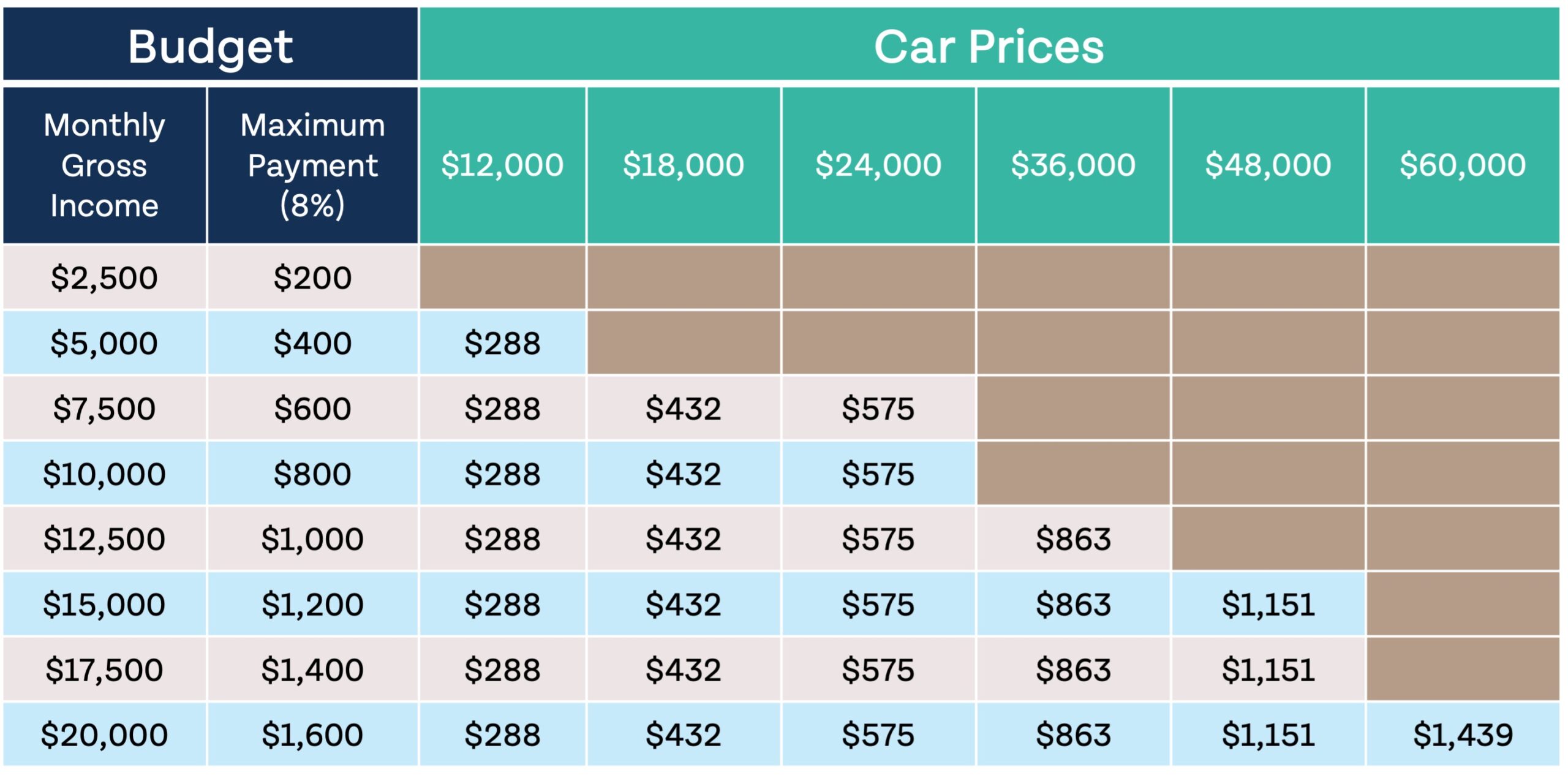
The price of the car and the loan itself are just part of the financial picture. Many other costs associated with car ownership are often overlooked but significantly impact true affordability.
Insurance Premiums: An Unavoidable Expense
Car insurance is a legal requirement in most places and a financial necessity everywhere. The cost of insurance can vary wildly based on the vehicle type (make, model, year, safety features), your driving record, age, location, and the coverage you choose. A powerful sports car will typically cost more to insure than a modest sedan. Get insurance quotes for specific models you’re considering before you commit to a purchase. An otherwise affordable car payment can become burdensome if combined with unexpectedly high insurance premiums.
Fuel, Maintenance, and Repairs: The Ongoing Costs of Ownership
Once you drive off the lot, the costs don’t stop. You’ll need to factor in:
-
Fuel: Consider the vehicle’s fuel efficiency (MPG) and your typical driving habits. A car with poor gas mileage will cost you more at the pump over time.
-
Scheduled Maintenance: All cars require regular oil changes, tire rotations, brake checks, and other services. Research the typical maintenance costs for the models you’re interested in. Luxury or specialty vehicles often have higher maintenance expenses.
-
Unforeseen Repairs: Even new cars can occasionally require repairs, and older used cars are more prone to them. Building an emergency fund specifically for car repairs is a wise financial move.
Depreciation: The Silent Killer of Value
Depreciation is the decline in a vehicle’s value over time. It’s not a direct monthly cost, but it’s a significant financial consideration. Most new cars lose 20-30% of their value in the first year alone, and up to 50% or more within five years. This impacts your equity, trade-in value, and can make you “upside down” on your loan if you haven’t made a substantial down payment or chosen a short loan term. While you can’t prevent depreciation, understanding it helps you make smarter choices about which vehicles hold their value better, and how long you might want to keep the car.
Sales Tax and Registration Fees: Upfront Expenses
Don’t forget these immediate out-of-pocket costs. Sales tax on a vehicle purchase can be thousands of dollars depending on your state and the car’s price. Additionally, there are registration fees, title fees, and license plate fees. These are typically due at the time of purchase or shortly thereafter and can add a considerable sum to your initial outlay. Factor these into your overall budget for the car.
4. Strategic Approaches to Securing Your Auto Loan
Armed with a comprehensive understanding of your finances and the components of an auto loan, you can now strategically approach the vehicle purchasing process.
Pre-Approval: Know Your Limits Before You Shop
One of the most powerful tools in a car buyer’s arsenal is auto loan pre-approval. Before setting foot in a dealership, apply for pre-approval from banks, credit unions, and online lenders. Pre-approval provides you with:
-
A Solid Budget: You’ll know exactly how much you’re approved to borrow and at what interest rate, giving you a firm upper limit.
-
Negotiating Power: With pre-approval in hand, you become a cash buyer in the eyes of the dealership. This allows you to negotiate the car’s price separately from the financing, often leading to a better deal.
-
Comparison Tool: You can use your pre-approved offer to challenge the dealership’s financing department to beat your rate.
Pre-approval typically involves a hard credit inquiry, but multiple inquiries for the same type of loan within a short window (usually 14-45 days) are often counted as a single inquiry by credit scoring models, mitigating the impact on your score.
Budgeting for the Long Term: Creating a Sustainable Car Fund
Beyond the initial purchase, think about creating a dedicated “car fund.” This fund can be used for:
-
Emergency Repairs: As mentioned, unexpected breakdowns can happen.
-
Scheduled Maintenance: Proactive maintenance saves money in the long run.
-
Next Down Payment: Start saving for your next car’s down payment even before you’ve paid off your current one. This breaks the cycle of perpetual car payments and can significantly improve your financial standing over time.
This forward-thinking approach transforms car ownership from a recurring debt burden into a manageable, integrated part of your financial plan.
Negotiating Smartly: Beyond the Sticker Price
Many people feel intimidated by car negotiations, but understanding how dealerships operate can empower you.
-
Negotiate the Price of the Car First: Do not discuss financing until you have agreed on a firm purchase price for the vehicle. This separates the two transactions.
-
Know the Market Value: Research the fair market value of the car you want (new or used) using resources like Kelley Blue Book, Edmunds, or NADAguides.
-
Be Prepared to Walk Away: This is your strongest negotiating chip. If the deal isn’t right, be ready to leave.
-
Scrutinize the Fine Print: Read every document carefully before signing. Watch out for added fees, extended warranty push, or unnecessary add-ons that inflate the price.
Refinancing Options: Adapting to Changing Circumstances
Life happens, and your financial situation can improve. If your credit score has significantly increased since you took out your initial auto loan, or if interest rates have dropped, you might be able to refinance your loan. Refinancing replaces your old loan with a new one, ideally with a lower interest rate or a more favorable term. This can significantly reduce your monthly payment or the total interest you pay, making your existing car more affordable. Always compare the new offer to your current loan and factor in any refinancing fees.
5. Making the Informed Decision: Driving Away with Confidence
Synthesizing all these factors is the final step in determining how much auto loan you can afford. It’s about aligning your desires with your financial reality and making a choice that serves your long-term well-being.
Prioritizing Needs vs. Wants
Distinguish between what you need in a vehicle (reliable transportation, safety features, cargo space) and what you want (luxury features, high performance, brand prestige). Often, sacrificing a few “wants” can dramatically reduce the car’s price and subsequent loan amount, bringing it firmly within your affordable range. Be realistic about your lifestyle and your budget.
Running the Numbers: Using Online Calculators and Spreadsheets
Don’t rely on mental math. Use online auto loan calculators to plug in different scenarios: varying loan amounts, APRs, and terms. Create a spreadsheet to compare total costs, not just monthly payments. Include all the hidden costs discussed earlier (insurance, fuel, maintenance, fees) to get a holistic view of the total cost of ownership over the expected life of the loan. This data-driven approach removes emotion from the equation and presents the hard facts.
Consulting a Financial Advisor: Expert Guidance
If you find the process overwhelming or have complex financial circumstances, consider consulting a financial advisor. They can provide personalized advice, help you analyze your budget, and offer an unbiased perspective on how an auto loan fits into your broader financial plan. Their expertise can be invaluable in making a decision that supports your overall financial goals.

The Comfort Test: Ensuring Your Loan Fits Your Life
Finally, after all the calculations and negotiations, perform a “comfort test.” Imagine that new car payment hitting your bank account every month. Does it still feel comfortable? Does it leave you enough breathing room for savings, emergencies, and other discretionary spending? If the thought of making that payment induces anxiety or forces you to cut back significantly on other essential areas, then the loan is likely too large for your budget. Your auto loan should enhance your life, not constrain it.
By meticulously evaluating your financial situation, understanding all components of an auto loan, accounting for hidden costs, and adopting strategic purchasing approaches, you can confidently answer the question “How much auto loan can I afford?” This disciplined approach ensures that your journey into vehicle ownership is a smart, sustainable, and stress-free one.
aViewFromTheCave is a participant in the Amazon Services LLC Associates Program, an affiliate advertising program designed to provide a means for sites to earn advertising fees by advertising and linking to Amazon.com. Amazon, the Amazon logo, AmazonSupply, and the AmazonSupply logo are trademarks of Amazon.com, Inc. or its affiliates. As an Amazon Associate we earn affiliate commissions from qualifying purchases.