
For investors navigating the intersection of traditional enterprise software and the volatile world of digital assets, few stocks command as much attention as MicroStrategy Incorporated (MSTR). Once a relatively quiet player in the business intelligence (BI) space, the company has transformed into a high-stakes proxy for Bitcoin, making its quarterly earnings announcements some of the most anticipated events on the financial calendar. Understanding when MSTR reports earnings, what those reports contain, and how the market typically reacts is essential for any modern investor’s toolkit.
Understanding MicroStrategy’s Earnings Cycle and Disclosure Patterns
MicroStrategy follows a standard fiscal year that aligns with the calendar year, ending on December 31st. Like most publicly traded companies in the United States, it is required by the Securities and Exchange Commission (SEC) to report its financial performance four times a year. These reports provide a detailed look at the company’s operational health, its software revenue, and, most importantly, its massive treasury of Bitcoin.
The Quarterly Schedule
While the exact date for an earnings release is usually confirmed by the company only a few weeks in advance, MicroStrategy typically adheres to a predictable rhythm:
-
First Quarter (Q1): The report for the period ending March 31 is generally released in late April or the first week of May.
-
Second Quarter (Q2): The report for the period ending June 30 is typically released in late July or early August.
-
Third Quarter (Q3): The report for the period ending September 30 usually arrives in late October or early November.
-
Fourth Quarter (Q4) and Full Year: The final report for the fiscal year ending December 31 is typically released in late January or February of the following year.
Historically, MicroStrategy tends to release its earnings results after the market closes, usually around 4:05 PM Eastern Time, followed by a live webcast and conference call at 5:00 PM Eastern Time. During these calls, executive leadership—most notably Executive Chairman Michael Saylor and CEO Phong Le—discusses the results and provides commentary on the company’s dual-track strategy of growing its software business and acquiring more Bitcoin.
Where to Find the Official Announcement
Investors should look for the official confirmation of the earnings date via the MicroStrategy Investor Relations website. The company typically issues a press release roughly two weeks before the call to announce the date and provide registration details for the webcast. Reliable financial news outlets and brokerage platforms also track these dates, but the company’s own portal remains the primary source for the most accurate and timely information.
Key Metrics to Watch in MSTR Earnings Reports
An MSTR earnings report is unique because it combines the metrics of a software-as-a-service (SaaS) provider with the balance sheet of a major investment fund. To analyze the report effectively, investors must look beyond traditional “beats” or “misses” on earnings per share (EPS).
The Bitcoin Treasury and Digital Asset Impairment
The most significant factor in MicroStrategy’s financial statements is its Bitcoin holdings. Under current accounting standards (GAAP), Bitcoin is treated as an “indefinite-lived intangible asset.” This means if the price of Bitcoin drops even momentarily below the company’s carrying value during a quarter, the company must record an “impairment charge” on its income statement.
These impairment charges can often result in massive reported net losses, even if the company hasn’t sold a single satoshi and the market value of Bitcoin has since recovered. Sophisticated investors often focus on “non-GAAP” or “adjusted” figures that strip out these non-cash impairment charges to get a clearer picture of the company’s underlying operational performance.
Core Business Intelligence Performance
While the Bitcoin strategy captures the headlines, the core software business remains the engine that funds the company’s operations. Key metrics here include:
-
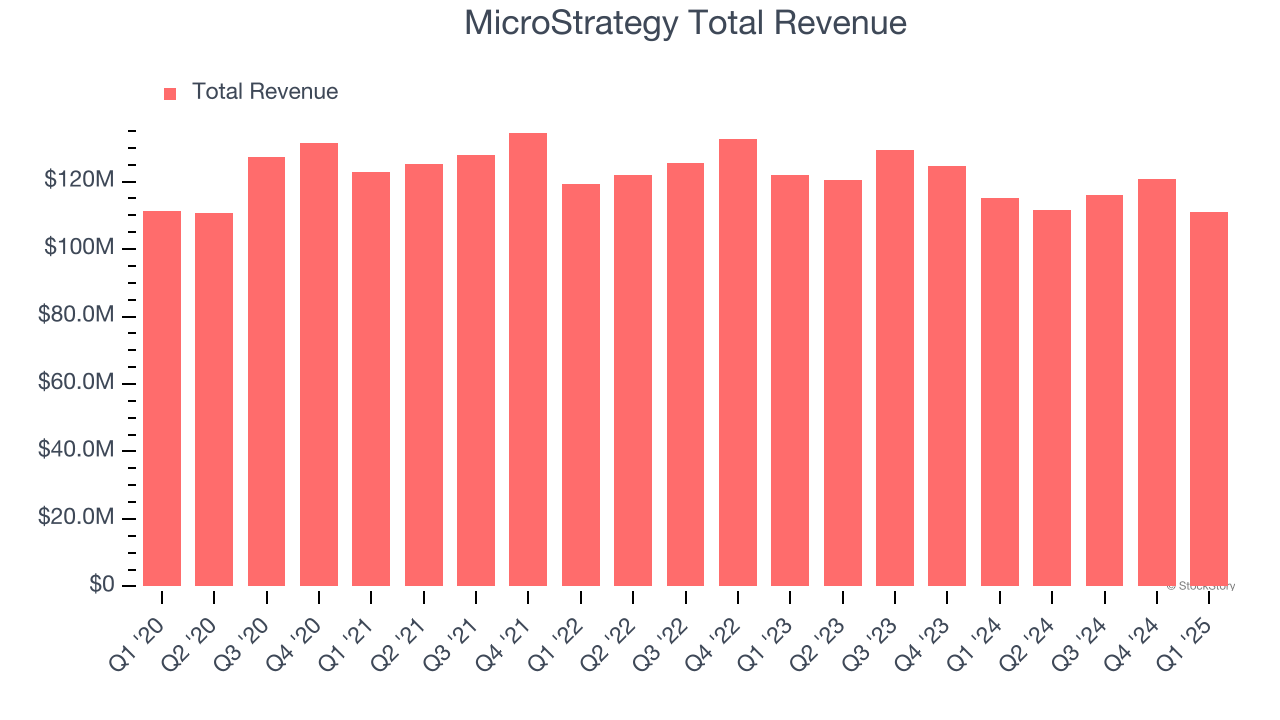
Total Revenues: This reflects the demand for MicroStrategy’s analytics platform.
-
Subscription Services Revenues: This is a critical indicator of the company’s transition to a cloud-first model. High growth in this area suggests a more predictable and sustainable revenue stream.
-
Operating Income: This shows whether the software business is profitable before considering the volatile swings of the Bitcoin treasury.
Capital Structure and Debt Management
MicroStrategy has frequently utilized the debt markets—specifically through the issuance of convertible senior notes—to finance its Bitcoin purchases. During earnings calls, investors pay close attention to the company’s interest expense, the maturity dates of its debt, and its overall leverage. The ability to manage this debt while maintaining a “HODL” strategy is central to the bull case for MSTR.

How the Market Reacts to MicroStrategy Earnings
Earnings season for MSTR is characterized by heightened volatility. Because the stock is often viewed as a leveraged play on Bitcoin, the report can trigger significant price movements that may or may not correlate directly with the company’s software revenue.
The “Saylor Effect” and Forward Guidance
Michael Saylor’s commentary during the earnings call often carries more weight than the historical numbers. Investors listen for clues regarding future Bitcoin acquisition plans, views on the regulatory environment for digital assets, and the company’s intent to issue more equity or debt. If the leadership signals a more aggressive buying stance, it can drive the stock price up regardless of a quarterly loss. Conversely, any hint of a shift in the Bitcoin strategy could lead to a sharp sell-off.
Institutional Sentiment and Short Interest
MicroStrategy is a favorite among both institutional “true believers” and short-sellers who view the company as overvalued compared to its underlying assets. Earnings reports often act as a catalyst for “short squeezes” or rapid de-leveraging. The “Net Asset Value” (NAV) premium—the difference between MSTR’s market capitalization and the value of the Bitcoin it holds—is a metric that many traders watch closely around earnings. If the premium is perceived as too high or too low, the earnings report provides the fundamental data needed for the market to “correct” that valuation.
Correlation with the Broader Crypto Market
Often, the stock’s reaction to earnings is overshadowed by the price action of Bitcoin itself on the day of the release. If Bitcoin is rallying, MSTR may rise even if its software earnings were lackluster. However, a “divergence” where the stock moves independently of Bitcoin after an earnings report can signal that investors are placing a new valuation on the company’s specific business execution or capital management strategy.
Navigating the Earnings Season: Tools and Strategies for Investors
Investing in a company as dynamic as MicroStrategy requires a disciplined approach to information gathering. Relying solely on headlines can be misleading due to the complexities of impairment accounting.
Utilizing SEC Filings
To get the full story, investors should read the Form 10-Q (quarterly report) or Form 10-K (annual report) filed with the SEC. These documents contain “Management’s Discussion and Analysis” (MD&A), which provides context on why certain numbers moved the way they did. It also includes the specific “cost basis” of their Bitcoin holdings, which is vital for calculating the company’s potential “paper” profits.
Setting Realistic Expectations
Given MSTR’s volatility, long-term investors often use earnings reports as an opportunity to reassess their thesis rather than a signal to day-trade. The key question for MSTR shareholders is usually: Is the software business stable enough to support the debt, and is the company continuing to increase its Bitcoin per share?
MicroStrategy has introduced a “Bitcoin Yield” KPI, which measures the percentage change over time in the ratio between the company’s Bitcoin holdings and its assumed diluted shares outstanding. Tracking this metric over multiple earnings cycles provides a clearer picture of whether management is successfully creating value for shareholders through its unconventional treasury policy.

The Strategic Outlook: Beyond the Date
Knowing “when” MSTR reports earnings is the first step, but understanding the “why” behind the market’s reaction is what separates successful investors from the pack. MicroStrategy has positioned itself as a pioneer in corporate finance, challenging traditional notions of how a public company should manage its balance sheet.
As the regulatory landscape for digital assets evolves—particularly with the potential for new FASB (Financial Accounting Standards Board) rules that would allow companies to report Bitcoin at “fair value”—the nature of MSTR’s earnings reports may change. Fair value accounting would eliminate the lopsided “impairment only” model, potentially making the company’s net income reflect the actual market value of its holdings. Until then, every earnings date remains a pivotal moment for transparency, strategy, and market sentiment.
By staying tuned to the financial calendar and focusing on the core metrics of software growth, debt sustainability, and Bitcoin yield, investors can navigate MSTR’s earnings season with confidence and clarity. The report is more than just a set of numbers; it is a quarterly update on one of the boldest corporate experiments in modern financial history.
aViewFromTheCave is a participant in the Amazon Services LLC Associates Program, an affiliate advertising program designed to provide a means for sites to earn advertising fees by advertising and linking to Amazon.com. Amazon, the Amazon logo, AmazonSupply, and the AmazonSupply logo are trademarks of Amazon.com, Inc. or its affiliates. As an Amazon Associate we earn affiliate commissions from qualifying purchases.