
Florida, the Sunshine State, beckons millions annually with its pristine beaches, vibrant theme parks, and lush natural landscapes. Whether you’re dreaming of a magical family vacation in Orlando, a glamorous weekend in Miami, or a relaxed getaway to the Gulf Coast, the first significant financial hurdle often involves the cost of getting there. The question “how much are airline tickets to Florida?” is far from straightforward. It’s a complex puzzle influenced by a multitude of economic factors, market dynamics, and personal choices. For the financially savvy traveler, understanding these variables and employing strategic planning can translate into substantial savings, making your Florida dream trip more accessible and budget-friendly. This guide delves into the intricacies of airfare pricing to Florida, offering actionable insights and financial tools to help you navigate the market and secure the best possible deals.

Understanding the Dynamics of Airfare Pricing to Florida
The price you pay for an airline ticket to Florida is not arbitrary; it’s the result of a sophisticated algorithmic dance driven by supply and demand, operational costs, and competitive pressures. Deciphering these underlying dynamics is the first step towards mastering your travel budget.
The Core Variables Influencing Ticket Costs
At its heart, airfare pricing operates like any other market – based on what people are willing to pay and what airlines are willing to offer. Several key variables consistently shape these costs:
- Demand: This is arguably the biggest driver. High demand, typically during peak travel seasons, holidays, and major events, invariably leads to higher prices. Conversely, off-peak periods see lower demand and, consequently, more attractive fares.
- Supply: The number of available seats on a particular route directly impacts pricing. If an airline reduces its capacity or there are fewer airlines flying to a specific Florida airport, prices tend to rise.
- Booking Window: The timing of your purchase is critical. Airlines often offer lower fares when tickets are released far in advance, gradually increasing them as the departure date approaches and seats fill up. There’s often a “sweet spot” for booking that balances availability and price.
- Competition: Routes with multiple airlines competing for passengers tend to have more competitive pricing. A lack of competition can lead to higher fares.
- Fuel Costs: Jet fuel is a major operational expense for airlines. Fluctuations in global oil prices can directly influence ticket prices, as airlines pass these costs onto consumers.
- Airport Choice: Major international hubs often have more routes and airlines, potentially leading to lower fares due to increased competition. Regional airports, while convenient, might have fewer flight options and higher prices.
Key Determinants for Florida-Specific Travel
When planning a trip to Florida, these general principles become even more pronounced due to the state’s unique appeal and visitor patterns:
- Peak Seasons: Florida’s most popular travel times include the winter months (escaping cold weather up north), Spring Break (March-April), and summer holidays (June-August, especially for family theme park trips). Expect the highest prices during these periods. The shoulder seasons (late April/May and September/October) often present a balance of good weather and lower fares.
- Major Events & Holidays: Flights around Thanksgiving, Christmas, New Year’s, and major local events (e.g., sporting events, music festivals) will see significant price surges. Similarly, peak times for Disney World, Universal Studios, and other theme parks directly influence Orlando (MCO) flight costs.
- Departure City: Flying from a major hub city (e.g., New York, Chicago, Atlanta, Dallas) with numerous direct flights and high competition generally yields lower fares than departing from smaller regional airports.
- Arrival Airport: Florida boasts several major international airports. While Orlando International (MCO) is often the gateway for theme park visitors, Miami International (MIA) and Fort Lauderdale (FLL) serve South Florida, Tampa International (TPA) the Gulf Coast, and Southwest Florida International (RSW) near Fort Myers. Comparing prices to different arrival airports, even if it means a slightly longer drive to your final destination, can reveal significant savings.
Strategic Financial Planning for Affordable Flights
Armed with an understanding of how airfares are priced, the next step is to implement smart financial strategies to minimize your out-of-pocket expenses. This involves timing your purchase, leveraging flexibility, and utilizing powerful financial tools.
Timing Your Purchase for Maximum Savings
The “when” of booking can be as crucial as the “where.” Adhering to certain booking windows often leads to more favorable prices.
- The “Goldilocks” Window: For domestic flights within the U.S., including routes to Florida, the sweet spot for booking is generally considered to be 1 to 3 months before your departure date. During this period, airlines have usually optimized their schedules and are looking to fill seats before last-minute demand pushes prices up. Booking too early (e.g., 6+ months out) can sometimes mean paying higher prices, as airlines may not yet have fully adjusted to market demand. Booking too late (within a few weeks) almost always results in premium pricing.
- Booking on Specific Days: While not a hard and fast rule, historical data often suggests that booking flights on Tuesdays, Wednesdays, or Thursdays can sometimes yield slightly lower prices than on weekends, when many people browse and book travel.
- Avoiding Peak Travel Dates: This goes back to demand. If your travel dates coincide with major holidays, school breaks, or popular events, acknowledge that prices will be higher. If possible, shift your travel by a few days to avoid the absolute peak of these periods. For example, flying on Christmas Day itself might be cheaper than the days immediately preceding it.
Leveraging Flexibility to Reduce Expenses
Flexibility is a traveler’s best financial friend. The more adaptable you can be, the greater your chances of finding a bargain.
- Flexible Travel Dates: If your schedule allows, consider flying mid-week (Tuesday, Wednesday, Thursday) instead of popular weekend travel days (Friday, Sunday, Monday). Mid-week flights are often significantly cheaper. Similarly, flying early in the morning or late at night can sometimes present savings.
- Flexible Airports: Don’t limit your search to just one Florida airport. If you’re heading to the Fort Myers area, check flights not just to RSW but also to TPA or even MIA/FLL, factoring in the cost and time of the connecting drive. Similarly, if your destination is close to Orlando, consider flying into Sanford (SFB), a smaller airport often served by budget airlines, though it’s a bit further from the theme parks.
- Considering Layovers vs. Direct Flights: While direct flights are convenient, they often come at a premium. If you’re willing to endure a layover or two, especially if they are reasonably timed, you can frequently find substantially cheaper tickets. Weigh the monetary savings against the added travel time and potential for delays.
Harnessing Financial Tools and Resources

In the digital age, a plethora of tools and platforms exist to help you track, compare, and secure the best flight deals.
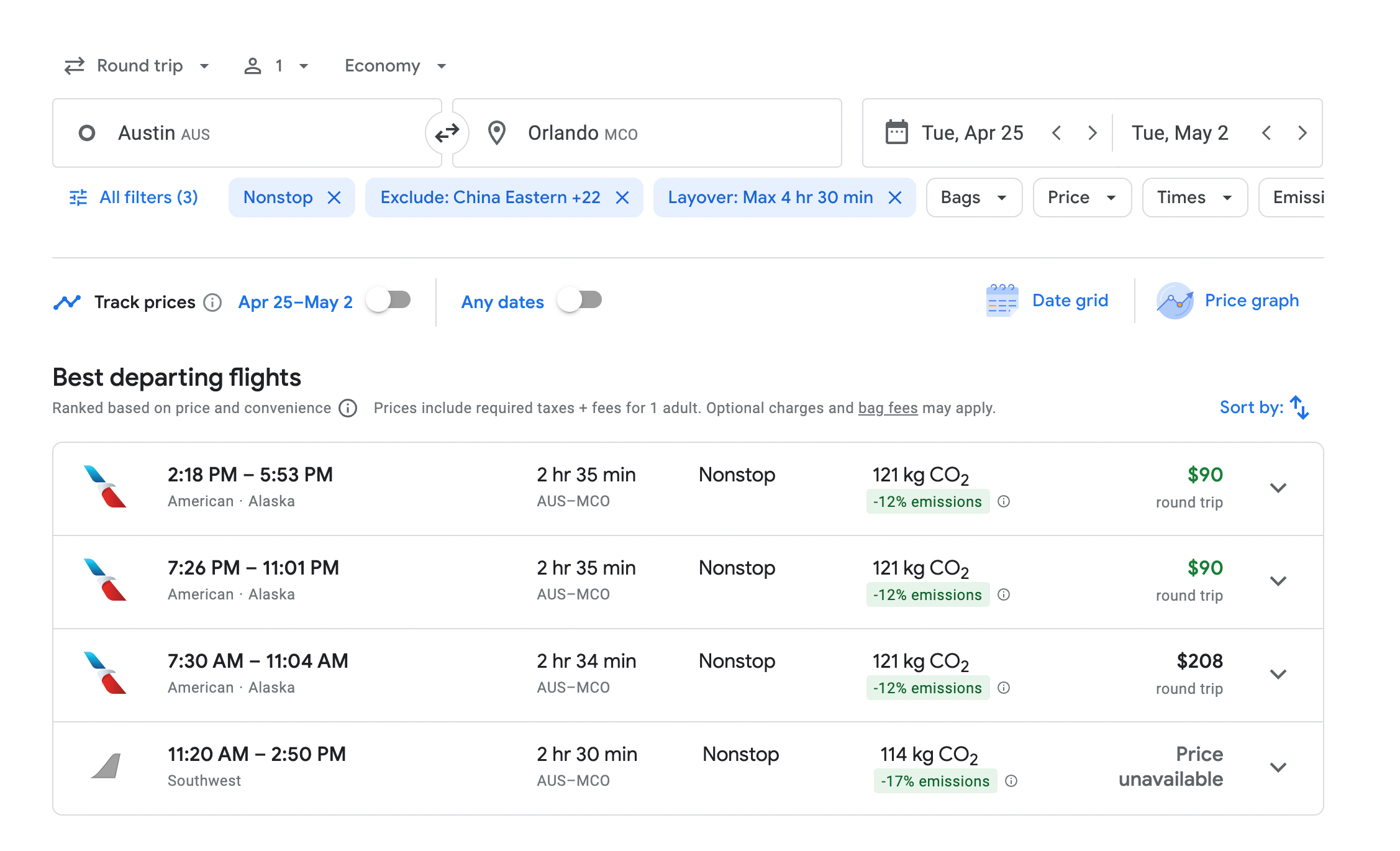
- Price Comparison Websites: Platforms like Google Flights, Skyscanner, Kayak, Expedia, and Priceline are indispensable. They aggregate data from numerous airlines and online travel agencies, allowing you to compare prices across different dates, airlines, and airports at a glance. Google Flights, in particular, offers a calendar view that highlights the cheapest days to fly.
- Airline Price Alerts: Many of these comparison sites, as well as individual airline websites, allow you to set up price alerts. You input your desired route and dates, and you’ll receive email notifications when the price drops or changes significantly. This passive monitoring can save you from constantly checking manually.
- Incognito Mode for Browsing: While debated, some travelers swear by using their browser’s incognito or private browsing mode when searching for flights. The theory is that websites track your cookies and may increase prices for a route you’ve repeatedly searched, creating a sense of urgency. While not scientifically proven across the board, it costs nothing to try.
- Credit Card Travel Rewards and Miles: For frequent travelers, a strong financial strategy includes leveraging travel-rewards credit cards. Earning points or miles through everyday spending can significantly offset the cost of flights, sometimes even covering them entirely. Research cards that offer robust sign-up bonuses and ongoing rewards for travel-related purchases.
- Budget Airlines vs. Full-Service Carriers: Airlines like Spirit, Frontier, and Allegiant often offer base fares that are significantly cheaper than full-service carriers like Delta, American, or United. However, be acutely aware of their fee structures for baggage, seat selection, and other “extras.” For a minimalist traveler, these can be incredible value, but for those who need more amenities, the costs can quickly add up, potentially negating the initial savings. Always calculate the total cost.
Beyond the Ticket Price: Accounting for Total Travel Costs
While the flight ticket is a major expense, a truly comprehensive financial plan for your Florida trip must extend beyond the airfare to encompass all potential expenditures. Overlooking these can quickly derail your budget.
Ancillary Airline Fees
The days of a single ticket price covering everything are largely gone. Airlines now unbundle services, creating numerous opportunities for additional charges:
- Baggage Fees: This is often the most significant hidden cost. Checked bags almost always incur a fee, and increasingly, even carry-on bags can have a charge, especially on budget airlines. Understand the airline’s specific baggage policy (size, weight, cost) before you fly.
- Seat Selection Fees: Many airlines charge extra to select a specific seat, especially if you desire an aisle, window, or more legroom. If you don’t pay, you’ll be assigned a seat at check-in, which may mean being separated from your travel companions.
- Change/Cancellation Fees: Life happens, and plans change. Be aware of the fees associated with modifying or canceling your flight. Some airlines offer “flexible fare” options that allow changes without a fee, though these come at a higher initial price.
- In-flight Purchases: Drinks, snacks, and Wi-Fi are almost always extra on most flights. Factor these into your budget if you plan to utilize them.
Ground Transportation and Accommodation Impact
Once you land in Florida, your financial outlay continues. How you plan to get around and where you’ll sleep directly impacts your overall budget.
- Rental Cars vs. Ride-Shares vs. Public Transit: Florida is a car-centric state, and a rental car is often essential, especially for exploring beyond major city centers. Research rental car rates in advance, including insurance and fuel costs. In some areas, ride-share services (Uber, Lyft) or public transportation might be viable, but their coverage can be limited outside metropolitan hubs.
- Hotel vs. Airbnb vs. Vacation Rentals: Accommodation choices vary widely in price and amenities. Hotels offer convenience, while Airbnbs or vacation rentals can provide more space, kitchen facilities, and potentially be more cost-effective for longer stays or groups. Always compare total costs, including cleaning fees and resort fees.
- Parking: Factor in parking costs at your origin airport, at your Florida destination, and potentially at attractions like theme parks. These seemingly small costs can add up quickly.
Budgeting for On-the-Ground Expenses
Your Florida adventure will undoubtedly involve spending money on experiences. Having a realistic budget for these ensures you can enjoy your trip without financial stress.
- Food: From quick bites to fine dining, allocate a daily budget for meals and snacks. Self-catering part of your meals through grocery store visits can significantly reduce costs.
- Activities & Theme Park Tickets: Theme park admission, boat tours, museum entry fees, and other attractions are major expenses. Purchase these well in advance if possible, as bundle deals or multi-day passes can offer savings.
- Souvenirs & Incidentals: Leave room in your budget for souvenirs, unexpected purchases, or small emergencies.
- Travel Insurance: While an upfront cost, travel insurance can be a wise financial decision, protecting you from unforeseen circumstances like flight cancellations, lost luggage, or medical emergencies during your trip.
Practical Examples: Budgeting for Different Florida Trips
To illustrate these financial strategies, let’s consider a couple of hypothetical scenarios:
- A Winter Escape to Orlando: Planning a family trip to Disney World in December (peak season). Booking 3 months out from a major Northeast hub, flying mid-week to MCO, opting for a basic economy fare (paying for one checked bag), and planning on an Airbnb with kitchen facilities near the parks. The flight might cost $300-$400 round trip per person, but careful budgeting for theme park tickets, food, and rental car (all significantly higher in December) becomes paramount. Flexibility on actual travel dates by a few days could drop airfare by $50-$100 per person.
- Summer Beach Trip to Miami: A couple looking for a beach getaway in July. Flying from a smaller Midwest city, but being flexible with dates (mid-week arrival/departure) and considering FLL instead of MIA. They find a great deal to FLL for $200-$250 round trip per person by booking 2 months in advance. Their budget focuses on local dining, ride-shares, and beachfront accommodation. They opt for basic economy with just carry-ons to avoid baggage fees.
These examples highlight that the “how much” is dynamic. For instance, an off-peak visit to Tampa in September might see flights as low as $150-$200 round trip from major hubs, offering maximum savings, allowing the traveler to allocate more funds to experiences or higher-end accommodations.
Conclusion
Determining “how much are airline tickets to Florida” is a nuanced financial inquiry that demands a strategic approach rather than a single definitive answer. From the intricate web of supply and demand to the specifics of your booking window and chosen airport, countless factors influence the final price. However, by understanding these dynamics, embracing flexibility in your travel plans, and leveraging the array of financial tools available, you can significantly empower yourself to find the most cost-effective flights. Remember to budget holistically, accounting for not just the ticket price but also ancillary fees, ground transportation, accommodation, and on-the-ground expenses. With careful planning and a financially insightful perspective, your dream trip to the Sunshine State can become a reality, without breaking the bank.
aViewFromTheCave is a participant in the Amazon Services LLC Associates Program, an affiliate advertising program designed to provide a means for sites to earn advertising fees by advertising and linking to Amazon.com. Amazon, the Amazon logo, AmazonSupply, and the AmazonSupply logo are trademarks of Amazon.com, Inc. or its affiliates. As an Amazon Associate we earn affiliate commissions from qualifying purchases.