
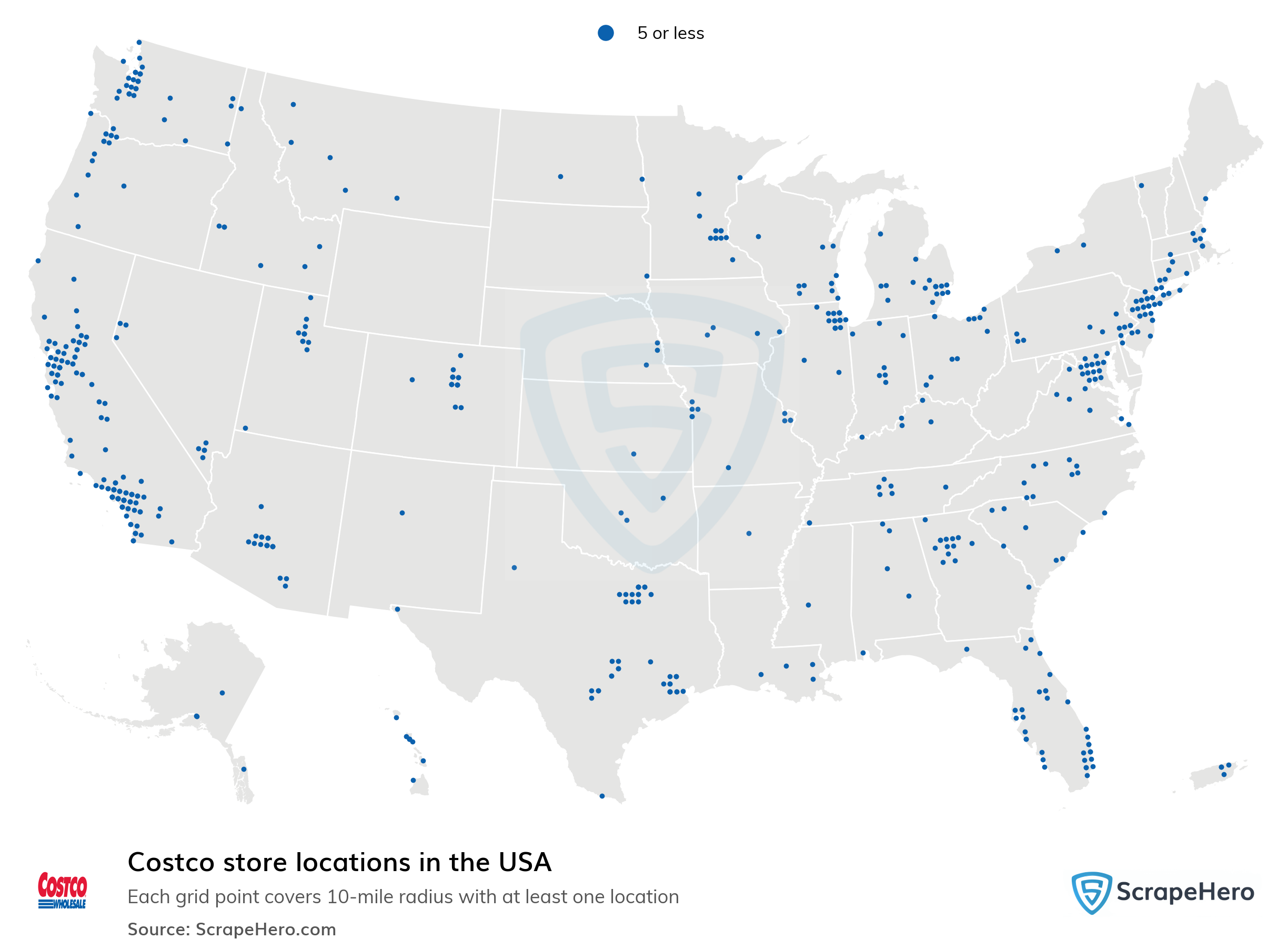
When investors and financial analysts look at the American retail landscape, few entities command as much respect and scrutiny as Costco Wholesale Corporation. While the simple question of “how many Costco stores are there in the United States” might seem like a matter of basic geography, the answer serves as a vital indicator of the company’s economic health, market penetration, and long-term valuation. As of late 2023 and moving into 2024, Costco operates approximately 600 warehouses across the United States and Puerto Rico, representing the vast majority of its global presence.
However, for those interested in the “Money” niche—encompassing business finance, investing, and corporate strategy—the number of stores is merely the tip of the iceberg. To truly understand Costco’s dominance, one must look at the financial architecture that supports these 600 locations, the revenue-per-square-foot metrics that outperform almost every competitor, and the unique membership model that turns traditional retail economics on its head.
The Economics of the Warehouse Model: Beyond the SKU
Costco’s financial success is not built on the same foundation as traditional retailers like Walmart or Target. While a typical supermarket may carry 30,000 to 50,000 individual Stock Keeping Units (SKUs), a Costco warehouse—despite its massive physical footprint—carries only about 3,800 to 4,000 SKUs. This intentional scarcity is a masterclass in operational efficiency and business finance.
Membership Fees: The Primary Profit Driver
From a financial perspective, Costco is less a retailer and more a membership club that happens to sell bulk goods. The “Money” story of Costco is found in its membership renewal rates, which consistently hover around 92% to 93% in the U.S. and Canada. For the fiscal year, membership fees often account for the vast majority of the company’s net income.
While the margins on the products themselves are razor-thin—capped at roughly 14% to 15%—the membership fees provide a steady, predictable stream of high-margin cash flow. This allows the company to weather economic downturns more effectively than retailers who rely solely on transactional margins. For investors, this creates a “subscription-like” revenue model within a hardware-heavy industry.
High Volume and the Negative Cash Conversion Cycle
Costco’s financial brilliance is also reflected in its inventory management. The company often sells its inventory before it even has to pay its suppliers. This is known as a negative cash conversion cycle. By moving massive volumes of goods quickly, Costco generates cash from sales, puts that money to work or earns interest on it, and only then settles the invoices with vendors. This efficiency reduces the need for external financing and keeps the balance sheet exceptionally lean for a company of its scale.
Regional Distribution and Market Saturation: The Strategic U.S. Footprint
The distribution of the 600+ U.S. stores is not random; it is a calculated map of American wealth and population density. California leads the nation by a significant margin, housing over 130 locations. This is followed by states like Texas, Florida, and Washington. For an analyst, these numbers reveal the company’s strategy of targeting high-discretionary-income demographics.
The Strategic Growth of U.S. Locations
Costco does not open stores at the breakneck speed of a dollar store chain. Each new warehouse requires a capital expenditure of roughly $100 million or more, including land acquisition and construction. Therefore, each of the 600 U.S. stores is a high-stakes investment. The company focuses on “cannibalizing” its own successful stores—opening a second or third location in a high-traffic area to relieve pressure on an over-capacity warehouse. While this might seem counterintuitive, it actually increases the total regional market share and improves the shopping experience, ensuring long-term membership retention.
Real Estate and Operational Efficiency
Unlike many retailers that lease their spaces, Costco owns the land and buildings for the majority of its locations. From a corporate finance standpoint, this provides a massive asset base that protects the company against rising commercial rents. Furthermore, the “no-frills” design of the warehouses—concrete floors, industrial shelving, and skylights to reduce electricity costs—minimizes overhead. Every dollar saved in operational expenses is funneled back into lowering prices for members, which reinforces the “value” brand and drives more traffic, creating a virtuous financial cycle.

Costco as an Investment Vehicle: Analyzing $COST
For those looking at Costco through the lens of personal finance and investing, the stock (NASDAQ: COST) has historically been a “darling” of Wall Street. Its valuation often remains high relative to its peers, with a Price-to-Earnings (P/E) ratio that frequently exceeds the retail sector average.
Historical Performance and Shareholder Value
Investors are willing to pay a premium for Costco because of its consistency. Over the last decade, the stock has significantly outperformed the S&P 500. The company is also known for its “Special Dividends.” In addition to a regular quarterly dividend, Costco management has a history of returning excess cash to shareholders via large, one-time payouts (such as the $15 per share special dividend announced in late 2023). This demonstrates a disciplined capital allocation strategy where the company only keeps the cash it needs for expansion and returns the rest to its owners.
Resilience in Inflationary Environments
Costco’s business model is uniquely positioned to thrive during periods of inflation. When the cost of living rises, consumers become more price-sensitive and look to maximize the value of every dollar. The 600+ U.S. stores act as a hedge for the consumer. Because Costco buys in such massive bulk, it has immense bargaining power with suppliers, allowing it to keep prices lower than traditional grocery stores even when wholesale costs rise. This “sticky” customer base provides a safety net for the company’s stock price during volatile market cycles.
Future Outlook: Expansion and the Digital Frontier
While the current count of 600 U.S. stores is impressive, the financial narrative is shifting toward how these physical locations will integrate with the digital economy. The next phase of Costco’s growth involves balancing its brick-and-mortar strength with an evolving e-commerce strategy.
Balancing Physical Growth with Digital Sales
Costco was famously slow to embrace e-commerce, preferring to drive foot traffic into warehouses where “treasure hunt” impulse buys occur. However, the company has recently invested heavily in its digital infrastructure and “Costco Next,” a platform that allows members to buy directly from suppliers at Costco prices.
From a financial perspective, the goal is to increase the “wallet share” of each member. By offering big-ticket items like appliances, electronics, and even gold bars online, Costco can increase its revenue per member without needing to build thousands of new stores. This “omnichannel” approach is vital for maintaining the growth rates that investors have come to expect.

The Sustainability of the Membership Model
The final question for any business finance analysis is sustainability. Can Costco continue to grow its U.S. footprint? While some markets are reaching saturation, there is still significant “white space” in the Midwest and South. Moreover, the company’s ability to successfully raise membership fees every few years without losing customers suggests a high degree of “pricing power”—a trait highly prized by legendary investors like Warren Buffett.
As long as Costco maintains its focus on value and operational excellence, the number of stores will continue to climb. But for the savvy observer, the real story isn’t just the number “600”—it is the billions of dollars in membership dues, the disciplined capital expenditure, and the relentless efficiency that makes each of those 600 stores a powerhouse of American commerce.
Conclusion
Understanding how many Costco stores are in the United States is the beginning of a much deeper financial journey. It is a story of a company that has mastered the art of low-margin retail by pivoting to a high-margin membership model. With approximately 600 locations acting as hubs of high-volume commerce, Costco remains a titan of the U.S. economy and a benchmark for operational efficiency in the global marketplace. Whether you are a consumer looking to save on household essentials or an investor looking for a defensive growth stock, the scale and strategy of Costco’s U.S. operations offer a compelling case study in financial success.