
In the world of traditional finance, the supply of money is a flexible, often unpredictable variable controlled by central banks. When economies stumble, more currency is printed; when inflation spikes, monetary policy tightens. However, Bitcoin introduced a radical departure from this centuries-old model: a fixed, immutable supply. For any investor or student of personal finance, the question “how many Bitcoins are there?” is not just a query about a number—it is an inquiry into the fundamental value proposition of the world’s first decentralized digital asset.
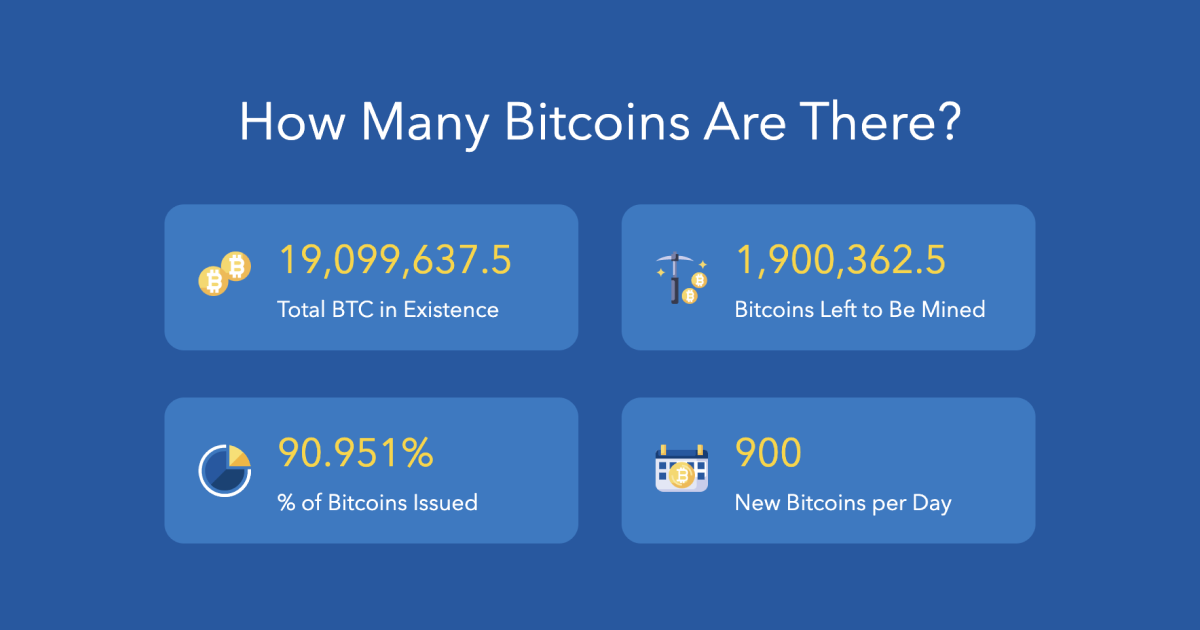
As of today, approximately 19.7 million Bitcoins have been mined. This leaves fewer than 1.3 million coins left to be brought into circulation. To understand why this matters for your portfolio and the broader financial landscape, we must dive into the mechanics of scarcity, the timeline of distribution, and the reality of how many coins are actually accessible.
The Hard Cap: Why 21 Million Matters for Investors
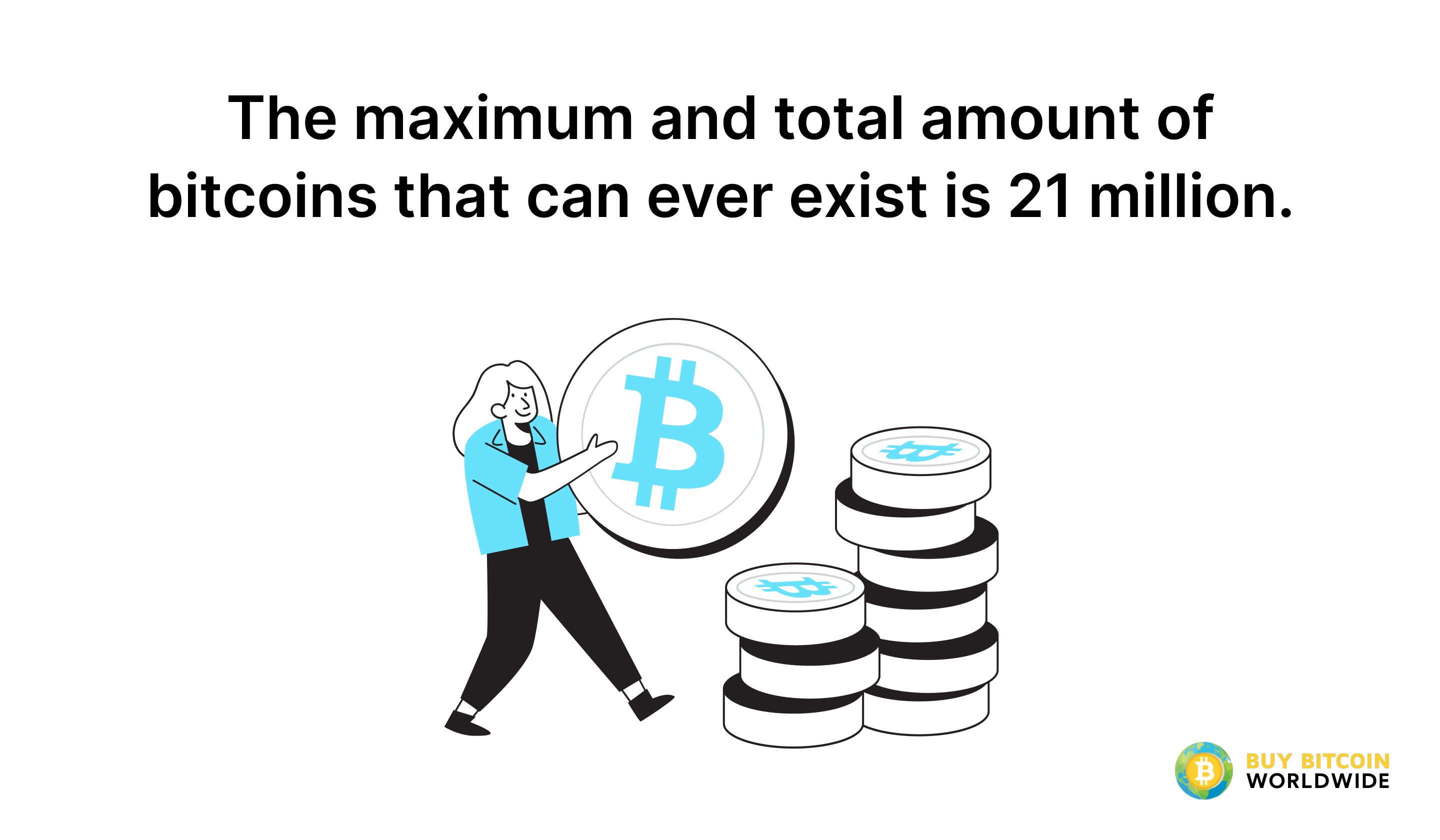
At the core of Bitcoin’s economic identity is its hard cap of 21 million coins. This limit was hardcoded into the protocol by its creator, Satoshi Nakamoto, and remains the cornerstone of its “digital gold” narrative. In the realm of money and investing, scarcity is a primary driver of value.
The Concept of Absolute Scarcity
Bitcoin is arguably the first asset in human history to possess absolute scarcity. While the supply of gold increases by roughly 1–2% every year through mining, and fiat currencies can be devalued at the stroke of a pen, Bitcoin’s supply is governed by mathematics. This fixed supply ensures that no central authority can “debase” the currency. From a wealth preservation perspective, this makes Bitcoin a hedge against the programmatic devaluation of traditional currencies.
Comparison with Fiat Currency and Inflation
To appreciate the 21 million limit, one must contrast it with the current state of global finance. Since the decoupling of the US dollar from gold in 1971, the money supply has expanded exponentially. This expansion leads to inflation—the erosion of purchasing power. Investors turn to Bitcoin because its supply curve is the inverse of fiat: while the demand for money grows and supply fluctuates, Bitcoin’s supply remains on a strict, diminishing schedule. This predictability allows for long-term financial planning that is shielded from the whims of geopolitical shifts or central bank interventions.
The Distribution Mechanism: How New Bitcoins Enter the Market
Bitcoins are not “issued” in the traditional sense. Instead, they are “mined.” This process is both a security feature and a distribution method, ensuring that new coins enter the market at a steady, slowing rate.
Bitcoin Mining and Block Rewards
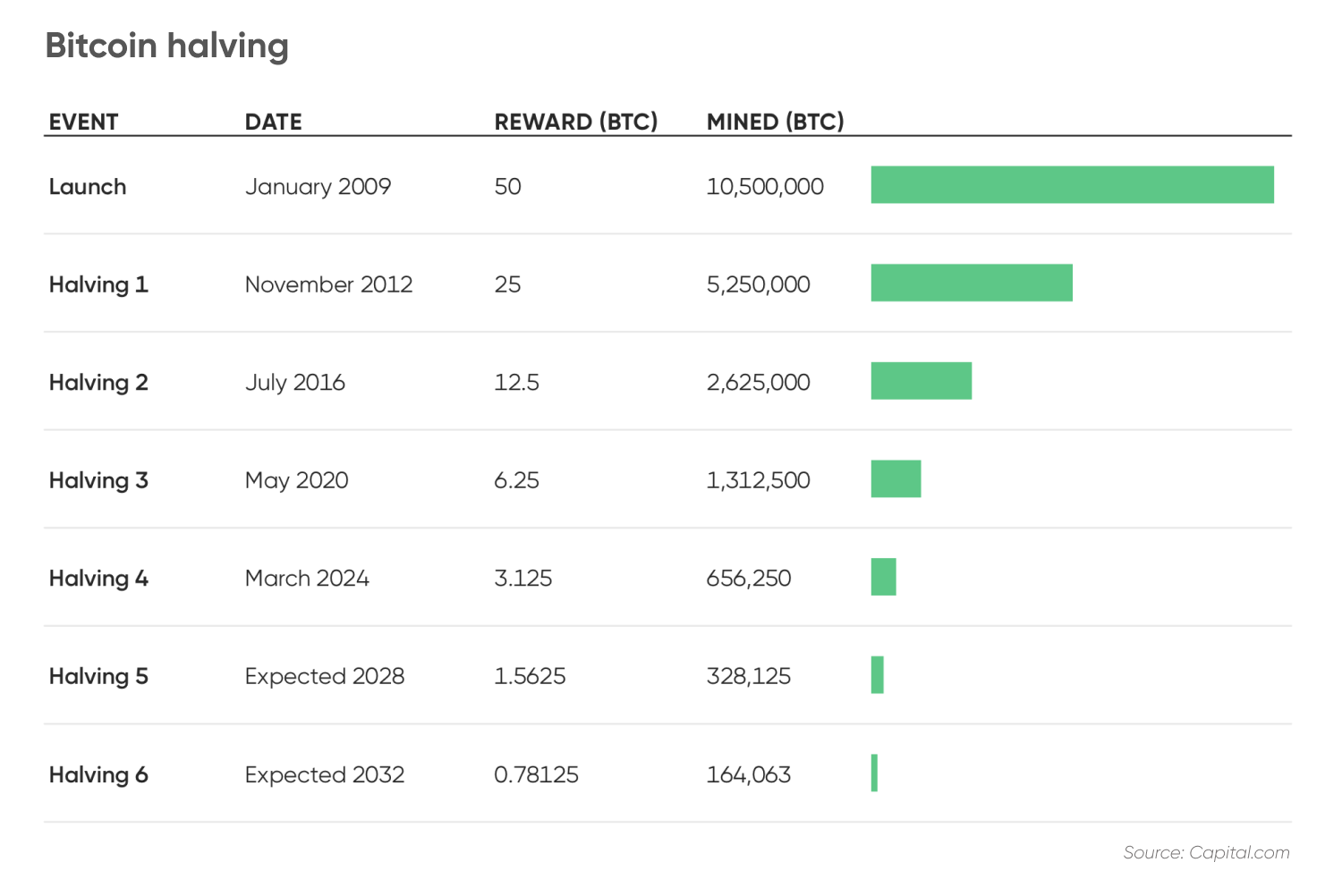
Mining involves high-powered computers solving complex mathematical puzzles to secure the network and verify transactions. As a reward for this service, the network “mints” new Bitcoins and awards them to the successful miner. Currently, this happens roughly every ten minutes. In the early days of Bitcoin (2009–2012), the reward was 50 BTC per block. This was the era of rapid expansion, designed to incentivize early adopters and secure the nascent network.
The Halving Cycle: A Periodic Supply Shock
Every 210,000 blocks (approximately every four years), the block reward is cut in half. This event is known as “The Halving.” We have seen the reward drop from 50 to 25, then to 12.5, then 6.25, and most recently in 2024, to 3.125 BTC.
For the investor, the Halving represents a significant supply-side shock. While demand for Bitcoin may stay the same or grow, the rate at which new supply enters the market drops by 50%. Historically, these events have preceded major bull markets, as the market adjusts to the new, tighter supply dynamics. The Halving ensures that the final Bitcoin will not be mined until roughly the year 2140.
The Reality of Circulating Supply vs. Total Supply
While the protocol says there are nearly 19.7 million coins in existence, the “effective” supply—the amount of Bitcoin actually available for trade or use—is significantly lower. For anyone calculating market capitalization or entry points, understanding this discrepancy is vital.
Lost Bitcoins and the “Zombie” Supply
In the early years of Bitcoin, the asset had little to no monetary value. Consequently, many early miners were careless with their private keys. Hard drives were thrown away, passwords were forgotten, and individuals passed away without leaving instructions for their digital estates.
Blockchain analysis firms like Chainalysis estimate that between 3 to 4 million Bitcoins may be lost forever. These coins still exist on the ledger, but they are “zombies”—they can never be moved or sold. From an investment standpoint, this “accidental burning” of coins increases the scarcity of the remaining supply, effectively making each remaining Bitcoin more valuable.
Institutional Holdings and “HODLing” Behavior
Another factor tightening the supply is the shift in ownership. In the past, Bitcoin was largely held by retail hobbyists. Today, it is increasingly held by “Institutional HODLers.” Companies like MicroStrategy, Tesla, and various Spot Bitcoin ETFs (Exchange Traded Funds) have moved hundreds of thousands of coins into long-term cold storage.
Furthermore, “illiquid supply”—coins held by entities that rarely sell—is at an all-time high. When a large percentage of the 19.7 million coins is locked away in long-term investment portfolios, the “circulating supply” available on exchanges for new buyers becomes incredibly thin. This “supply crunch” is a key reason why Bitcoin price movements can be so volatile and explosive.
Bitcoin’s Role in a Modern Investment Portfolio
Understanding the total count of Bitcoins is only useful if you understand how that scarcity translates into a financial strategy. As Bitcoin matures, its role in personal and corporate finance continues to evolve.
Store of Value vs. Speculative Asset
Initially viewed as a speculative experiment, Bitcoin is increasingly classified by financial institutions as a “Store of Value” (SoV). In a diversified portfolio, it serves a similar role to gold but with the advantages of portability and divisibility. Because you can buy a fraction of a Bitcoin (down to eight decimal places, known as a “Satoshi”), the 21 million cap does not prevent the world from using it; it simply ensures that as adoption grows, the value of each unit must increase.
Long-term Projections: What Happens After 2140?
A common question in financial circles is what happens when the 21 millionth Bitcoin is finally mined. When the block reward hits zero, miners will no longer receive newly minted coins. Instead, they will be compensated entirely through transaction fees.
For the long-term investor, this transition represents the final stage of Bitcoin’s evolution: a fully mature, closed-loop economy. By that time, if Bitcoin has maintained its security and adoption, it will likely be one of the most stable and pristine collateral assets in the world. The journey from 0 to 21 million is essentially a 130-year price discovery phase, and we are currently in the final stages of the supply expansion.
Conclusion: The Power of the Known
In the world of finance, certainty is a luxury. We don’t know how much gold is left in the earth’s crust, and we don’t know how much currency governments will print next year. The power of the “21 million” figure lies in its transparency.
Knowing exactly how many Bitcoins there are—and exactly how many there will ever be—allows investors to make decisions based on immutable supply data. As the circulating supply approaches the 21 million limit and “zombie coins” continue to reduce the effective supply, the economic pressure on this digital asset remains upward. Whether you view it as a side hustle for extra income or a cornerstone of your retirement strategy, Bitcoin’s supply dynamics are the most important financial metric in the digital age. By the time the last Bitcoin is mined in 2140, the world of money will have been irrevocably transformed by the power of a fixed number.
aViewFromTheCave is a participant in the Amazon Services LLC Associates Program, an affiliate advertising program designed to provide a means for sites to earn advertising fees by advertising and linking to Amazon.com. Amazon, the Amazon logo, AmazonSupply, and the AmazonSupply logo are trademarks of Amazon.com, Inc. or its affiliates. As an Amazon Associate we earn affiliate commissions from qualifying purchases.