
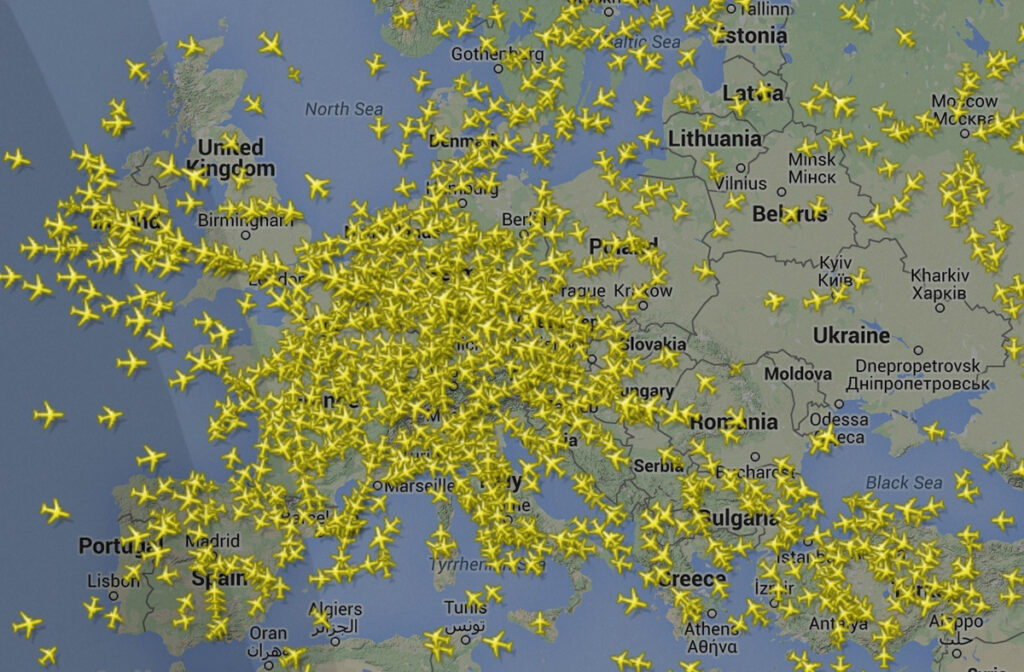
The sky above us, often perceived as an open expanse, is in reality a meticulously managed superhighway of commerce, travel, and logistics. At any given moment, thousands of aircraft are traversing continents, connecting cultures, and facilitating global trade. The sheer scale of this aerial ballet begs a fundamental question: “How many airplanes fly per day?” Answering this question is not merely about reciting a number; it’s a deep dive into the sophisticated technological infrastructure that underpins modern aviation, from advanced tracking systems to predictive analytics and the seamless integration of global air traffic control.

The short answer, focusing on commercial passenger and cargo flights, often hovers around 100,000 flights per day globally during peak operational periods. This figure encompasses departures and arrivals worldwide, translating to roughly 50,000 aircraft taking off and 50,000 landing daily. When factoring in general aviation (private planes, training flights), military flights, and other specialized aerial activities, the total number of airborne movements can swell significantly, pushing well over 200,000 operations. However, the true insight lies not just in the number itself, but in the intricate technological web that allows us to track, manage, and understand this colossal volume of daily air traffic. This article will explore the technological advancements that make such precise monitoring possible and delve into the systems that orchestrate this global phenomenon.
The Global Symphony of Air Traffic: A Technological Masterpiece
The ability to accurately quantify daily flight numbers is a testament to the advanced technology systems that govern air travel. It’s a complex, dynamic environment where data flows continuously, painting a real-time picture of global airspace.
Unraveling the Numbers: A Daily Aviation Census Powered by Data
To arrive at the “100,000 flights per day” figure, aviation authorities, flight tracking services, and data analytics firms process colossal amounts of data. This data originates from various sources, including flight plans filed by airlines, radar transponder signals, Automatic Dependent Surveillance-Broadcast (ADS-B) transmissions, and satellite tracking. Each piece of information – a plane’s call sign, its origin, destination, planned route, altitude, speed, and real-time position – is ingested, processed, and visualized by sophisticated software platforms.
Before the widespread adoption of digital systems, estimating daily flight volumes was a more manual, localized process. Today, algorithms work tirelessly, cross-referencing millions of data points to identify unique flights, track their progress, and record their status (departed, in-flight, landed). This real-time census provides not only a daily tally but also historical data for trend analysis, operational planning, and infrastructure development. The accuracy of this census is crucial for safety, efficiency, and environmental monitoring, making the underlying data collection and processing technologies indispensable.
The Interconnected Network: From Takeoff to Landing Through Digital Integration
The journey of an airplane from one airport to another is a sequence of highly coordinated digital handoffs. Before a flight even departs, its flight plan, often generated and optimized by sophisticated airline operations software, is submitted to air traffic control (ATC) systems. These systems, operated by national and international aviation bodies, digitally approve, modify, and monitor the plan.
Once airborne, the aircraft becomes part of a vast, interconnected digital network. As it crosses national boundaries, control is seamlessly transferred between different ATC centers, each utilizing compatible, standardized data exchange protocols. This digital integration ensures that every aircraft is continuously monitored, its trajectory optimized, and potential conflicts averted. The entire system relies on robust network infrastructure, redundant data centers, and advanced communication protocols (like ATN – Aeronautical Telecommunication Network) to maintain uninterrupted data flow and control across vast geographical distances. Without this deep level of digital integration, the sheer volume of daily flights would be unmanageable, leading to chaos and significant safety risks.
The Technological Backbone of Air Traffic Management
The precise tracking and management of tens of thousands of daily flights are only possible due to a bedrock of advanced technologies that have evolved significantly over decades. These systems represent the cutting edge of real-time data processing, communication, and automation.
Radar, ADS-B, and Satellite Tracking: The Eyes in the Sky
The primary technologies enabling us to “see” and track aircraft globally are:
- Radar: Traditional secondary surveillance radar (SSR) interrogates an aircraft’s transponder, which then replies with a unique code, altitude, and other data. Primary radar, less common for civil aviation, detects aircraft by bouncing radio waves off their surfaces. While essential, radar has limitations, including range and line-of-sight requirements, making it less effective over oceans or remote areas.
- Automatic Dependent Surveillance-Broadcast (ADS-B): This revolutionary technology is becoming the standard for air traffic surveillance. Aircraft equipped with ADS-B transmitters continuously broadcast their GPS-derived position, altitude, speed, and other data without requiring interrogation. This information is received by ground stations and other ADS-B-equipped aircraft. Its advantages include higher accuracy, greater update rates, and broader coverage (especially with space-based ADS-B via satellite constellations), making it a cornerstone for next-generation air traffic control systems.
- Satellite Tracking: For areas beyond ground-based radar and ADS-B range, such as oceanic airspace, satellite-based tracking is crucial. Systems like Iridium NEXT, equipped with ADS-B receivers, pick up aircraft transmissions from space, providing truly global coverage. This has transformed oceanic air traffic management, allowing for closer aircraft spacing and more efficient routes, drastically improving safety and fuel efficiency.
These technologies work in concert, feeding a continuous stream of positional data into ATC systems, enabling controllers and automated systems to maintain a real-time, comprehensive picture of the global airspace.
Air Traffic Control (ATC) Systems: Orchestrating the Flow with Software Intelligence
At the heart of air traffic management are sophisticated ATC systems. These are not merely human operators; they are complex software suites that gather, interpret, and present data to controllers, often suggesting optimal routes and conflict resolutions. Modern ATC systems feature:
- Advanced Display Interfaces: High-resolution screens present controllers with a consolidated view of aircraft positions, flight plans, weather overlays, and potential conflicts. These interfaces are designed for rapid information assimilation and decision-making.
- Conflict Detection and Resolution Software: Algorithms constantly analyze aircraft trajectories, predicting potential collisions or airspace infringements. When a conflict is detected, the system alerts the controller and may suggest corrective actions, significantly reducing human error.
- Flow Management Tools: These tools optimize the flow of air traffic into busy airspace and airports, preventing bottlenecks and minimizing delays. They consider factors like airport capacity, runway availability, and weather conditions, using predictive modeling to manage arrivals and departures effectively.
- Data Communications: Controllers no longer rely solely on voice communication. Controller-Pilot Data Link Communications (CPDLC) allow for text-based exchanges of routine instructions and clearances, reducing communication errors and easing frequency congestion.
These integrated software platforms transform raw data into actionable intelligence, allowing human controllers to manage an incredibly dense and fast-moving environment with precision and safety.
Predictive Analytics and AI: Optimizing the Future of Flight
The vast quantities of data generated by daily flights are a goldmine for advanced analytics and artificial intelligence (AI). These emerging technologies are being leveraged to push the boundaries of aviation efficiency and safety.
- AI for Route Optimization: AI algorithms can analyze historical weather patterns, air traffic congestion data, and aircraft performance characteristics to suggest dynamically optimized flight paths. This leads to shorter flight times, reduced fuel consumption, and lower emissions.
- Predictive Maintenance: Machine learning models analyze data from aircraft sensors to predict component failures before they occur. This proactive approach reduces unexpected breakdowns, improves aircraft availability, and enhances safety.
- Demand Forecasting: AI can forecast passenger demand and cargo needs with greater accuracy, allowing airlines to optimize their schedules and resource allocation, further impacting the daily flight numbers by influencing scheduling decisions.
- Anomaly Detection: AI systems can monitor thousands of flight parameters in real-time, flagging unusual deviations that might indicate a problem before it escalates, providing an additional layer of safety surveillance.
The integration of predictive analytics and AI moves aviation from a reactive to a proactive paradigm, continuously refining operations and improving outcomes across the entire ecosystem.
Data Beyond Numbers: Understanding Aviation Trends

The technology that counts daily flights also provides a rich dataset for deeper insights, extending beyond simple enumeration to reveal crucial trends and facilitate broader applications.
Real-time Data Platforms: Flight Tracking for Everyone
One of the most visible applications of aviation technology is accessible flight tracking platforms like FlightAware, FlightRadar24, and Plane Finder. These consumer-facing applications harness the same underlying data streams (primarily ADS-B and radar data) to display the real-time positions of thousands of aircraft on an interactive map.
These platforms demystify air travel, allowing anyone to track flights, check statuses, and understand delays. From a technological standpoint, they showcase powerful data visualization, real-time streaming data processing, and robust server infrastructures capable of handling millions of simultaneous user requests. They’ve transformed how the public interacts with air travel data, making once-proprietary information widely available and sparking a greater understanding of the sheer volume of daily air movements.
Environmental Monitoring and Efficiency Metrics
The sheer number of daily flights carries significant environmental implications. Aviation technology is now being heavily employed to monitor and mitigate the industry’s carbon footprint.
- Fuel Efficiency Monitoring Systems: Aircraft are equipped with advanced sensors that continuously log fuel consumption, engine performance, and flight parameters. This data is transmitted and analyzed by airlines using specialized software to identify inefficiencies and optimize operational procedures.
- Emissions Tracking Software: Regulators and airlines use sophisticated models and reporting tools to track CO2 and other greenhouse gas emissions per flight, per route, and across entire fleets. This data is critical for compliance with environmental regulations and for developing strategies to achieve sustainability targets.
- Noise Abatement Technologies: Software tools model aircraft noise footprints around airports, helping to optimize flight paths and approach procedures to minimize community impact. Engine manufacturers also use advanced computational fluid dynamics (CFD) and acoustic modeling software to design quieter engines.
These technologies provide the data necessary for the aviation industry to measure its environmental impact accurately and drive initiatives towards more sustainable flight operations, affecting everything from route planning to aircraft design.
Safety and Security Protocols: Data’s Role in Prevention
Every flight contributes to a vast reservoir of operational data that is instrumental in enhancing aviation safety and security. Analyzing this data is a key technological undertaking.
- Flight Data Recorders (FDRs) and Cockpit Voice Recorders (CVRs): These “black boxes” are designed to survive crashes and provide crucial data for accident investigations. FDRs record hundreds of flight parameters, offering an unparalleled insight into an aircraft’s performance leading up to an incident.
- Safety Management Systems (SMS): These are comprehensive software platforms used by airlines and aviation authorities to identify, assess, and mitigate risks. They integrate data from incident reports, maintenance logs, operational audits, and flight data monitoring to proactively address safety concerns.
- Predictive Safety Analytics: Leveraging AI and machine learning, this technology analyzes vast amounts of operational data to identify precursors to incidents. By spotting subtle patterns or deviations from normal operations, these systems can alert operators to potential risks before they manifest as serious events.
- Cybersecurity in Aviation: With increasing digital integration, the security of flight data and ATC systems is paramount. Advanced encryption, intrusion detection systems, and secure network architectures are critical technologies employed to protect against cyber threats that could disrupt operations or compromise safety.
The continuous collection and rigorous analysis of flight data are fundamental to the iterative process of improving aviation safety and security, ensuring that flying remains one of the safest modes of transportation.
The Future of Flight Data and Airspace Intelligence
The journey of aviation technology is far from over. As daily flight numbers continue to fluctuate with global dynamics, the demand for more intelligent, efficient, and integrated systems will only grow.
Leveraging Big Data for Operational Excellence
Airlines, airports, and air navigation service providers (ANSPs) are increasingly harnessing the power of “Big Data” analytics to achieve operational excellence. This involves collecting, storing, and processing petabytes of data from various sources – real-time flight data, weather, passenger manifests, baggage tracking, ground handling, maintenance schedules, and more.
- Integrated Operations Centers: These centers utilize dashboards and decision-support tools powered by Big Data analytics to provide a holistic view of operations, enabling rapid, informed decisions during disruptions (e.g., severe weather, technical issues).
- Turnaround Optimization: Algorithms analyze historical data to optimize every step of an aircraft’s ground turnaround – from gate arrival to pushback – minimizing delays and maximizing efficiency.
- Predictive Resource Allocation: Data analytics helps airports predict passenger flows and allocate security, gate, and baggage handling resources more effectively, enhancing the passenger experience and operational smoothness.
The ability to extract actionable insights from these massive datasets is transforming the way aviation businesses operate, making them more resilient, responsive, and efficient.
Digital Twins and Simulation: A New Era of Planning
The concept of “digital twins” – virtual replicas of physical assets, systems, or processes – is gaining traction in aviation. A digital twin of an airport, an aircraft, or even an entire airspace can be created using real-time data, allowing for complex simulations.
- Airspace Digital Twins: ANSPs can simulate new air traffic routes, procedures, or technologies within a virtual environment before deploying them in the real world, assessing impacts on capacity, safety, and efficiency.
- Airport Digital Twins: These allow airport operators to test changes in terminal layouts, baggage handling systems, or runway configurations virtually, predicting outcomes and optimizing designs.
- Aircraft Digital Twins: Manufacturers and airlines can monitor the performance of individual aircraft, predict maintenance needs, and simulate flight scenarios, optimizing operational life and safety.
These sophisticated simulation technologies enable risk-free experimentation and optimization, accelerating innovation and improving decision-making across the aviation spectrum.
Empowering Travelers with Real-time Information
While much of aviation technology focuses on operational efficiency and safety, a significant portion is dedicated to empowering the end-user: the traveler.
- Personalized Travel Apps: Mobile applications provide travelers with real-time updates on flight status, gate changes, boarding times, and baggage claim information. These apps often leverage AI to offer personalized recommendations for connections, ground transport, and amenities.
- Biometric Boarding: Technologies like facial recognition are streamlining the boarding process, reducing wait times and enhancing security by digitally verifying passenger identities.
- Smart Baggage Tracking: RFID and GPS technologies are being integrated into luggage, allowing passengers to track their bags in real-time via mobile apps, providing peace of mind and reducing lost luggage incidents.
These technological advancements directly address passenger pain points, offering greater transparency, convenience, and control over their travel experience, reflecting a growing trend of user-centric design in the aviation sector.
In conclusion, the answer to “how many airplanes fly per day” is a fluctuating number, typically around 100,000 commercial flights, but it’s the underlying technological marvels that allow us to know, manage, and optimize this incredible daily feat. From the foundational radar and ADS-B systems to the cutting-edge of AI and Big Data analytics, technology is not just counting flights; it’s orchestrating a global network, enhancing safety, improving efficiency, and continuously redefining the capabilities of human flight. The future promises even more integrated and intelligent systems, ensuring that our skies remain busy, safe, and ever more efficient.
aViewFromTheCave is a participant in the Amazon Services LLC Associates Program, an affiliate advertising program designed to provide a means for sites to earn advertising fees by advertising and linking to Amazon.com. Amazon, the Amazon logo, AmazonSupply, and the AmazonSupply logo are trademarks of Amazon.com, Inc. or its affiliates. As an Amazon Associate we earn affiliate commissions from qualifying purchases.