
In the dynamic world of finance, few metrics capture public attention and market sentiment quite like the Dow Jones Industrial Average (DJIA), often simply referred to as “the Dow.” For investors, economists, and even casual observers, understanding how the Dow is performing today offers a snapshot, albeit a limited one, of the broader market’s health and direction. It serves as a daily barometer, its fluctuating numbers sparking discussions, influencing decisions, and often shaping the narrative of the global economy.
But what exactly does it mean when we ask “How is the Dow Jones today?” It’s more than just a simple up or down arrow; it’s an intricate dance of corporate performance, economic indicators, geopolitical shifts, and investor psychology. Daily movements of the Dow reflect a confluence of factors, from the earnings reports of its thirty constituent companies to broader macroeconomic trends like inflation, interest rates, and employment figures. While its daily oscillations can be captivating, truly grasping its significance requires looking beyond the immediate headlines and understanding the underlying mechanisms and influences at play.

This article delves into the various facets of the Dow Jones Industrial Average, exploring its foundational principles, the forces that drive its daily performance, and how its movements can be interpreted within a broader investment context. For anyone looking to make informed financial decisions or simply gain a deeper understanding of the market, deciphering the Dow’s daily pulse is an essential exercise.
Understanding the Dow Jones Industrial Average
To truly appreciate the daily movements of the Dow, one must first grasp its fundamental nature and historical significance. It’s not just a random collection of stocks but a carefully curated index that reflects a significant portion of American industrial and economic power.
What is the DJIA? History and Composition
The Dow Jones Industrial Average is one of the oldest and most widely recognized stock market indexes in the world, created by Charles Dow in 1896. Initially composed of just 12 industrial companies, it expanded to 30 companies in 1928, a number it has maintained ever since. These 30 companies are often referred to as “blue chips” – large, well-established, and financially sound corporations that are leaders in their respective industries. While the name “Industrial Average” might suggest a focus solely on manufacturing, the modern DJIA includes companies from a diverse range of sectors, including technology, finance, healthcare, and consumer goods, reflecting the evolving nature of the U.S. economy. Examples of current components include Apple, Microsoft, Goldman Sachs, Johnson & Johnson, and Walmart. The composition of the Dow is not static; S&P Dow Jones Indices, which maintains the index, periodically makes changes to ensure it remains a relevant indicator of the broader market. These changes often occur when a constituent company undergoes a major restructuring, significantly declines in market capitalization relative to its peers, or when a new industry leader emerges.
Why is it Important? Indicator of US Economic Health
The DJIA holds significant importance as an indicator of US economic health for several reasons. Firstly, its constituent companies are some of the largest and most influential corporations globally. Their collective performance offers a proxy for the overall health of the American corporate sector. When these companies are performing well, it often signals robust economic activity, strong consumer demand, and favorable business conditions. Conversely, widespread struggles among Dow components can indicate economic headwinds. Secondly, due to its prominence and historical longevity, the Dow often serves as a primary benchmark for investor sentiment. A rising Dow can inspire confidence, encouraging further investment and spending, while a falling Dow can trigger caution or even panic. It’s a key metric cited in news reports and economic analyses worldwide, making it a critical, albeit imperfect, gauge of the market’s mood and direction.
How is it Calculated? The Price-Weighted Average
Unlike many modern indexes that are market-capitalization weighted (where companies with larger market values have a greater impact), the Dow Jones Industrial Average is a price-weighted index. This means that stocks with higher share prices have a greater influence on the index’s value than stocks with lower share prices, regardless of their total market value. The calculation involves summing the prices of the 30 component stocks and then dividing that sum by a “Dow Divisor.” The Dow Divisor is a dynamic number that is adjusted periodically to account for stock splits, stock dividends, and changes in the index’s composition. These adjustments ensure that the index’s value remains comparable over time, preventing artificial distortions from corporate actions. This price-weighted methodology has its critics, as a significant movement in a high-priced stock like UnitedHealth Group (which historically has a high share price) can have a larger impact on the Dow than an equivalent percentage move in a lower-priced but potentially larger company by market cap. Nevertheless, understanding this calculation is crucial for interpreting its daily movements accurately.
Daily Market Dynamics and the Dow
The Dow’s daily performance is a complex interplay of numerous factors, ranging from company-specific news to global macroeconomic shifts. Investors and analysts constantly monitor these elements to predict or explain the index’s trajectory.
Factors Influencing Daily Movements
The immediate direction of the Dow on any given day is a result of several concurrent forces. Earnings reports from its 30 constituent companies are paramount; positive surprises can boost the index, while misses can drag it down. Beyond individual company news, broader economic data releases play a crucial role. Reports on inflation (like the Consumer Price Index), unemployment rates, GDP growth, and consumer confidence can significantly sway market sentiment. Geopolitical events such as international conflicts, trade disputes, or major policy changes in key global economies can introduce volatility. Furthermore, monetary policy decisions by central banks, particularly the U.S. Federal Reserve, regarding interest rates and quantitative easing, profoundly impact the cost of capital and corporate profitability, directly affecting stock valuations. Finally, investor sentiment, often driven by fear or greed, can create self-fulfilling prophecies, amplifying daily movements beyond what fundamental data might suggest.
Key Economic Indicators to Watch
Savvy investors keep a close eye on a suite of economic indicators that frequently dictate the Dow’s short-term performance. The Consumer Price Index (CPI) and Producer Price Index (PPI) provide insights into inflation, which can impact corporate costs and consumer purchasing power. Gross Domestic Product (GDP) reports offer a comprehensive view of economic growth. Employment figures, including the non-farm payrolls and unemployment rate, indicate labor market health and consumer spending capacity. Retail sales data directly reflects consumer spending patterns. Manufacturing and services PMIs (Purchasing Managers’ Indexes) give a forward-looking perspective on sector-specific activity. Lastly, interest rate announcements by the Federal Reserve are critical, as higher rates can increase borrowing costs for companies and make bonds more attractive relative to stocks, potentially dampening stock market enthusiasm.
The Role of Corporate Earnings
Individual corporate earnings are arguably the most direct driver of daily Dow movements. Each quarter, the 30 companies within the index release their financial results, detailing revenues, profits, and future outlooks. Strong earnings, particularly when they exceed analyst expectations, can lead to a surge in that company’s stock price, contributing positively to the overall index. Conversely, disappointing results, lowered guidance, or unexpected challenges can cause a stock to drop, pulling the Dow down with it. Given the price-weighted nature of the index, a significant move in a high-priced Dow component, regardless of its market cap, can have a disproportionately large impact on the index’s points. Therefore, tracking the earnings calendar and understanding the sentiment around key Dow components is essential for anticipating daily market reactions.
Interpreting Today’s Dow Performance
Simply knowing whether the Dow is up or down today isn’t enough; true insight comes from interpreting that movement within a broader context. Understanding the nuances allows for more informed decision-making and avoids overreactions to short-term fluctuations.

What Does a “Good” or “Bad” Day Mean?
Defining a “good” or “bad” day for the Dow requires context. A mere point change doesn’t tell the whole story. For instance, a 100-point gain when the Dow is at 10,000 represents a 1% increase, whereas a 100-point gain when the Dow is at 35,000 is a much smaller percentage increase (around 0.28%). Therefore, percentage changes are often more informative than raw point changes. Moreover, a single day’s performance rarely indicates a long-term trend. A “good” day might be celebrated, but it should be viewed in light of previous days or weeks. Conversely, a “bad” day might be a temporary dip or profit-taking rather than the start of a bear market. Investors should always consider the broader economic environment, recent market trends, and any significant news events that accompanied the day’s movement before assigning a definitive judgment.
Beyond the Headline Number: Sector Performance and Individual Movers
The headline number of the Dow’s daily performance can be misleading if not scrutinized further. A moderate gain or loss in the overall index might mask significant divergences among its components. It’s crucial to look “under the hood” to understand which sectors are leading or lagging and which individual stocks are driving the most significant movements. For example, on a day when the Dow rises slightly, it might be due to strong performance in a few technology or healthcare stocks, while industrial or financial stocks might have performed poorly. This granular analysis provides a deeper understanding of market dynamics, revealing sector rotation, investor preferences, or specific industry challenges that the aggregate number obscures. Financial news outlets and brokerage platforms typically provide details on the top gainers and losers within the Dow, offering valuable insights into the day’s true drivers.
Short-Term Volatility vs. Long-Term Trends
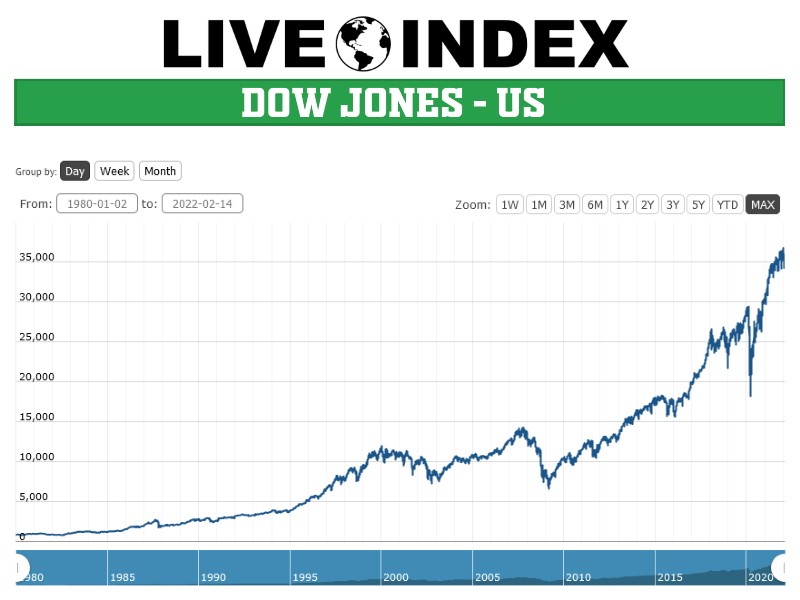
One of the most critical aspects of interpreting the Dow’s daily performance is distinguishing between short-term volatility and long-term trends. The stock market, and by extension the Dow, is inherently volatile in the short run. Daily swings of hundreds of points, both up and down, are common and often driven by fleeting news cycles, algorithmic trading, or emotional reactions. These short-term movements are largely unpredictable and can be noise for long-term investors. What truly matters for building wealth is the long-term trend. Historically, despite numerous corrections and bear markets, the Dow Jones Industrial Average has demonstrated a consistent upward trajectory over decades, reflecting the enduring growth and innovation of the U.S. economy. Investors are often advised not to overreact to daily volatility but to maintain a disciplined approach, focusing on their long-term financial goals and investment strategies rather than attempting to time the market based on daily headlines.
The Dow Jones and Your Investment Strategy
While the Dow offers a vital pulse on the market, it’s crucial for individual investors to understand its limitations and integrate its insights into a broader, more robust investment strategy.
Diversification Beyond the Dow
Relying solely on the Dow Jones Industrial Average as an indicator for your personal investment strategy can be problematic due to its inherent limitations. As a price-weighted index of just 30 large-cap companies, it does not fully represent the breadth and diversity of the entire stock market. It excludes small-cap and mid-cap companies, a vast majority of publicly traded stocks, and the entire bond market. Therefore, a comprehensive investment strategy necessitates diversification beyond what the Dow represents. This means investing across various asset classes (stocks, bonds, real estate), different market capitalizations (small, mid, large-cap), different sectors, and even international markets. Diversification helps spread risk, ensuring that underperformance in one area doesn’t derail your entire portfolio. While the Dow can inform your outlook on large-cap U.S. equities, it should be just one piece of a much larger, well-diversified puzzle.
Long-Term Investing Principles
For most individual investors, short-term market timing based on daily Dow fluctuations is a losing game. A more effective approach is adherence to long-term investing principles. This includes strategies like dollar-cost averaging, where you invest a fixed amount of money at regular intervals, regardless of market highs or lows. This method reduces the risk of investing a large sum at an unfavorable time and allows you to buy more shares when prices are low and fewer when prices are high. Embracing the power of compound interest is also fundamental; by reinvesting earnings, your investments grow exponentially over time. Furthermore, maintaining a disciplined approach, setting clear financial goals, and resisting the urge to panic during market downturns are crucial. Historical data consistently shows that long-term investors who stay the course tend to outperform those who try to time the market.
Utilizing Financial Tools for Analysis
To make informed decisions, investors should leverage a variety of financial tools for analysis. Most modern brokerage platforms offer robust research capabilities, including real-time quotes, charts, historical data, company financials, and analyst ratings for individual Dow components and the index itself. Dedicated financial news websites (e.g., Bloomberg, Wall Street Journal, Reuters) provide in-depth market commentary, economic calendars, and breaking news that can impact the Dow. Additionally, various financial analysis tools can help investors screen for specific criteria, evaluate portfolio performance, and conduct technical or fundamental analysis. Subscribing to reputable financial newsletters or podcasts can also offer insightful perspectives. The key is to use these tools not to react impulsively to daily Dow movements but to gain a deeper, evidence-based understanding that supports a well-thought-out, long-term investment strategy.
Looking Ahead: What to Monitor for Future Dow Movements
Predicting the future movements of the Dow with certainty is impossible, but understanding the key drivers can help investors anticipate potential shifts and prepare their strategies.
Upcoming Economic Calendar
A crucial resource for anticipating market movements is the economic calendar. This calendar lists scheduled releases of major economic data, such as inflation reports (CPI, PPI), employment statistics (jobless claims, non-farm payrolls), GDP figures, manufacturing and services surveys, and consumer confidence indexes. It also highlights central bank meetings, particularly those of the Federal Reserve, where interest rate decisions are made. These announcements often create significant market reactions, as they provide fresh insights into the health of the economy and potential policy changes. By staying aware of upcoming events, investors can better understand the context behind daily Dow movements and potentially adjust their short-term risk exposure, though long-term investors typically maintain their course regardless.
Global Influences
The U.S. economy, and by extension the Dow, does not exist in a vacuum. Global influences play an increasingly significant role in its performance. International markets, particularly those in major economies like China and Europe, can impact Dow companies through supply chains, export demand, and investor sentiment. Geopolitical tensions, such as trade wars, regional conflicts, or political instability in key regions, can trigger market volatility and impact global commodity prices, affecting corporate profitability. Furthermore, global monetary policy decisions by other major central banks can influence currency exchange rates and capital flows, indirectly impacting U.S. markets. A holistic view that considers international developments is essential for understanding the broader forces shaping the Dow’s trajectory.
Technological Shifts and Sector Rotation
The composition and performance of the Dow are also continually shaped by technological shifts and the resulting sector rotation. Breakthroughs in areas like artificial intelligence, biotechnology, renewable energy, and digital transformation can propel certain industries and their constituent companies to new heights, potentially leading to their inclusion in the Dow or increasing their weight within the index. Conversely, industries that fail to adapt can see their influence wane. This constant evolution means that investor focus can shift from one sector to another based on innovation, growth prospects, and economic cycles. Understanding these longer-term trends of technological advancement and capital reallocation is crucial for discerning which industries and companies are likely to drive the Dow’s performance in the years to come, offering insights for strategic portfolio positioning.
In conclusion, “How is the Dow Jones today?” is a question that opens a window into the intricate mechanisms of the financial markets. While its daily fluctuations can be a source of both excitement and anxiety, a truly insightful answer lies in understanding its historical context, the myriad forces that drive its movements, and its role within a broader, diversified investment strategy. By focusing on long-term principles, utilizing robust financial tools, and maintaining a well-informed perspective, investors can leverage the insights provided by the Dow to make sound financial decisions, rather than being swayed by the transient nature of daily market noise.
aViewFromTheCave is a participant in the Amazon Services LLC Associates Program, an affiliate advertising program designed to provide a means for sites to earn advertising fees by advertising and linking to Amazon.com. Amazon, the Amazon logo, AmazonSupply, and the AmazonSupply logo are trademarks of Amazon.com, Inc. or its affiliates. As an Amazon Associate we earn affiliate commissions from qualifying purchases.