
Navigating the financial landscape of child support is one of the most critical aspects of post-divorce or separation financial planning. While often viewed through a legal lens, child support is fundamentally a complex exercise in personal finance, cash flow management, and long-term economic forecasting. Understanding how these figures are derived is essential for maintaining individual financial stability while ensuring the well-being of the children involved.
For most individuals, child support represents one of the largest monthly recurring expenses or sources of non-taxable income in their personal budget. This article explores the mathematical frameworks, income definitions, and financial nuances that determine how child support is calculated.
The Core Financial Framework of Child Support
At its heart, child support is designed to ensure that children enjoy the same standard of living they would have experienced had their parents remained in a single household. To achieve this, states and jurisdictions use standardized economic models to remove as much subjectivity as possible from the calculation.
The Income Shares Model vs. Percentage of Income
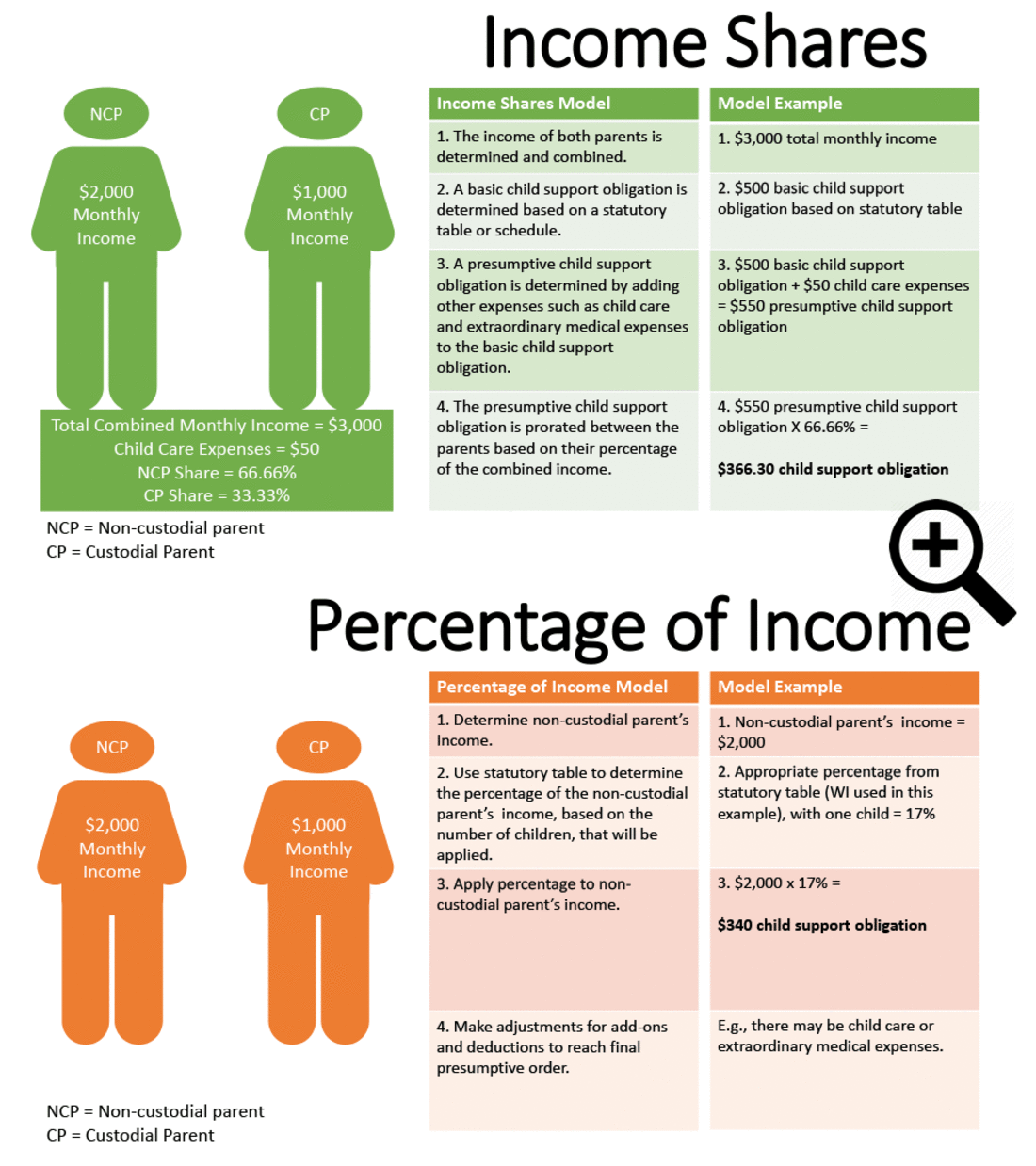
The most common methodology used today is the Income Shares Model. This approach is based on the economic principle that the amount of money spent on children should be a proportion of the parents’ combined income. The total support amount is calculated by looking at what a dual-parent household at that income level typically spends on a child, and then that obligation is divided between the parents based on their respective contributions to the total income.
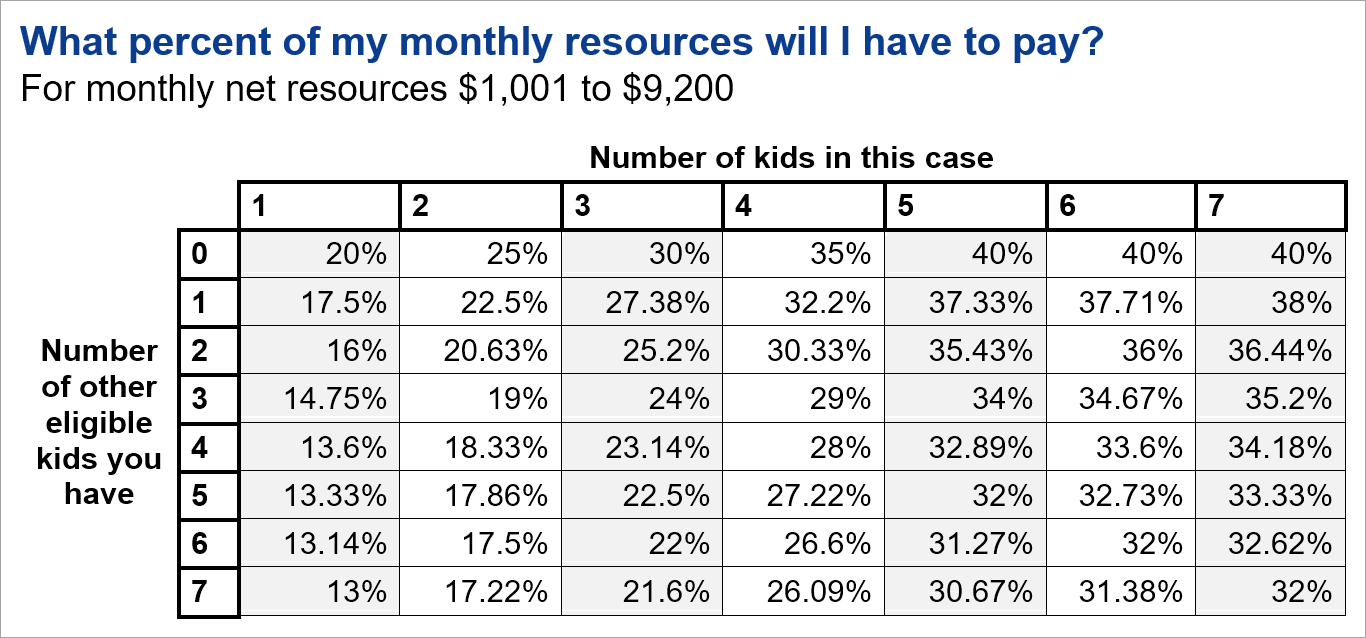
Alternatively, some jurisdictions use the Percentage of Income Model. This is a simpler financial calculation where the non-custodial parent pays a flat percentage of their income—for example, 20% for one child or 28% for two—regardless of the custodial parent’s earnings. While easier to calculate, many financial analysts argue this model is less reflective of the actual “cost” of raising a child in modern economies.
Defining Gross vs. Net Income
The “input” for any child support calculator is income, but what constitutes income can be a point of significant financial debate. Most calculations begin with Gross Income, which includes wages, salaries, commissions, bonuses, and interest from investments. However, the calculation usually shifts to Net Income or “Adjustable Gross Income” for the final determination.
From a personal finance perspective, this means subtracting mandatory deductions such as federal and state taxes, FICA (Social Security and Medicare), and sometimes mandatory union dues or retirement contributions. Understanding the difference between what you earn on paper and what is “available” for support is the first step in accurate financial planning.
Variable Factors That Influence the Final Calculation
A child support figure is rarely static; it is influenced by a variety of logistical and secondary financial factors that can swing the monthly obligation by hundreds or even thousands of dollars.
Custody Arrangements and the “Overnight” Factor
Modern personal finance within a co-parenting structure must account for the time a child spends in each household. Many states use a “Shared Parenting” formula when a child spends more than a certain number of overnights (typically 90 to 123) with the non-primary parent.
From a mathematical standpoint, the more time a child spends with a parent, the more that parent is presumably spending directly on the child’s daily needs (food, utilities, transportation). Consequently, the child support obligation usually decreases as the number of overnights increases. This creates a “sliding scale” in the financial model, where the transfer of wealth between households is adjusted to reflect direct out-of-pocket spending.
Healthcare, Education, and Extraordinary Expenses
The “basic” child support obligation usually covers food, shelter, and clothing. However, in modern financial planning, these are rarely the only costs. Calculations frequently include “add-ons” for:
- Health Insurance Premiums: The cost of adding a child to a medical, dental, or vision plan is usually pro-rated between the parents.
- Work-Related Childcare: Daycare and after-school care are significant cash-flow burdens. The calculation typically splits these costs based on the percentage of each parent’s income.
- Extraordinary Expenses: Private school tuition, specialized tutoring, or competitive sports fees are often treated as separate line items in the financial agreement, outside the standard monthly support figure.
The Impact of Business Ownership and Complex Income

For entrepreneurs, freelancers, and high-net-worth individuals, child support calculations become significantly more intricate. Standard payroll entries do not always tell the full story of a parent’s “ability to pay.”
Calculating Support for Entrepreneurs and the Self-Employed
When a parent owns a business, the court and financial analysts look beyond a simple paycheck. They analyze EBITDA (Earnings Before Interest, Taxes, Depreciation, and Amortization) and scrutinize “add-backs.” In personal finance terms, if a business owner is running their personal car lease, cell phone, or travel through the business, these are often added back to their “income” for child support purposes.
This requires a deep dive into Profit and Loss (P&L) statements. For a business owner, the goal is to distinguish between legitimate business reinvestment and “income” that is being shielded from the support calculation. This is where financial expertise becomes vital, as depreciation—a non-cash expense that lowers taxable income—is often disregarded in child support models to reflect actual available cash flow.
Handling Bonuses, RSUs, and Volatile Income
Many professionals in tech or finance receive a large portion of their compensation through Restricted Stock Units (RSUs), stock options, or annual performance bonuses. Since these are not guaranteed, they present a challenge for a fixed monthly budget.
Financial experts often recommend a “base plus percentage” approach. The parent pays a fixed amount based on their base salary, and then a secondary calculation is performed annually—or whenever a vest occurs—to pay a percentage of the supplemental income. This ensures that the child benefits from the parent’s financial success without creating a “dry” cash-flow crisis for the payer during months where only base salary is earned.
Long-term Financial Planning and Modifications
Child support is rarely a “set it and forget it” financial obligation. Because it is tied to income and the needs of the child, it is subject to the fluctuations of the broader economy.
Adjusting for Inflation and Lifestyle Changes
As inflation rises, the purchasing power of a child support check established five years ago may no longer meet the child’s needs. Conversely, if a parent loses a high-paying job in a tech sector downturn, the existing support obligation could lead to insolvency.
Most financial agreements include provisions for a “modification” if there is a substantial change in circumstances (usually defined as a 10-15% change in income). From a personal finance management perspective, it is wise to review these figures every two to three years to ensure they align with current market realities and the actual cost of living.
The Concept of Imputed Income
One of the most controversial aspects of child support calculation is Imputed Income. If a parent is “underemployed” or chooses not to work, the calculation might be based on what they could be earning given their education, training, and work history.
For the parent receiving support, this protects the child’s financial interest against a payer who might intentionally lower their income to avoid obligations. For the payer, it serves as a financial motivator to maintain a career trajectory consistent with their earning potential. This highlights that child support is not just based on actual cash on hand, but on “earning capacity,” a vital concept in human capital theory.
Strategic Budgeting for Support Obligations
Whether you are the payer or the recipient, child support must be integrated into a comprehensive wealth management strategy.
For the payer, child support is a post-tax expenditure in most jurisdictions (following the 2017 Tax Cuts and Jobs Act in the US, where child support is no longer tax-deductible). This means every dollar paid is a full dollar out of net wealth, requiring a lean approach to other discretionary spending.
For the recipient, child support is typically non-taxable income. However, it is “unearned” income that usually terminates when the child reaches the age of majority. A sound financial strategy involves not becoming overly reliant on these funds for long-term lifestyle needs, but rather utilizing them for the child’s current expenses while perhaps diverting any surplus into a 529 College Savings Plan or other dedicated investment vehicles for the child’s future.
In conclusion, calculating child support is a data-driven process that blends legal guidelines with rigorous financial analysis. By understanding the models of income sharing, the impact of custody on cash flow, and the complexities of modern compensation, parents can better prepare for their financial futures while ensuring the next generation is adequately supported.
aViewFromTheCave is a participant in the Amazon Services LLC Associates Program, an affiliate advertising program designed to provide a means for sites to earn advertising fees by advertising and linking to Amazon.com. Amazon, the Amazon logo, AmazonSupply, and the AmazonSupply logo are trademarks of Amazon.com, Inc. or its affiliates. As an Amazon Associate we earn affiliate commissions from qualifying purchases.