
The concept of compound interest is often hailed as the “eighth wonder of the world,” and for good reason. Its power to generate wealth over time is unparalleled, transforming modest sums into substantial fortunes. While most commonly associated with savings accounts and bonds, compound interest plays an equally, if not more, critical role in the world of stock investing. Understanding how this financial marvel intersects with the dynamics of the stock market is fundamental for any aspiring or seasoned investor aiming to build significant long-term wealth. This article delves into the mechanics of how compound interest operates within stock investments, offering insights into leveraging this powerful force for your financial future.
Understanding the Fundamentals: Compound Interest Explained
Before exploring its application in stocks, it’s crucial to grasp the core principle of compound interest itself. At its heart, compound interest is “interest on interest” – the process where the interest earned on an initial investment (principal) is added back to the principal, and then the next period’s interest is calculated on this new, larger sum. This creates an accelerating growth trajectory that becomes increasingly potent over time.
What is Simple vs. Compound Interest?
To fully appreciate compounding, it’s helpful to contrast it with simple interest. Simple interest is calculated only on the original principal amount. If you invest $1,000 at 5% simple interest per year, you’d earn $50 each year, and your principal would remain $1,000 for calculation purposes. After 10 years, you’d have your original $1,000 plus $500 in interest ($50 x 10).
Compound interest, on the other hand, means that the $50 earned in the first year is added to your principal, making it $1,050. In the second year, the 5% interest is calculated on $1,050, yielding $52.50. This $52.50 is then added, making the new principal $1,102.50, and so on. This continuous cycle of earning returns on previous returns is what creates the “snowball effect” and sets compounding apart as a wealth-building engine.
The Power of Time and Rate
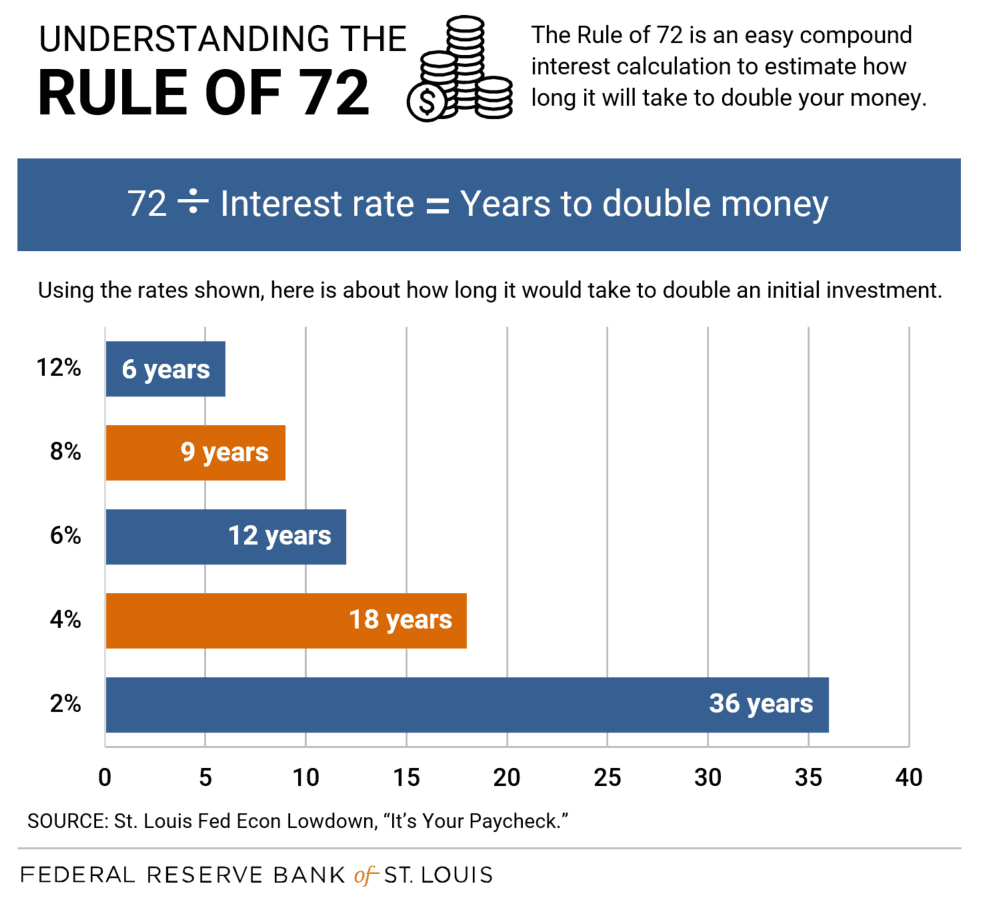
Two primary factors dictate the effectiveness of compound interest: the length of time an investment is allowed to grow and the rate of return (or interest rate). The longer your money is invested, the more opportunities it has to compound, and the more significant the growth becomes, especially in later years. Similarly, a higher annual rate of return will naturally lead to faster and greater compounding, as a larger amount of ‘interest on interest’ is generated each period. This synergy makes starting early with a reasonable rate of return far more impactful than starting late with an even higher rate.
Key Drivers of Compounding Growth
Beyond time and rate, other elements influence the potency of compounding:
-
Initial Principal: The larger the initial investment, the larger the base from which compounding can begin.
-
Compounding Frequency: The more frequently interest is compounded (e.g., daily vs. annually), the faster the growth, though this effect is less pronounced than time or rate.
-
Additional Contributions: Regularly adding new capital to an investment significantly amplifies compounding, effectively increasing the principal base at consistent intervals.
Applying Compounding Principles to Stock Investments
While compound interest is easily visualized with fixed-income products, its application to the often-volatile stock market requires a nuanced understanding. Stocks don’t pay a direct “interest rate” in the traditional sense, but they offer avenues for returns that, when managed correctly, compound powerfully.
Reinvesting Dividends: The Direct Path to Stock Compounding
One of the most direct ways compound interest works with stocks is through dividend reinvestment. Many companies distribute a portion of their profits to shareholders in the form of dividends. Instead of taking these dividends as cash, investors can choose to reinvest them, using the dividend income to purchase additional shares of the same stock (often through a Dividend Reinvestment Plan, or DRIP).
This creates a powerful compounding loop:
-
You own shares and receive dividends.
-
You use those dividends to buy more shares.
-
These new shares then entitle you to even more dividends in the future.
-
More dividends lead to buying even more shares, accelerating the process.
Over time, this strategy allows your share count to grow without additional capital outlays, leading to an exponential increase in your dividend income and total portfolio value, assuming the stock price remains stable or increases.
Capital Appreciation and Growth Stocks
Even stocks that don’t pay dividends can demonstrate compounding through capital appreciation. When you invest in a stock, you expect its value (share price) to increase over time as the underlying company grows, becomes more profitable, or gains market share. If you buy a stock for $100 and it grows to $110, you’ve earned a 10% return. If it then grows another 10% the following year, that gain is calculated on the new $110 value, yielding $11, not $10. This results in a new value of $121.
This continuous growth in the underlying asset’s value, where subsequent gains are calculated on an ever-increasing base, is a form of compounding. Each percentage gain builds upon the previous, larger value, mirroring the “interest on interest” principle. This is particularly relevant for growth stocks, which often reinvest all their earnings back into the business for expansion rather than paying dividends, aiming for significant capital appreciation.
The Role of Consistent Contributions
Beyond reinvesting dividends or relying solely on capital appreciation, the act of consistently adding new money to your stock investments is a vital component of stock compounding. Each new contribution effectively increases your principal base, providing more capital to participate in future market gains and dividend payments. This strategy, often employed through regular contributions to retirement accounts or investment portfolios, leverages the compounding effect on a continually expanding pool of capital, greatly accelerating wealth accumulation.
The Mechanics of Compounding in a Stock Portfolio
To truly appreciate how compounding manifests in the stock market, it helps to visualize the process within a portfolio context. It’s not just about a single stock’s growth, but the aggregate effect across diverse holdings.
Illustrative Example: A Dividend Growth Stock
Imagine investing $10,000 in a company stock with a 3% dividend yield and a 5% average annual capital appreciation. If you reinvest those dividends:
-
Year 1: You earn $300 in dividends ($10,000 x 0.03). You reinvest this, buying more shares. Your initial shares also appreciate by 5% to $10,500. Your total value increases.
-
Year 2: Now you own more shares due to reinvestment. Your dividend income will be calculated on a slightly larger share count, generating more dividends. Your entire, larger share count will also appreciate by 5%.
-
Years 3-10-20: This cycle continues. The increasing share count from reinvested dividends, coupled with the capital appreciation on your entire, growing portfolio of shares, creates a powerful compounding loop. The value of your initial $10,000 can easily multiply many times over, far surpassing what simple interest or even just capital appreciation alone could achieve.
The Snowball Effect: Compounding Across Multiple Assets
A well-diversified stock portfolio often holds a mix of dividend-paying stocks, growth stocks, and potentially even some value stocks. Each of these components contributes to the overall compounding effect:
-
Dividend stocks compound through reinvestment.
-
Growth stocks compound through capital appreciation.
-
Value stocks might offer a combination of both, alongside the potential for significant revaluation.
Furthermore, within a diversified portfolio, the overall returns from various assets compound together. As one sector or stock performs well, its gains contribute to the overall portfolio value, upon which future returns (from all components) are calculated. This creates a broader “snowball effect,” where the entire portfolio grows faster than the sum of its parts.
Understanding Total Return: The True Measure of Compounding
When evaluating stock performance, it’s crucial to look beyond just capital gains or dividend yield in isolation. Total return, which combines both capital appreciation and dividend income (assuming reinvestment), is the true metric for understanding how your investment is compounding. A stock might have modest capital appreciation but a high, reinvested dividend yield, leading to substantial total returns over time. Conversely, a high-growth stock with no dividends can also provide excellent total returns through capital appreciation alone. Both are forms of compounding, and it’s their combined effect that ultimately dictates long-term wealth growth.
Strategies to Maximize Compound Growth in Stocks
To fully harness the power of compounding with stocks, investors should adopt disciplined strategies focused on long-term growth.
Early Start and Long-Term Horizon
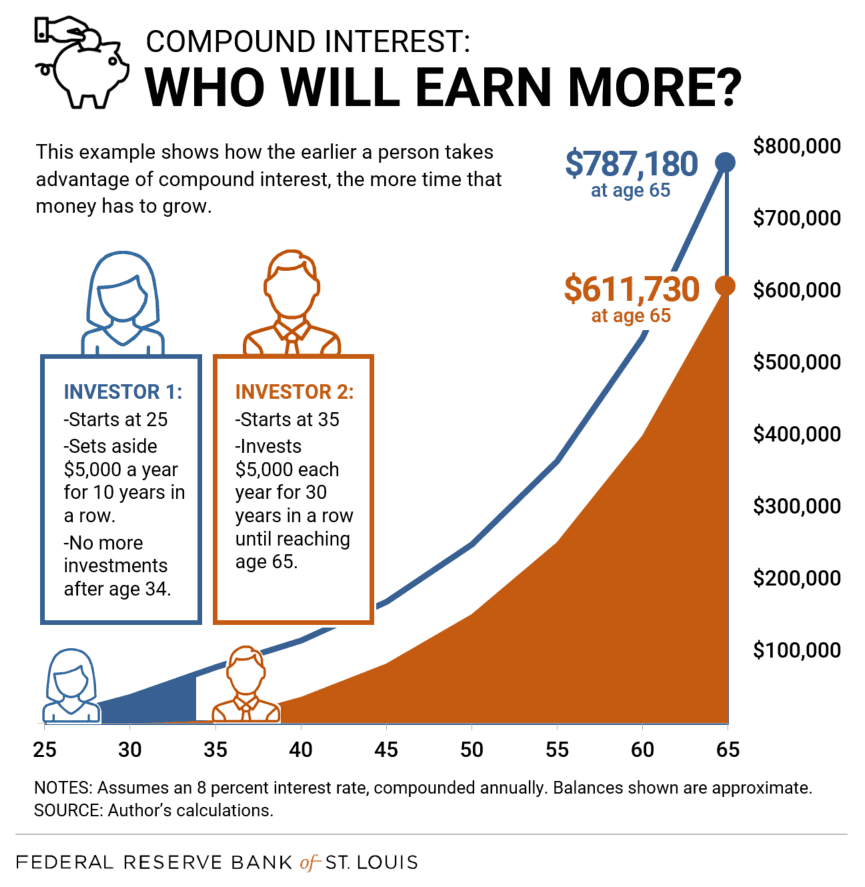
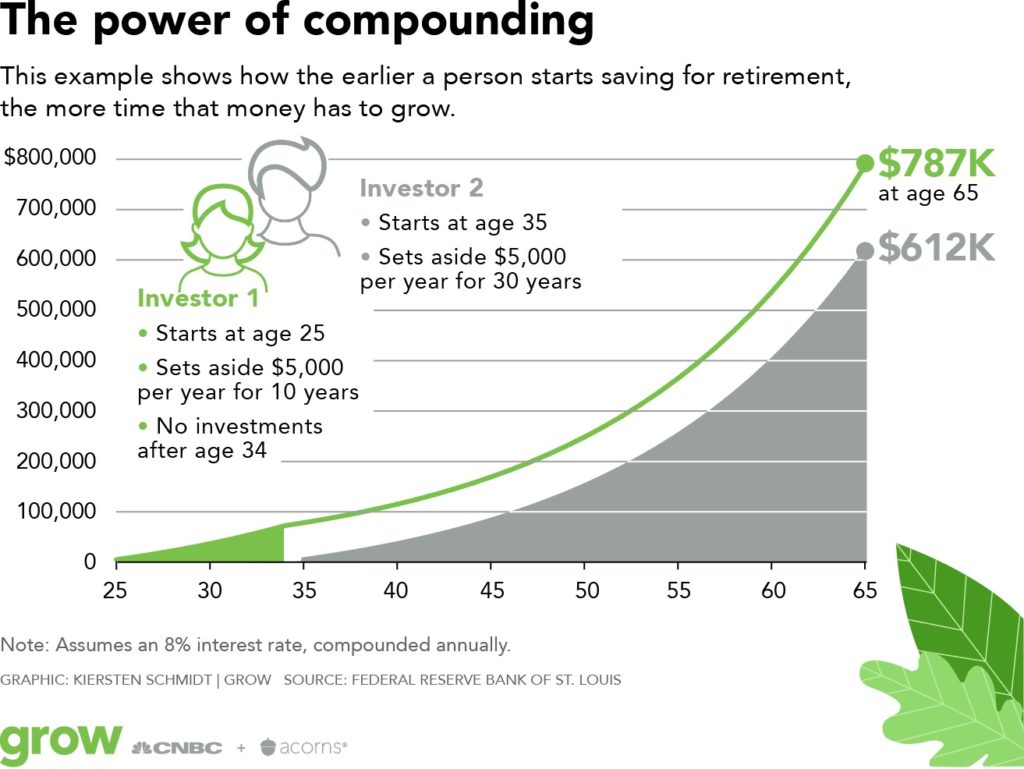
The single most important factor for maximizing compounding is time. Starting to invest early, even with small amounts, gives your money decades to compound. The difference in wealth accumulated between someone who starts investing at 25 versus 35 can be enormous, even if the later investor contributes more aggressively. The exponential nature of compounding means that the bulk of returns often occur in the later years of an investment horizon.
Selecting Quality Growth and Dividend Stocks
Not all stocks are created equal. For effective compounding, focus on companies with:
-
Strong fundamentals: Healthy balance sheets, consistent profitability, and good management.
-
Growth potential: Businesses positioned to grow their earnings and market value over time.
-
Reliable dividends (for dividend-focused strategies): Companies with a history of consistent and growing dividend payments, indicating financial stability and a commitment to shareholders.
Regular Investing (Dollar-Cost Averaging)
Dollar-cost averaging (DCA) involves investing a fixed amount of money at regular intervals (e.g., $200 every month), regardless of market fluctuations. This strategy has several benefits for compounding:
-
It ensures consistent contributions, continuously adding to your compounding base.
-
It helps mitigate risk by averaging out your purchase price over time, buying more shares when prices are low and fewer when prices are high.
-
It removes emotion from investing, fostering discipline and consistency.
Minimizing Fees and Taxes
High investment fees (e.g., expense ratios in mutual funds, trading commissions) and taxes can significantly erode compounded returns. Every dollar lost to fees or taxes is a dollar that cannot compound for you.
-
Choose low-cost investment vehicles: Opt for low-expense index funds or ETFs.
-
Utilize tax-advantaged accounts: Maximize contributions to IRAs, 401(k)s, or other retirement accounts where investments grow tax-deferred or tax-free, allowing your returns to compound without the annual drag of taxes.
Potential Pitfalls and Considerations
While powerful, compounding in the stock market is not without its challenges and risks.
Market Volatility and Drawdowns
Unlike a guaranteed interest rate in a savings account, stock market returns are not linear or guaranteed. Stock prices can fluctuate dramatically due to economic cycles, company-specific news, or geopolitical events. During market downturns (drawdowns), your portfolio’s value can temporarily decrease, which can be unsettling. However, for long-term investors, these periods often present opportunities to buy more shares at lower prices, further fueling compounding when the market recovers.
Inflation’s Erosion of Returns
Inflation, the rate at which the general level of prices for goods and services is rising, can diminish the real purchasing power of your compounded returns. While stocks are generally considered a good hedge against inflation over the long term, it’s crucial to ensure your nominal compounded returns are significantly higher than the rate of inflation to achieve real wealth growth.
The Importance of Diversification
“Don’t put all your eggs in one basket” is particularly true for stock investing. Concentrating all your capital in a single stock or a few stocks exposes you to excessive risk. If that particular company or sector falters, your entire investment can be jeopardized. Diversification across different companies, industries, and geographies helps spread risk and provides a more stable foundation for long-term compounding.
Conclusion
Compound interest, when applied to stock investments, is arguably the most potent tool available for building significant wealth over time. It transforms your initial investments, dividend income, and capital gains into a self-propelling engine of growth. By understanding the principles of “interest on interest” and applying strategies such as early investing, consistent contributions, dividend reinvestment, and diversification, investors can harness this extraordinary financial phenomenon. While market volatility and other factors demand patience and discipline, the long-term rewards of compounding in the stock market can be truly life-changing, paving the way for a secure and prosperous financial future.
aViewFromTheCave is a participant in the Amazon Services LLC Associates Program, an affiliate advertising program designed to provide a means for sites to earn advertising fees by advertising and linking to Amazon.com. Amazon, the Amazon logo, AmazonSupply, and the AmazonSupply logo are trademarks of Amazon.com, Inc. or its affiliates. As an Amazon Associate we earn affiliate commissions from qualifying purchases.