
In the modern financial landscape, the ability to accept credit card payments is no longer a luxury reserved for large-scale corporations; it is a fundamental requirement for any business seeking to maintain liquidity, ensure customer satisfaction, and scale operations. Whether you are operating a boutique consulting firm, a high-volume e-commerce storefront, or a local service-based business, understanding the mechanics of payment processing is critical to managing your bottom line.
Accepting digital payments involves a sophisticated ecosystem of financial institutions, technology interfaces, and regulatory compliance. Moving from a cash-heavy model to a digital-first approach requires a strategic understanding of how funds move from a consumer’s credit limit to your business bank account.

The Financial Infrastructure of Payment Processing
To understand how to accept a credit card payment, one must first understand the financial architecture that facilitates the transfer of value. This process is not a direct transfer but a series of authorizations and settlements involving multiple parties.
Merchant Accounts vs. Payment Aggregators
There are two primary paths for a business to enter the credit card ecosystem: obtaining a dedicated merchant account or utilizing a payment aggregator.
A Merchant Account is a specific type of business bank account that allows you to accept credit and debit card payments. When you have a dedicated merchant account, you have a direct relationship with an acquiring bank. This path often offers lower transaction rates for high-volume businesses and provides greater stability, as the underwriting process happens upfront. However, it typically involves more paperwork and longer setup times.
A Payment Aggregator (such as Square, Stripe, or PayPal) allows businesses to process payments under the aggregator’s own master merchant account. This is the fastest way to begin accepting payments. The barrier to entry is low, often requiring only a few minutes of digital onboarding. While convenient, aggregators typically charge higher flat-rate fees and may have more stringent automated fraud triggers that can lead to temporary account freezes.
The Role of Payment Gateways
While the merchant account holds the funds, the Payment Gateway is the financial “highway” that transmits the transaction data. In an e-commerce setting, the gateway is the digital equivalent of a physical Point of Sale (POS) terminal. It encrypts sensitive cardholder data and communicates between the merchant, the card networks (Visa, Mastercard, Amex), and the issuing banks to authorize the transaction. For a business to function seamlessly, the gateway must be integrated into the financial stack to ensure real-time reporting and reconciliation.
Navigating the Landscape of Payment Providers
Choosing a provider is a significant financial decision that impacts your operational overhead. The right choice depends on your specific business model, projected sales volume, and the nature of your transactions.
Brick-and-Mortar vs. E-commerce Solutions
If your business operates in a physical location, your primary concern is the Point of Sale hardware. Modern POS systems do more than just process cards; they act as the central nervous system for business finance, tracking inventory, managing payroll, and generating tax-ready financial statements. When selecting hardware, look for EMV (chip) compliance and NFC (contactless) capabilities to reduce liability and meet consumer demand for mobile wallets like Apple Pay.
For e-commerce, the focus shifts to API integrations and checkout experiences. The financial goal is to reduce “cart abandonment” by providing a frictionless payment flow. This involves selecting a provider that supports “hosted checkout” (where the provider handles the security on their servers) or “integrated checkout” (where you maintain control over the user interface while the data is securely tokenized).
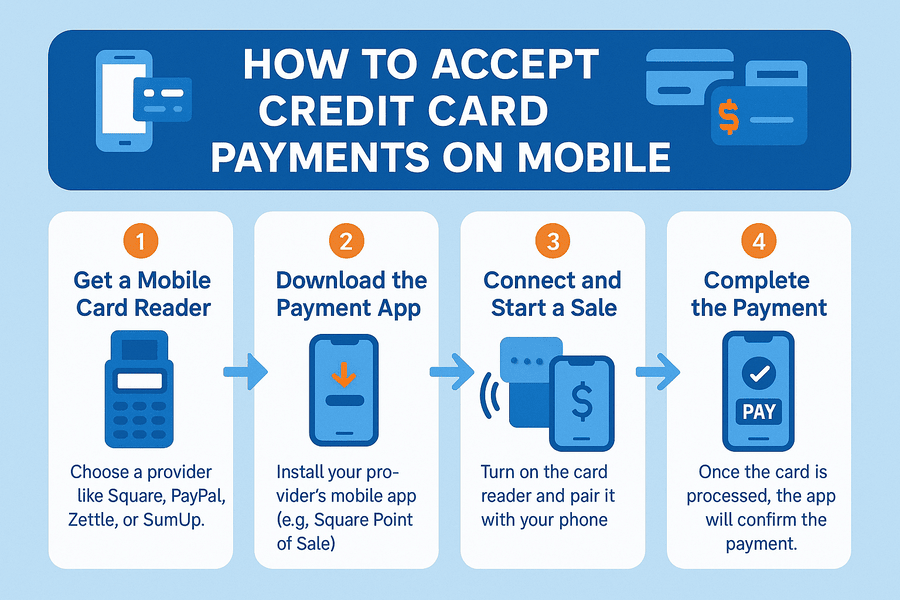
Mobile and Remote Billing
For service-based professionals—such as contractors, lawyers, or consultants—accepting a credit card payment often happens via digital invoicing. Many modern financial tools allow you to send an invoice with a “Pay Now” button, allowing the client to enter their card details securely. This significantly reduces the “Days Sales Outstanding” (DSO), accelerating your cash flow and reducing the time spent on manual collections.
Deconstructing the Cost of Credit Card Acceptance
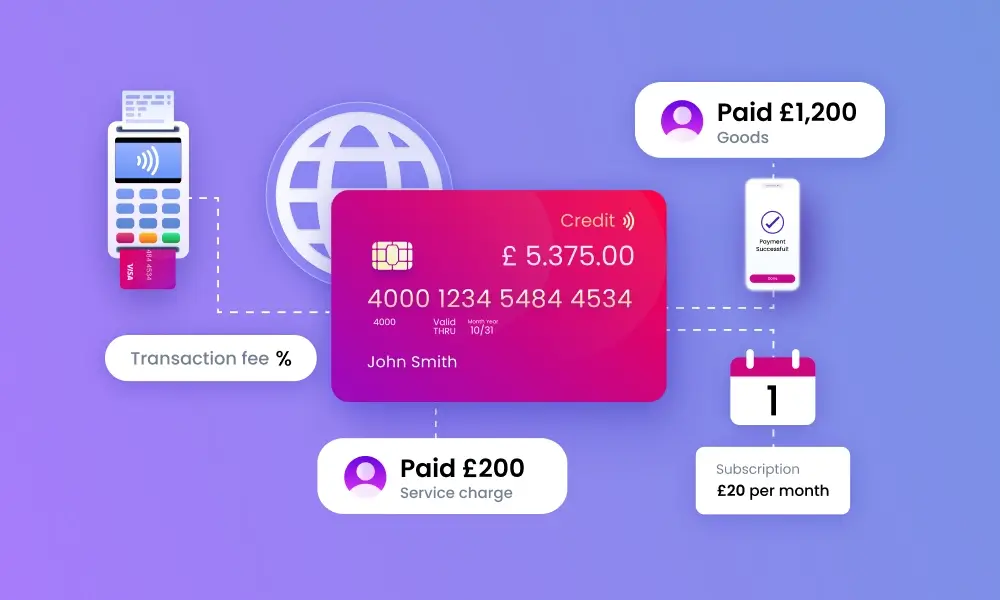
Accepting credit cards is not free; it is a service for which the merchant pays a premium. Understanding the fee structure is essential for accurate pricing and margin management.
Interchange-Plus Pricing
This is widely considered the most transparent pricing model in the financial industry. It consists of two parts: the “interchange” fee and the “plus” (the processor’s markup). The interchange fee is set by the card networks (Visa/Mastercard) and is non-negotiable. It varies based on the card type (a rewards-heavy Infinite card costs more to process than a basic debit card). By using interchange-plus pricing, a business pays exactly what the network charges plus a fixed, disclosed margin to the processor.
Flat-Rate Pricing
Commonly used by aggregators, flat-rate pricing simplifies business accounting by charging a single percentage (e.g., 2.9% + $0.30) for every transaction, regardless of the card type. While this offers predictability for small businesses with lower volumes, it can become significantly more expensive as a business scales, as you lose the opportunity to benefit from lower-cost debit card transactions.
Subscription and Tiered Models
Some providers offer a subscription model where you pay a monthly fee in exchange for 0% markup on interchange rates. This is highly beneficial for high-volume merchants. Conversely, “Tiered Pricing” should be approached with caution. It categorizes transactions into “qualified,” “mid-qualified,” and “non-qualified” tiers. Often, the low advertised rate only applies to a small fraction of transactions, while the majority are pushed into higher-cost tiers, obscuring the true cost of acceptance.
Risk Management and Financial Compliance
The privilege of accepting credit card payments comes with the responsibility of protecting the financial ecosystem. Failure to manage risk can lead to heavy fines, loss of processing privileges, and direct financial hits to your capital.
PCI DSS Compliance
The Payment Card Industry Data Security Standard (PCI DSS) is a set of security requirements designed to ensure that all companies that process, store, or transmit credit card information maintain a secure environment. As a merchant, you must ensure your systems (or the third-party tools you use) are compliant. Most modern processors handle the bulk of this burden through tokenization—a process where sensitive card data is replaced with a non-sensitive equivalent, ensuring that your business never actually “touches” the raw credit card number.
Managing Chargebacks and Fraud
A chargeback occurs when a customer disputes a transaction through their bank rather than seeking a refund from the merchant. Chargebacks are a significant financial risk; not only do you lose the sale amount and the cost of the goods sold, but you are also hit with a “chargeback fee” (usually $15–$50) regardless of the outcome.
To protect your business finance, implement robust fraud detection tools such as Address Verification Service (AVS) and Card Verification Value (CVV) checks. Maintaining clear transaction descriptors on customer bank statements also reduces “friendly fraud,” where customers fail to recognize a legitimate charge and initiate a dispute.
Optimizing Your Revenue Cycle
Once you have the infrastructure in place to accept payments, the focus shifts to optimizing the financial outcome of those transactions.
Payout Speeds and Cash Flow Management
The time it takes for processed funds to reach your business bank account is a critical variable in your cash flow. Traditional merchant accounts often have a settlement period of 2 to 4 business days. Some modern fintech providers offer “Instant Payouts” for a small additional fee, which can be a vital tool for businesses needing immediate access to working capital to cover inventory or payroll.
International Payments and Multi-Currency
If your business operates globally, you must consider the financial implications of cross-border transactions. Accepting international credit cards involves currency conversion fees and potentially higher interchange rates. Utilizing a processor that supports “Multi-Currency Settlement” allows you to accept payments in a customer’s local currency while receiving the funds in your home currency, or holding the foreign currency in a dedicated account to hedge against exchange rate volatility.
Recurring Billing and Subscription Models
For businesses with a recurring revenue model, the ability to securely store card information (vaulting) and automate billing is essential. This creates a predictable revenue stream and reduces the administrative overhead of manual invoicing. Ensure your chosen system supports “Account Updater” services, which automatically update stored card information when a customer’s card expires or is replaced, preventing involuntary churn and maintaining consistent revenue.
In conclusion, accepting credit card payments is a strategic financial operation that requires a balance between cost, security, and customer experience. By carefully selecting your provider, understanding your fee structure, and maintaining rigorous security standards, you transform payment acceptance from a simple transaction into a powerful engine for business growth and financial stability.
aViewFromTheCave is a participant in the Amazon Services LLC Associates Program, an affiliate advertising program designed to provide a means for sites to earn advertising fees by advertising and linking to Amazon.com. Amazon, the Amazon logo, AmazonSupply, and the AmazonSupply logo are trademarks of Amazon.com, Inc. or its affiliates. As an Amazon Associate we earn affiliate commissions from qualifying purchases.