
In the intricate world of finance, where every digit counts and precision is paramount, understanding the foundational principles of numbers is not just a convenience – it’s a necessity. From personal budgeting and investment analysis to corporate finance and economic forecasting, numbers form the universal language. Yet, this language often presents itself in various dialects: whole numbers, fractions, percentages, and decimals. Among these, the ability to seamlessly convert between fractions and decimals is a surprisingly powerful skill, a bedrock upon which sound financial decisions are built.
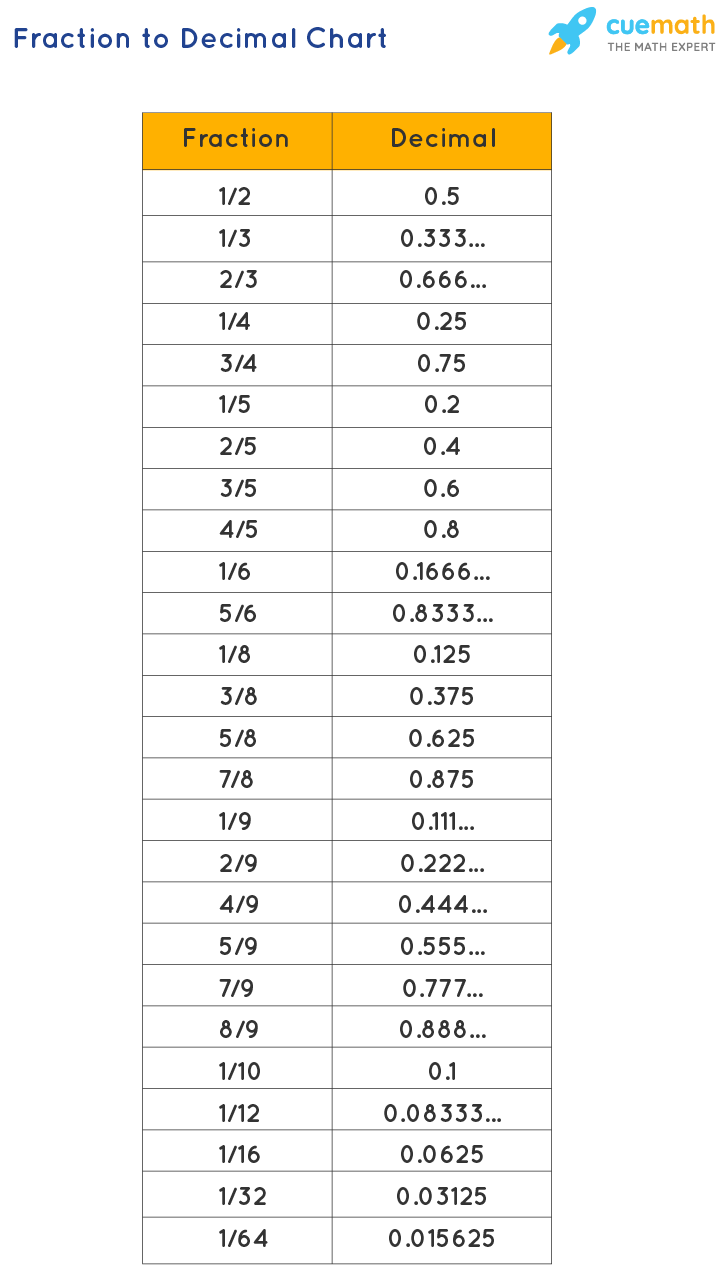
Consider a seemingly simple question: “What is 1 and 2/3 as a decimal?” While at first glance it appears to be a basic arithmetic problem, its implications extend deeply into how we interpret financial data, calculate returns, allocate resources, and measure performance. This article delves into the conversion process, but more importantly, it illuminates why this fundamental mathematical understanding is indispensable for anyone navigating the complexities of personal and business finance.
The Foundation: Understanding Fractions and Decimals in a Financial Context
Before we tackle the conversion itself, it’s crucial to appreciate what fractions and decimals represent and why both forms are prevalent in financial discourse. They are two sides of the same coin, each offering a unique lens through which to view parts of a whole, but decimals often provide the universal standard for financial calculation and reporting due to their inherent precision and ease of manipulation.
Deciphering “1 and 2/3”: Mixed Numbers Explained
“1 and 2/3” is an example of a mixed number, a combination of a whole number (1) and a proper fraction (2/3). In a financial context, mixed numbers can appear in various scenarios. For instance, an investment might mature in “1 and 2/3 years,” or a project might require “1 and 2/3 units” of a specific resource. Understanding the components of a mixed number is the first step towards converting it into a more universally applicable decimal format.
The whole number signifies a complete unit or cycle – a full year, a full dollar, a full percentage point. The fractional part, 2/3, represents a portion of that next unit or cycle. It tells us that we have two out of three equal parts of whatever the unit may be. In finance, where time, capital, and returns are often not neatly packaged into whole numbers, mixed numbers provide a natural way to express these in-between values. For example, if you’re calculating interest for a period of 1 year and 8 months (which is 1 and 8/12 or 1 and 2/3 years), expressing this as a decimal allows for direct input into interest formulas. Similarly, if your stock ownership grants you “1 and 2/3” votes per share, converting this to a decimal helps in tallying total voting power.
The Essence of Decimals: Precision in Numbers
Decimals, on the other hand, provide a singular, continuous representation of numbers, including fractional parts. They are based on powers of ten, making them highly compatible with our base-10 number system and, crucially, with digital computation. In finance, decimals are the workhorses for precision. Stock prices are quoted to two decimal places (e.g., $15.25), interest rates are expressed as decimals before being multiplied by 100 to become percentages (e.g., 0.05 for 5%), and exchange rates often extend to four or even six decimal places to capture minute fluctuations.
The power of decimals in finance lies in their ability to provide granular detail and facilitate easy comparison and calculation. When dealing with large sums of money, even small fractional differences, when converted to decimals, can have significant impacts. An error in understanding a fraction could lead to miscalculating returns, overestimating budgets, or misinterpreting financial ratios. Therefore, transforming any mixed or complex fraction into its decimal equivalent standardizes the data, making it readily usable for analysis, reporting, and direct input into financial models and software.
The Conversion Process: From Fraction to Financial Insight
The process of converting a mixed number like “1 and 2/3” to a decimal is straightforward, yet it unlocks a world of clearer financial understanding. It bridges the gap between conceptual representations of parts (fractions) and the precise, calculable figures required in finance (decimals).
Step-by-Step Conversion: The Mechanics
To convert “1 and 2/3” to a decimal, we break it down into its components: the whole number and the fractional part.
-
Isolate the Whole Number: In “1 and 2/3,” the whole number is 1. This part remains as it is; it will be the whole number part of our final decimal.
-
Convert the Fractional Part to a Decimal: The fractional part is 2/3. To convert any fraction to a decimal, you divide the numerator (the top number) by the denominator (the bottom number).
-
In this case, divide 2 by 3:
2 ÷ 3 = 0.6666… (This is a repeating decimal)
-
-
Combine the Whole Number and the Decimal Fraction: Now, simply add the whole number part (1) to the decimal equivalent of the fractional part (0.6666…).
- 1 + 0.6666… = 1.6666…
Therefore, 1 and 2/3 as a decimal is approximately 1.67 (when rounded to two decimal places, which is common in currency), or 1.667 (when rounded to three decimal places), or 1.6 recurring (1.6̅).
The choice of how many decimal places to use is critical in finance and depends entirely on the context. For currency, two decimal places are standard (cents). For interest rates or scientific calculations, more precision might be necessary.
Practical Tools for Conversion: Calculators and Spreadsheets
While understanding the manual process is vital, in professional financial settings, these conversions are rarely done by hand. Financial professionals rely heavily on tools like scientific calculators and spreadsheet software (e.g., Microsoft Excel, Google Sheets) to perform conversions quickly and accurately.
-
Calculators: Most scientific and even basic calculators can handle fraction-to-decimal conversions. You would typically enter the numerator, the division sign, and the denominator.
-
Spreadsheets: Spreadsheets are particularly powerful for financial calculations involving numerous conversions. You can simply enter
=2/3into a cell, and Excel will display0.666666667. You can then format the cell to display the desired number of decimal places. If you have a mixed number like1 2/3, you can input=1+(2/3)to get the combined decimal value.

Even with these sophisticated tools, a fundamental understanding of how the conversion works is non-negotiable. It ensures that inputs are correct, outputs are interpreted accurately, and potential errors from miskeying or misunderstanding are minimized. Relying solely on technology without comprehending the underlying math can lead to what’s known as “garbage in, garbage out,” where incorrect inputs yield flawed financial analyses.
Why This Simple Conversion Matters in Finance
The conversion of fractions to decimals might seem elementary, but its implications ripple through virtually every aspect of personal and corporate finance. It’s not just about getting the right answer; it’s about enabling a clearer, more standardized, and computationally friendly approach to financial data.
Understanding Investment Returns and Interest Rates
Investment returns and interest rates are almost exclusively dealt with in decimal or percentage form (which is just a decimal multiplied by 100). If an investment promises a return of “one and two-thirds percent” (1 2/3%), you must convert this to a decimal to correctly apply it in any calculation.
- 1 2/3% = 1.666…% = 0.01666… as a decimal.
This decimal form is then used in formulas for compound interest, future value, present value, or calculating actual earnings.
Consider an investment held for “1 and 2/3 years.” To calculate compound interest, the time period (t) in the formula A = P(1 + r/n)^(nt) must be in decimal form. If your bank calculates interest daily (n=365) and your investment is for 1 year and 8 months, understanding 1 and 2/3 years as approximately 1.67 years allows you to accurately input 1.666… into your calculations for precise interest accrual. Without this conversion, approximating or incorrectly handling the fractional part would lead to inaccurate projections of wealth growth.
Budgeting, Expense Tracking, and Resource Allocation
Effective personal and business budgeting relies on allocating specific portions of income or capital to various categories. While it’s common to think in percentages, sometimes fractional allocations emerge. For instance, you might decide to dedicate “1 and 2/3 times” your average utility bill amount to a specific home improvement fund for the next quarter. Converting “1 and 2/3” to 1.67 immediately provides a concrete multiplier to apply to your average utility bill, giving you a precise dollar figure for your budget allocation.
Similarly, in business, allocating resources like raw materials, labor hours, or marketing budget might involve fractional units. If a project requires “1 and 2/3” units of a specialized component, knowing this equates to 1.67 units allows for accurate inventory management, procurement planning, and cost analysis. It avoids ambiguity and ensures that financial planning is based on concrete, quantifiable figures.
Analyzing Financial Statements and Ratios
Financial statements are replete with numbers that tell a company’s story. Analysts use various financial ratios (e.g., current ratio, debt-to-equity ratio, profit margin) to gauge a company’s health and performance. These ratios are typically presented as decimals or percentages. For example, a current ratio of “1 and 2/3” means the company has $1.67 in current assets for every $1 in current liabilities, indicating its short-term liquidity.
When comparing a company’s ratios to industry benchmarks or its historical performance, it’s essential that all figures are in a consistent, standardized format, usually decimals. Converting any fractional representations allows for direct comparison and accurate interpretation, facilitating informed investment decisions, credit assessments, or strategic planning. Misinterpreting these ratios due to a failure in basic conversion can lead to flawed conclusions about a company’s financial stability or growth prospects.
Common Pitfalls and Best Practices in Financial Math
While the conversion process itself is simple, its application in finance comes with nuances that require attention to detail and a disciplined approach. Overlooking these can lead to significant errors with real financial consequences.
The Importance of Precision and Rounding Rules
One of the most critical aspects of working with decimals in finance is understanding precision and applying appropriate rounding rules. As we saw, 2/3 is a repeating decimal (0.666…). When and how you round this number is paramount.
-
Precision: In financial calculations, particularly those involving large sums or multiple steps, carrying out decimals to a higher degree of precision (e.g., 4-6 decimal places) for intermediate calculations is often best practice to minimize rounding errors.
-
Rounding: For final figures, especially currency, rounding to two decimal places (cents) is standard. However, understanding standard rounding rules (round up if the next digit is 5 or greater, otherwise round down) is crucial. A small rounding error, if compounded across thousands or millions of transactions, can lead to substantial discrepancies. For instance, if an interest rate is consistently rounded prematurely, the final interest earned or paid can differ significantly from the exact calculation. It’s often recommended to round only at the final step of a calculation.
Beyond Basic Conversions: The Mindset of Financial Literacy
Mastering the conversion of “1 and 2/3” to 1.67 is more than just memorizing a math rule; it’s about cultivating a financially literate mindset. This mindset involves:
-
Attention to Detail: Recognizing that every number, regardless of its format, carries specific financial weight.
-
Critical Thinking: Not just accepting numbers at face value but understanding their derivation and implications.
-
Continuous Learning: Recognizing that financial markets and tools evolve, and so too must one’s understanding of the underlying mathematical principles.
-
Application: Actively applying these fundamental skills in personal budgeting, investment analysis, and business operations to make more informed decisions.
This simple conversion serves as a gateway to understanding more complex financial instruments and concepts. It builds confidence in handling numerical data and reduces the intimidation factor often associated with finance.

Conclusion
The question “What is 1 and 2/3 as a decimal?” might appear trivial on the surface, a mere arithmetic exercise. However, when viewed through the lens of finance, it transforms into a foundational inquiry that underpins a vast array of practical applications. From calculating nuanced investment returns and precisely allocating resources in a budget to accurately interpreting critical financial ratios and ensuring the integrity of financial models, the ability to convert fractions to decimals is an indispensable skill.
In a world increasingly driven by data and quantitative analysis, financial clarity hinges on a solid grasp of mathematical fundamentals. By understanding how to convert “1 and 2/3” into its decimal equivalent of approximately 1.67, individuals and businesses unlock greater precision, reduce ambiguity, and enhance their capacity for informed decision-making. This seemingly small conversion represents a significant step towards achieving comprehensive financial literacy, empowering everyone to navigate the financial landscape with greater confidence and insight. Embrace the power of these fundamental numerical transformations; they are the silent workhorses that drive financial acumen and success.
aViewFromTheCave is a participant in the Amazon Services LLC Associates Program, an affiliate advertising program designed to provide a means for sites to earn advertising fees by advertising and linking to Amazon.com. Amazon, the Amazon logo, AmazonSupply, and the AmazonSupply logo are trademarks of Amazon.com, Inc. or its affiliates. As an Amazon Associate we earn affiliate commissions from qualifying purchases.