
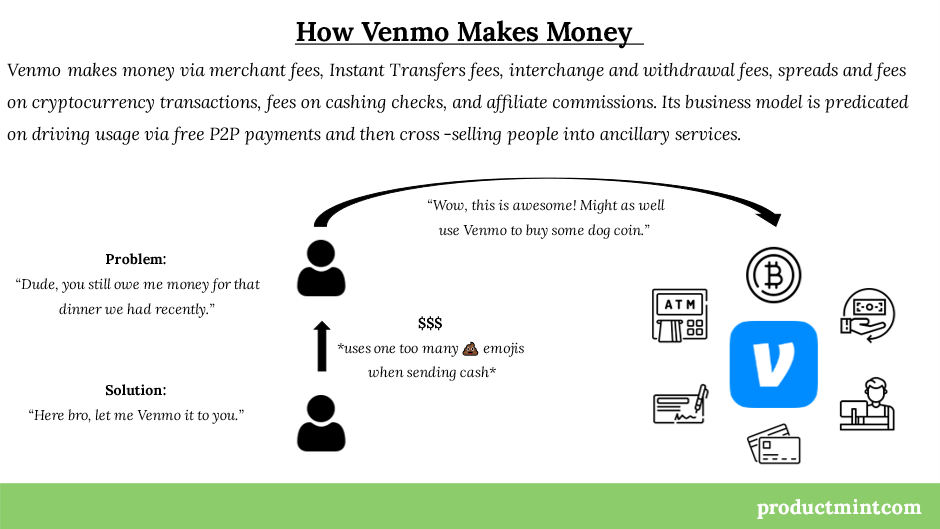
For millions, Venmo has become synonymous with splitting bills, sharing rent, and simplifying everyday financial interactions. Its intuitive peer-to-peer (P2P) payment system often feels entirely free, leading many to wonder: how exactly does Venmo, a major player in the digital payments arena, generate revenue and sustain its operations? The answer lies in a sophisticated, multi-pronged business model that leverages its massive user base, strategic partnerships, and a suite of additional financial services designed to monetize convenience and connectivity. Far from being a philanthropic endeavor, Venmo has meticulously crafted a financial strategy that converts its widespread adoption into a robust income stream within the competitive fintech landscape.

The Foundation: Free P2P Payments and Network Effects
At its core, Venmo’s strategy begins with the allure of a free, user-friendly service. This initial offering is not a direct revenue generator, but rather a powerful magnet for attracting and retaining a vast user base, which then becomes the fertile ground for monetization.
The Allure of Simplicity: Making Payments Easy
Venmo revolutionized the way people send and receive money, particularly among friends and family. Its social feed, coupled with an almost frictionless transaction process, made digital payments engaging and effortless. The ability to instantly send small amounts without fees, typically linked to a bank account or debit card, cultivated a sense of convenience and trust. This simplicity dramatically lowered the barrier to entry, encouraging widespread adoption among demographics often underserved or overlooked by traditional banking systems. Users gravitated towards Venmo not just for its utility, but for the ease and speed it offered in everyday financial exchanges.
Building a Massive User Base
The “free” P2P model is critical for achieving network effects. The more people who use Venmo, the more valuable it becomes to each individual user. If your friends, family, and colleagues are all on Venmo, you’re more likely to join and use it yourself to avoid friction in transactions. This viral growth mechanism has allowed Venmo, an integral part of the PayPal ecosystem, to accumulate tens of millions of active users. This massive, engaged user base is Venmo’s most valuable asset, transforming it from a mere payment app into a significant financial platform ripe for monetization through a variety of supplementary services.
The Strategic Imperative of “Free”
The initial “free” model is a deliberate strategic choice, often referred to as a “freemium” model in tech. It prioritizes user acquisition and engagement over immediate revenue generation from its most basic service. By making the core P2P experience free and seamless, Venmo embeds itself into users’ daily financial habits. Once users are integrated into the Venmo ecosystem and rely on it for their regular transactions, they become more receptive to adopting additional services, many of which do carry fees or generate revenue for the company. This long-term strategy acknowledges that the initial investment in a free service pays dividends through later monetization opportunities.
Unpacking Venmo’s Primary Revenue Streams
While the P2P transfers are mostly free, Venmo has developed a sophisticated array of services that generate significant income. These revenue streams are carefully integrated into the user experience, often providing enhanced convenience or utility for a fee.
Instant Transfer Fees: The Convenience Premium
One of Venmo’s most straightforward and significant revenue generators is the fee charged for “Instant Transfers.” While standard transfers to a linked bank account can take 1-3 business days and are free, Venmo offers the option to transfer funds almost immediately for a small percentage-based fee, typically 1.75% (with a minimum fee of $0.25 and a maximum of $25.00). This fee monetizes the urgency and convenience that many users value, particularly when they need quick access to their funds. For a user receiving a large sum or needing money rapidly, this small fee is a reasonable trade-off for instant liquidity, making it a highly effective income stream for Venmo.
Business Profiles and Merchant Transaction Fees
Venmo has increasingly expanded beyond P2P to facilitate payments for goods and services. Businesses can create Venmo Business Profiles, allowing them to accept payments directly from Venmo users. When customers pay a business via Venmo, the business is charged a small processing fee, typically 1.9% + $0.10 per transaction. This expands Venmo’s utility from a personal finance tool to a business payment solution, tapping into the vast market of small businesses, freelancers, and sole proprietors who want an easy way for customers to pay them. By acting as a payment processor, Venmo competes with traditional credit card networks and other digital payment platforms, generating significant revenue from transaction volumes.
The Venmo Debit and Credit Card: Interchange and Interest
Venmo has diversified its offerings by introducing both a physical Venmo Debit Card and a Venmo Credit Card, powered by Mastercard and issued by financial partners.
- Venmo Debit Card: This card allows users to spend their Venmo balance anywhere Mastercard is accepted, and also offers cash back rewards at select merchants. For every purchase made with the debit card, Venmo (or its parent, PayPal) earns a portion of the “interchange fee” – a small fee paid by the merchant’s bank to the cardholder’s bank for processing the transaction. This small percentage on millions of transactions quickly adds up.
- Venmo Credit Card: The Venmo Credit Card operates like a traditional credit card, offering cash back on spending categories where users spend the most, with rewards managed directly within the Venmo app. Here, Venmo and its issuing bank partner generate revenue through interchange fees, interest on outstanding balances, late payment fees, and potentially annual fees (though the initial offering didn’t have one). This pushes Venmo further into the realm of traditional banking services, broadening its financial footprint and revenue opportunities.
Cryptocurrency Services: A New Frontier for Revenue
Recognizing the growing interest in digital assets, Venmo integrated the ability for users to buy, sell, and hold cryptocurrencies directly within the app. Users can purchase Bitcoin, Ethereum, Litecoin, and Bitcoin Cash with as little as $1. Venmo charges a fee for each cryptocurrency transaction, typically a tiered fee based on the transaction amount. This move not only keeps Venmo relevant in the evolving financial landscape but also opens up a significant new revenue stream by facilitating access to the burgeoning crypto market for its existing user base, many of whom might be new to crypto.

Cash Back & Merchant Offers: Partnering for Profit
Venmo also generates revenue through partnerships with merchants and advertisers. Through “Cash Back & Merchant Offers,” Venmo presents users with personalized deals and discounts from participating businesses. While users save money, Venmo earns a commission or referral fee from these merchants when users engage with or redeem these offers. This creates a symbiotic relationship: users get value, merchants get exposure and sales, and Venmo monetizes its user data and platform reach by facilitating these connections.
Strategic Growth and Monetization Beyond Core Services
Venmo’s revenue model isn’t static; it constantly evolves through strategic growth initiatives and deeper integration into the broader digital economy. These efforts aim to enhance user engagement and unlock further monetization opportunities.
Data Monetization and User Insights
While Venmo doesn’t explicitly “sell” user data, the aggregated and anonymized transaction data it collects is immensely valuable. This data provides deep insights into consumer spending habits, trends, and preferences. Venmo can leverage these insights to optimize its own services, develop new features, and offer highly targeted advertising or merchant deals. This analytical capability enhances the effectiveness of its merchant partnerships and improves the personalization of its services, indirectly driving revenue by making its platform more attractive to both users and businesses.
Integration within the PayPal Ecosystem
As a subsidiary of PayPal, Venmo benefits immensely from the larger company’s infrastructure, security, and financial expertise. This integration also allows for cross-promotion and shared user bases. For instance, Venmo users can often pay with Venmo at millions of online retailers that accept PayPal. This expands Venmo’s “Pay with Venmo” feature beyond its direct business profiles, allowing Venmo to earn processing fees from a much wider network of merchants. This strategic alignment broadens Venmo’s reach and ability to capture a slice of the digital commerce pie, strengthening its overall revenue potential.
International Expansion and Localized Offerings
While Venmo has primarily focused on the U.S. market, future international expansion represents a significant growth vector. Adapting its services and monetization strategies to different global markets, considering local regulations, payment preferences, and economic conditions, could unlock vast new user bases and revenue streams. Localization of features, partnerships, and even the core P2P model would be key to successfully replicating its U.S. success abroad.
The Competitive Landscape and Future Monetization
Venmo operates in a fiercely competitive environment, constantly challenged by traditional banks, other fintech startups, and tech giants. Its ability to maintain and grow its revenue depends on innovation, adaptability, and a keen understanding of the market.
Navigating a Crowded Fintech Market
Venmo faces stiff competition from various fronts. Traditional banks have improved their own P2P services (like Zelle), and other fintech companies (like Cash App) offer similar functionalities and are also aggressively expanding their product suites. Tech giants like Apple Pay and Google Pay also offer robust payment solutions. To thrive, Venmo must continuously innovate, differentiate its offerings, and maintain its strong brand loyalty, which it has built through its social and user-friendly interface. Its competitive advantage lies in its network effects and its integrated financial ecosystem.
Regulatory Environment and Compliance Costs
The financial services industry is heavily regulated, and fintech companies like Venmo face increasing scrutiny regarding consumer protection, data privacy, anti-money laundering (AML), and know-your-customer (KYC) compliance. Adhering to these regulations is crucial for maintaining trust and operational legality, but it also incurs significant operational costs. Changes in regulatory policy can impact Venmo’s revenue streams, for instance, by restricting certain fee structures or requiring expensive new security measures. Proactive compliance and a robust legal framework are essential to Venmo’s long-term financial health.
Innovation as a Driver of New Income Streams
The future of Venmo’s monetization will likely involve continued innovation. This could include further expansion into credit products, investment services beyond cryptocurrency, budgeting tools, or even integration with emerging technologies like blockchain for more efficient cross-border payments. Exploring subscription models for premium features, enhanced analytics for businesses, or even small loan offerings could also represent future revenue opportunities. The ability to anticipate user needs and quickly develop valuable new services will be paramount.
Balancing User Experience with Profitability
Ultimately, Venmo’s continued success in making money hinges on its ability to strike a delicate balance between generating revenue and maintaining an excellent, user-friendly experience. Overly aggressive monetization or the introduction of too many fees could alienate its core user base, which was initially drawn to the platform by its simplicity and cost-effectiveness. Venmo’s strategy must always prioritize adding value for users, making the fees and services it offers feel like a worthwhile exchange rather than an unwanted imposition.
In conclusion, Venmo’s profitability is a testament to a well-executed strategy of building a vast, engaged user base on the back of a free core service, and then intelligently monetizing that user base through a diverse portfolio of value-added financial products and services. From instant transfer fees and business transaction charges to interchange fees from its debit and credit cards, and new ventures into cryptocurrency, Venmo has proven that convenience, connectivity, and a robust financial ecosystem can be very profitable indeed. As the digital finance landscape continues to evolve, Venmo’s adaptable and innovative approach positions it to sustain and grow its revenue streams well into the future.
aViewFromTheCave is a participant in the Amazon Services LLC Associates Program, an affiliate advertising program designed to provide a means for sites to earn advertising fees by advertising and linking to Amazon.com. Amazon, the Amazon logo, AmazonSupply, and the AmazonSupply logo are trademarks of Amazon.com, Inc. or its affiliates. As an Amazon Associate we earn affiliate commissions from qualifying purchases.