
For decades, the arrival of late summer and early autumn has signaled a period of physical distress for millions of individuals globally. The culprit is the ragweed plant, a prolific producer of pollen that triggers allergic rhinitis, asthma, and various respiratory complications. Historically, managing a ragweed allergy was a reactive process involving over-the-counter antihistamines and indoor confinement. However, as we move further into the decade, the intersection of healthtech, artificial intelligence, and environmental engineering is transforming the “ragweed season” from an unavoidable hardship into a data-driven, manageable condition.

The shift from traditional medicine to a tech-integrated approach is not merely a convenience; it represents a fundamental change in how we interact with our environment. By leveraging Big Data, Internet of Things (IoT) sensors, and advanced air purification technologies, we are building a “digital shield” that allows allergy sufferers to reclaim their quality of life.
The Rise of Hyper-Local Pollen Monitoring Systems
The primary challenge in managing ragweed allergies has always been the lack of precise data. Traditional pollen counts are often recorded at a single regional station, providing a broad average that may not reflect the actual air quality in a specific neighborhood or park. Modern technology is solving this through hyper-local monitoring.
IoT Sensors and Real-Time Data Collection
The deployment of IoT-enabled pollen sensors is a game-changer for environmental monitoring. Unlike traditional manual counting methods—which involve collecting particles on a slide and examining them under a microscope—new automated sensors utilize laser-based imaging and machine learning to identify pollen grains in real-time. These devices can distinguish between different types of pollen, such as ragweed, oak, or grass, and transmit that data instantly to a cloud-based network. This allows for the creation of “heat maps” that show exactly where pollen concentrations are highest at any given moment.
Machine Learning Algorithms for Predictive Modeling
Data collection is only half the battle; the real value lies in prediction. Machine learning models are now being trained on decades of historical weather data, satellite imagery, and soil moisture levels to predict when ragweed will bloom and how far its pollen will travel. Companies like Google have integrated these predictive models into their Maps API, allowing third-party developers to build apps that suggest “low-pollen routes” for runners or commuters. By analyzing wind patterns and humidity levels, these algorithms can forecast a “pollen storm” days before it occurs, giving users ample time to adjust their medication or schedules.
Personal Healthtech: Wearables and Symptom Tracking
The “Quantified Self” movement has reached the world of allergy management. We are moving away from general advice toward personalized interventions based on an individual’s unique physiological response to ragweed.
Bio-Sensors and Physiological Data Integration
Modern wearables, such as smartwatches and rings, are becoming increasingly sophisticated in their ability to detect the early physiological signs of an allergic reaction. Before a user even begins to sneeze, sensors can detect subtle changes in Heart Rate Variability (HRV), respiratory rate, and blood oxygen levels. When this biometric data is cross-referenced with local pollen levels via a smartphone app, the technology can provide a “personalized allergy alert.” For instance, if an Apple Watch detects a spike in respiratory rate while the user is in a high-ragweed area, it can prompt them to use their nasal spray or head indoors before the symptoms become severe.
Smart Inhalers and Connected Medication
For those whose ragweed allergy triggers asthma, tech-enabled “smart inhalers” are providing a new level of safety. These devices attach to standard inhalers and record the time and location of every dose. Through Bluetooth synchronization, this data is shared with an app that analyzes usage patterns. If a user is reaching for their rescue inhaler more frequently during ragweed season, the software can flag this trend and suggest a consultation with a specialist or an adjustment in daily preventative medication. This creates a digital diary that is far more accurate than a patient’s memory, leading to better clinical outcomes.
AI-Driven Diagnostics and Personalized Immunotherapy

The diagnostic process for allergies has traditionally been invasive and time-consuming. Technology is streamlining this through AI-powered tools that move the lab closer to the patient.
Computer Vision in Botanical Identification
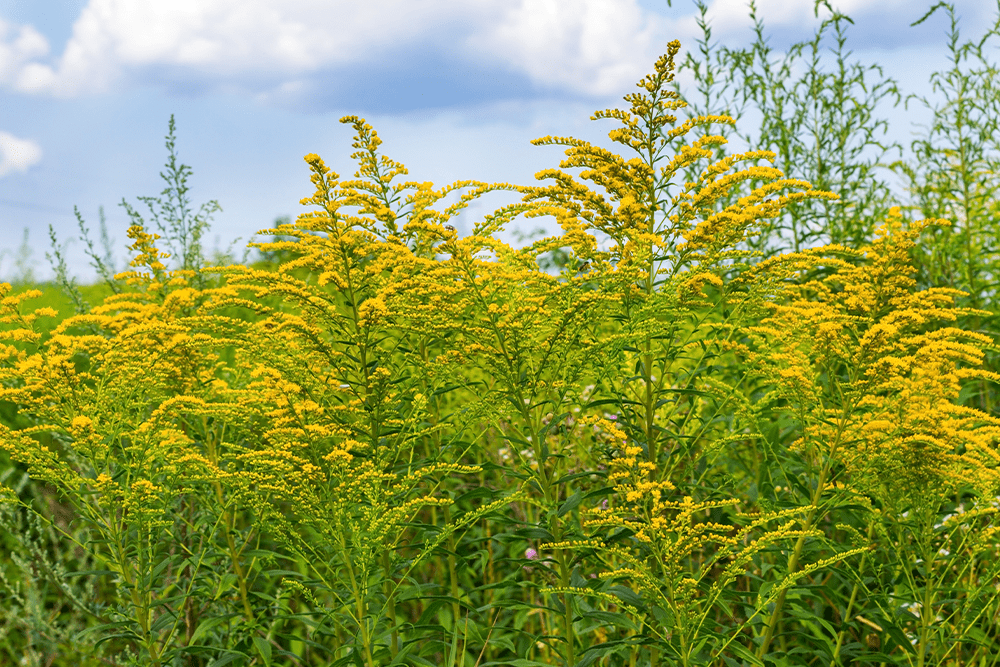
Identifying ragweed in one’s immediate environment is the first step in avoidance. New mobile applications utilize computer vision—a branch of AI that allows computers to “see”—to identify ragweed plants through a smartphone camera. A homeowner can scan their backyard, and the AI can distinguish between harmless weeds and highly allergenic common or giant ragweed. This empowers individuals to engage in targeted environmental control, removing the source of the allergen before it has a chance to pollinate.
Generative AI in Drug Discovery for Allergens
On the pharmaceutical front, generative AI is accelerating the development of next-generation immunotherapy. Traditional allergy shots involve years of injections to desensitize the immune system. Tech firms are now using AI to simulate how different ragweed proteins interact with human immune cells at a molecular level. This “in-silico” testing allows researchers to design more potent and specific immunotherapies (such as sublingual drops or short-course vaccines) that target the exact components of the ragweed pollen grain responsible for the allergic response. This significantly reduces the time required for drug development and increases the efficacy of the treatment.
Smart Environments: Tackling Allergens in the Smart Home
Since ragweed pollen is microscopic and can easily enter buildings through windows, doors, and HVAC systems, technology is being used to turn the home into a sanctuary.
HEPA-Integrated Smart HVAC Systems
The modern smart home is now equipped with HVAC systems that do more than just regulate temperature. Advanced systems are integrated with indoor air quality (IAQ) monitors that detect particulate matter (PM2.5) and biological aerosols. When the outdoor pollen count rises, the system can automatically switch to a high-efficiency particulate air (HEPA) filtration mode and increase the air exchange rate. These systems are often connected to local weather stations; if the “ragweed index” is high, the house can “seal” itself by closing motorized windows and engaging the air purification system before the pollen enters the living space.
Robotic Air Quality Management
Beyond static filters, we are seeing the rise of mobile air purification. Robotic air purifiers, similar in design to robotic vacuums, can now navigate a home and identify “stagnant zones” where pollen and dust may have settled. Using laser sensors, these robots can detect high concentrations of particles and focus their purification efforts on specific rooms. Furthermore, robotic vacuums equipped with specialized HEPA filters and UV-C light are more effective at neutralising and removing ragweed pollen from carpets and upholstery than traditional manual cleaning methods.
The Future of Digital Health Ecosystems for Allergy Sufferers
As we look toward the future, the goal is to integrate these disparate technologies into a seamless digital health ecosystem. This involves a holistic approach where the environment, the device, and the doctor are all connected.
Telehealth Integration and Remote Monitoring
The data collected by IoT sensors, wearables, and smart inhalers is most powerful when it is shared with healthcare providers. We are entering an era of “remote allergy management,” where an allergist can monitor a patient’s symptom load in real-time during ragweed season. Telehealth platforms are integrating this data into Electronic Health Records (EHR), allowing for proactive rather than reactive medicine. If a patient’s data shows a decline in lung function during a high-pollen week, the doctor can send a digital prescription update or schedule a virtual check-in immediately.
Blockchain for Environmental and Health Data
As health and environmental data becomes more prevalent, privacy and data integrity become paramount. Blockchain technology is being explored as a way to securely store and share allergy data. By using a decentralized ledger, patients can maintain ownership of their biometric data while allowing researchers to access anonymized “crowdsourced” pollen reports. This could lead to a massive, global database of ragweed prevalence and human reaction patterns, driving further innovations in urban planning and public health policy.
The evolution of ragweed allergy management is a testament to the power of technology to solve age-old biological challenges. By moving beyond the antihistamine tablet and embracing a suite of digital tools—from AI-driven forecasting to smart home filtration—we are creating a future where “allergy season” no longer dictates the limits of human activity. The tech-enabled response to ragweed is not just about comfort; it is about the precision application of data to improve the respiratory health of the global population.
aViewFromTheCave is a participant in the Amazon Services LLC Associates Program, an affiliate advertising program designed to provide a means for sites to earn advertising fees by advertising and linking to Amazon.com. Amazon, the Amazon logo, AmazonSupply, and the AmazonSupply logo are trademarks of Amazon.com, Inc. or its affiliates. As an Amazon Associate we earn affiliate commissions from qualifying purchases.