
The journey into the world of investing often begins with a fundamental question: how do you actually purchase stocks? While the process has been significantly simplified by the digital revolution, the mechanics of the stock market remain a blend of strategy, technical execution, and financial discipline. For the modern investor, buying a stock is no longer about shouting on a trading floor; it is about utilizing sophisticated digital tools to claim ownership in the world’s most influential companies. This guide explores the end-to-end process of purchasing stocks, from initial preparation to the final execution of a trade.

Establishing Your Financial Foundation
Before a single dollar is committed to the equity markets, it is imperative to establish a stable financial baseline. Investing is a tool for wealth preservation and growth, but it carries inherent risks that require a safety net.
Assessing Debt and Liquidity
The first step in the pre-investment phase is evaluating your current liabilities. Financial experts generally advise against investing significant capital while carrying high-interest debt, such as credit card balances. If your debt carries an interest rate of 15% to 25%, and the historical average return of the stock market is approximately 10%, paying down debt provides a guaranteed “return” that outperforms most market investments.
Furthermore, an emergency fund is non-negotiable. This fund should ideally cover three to six months of living expenses held in a liquid high-yield savings account. This ensures that if the market experiences a downturn, you are not forced to liquidate your stocks at a loss to cover unforeseen personal costs.
Defining Your Investment Goals and Risk Tolerance
Are you investing for a retirement that is thirty years away, or are you saving for a down payment on a home in five years? The answer dictates your strategy. Long-term goals allow for higher exposure to volatile assets because you have the luxury of time to recover from market cycles. Short-term goals require a more conservative approach, focusing on capital preservation through bonds or dividend-paying “blue-chip” stocks. Understanding your risk tolerance—your emotional and financial ability to withstand a 10% or 20% drop in portfolio value—is the cornerstone of a sustainable investment plan.
Selecting the Right Brokerage Platform
A brokerage is the intermediary that executes your buy and sell orders. In the current landscape, investors have a plethora of options ranging from traditional powerhouses to streamlined mobile apps.
Types of Brokerage Accounts
When you open an account, you must decide on its tax structure.
-
Taxable Brokerage Accounts: These offer the most flexibility. You can deposit and withdraw money at any time, but you are subject to capital gains taxes on your profits.
-
Retirement Accounts (IRAs): In the United States, accounts like the Roth IRA or Traditional IRA offer significant tax advantages. A Roth IRA allows for tax-free growth and withdrawals in retirement, while a Traditional IRA may provide an upfront tax deduction. These are ideal for long-term “buy and hold” strategies.
-
Custodial Accounts: These are managed by an adult for a minor, allowing parents to start a portfolio for their children.
Evaluating Platforms
When choosing a platform, consider the following criteria:
-
Commissions and Fees: Most major U.S. brokerages (such as Fidelity, Charles Schwab, and Vanguard) now offer zero-commission trading for domestic stocks and Exchange-Traded Funds (ETFs). However, always check for hidden fees like account maintenance or wire transfer charges.
-
Tools and Research: Some platforms provide institutional-grade research reports, technical charting tools, and real-time data. Beginners may prefer a clean, intuitive interface, while active traders might require a platform with high-speed execution capabilities.
-
Fractional Shares: This is a vital feature for those starting with smaller amounts of capital. It allows you to buy a portion of a stock (e.g., $10 worth of a $3,000 stock) rather than needing the full price of a single share.
The Mechanics of Placing a Trade
Once your account is funded, the actual act of purchasing a stock involves navigating the “order entry” screen. Understanding the terminology here is critical to ensuring you pay the price you intended.
Understanding Ticker Symbols and Quotes
Every publicly traded company is identified by a unique ticker symbol (e.g., AAPL for Apple, TSLA for Tesla). When you search for a ticker, you will see a “Bid” and an “Ask” price.
-
The Bid: The highest price a buyer is willing to pay for the stock.
-
The Ask: The lowest price a seller is willing to accept.
-
The Spread: The difference between the bid and the ask. For highly liquid stocks, this spread is usually just a penny.

Choosing Your Order Type
There are two primary ways to tell your broker to buy a stock:
-
Market Order: This tells the broker to buy the stock immediately at the best available current price. While this guarantees the trade will happen quickly, the final price might be slightly higher than the last quoted price if the market is moving fast.
-
Limit Order: This allows you to set a maximum price you are willing to pay. For example, if a stock is trading at $105, you can set a limit order for $100. The trade will only execute if the price drops to $100 or lower. This gives you price certainty but risks the trade not being filled if the price never hits your target.
Execution and Settlement
After you click “Buy,” the broker matches your order with a seller. Once the trade is “filled,” you are the beneficial owner of those shares. It is important to note that most markets operate on a “T+1” or “T+2” settlement cycle, meaning it takes one to two business days for the legal transfer of ownership and funds to be fully finalized, though the shares will appear in your account immediately.
Developing a Strategic Investment Philosophy
Purchasing a stock is easy; choosing which stock to buy—and why—is the difficult part. A disciplined philosophy separates successful investors from speculators.
Individual Stocks vs. ETFs
Purchasing shares of an individual company (like Microsoft or Amazon) requires deep research into financial statements, competitive advantages, and management quality. This is “active” investing.
For many, “passive” investing through Exchange-Traded Funds (ETFs) is a more efficient route. An ETF is a basket of hundreds or thousands of stocks. By purchasing one share of an S&P 500 ETF (like VOO or SPY), you are effectively buying a small piece of the 500 largest companies in the U.S. This provides instant diversification and lowers the risk of a single company’s failure ruining your portfolio.
The Power of Diversification
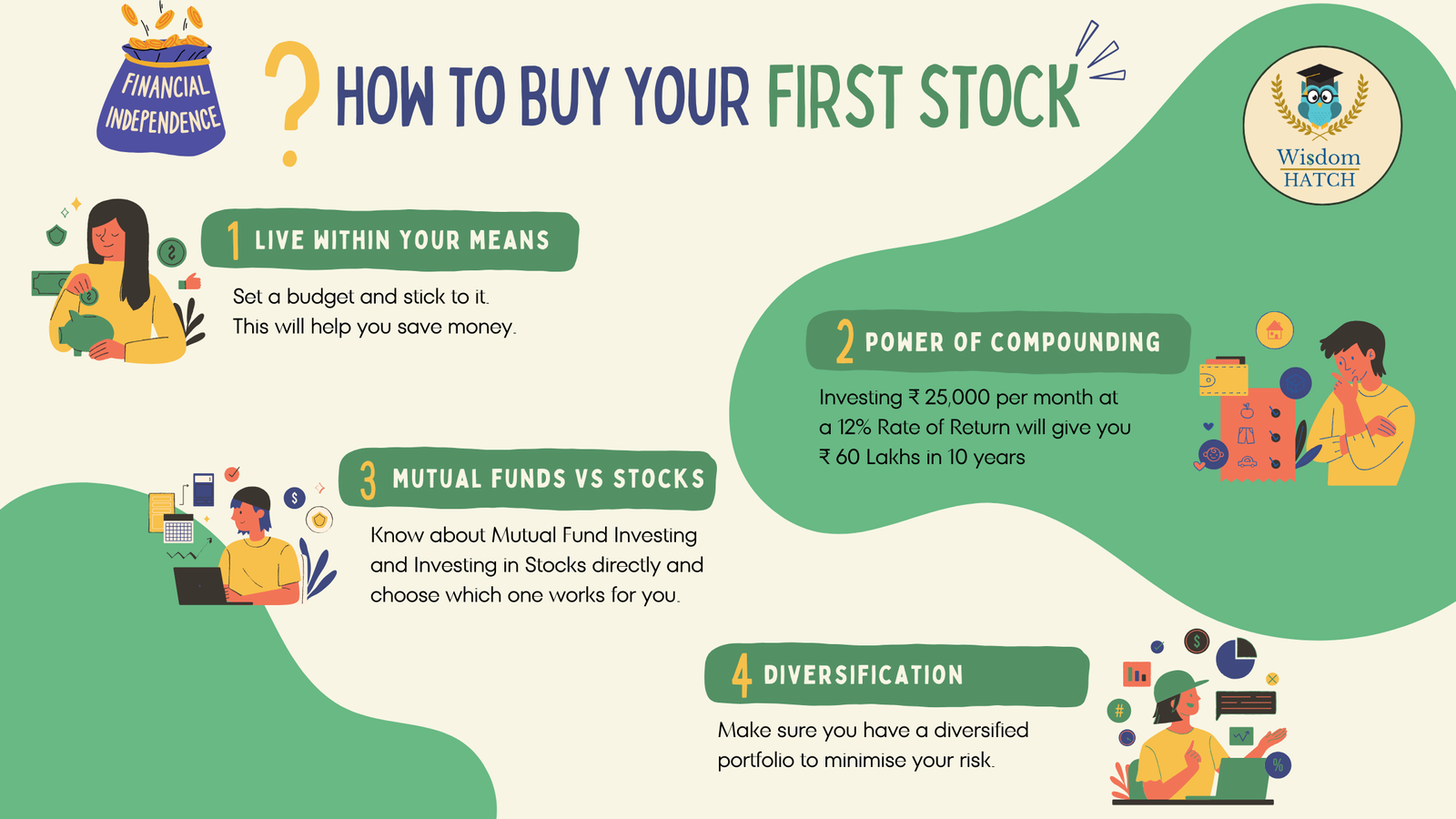
Diversification is often called the “only free lunch in finance.” By spreading your investments across different sectors (Technology, Healthcare, Energy, Consumer Staples) and geographies (U.S., Emerging Markets, Europe), you reduce the volatility of your portfolio. When one sector underperforms, another may overperform, smoothing out your returns over time.
Dollar-Cost Averaging (DCA)
Instead of trying to “time the market” by waiting for the perfect low price, many successful investors use Dollar-Cost Averaging. This involves investing a fixed amount of money at regular intervals (e.g., $500 every month), regardless of the stock price. Over time, this strategy results in buying more shares when prices are low and fewer shares when prices are high, lowering your average cost per share and removing the emotional stress of market fluctuations.
Managing and Growing Your Portfolio
The work does not end once the “Buy” button is pressed. Portfolio management is an ongoing process of monitoring and adjustment.
Monitoring Performance and Rebalancing
While checking your portfolio every hour is counterproductive, a quarterly or annual review is essential. Over time, certain stocks or sectors may grow faster than others, causing your portfolio to become “top-heavy” in one area. Rebalancing involves selling a portion of your winners and buying more of your underperformers to return your portfolio to its original intended asset allocation. This forces you to follow the golden rule of investing: sell high and buy low.
The Role of Dividends
Many established companies pay out a portion of their earnings to shareholders in the form of dividends. For long-term growth, many investors utilize a Dividend Reinvestment Plan (DRIP). This automatically uses your dividend payments to purchase more shares of the same stock, creating a compounding effect where your shares produce dividends, which buy more shares, which then produce even more dividends.
Tax Implications and Exit Strategies
Eventually, you may decide to sell your stocks. It is crucial to understand the tax consequences. In many jurisdictions, if you hold a stock for more than a year before selling, you qualify for “Long-Term Capital Gains” tax rates, which are typically lower than standard income tax rates. Conversely, selling at a loss can sometimes be used to offset gains in other areas, a strategy known as tax-loss harvesting.
Having a predetermined exit strategy is just as important as having a buy strategy. Whether you sell because the company’s fundamentals have changed, or because you have reached your financial goal, making decisions based on data rather than emotion is the key to long-term success.
In conclusion, purchasing stocks is a multi-faceted process that begins with financial self-assessment and ends with disciplined portfolio management. By choosing the right brokerage, understanding order types, and adhering to a diversified strategy, any individual can harness the power of the capital markets to build a more secure financial future.
aViewFromTheCave is a participant in the Amazon Services LLC Associates Program, an affiliate advertising program designed to provide a means for sites to earn advertising fees by advertising and linking to Amazon.com. Amazon, the Amazon logo, AmazonSupply, and the AmazonSupply logo are trademarks of Amazon.com, Inc. or its affiliates. As an Amazon Associate we earn affiliate commissions from qualifying purchases.