
The rhythm of the global financial markets is typically defined by high-frequency data, split-second execution, and a relentless 24-hour news cycle. However, once a year, the frenetic energy of Wall Street comes to a grinding halt for a day that is not even a federal holiday in the United States: Good Friday. For seasoned investors and novice traders alike, the closure of the New York Stock Exchange (NYSE) and the Nasdaq on this day often prompts a recurring question: Why does the secular world of high finance pause for a religious observance?
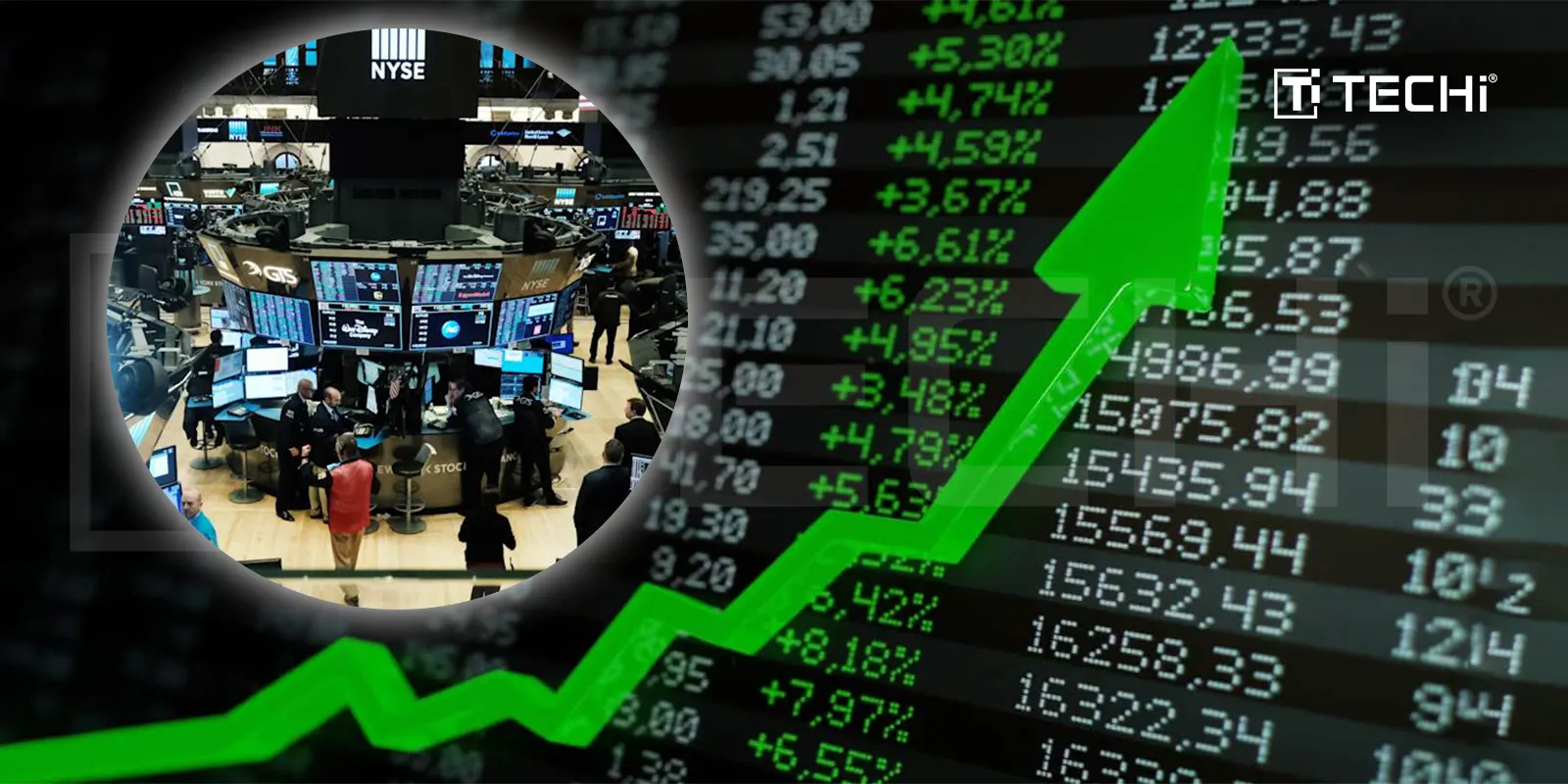
Understanding the closure of the stock market on Good Friday requires a dive into historical tradition, the cultural fabric of American commerce, and the complex logistical frameworks that keep the global economy moving. While the government remains open and the post office continues to deliver mail, the trading floors go dark, creating a unique pocket of stillness in the financial calendar.
The Historical and Cultural Roots of the Market Holiday
To understand why the stock market remains closed on Good Friday, one must look back at the origins of the New York Stock Exchange. Founded in the late 18th century, the NYSE was heavily influenced by the cultural and social norms of the era’s merchant class. In the 1800s, the distinction between religious life and commercial life was far more porous than it is today. Many of the early leaders of the American financial system were members of religious communities that observed the Paschal Triduum with deep solemnity.
The Influence of Tradition over Legislation
Unlike New Year’s Day, Independence Day, or Christmas, Good Friday is not a federal holiday in the United States. This creates a curious paradox where federal employees report to work and the bond market may have truncated hours, yet the equity markets are fully shuttered. The NYSE has observed Good Friday for the vast majority of its existence, with very few exceptions.
In the early decades of the exchange, holidays were less standardized. However, as the exchange modernized in the late 19th and early 20th centuries, the Board of Governors solidified a calendar that respected traditional Western observances. The closure on Good Friday became a “bank holiday” in the traditional British sense—a day when commerce paused to allow for reflection and rest, regardless of the state’s official secular calendar.
Rare Exceptions and Historical Anomalies
History shows that the market has not always been perfectly consistent. There have been rare occasions, such as in the late 1800s and early 1900s, where the market remained open or held a half-day session. However, since the mid-20th century, the closure has become an immovable fixture. The consistency of this closure serves as a reminder that the stock market is not merely a collection of algorithms, but an institution built on centuries of human tradition and social agreement.
Global Market Synchronization and the Good Friday Effect
The closure of the U.S. markets on Good Friday does not happen in a vacuum. Because Good Friday is a major public holiday in the United Kingdom, Canada, Germany, Australia, and much of Europe, the international financial system largely enters a period of synchronized hibernation.
The Impact on Global Liquidity
Liquidity is the lifeblood of efficient markets. When the major European exchanges (such as the London Stock Exchange and the Deutsche Börse) and the North American exchanges close simultaneously, global trading volume drops precipitously. Even if the NYSE attempted to remain open, the lack of participation from international institutional investors would lead to extremely “thin” markets. Thin markets are prone to high volatility and wider bid-ask spreads, which can be detrimental to price discovery and fair execution. By closing, the NYSE avoids the erratic price swings that might occur when only a small fraction of global participants are active.
The Contrast with Federal Status
The fact that the U.S. government remains open on Good Friday creates a unique situation for economic data releases. Occasionally, the Department of Labor releases the crucial “Jobs Report” (Non-Farm Payrolls) on Good Friday. When this occurs, the stock market is closed and cannot immediately react to the data. This forces investors to wait until the following Monday to price in the new information. This “forced waiting period” can lead to significant “gap openings” on Monday morning, where the market opens at a price substantially different from Thursday’s close as it digests the news over the long weekend.
The Economic and Operational Impact of the Three-Day Weekend

From a business finance perspective, market closures are not just about tradition; they are about operational maintenance and risk management. The “long weekend” provided by Good Friday offers a necessary breather for the technical and human infrastructure of the financial world.
System Maintenance and Stress Testing
Modern trading is dependent on incredibly complex software and hardware architectures. The 24/7 nature of some financial instruments (like futures or cryptocurrency) puts immense strain on these systems. A scheduled three-day closure for equities allows IT departments at major exchanges and brokerage firms to perform deep system maintenance, software patches, and hardware upgrades that are too risky to perform during a standard overnight window.
The Human Element: Combating Burnout
In the high-stakes environment of investment banking and professional trading, burnout is a significant operational risk. The Good Friday closure, occurring in the spring, often serves as the first major break for the financial sector after the intense “first quarter” push. It allows traders, analysts, and compliance officers a period of mandatory rest. This human element is vital for maintaining the cognitive sharpness required for risk management and complex decision-making.
Settlement Cycles and Clearinghouses
Market closures also affect the settlement of trades. With the transition toward T+1 (trade date plus one day) settlement in many jurisdictions, the “clock” on financial obligations pauses during the holiday. Clearinghouses use these breaks to reconcile accounts and ensure that the systemic plumbing of the financial world is functioning correctly. For corporate finance departments, this closure means that capital raises or stock buyback programs must be timed around the holiday to avoid settlement delays.
Strategic Considerations for Investors During the Closure
For the individual investor, the Good Friday closure is more than a day off; it is a period that requires specific strategic considerations. Professional money managers often adjust their portfolios in the days leading up to the long weekend to mitigate “weekend risk.”
Managing “Weekend Risk”
Weekend risk refers to the possibility of a major geopolitical or economic event occurring while the markets are closed, leaving investors unable to liquidate or adjust their positions. Because the Good Friday break is three days long, this risk is slightly magnified. It is common to see a reduction in trading volume on the Thursday prior, as traders “derisk” or move to cash to avoid being caught on the wrong side of a news event over the break.
The “Easter Effect” and Market Psychology
Market historians often discuss the “holiday effect,” a phenomenon where stocks tend to perform better on the day before a holiday. This is attributed to a psychological boost—optimism among investors looking forward to a break. While not a guaranteed strategy, data often shows a slight bullish bias on the Thursday preceding Good Friday. Understanding these psychological patterns can help investors better navigate the timing of their entries and exits.
Dividend and Earnings Timing
Corporations are acutely aware of the market calendar. Very few companies choose to report earnings or announce major mergers on the Thursday afternoon before Good Friday, as they risk their news being “buried” or forgotten over the long weekend. For an investor, the week leading up to Good Friday is often characterized by a flurry of activity early in the week, followed by a noticeable cooling of corporate news as the holiday approaches.
The Future of Market Holidays in a Digital Era
As we move further into the 21st century, the concept of a “closed” market is being challenged by the rise of digital assets and 24/7 trading platforms. This raises questions about the long-term viability of traditional exchange holidays like Good Friday.
The Rise of Cryptocurrency and 24/7 Markets
Unlike the NYSE, the cryptocurrency market never closes. Bitcoin, Ethereum, and other digital assets trade through Good Friday, Easter Sunday, and every other day of the year. This constant uptime has created a new breed of investor accustomed to immediate liquidity. As traditional finance (TradFi) and decentralized finance (DeFi) continue to converge, there is a growing debate about whether the stock market should move toward a 24/7 model.
The Argument for Preserving the Pause
Despite the technological capability to trade 365 days a year, many institutional leaders argue for the preservation of market holidays. They contend that a market that never sleeps is a market that never reflects. The closure on Good Friday provides a collective moment for the entire industry to step back, reassess valuations, and return with a clearer perspective. In an age of high-frequency trading and AI-driven algorithms, the “human-centric” pause of a traditional holiday serves as a vital circuit breaker against perpetual volatility.

Conclusion: A Legacy of Balance
The stock market is closed on Good Friday because of a legacy that balances religious tradition, global cooperation, and operational necessity. It remains a testament to the fact that even the most advanced financial systems in the world are ultimately governed by human customs and the need for periodic rest. For the investor, the silence of the ticker on Good Friday is not a loss of opportunity, but an invitation to step back from the charts and view the broader horizon of their financial goals. As the markets reopen on the following Monday, they do so with a refreshed pool of liquidity and a recalibrated sense of value, continuing the cycle that has defined Wall Street for centuries.
aViewFromTheCave is a participant in the Amazon Services LLC Associates Program, an affiliate advertising program designed to provide a means for sites to earn advertising fees by advertising and linking to Amazon.com. Amazon, the Amazon logo, AmazonSupply, and the AmazonSupply logo are trademarks of Amazon.com, Inc. or its affiliates. As an Amazon Associate we earn affiliate commissions from qualifying purchases.