
In the landscape of modern personal finance, the method by which we exchange value has shifted from physical currency to digital ledgers. At the forefront of this revolution is PayPal, a financial tool that has transformed from a niche Silicon Valley experiment into a global standard for online commerce and peer-to-peer transfers. For many, the platform is synonymous with digital security and convenience, yet the technical and financial nuances of how one actually executes a payment via PayPal are multifaceted. Understanding these mechanisms is essential for anyone looking to navigate the digital economy with confidence, whether you are a casual shopper, a freelancer managing a side hustle, or a consumer looking to optimize your financial security.

The Financial Infrastructure: Setting Up Your Digital Wallet
To understand how to pay via PayPal, one must first view the platform not just as a website, but as a digital wallet that acts as an intermediary between your traditional banking institutions and the global marketplace. The first step in the payment process is the orchestration of your financial sources. PayPal does not require you to maintain a balance within the platform to make a purchase; rather, it acts as a secure bridge.
Linking Bank Accounts and Cards
The core of the PayPal experience involves linking your primary financial instruments. Users can connect various sources, including checking accounts, savings accounts, debit cards, and credit cards. When you initiate a payment, PayPal communicates with these sources to facilitate the transfer. For those focused on personal finance optimization, the choice of which source to link is significant. Linking a credit card, for instance, allows a user to benefit from the card’s own rewards programs and an additional layer of fraud protection provided by the card issuer, all while keeping the card details hidden from the merchant.
The PayPal Balance and Digital Dividends
While not strictly necessary for making payments, the “PayPal Balance” functions as an internal ledger. If you receive money from a friend or get paid for a service, those funds typically sit in your balance. When you go to pay for an item, PayPal will often default to using this balance first before drawing from your linked bank or card. This creates a closed-loop ecosystem that can be highly efficient for those managing online income or side hustles, as it allows for the immediate reinvestment of earnings into other purchases without waiting for bank transfer clearing times.
Verification and Limits
To ensure the integrity of the financial system, PayPal employs a verification process. This usually involves confirming your bank account through small “shadow” deposits or verifying your identity via government-issued documentation. Once verified, the limits on how much you can send or withdraw are typically lifted, transforming the account into a robust tool for significant business or personal transactions.
The Mechanics of Online and Mobile Checkout
The most common way people pay via PayPal is through e-commerce integration. Whether you are shopping on a global marketplace or a small boutique website, the “PayPal” button has become a ubiquitous symbol of trust.
The Standard Checkout Flow
When you select PayPal at an online checkout, you are redirected to a secure PayPal gateway. This is a critical security feature: the merchant never sees your sensitive financial information, such as your credit card number or bank routing details. You log in using your credentials—often bolstered by two-factor authentication—and select your preferred funding source. Once you click “Pay Now,” PayPal authorizes the transaction and sends a confirmation to the merchant instantly, allowing them to process your order without delay.
OneTouch and Frictionless Payments
For frequent users, PayPal offers a feature known as OneTouch. This technology allows you to stay logged in on a specific device and browser, skipping the login screen for future purchases. From a financial management perspective, this reduces “transaction friction,” which is convenient but requires a higher level of personal device security. It streamlines the impulse-to-purchase path, making it a powerful tool for those who value speed in their digital interactions.
Paying via the Mobile App and QR Codes
As commerce moves increasingly toward mobile environments, the PayPal app has evolved to handle in-person transactions. Many physical retailers now accept PayPal via QR codes. To pay this way, a user opens the app, scans the merchant’s unique code, enters the amount, and confirms the payment. This bridges the gap between online finance and physical retail, allowing users to leave their physical wallets at home while still accessing their full suite of linked financial accounts.
Peer-to-Peer Transfers and Professional Payments
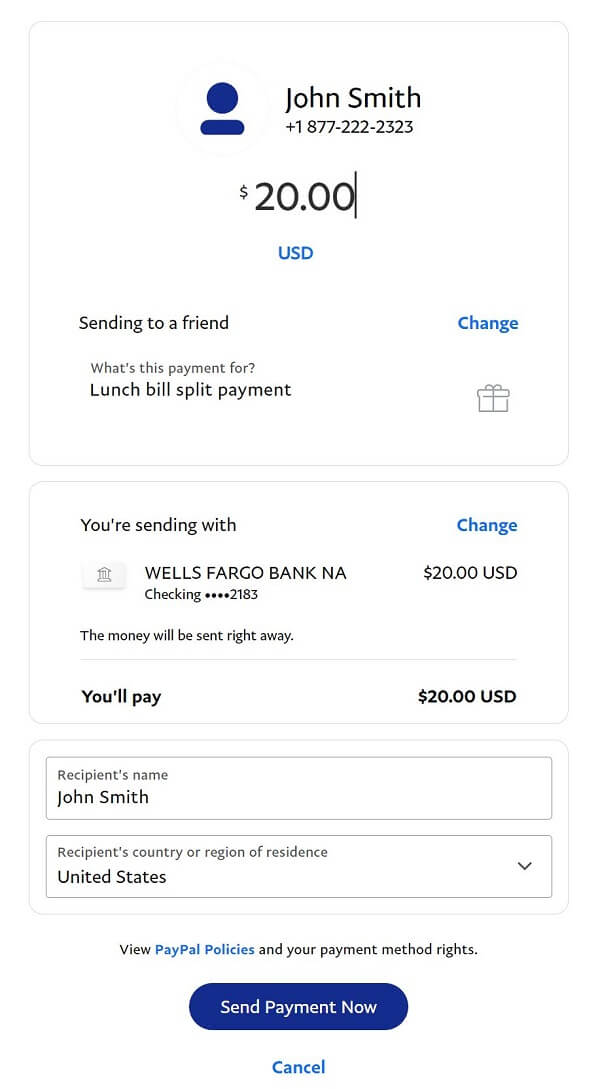
Beyond purchasing goods, PayPal is a primary engine for peer-to-peer (P2P) transfers. This is where the platform functions most like a social financial tool, allowing for the seamless splitting of bills, sending of gifts, or paying for services rendered.

Friends and Family vs. Goods and Services
When sending money to an individual, PayPal presents a choice: “Friends and Family” or “Goods and Services.” This distinction is vital for personal finance management. Payments made to friends and family are typically free when funded by a bank account or PayPal balance. However, they do not come with Purchase Protection. Conversely, “Goods and Services” payments are intended for commercial transactions. The sender pays no fee, but the recipient (the seller) is charged a processing fee. In exchange, the transaction is covered by PayPal’s security protocols, ensuring that if the item is never delivered, the buyer can initiate a dispute to recover their funds.
Navigating International Transfers and Currency Conversion
For those operating in a globalized economy, paying someone in a different country introduces the complexity of currency conversion. PayPal handles this automatically, but it is important to be aware of the financial implications. PayPal typically applies a spread—a percentage above the wholesale exchange rate—to convert your local currency into the recipient’s currency. Users have the option to let PayPal handle the conversion or, in some cases, let their credit card issuer handle it. For large international payments, comparing these rates is a key step in responsible financial management.
Paying for Freelance and Professional Services
For many in the “gig economy,” PayPal is the standard for paying contractors. Business owners can pay invoices directly through the platform. This creates a digital paper trail that is invaluable for tax purposes and business accounting. When you pay a professional via their PayPal-generated invoice, the transaction is categorized clearly in your financial history, making it easy to track business expenses and outgoing cash flow.
Advanced Financial Features: Credit and Deferred Payments
As PayPal has matured, it has integrated more sophisticated financial products that go beyond simple immediate transfers. These tools provide users with greater flexibility in how they manage their liquidity and cash flow.
Pay in 4 and Buy Now, Pay Later (BNPL)
One of the most significant shifts in consumer finance is the “Buy Now, Pay Later” model. PayPal’s “Pay in 4” allows users to split a purchase into four equal interest-free installments. The first payment is due at the time of purchase, and the remaining three are paid every two weeks. From a personal finance perspective, this can be a strategic way to manage large expenses without accruing high-interest credit card debt, provided the user remains disciplined with their repayment schedule.
PayPal Credit
For larger or more long-term financing needs, PayPal Credit acts as a reusable digital credit line. Unlike “Pay in 4,” this is a formal credit product that may involve a credit check. It often offers promotional periods, such as “No Interest if paid in full in 6 months” on purchases over a certain threshold. This is a sophisticated financial tool that requires careful management to avoid the high-interest rates that kick in after the promotional period ends.
Managing Subscriptions and Recurring Payments
Many digital services, from streaming platforms to software-as-a-service (SaaS) tools, use PayPal to manage recurring billing. Within your PayPal account settings, you can view and cancel these “automatic payments” in one centralized location. This provides a level of financial oversight that is often superior to tracking subscriptions across multiple different bank statements or credit card portals.
Optimizing Security and Financial Integrity
The final and perhaps most important aspect of paying via PayPal is the security layer it provides. In an era of increasing cyber threats, understanding how PayPal protects your money is as important as knowing how to click the “buy” button.
Purchase Protection and Dispute Resolution
One of the primary reasons consumers choose to pay via PayPal is the robust Purchase Protection program. If you pay for an item and it arrives significantly different than described, or if it never arrives at all, PayPal provides a structured dispute resolution process. You can open a case, provide evidence, and if the merchant cannot prove they fulfilled their end of the bargain, PayPal will often refund the full purchase price plus original shipping costs. This mitigates the financial risk inherent in online shopping.
Two-Factor Authentication and Account Hygiene
To ensure that your “pay via PayPal” experience remains secure, the use of two-factor authentication (2FA) is non-negotiable in modern finance. By requiring a code sent to a mobile device in addition to a password, you protect your linked bank accounts and credit cards from unauthorized access. Furthermore, regularly reviewing your “Authorized Devices” and “Logged In” sessions within the PayPal security dashboard is a best practice for maintaining financial integrity.
Identifying Phishing and Fraud
Because PayPal is a major financial hub, it is a frequent target for phishing attempts. Users must be aware that PayPal will never ask for sensitive information, such as passwords or full credit card numbers, via email. Legitimate payment requests will always appear within your account dashboard on the official website or app. Recognizing these red flags is a critical skill for anyone participating in the digital economy.
By mastering the various ways to pay via PayPal—from simple checkouts to complex international transfers and installment-based financing—consumers can take full advantage of a tool that offers both flexibility and security. In the modern world, how you pay is just as important as what you pay for, and PayPal remains a cornerstone of savvy financial management.
aViewFromTheCave is a participant in the Amazon Services LLC Associates Program, an affiliate advertising program designed to provide a means for sites to earn advertising fees by advertising and linking to Amazon.com. Amazon, the Amazon logo, AmazonSupply, and the AmazonSupply logo are trademarks of Amazon.com, Inc. or its affiliates. As an Amazon Associate we earn affiliate commissions from qualifying purchases.