
In the world of finance, numbers are the alphabet, but percentages are the grammar. Whether you are tracking the growth of a retirement account, calculating the impact of inflation on your purchasing power, or determining how much of your monthly income should go toward a mortgage, the ability to calculate and interpret percentages is the single most important mathematical skill a person can possess.
Understanding how to find the percent of a number is not merely an academic exercise; it is a fundamental pillar of financial literacy. It allows an individual to move from a passive observer of their bank balance to an active architect of their wealth. This guide explores the mechanics of percentage calculations through the lens of personal and business finance, providing the tools necessary to navigate the complexities of the modern economic landscape.

The Fundamental Role of Percentages in Personal Finance
At its core, a percentage is a way of expressing a number as a fraction of 100. In financial terms, this represents a ratio that helps us compare different values on a level playing field. Without percentages, comparing a $500 profit on a $1,000 investment to a $5,000 profit on a $100,000 investment would be confusing. Percentages provide the clarity needed to see that the former is a 50% gain, while the latter is only 5%.
Understanding the “Why” Before the “How”
In money management, we rarely deal with absolute numbers in isolation. We deal with changes, rates, and allocations. When a financial advisor tells you that the stock market historically returns 7% to 10% annually, or when a bank offers a 4.5% High-Yield Savings Account (HYSA), they are speaking the language of relativity. Knowing how to calculate these figures allows you to project your future wealth and make informed decisions about where to park your capital.
The Basic Formula for Financial Success
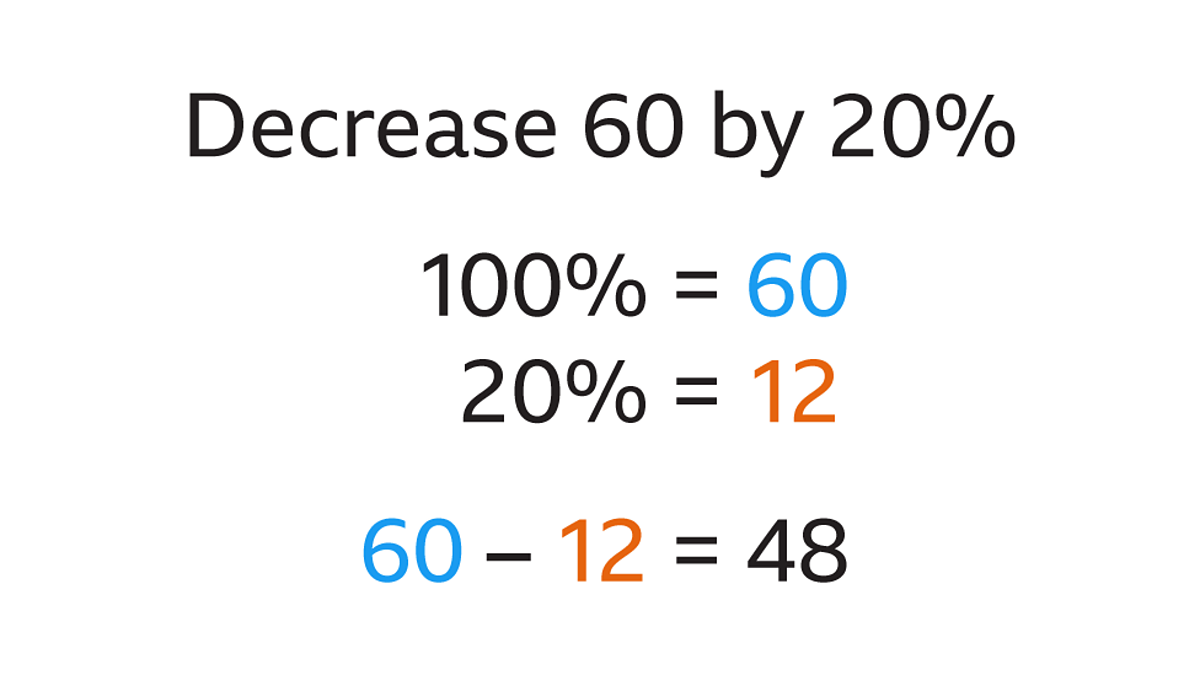
To find the percent of a number in a financial context, you use a simple but powerful formula:
Amount = (Percentage / 100) × Total Value
For example, if you want to save 15% of a $5,000 monthly salary, the calculation is:
(15 / 100) × 5,000 = 0.15 × 5,000 = $750.
Conversely, if you want to find what percentage a specific expense represents of your total budget, the formula is:
(Part / Whole) × 100 = Percentage
If your rent is $1,500 and your total income is $5,000, the calculation is:
(1,500 / 5,000) × 100 = 0.3 × 100 = 30%.
Mastering these two variations is the first step toward total control over your financial life.
Percentages in Investment and Wealth Growth
The most exciting application of percentages is in the realm of investing. Here, percentages represent the “velocity” of your money. The faster your money grows (the higher the percentage), the sooner you reach financial independence.
Measuring Return on Investment (ROI)
Return on Investment is the ultimate metric for any investor. It tells you how efficiently your capital is working for you. To calculate ROI, you subtract the initial cost of the investment from its current value, divide by the initial cost, and multiply by 100.
Suppose you bought shares in a tech company for $2,000, and a year later, the shares are worth $2,600.
- Gain = $2,600 – $2,000 = $600
- ROI = ($600 / $2,000) × 100 = 30%
A 30% return is exceptional, but it is important to calculate this percentage net of fees and taxes to understand your “real” return.
The Power of Compound Interest
Albert Einstein famously called compound interest the “eighth wonder of the world.” Compounding is the process where the value of an investment grows because the earnings on an investment earn interest as time goes by.
When dealing with compound interest, you aren’t just finding a percentage of your principal; you are finding a percentage of a number that is constantly growing. This is why a 10% annual return on $10,000 results in $1,000 the first year, but as that $1,000 is reinvested, the 10% return the following year is calculated on $11,000, resulting in $1,100. Over decades, this percentage-based growth creates exponential wealth.
The Rule of 72: A Percentage Shortcut
For quick mental math, investors use the “Rule of 72” to determine how long it will take for their money to double at a fixed annual percentage rate. You simply divide 72 by the annual interest rate.
- At a 6% return: 72 / 6 = 12 years to double.
- At a 10% return: 72 / 10 = 7.2 years to double.
This shortcut demonstrates how a seemingly small difference in percentage points—just 4%—can shave nearly five years off your wealth-building timeline.

Strategic Budgeting and Expense Management
Effective money management is less about how much you earn and more about the percentages you keep. Budgeting frameworks rely heavily on percentage allocations to ensure a balanced financial life.
The 50/30/20 Rule Explained
One of the most popular budgeting methods is the 50/30/20 rule, which categorizes your after-tax income into three percentage-based buckets:
- 50% for Needs: Housing, utilities, groceries, and transportation.
- 30% for Wants: Dining out, travel, hobbies, and entertainment.
- 20% for Savings and Debt Repayment: Retirement contributions, emergency funds, and extra payments on loans.
By viewing your budget through percentages rather than fixed dollar amounts, your lifestyle can scale. If you get a raise, your “Wants” budget increases in dollars, but stays at 30%, ensuring that your “Savings” also increase proportionally.
Understanding Debt-to-Income (DTI) Ratios
When you apply for a mortgage or a car loan, lenders don’t just look at your salary; they look at your Debt-to-Income ratio. This is a percentage that expresses how much of your gross monthly income goes toward paying debts.
- Formula: (Total Monthly Debt Payments / Gross Monthly Income) × 100.
Most lenders prefer a DTI ratio below 36%. If your DTI is 45%, a lender sees you as a high-risk borrower, regardless of whether you earn $50,000 or $150,000. Understanding how to calculate this percentage helps you position yourself for better interest rates and loan approvals.
Navigating Taxes and Inflation: The “Silent” Percentages
In finance, not all percentages work in your favor. Taxes and inflation are “leakage” points where percentages can erode your wealth if not monitored closely.
Effective Tax Rate vs. Marginal Tax Rate
The U.S. tax system is progressive, meaning different portions of your income are taxed at different percentages. Your Marginal Tax Rate is the percentage of tax applied to your last dollar of income (the highest bracket you hit). However, your Effective Tax Rate is the actual percentage of your total income that goes to the IRS.
To find your effective tax rate, divide your total tax bill by your total taxable income. If you earn $100,000 but only pay $15,000 in taxes after deductions, your effective tax rate is 15%, even if your marginal bracket is 22% or 24%. Knowing this distinction is vital for accurate tax planning and investment localization.
Protecting Purchasing Power from Inflation
Inflation is the percentage by which the general level of prices for goods and services rises. If the inflation rate is 3%, a $100 grocery bill this year will cost $103 next year. While 3% sounds small, it is a compounding percentage that devalues cash over time.
To find the “Real Rate of Return” on an investment, you must subtract the inflation percentage from your nominal percentage gain. If your savings account earns 4% interest but inflation is 3%, your real increase in purchasing power is only 1%. If inflation hits 5%, you are actually losing 1% of your purchasing power every year, even though your bank balance is technically “growing.”
Digital Tools and Automation for Financial Percentages
While manual calculations are essential for understanding the logic, modern financial management relies on digital tools to handle complex, multi-variable percentage tracking.
Using Spreadsheets for Complex Calculations
Microsoft Excel and Google Sheets are the gold standards for financial modeling. To find the percent of a number in a spreadsheet, you use cell references. For example, if your income is in cell A2 and your tax rate is in cell B2 (expressed as 0.25), the formula =A2*B2 will give you the dollar amount of your taxes.
For growth projections, the FV (Future Value) function allows you to input a percentage rate, the number of periods, and the payment amount to see how a portfolio will grow over 20 or 30 years. These tools allow you to run “what-if” scenarios, such as: “What if I increase my 401(k) contribution by 2%?”
Financial Apps and Automated Savings
Fintech apps like Mint, YNAB (You Need A Budget), or Personal Capital automate the percentage math for you. They categorize your spending and generate charts showing what percentage of your income goes to “Food & Drink” versus “Housing.”
Furthermore, many payroll systems and banking apps allow for “percentage-based” direct deposits. Instead of sending $500 to savings, you can set it to send 10%. This is a superior strategy because as your income grows through bonuses or raises, your savings rate automatically scales without you having to lift a finger.
Conclusion
Finding the percent of a number is the master key that unlocks the door to financial clarity. Whether you are calculating the ROI of a new business venture, adjusting your budget using the 50/30/20 rule, or protecting your wealth from the eroding effects of inflation, percentages provide the context necessary for wise decision-making.
By shifting your perspective from absolute dollars to relative percentages, you gain the ability to compare opportunities, assess risks, and track progress with mathematical precision. In the quest for financial independence, the person who understands percentages isn’t just counting money—they are managing momentum. Master this simple calculation, and you master the mechanics of wealth itself.
aViewFromTheCave is a participant in the Amazon Services LLC Associates Program, an affiliate advertising program designed to provide a means for sites to earn advertising fees by advertising and linking to Amazon.com. Amazon, the Amazon logo, AmazonSupply, and the AmazonSupply logo are trademarks of Amazon.com, Inc. or its affiliates. As an Amazon Associate we earn affiliate commissions from qualifying purchases.