
In the dynamic world of entrepreneurship, a business plan stands as a foundational document, often underestimated but invariably crucial for nascent ventures and established enterprises alike. It serves as a comprehensive roadmap, charting the course from conception to realization, outlining objectives, strategies, financial forecasts, and the operational intricacies of a business. Far from being a mere formality, a well-crafted business plan is a living document that guides decision-making, attracts investment, and clarifies an organization’s vision and purpose. For anyone embarking on a new business journey, seeking funding, or simply aiming to refine their strategic direction, understanding how to construct a robust business plan is not just beneficial—it’s indispensable. This article delves into the critical components, strategic considerations, and iterative processes involved in developing a business plan that truly fuels success within the realm of business finance.

The Indispensable Role of a Business Plan
A business plan is much more than a static document; it is a dynamic tool essential for various aspects of business development and financial stability. Its importance transcends initial startup phases, proving invaluable throughout the lifecycle of an organization.
More Than Just a Document: A Roadmap for Growth
At its core, a business plan is a strategic roadmap. It compels entrepreneurs to articulate their ideas, research their market, and define their operational framework. This rigorous process of documentation forces a systematic examination of every facet of the business, from product development to customer acquisition, and crucially, financial viability. It helps to clarify goals, establish measurable objectives, and outline the strategies required to achieve them. Without such a roadmap, businesses risk drifting aimlessly, reacting to circumstances rather than proactively shaping their future. For internal stakeholders, it provides a unified vision and a shared understanding of priorities, fostering cohesion and efficiency.
Attracting Investment and Securing Funding
Perhaps the most recognized function of a business plan is its role in securing financial capital. Whether you’re approaching venture capitalists, angel investors, banks, or applying for grants, a well-researched and professionally presented business plan is non-negotiable. Investors and lenders rely on this document to assess the potential profitability, scalability, and risk associated with your venture. They scrutinize financial projections, market analysis, competitive advantages, and the management team’s capabilities. A compelling business plan demonstrates not only a viable concept but also a clear understanding of the financial requirements, potential returns, and repayment strategies, significantly enhancing your credibility and chances of obtaining crucial funding.
Clarifying Vision and Mitigating Risks
The process of creating a business plan inherently demands a deep dive into every aspect of your proposed operation, forcing you to anticipate challenges and devise solutions proactively. This foresight is critical for identifying potential risks—be they market shifts, operational hurdles, or financial downturns—and developing contingency plans. By clearly articulating your value proposition, target market, and operational procedures, the plan helps to solidify your vision and mission, ensuring that all efforts are aligned. This clarity not only minimizes internal confusion but also helps in making informed decisions, conserving valuable resources, and ultimately, improving the odds of long-term financial success.
Deconstructing the Core Components of a Business Plan
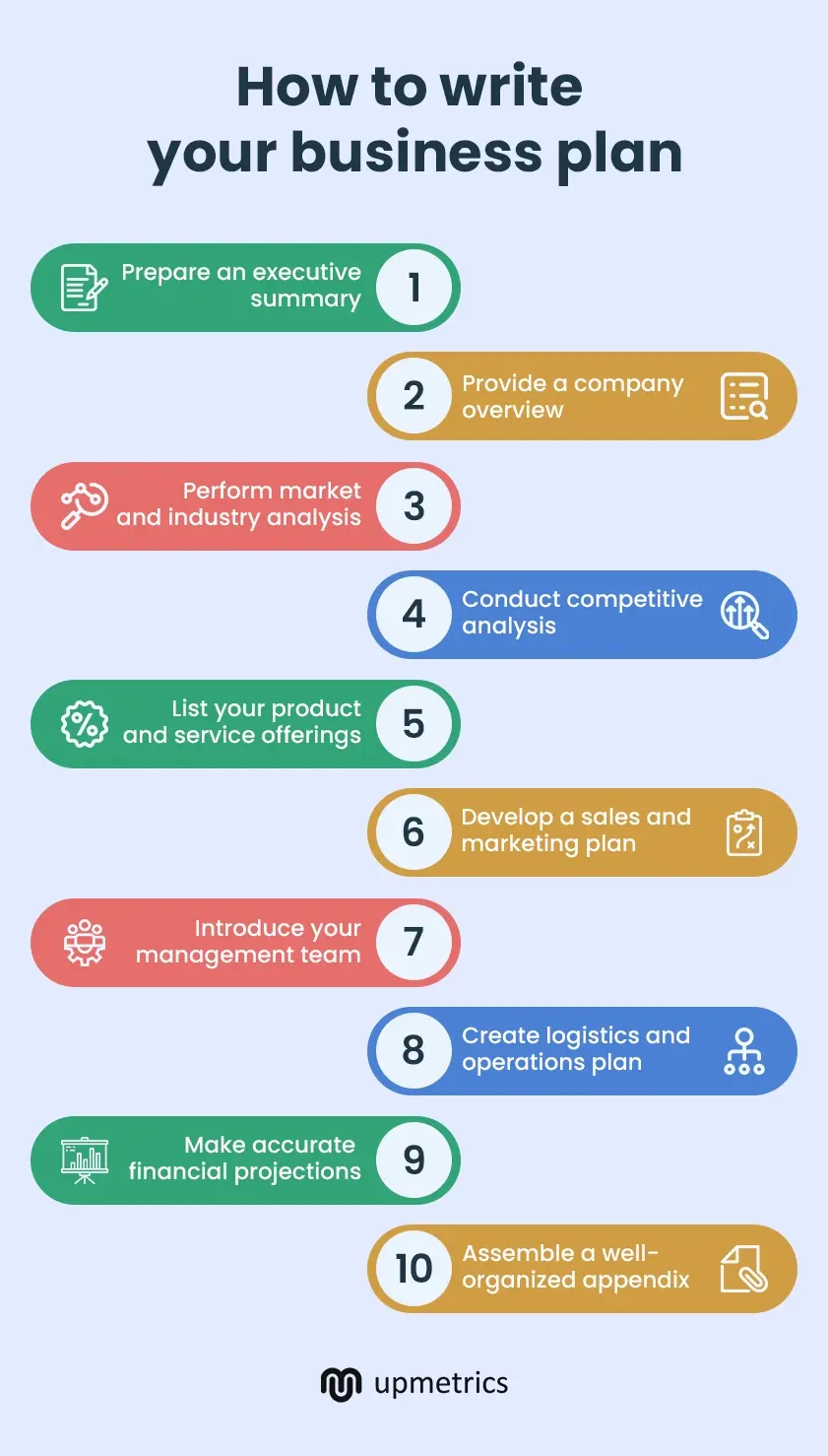
While every business plan is unique, reflecting the specific nature of the venture it describes, there are universally accepted sections that form its backbone. Understanding each component is vital for constructing a comprehensive and persuasive document.
Executive Summary: Your Business’s Elevator Pitch
The Executive Summary is arguably the most critical section, often read first (and sometimes exclusively) by potential investors or partners. It must be concise, compelling, and encapsulate the essence of your entire plan, providing a high-level overview of your business concept, market opportunity, competitive advantage, management team, and key financial projections. Think of it as your entire business story distilled into one or two powerful pages, designed to grab attention and entice the reader to delve deeper.
Company Description: Defining Your Identity and Mission
This section provides detailed information about your company. It outlines your mission statement, vision, values, and legal structure (e.g., sole proprietorship, LLC, corporation). You’ll explain the nature of your business, its history (if applicable), its unique value proposition, and the long-term goals. This is where you establish your company’s identity and articulate what problems you solve for your customers and why you exist.
Market Analysis: Understanding Your Landscape and Competition
A thorough market analysis demonstrates a deep understanding of your industry, target market, and competitive environment. This section should detail market size, trends, growth potential, and customer demographics. Crucially, it must identify your specific target market segments and provide data-backed evidence of their need for your product or service. A comprehensive competitor analysis is also vital, outlining competitors’ strengths, weaknesses, market share, and strategies, and explaining how your business will differentiate itself to capture market share.
Organization and Management: The People Powering Your Venture
Investors often invest in people as much as ideas. This section introduces your management team, outlining their experience, expertise, roles, and responsibilities. Include an organizational chart and describe the legal structure and ownership of your company. Highlight the specific skills and qualifications that make your team uniquely capable of executing the business plan, especially emphasizing financial acumen and relevant industry experience.
Service or Product Line: What You Offer and Why It Matters
Here, you describe the products or services you offer in detail. Explain what they are, how they work, their key features, and critically, the benefits they provide to customers. Discuss the lifecycle of your products, any intellectual property (patents, copyrights), and future development plans. This section should clearly articulate your unique selling proposition (USP) and how your offerings meet an identified market need better than existing alternatives.
Marketing and Sales Strategy: Reaching Your Customers
This section details how you plan to attract and retain customers. It covers your marketing mix (the 4 Ps: Product, Price, Place, Promotion) and your sales strategy. Describe your branding, pricing model, distribution channels, and promotional activities (e.g., digital marketing, public relations, direct sales). Crucially, explain how these strategies will translate into revenue and customer acquisition costs, directly linking to your financial projections.
Funding Request: Your Financial Ask (if applicable)
If you are seeking funding, this dedicated section will outline your specific financial needs. Clearly state the exact amount of funding required, how you intend to use the funds (e.g., equipment, inventory, marketing, working capital), and, critically, how this investment will lead to profitability and a return for investors. This often includes detailing the equity stake offered or the repayment terms for loans.
Financial Projections: The Numbers That Drive Decisions
This is arguably the most critical section for anyone evaluating the financial viability of your business. It must include detailed financial forecasts, typically for the next three to five years, comprising:
- Projected Income Statements (P&L): Revenue, cost of goods sold, operating expenses, and net profit.
- Cash Flow Statements: Inflows and outflows of cash, demonstrating liquidity.
- Balance Sheets: Assets, liabilities, and owner’s equity.
- Break-Even Analysis: The point at which revenue equals total costs.
- Key Financial Metrics: Gross margin, net profit margin, return on investment (ROI), customer acquisition cost (CAC), lifetime value (LTV), etc.
These projections must be realistic, well-substantiated with assumptions, and clearly presented to demonstrate financial health and growth potential.
Appendix: Supporting Documents
The appendix houses any supporting documentation that reinforces claims made in the main body of the plan. This might include market research data, resumes of key management, letters of intent, legal documents, product images, permits, licenses, or detailed financial spreadsheets. This section provides depth and credibility without cluttering the core narrative.
Strategies for Research and Data Collection
Developing a robust business plan requires diligent research and a commitment to gathering accurate, relevant data. The credibility of your plan, especially its financial projections, hinges on the quality of your underlying research.
Primary vs. Secondary Research: Gathering Relevant Information
Primary research involves collecting original data directly from your target market through surveys, interviews, focus groups, and observation. This provides specific insights into customer needs, preferences, and willingness to pay, directly informing your product development and marketing strategies.
Secondary research utilizes existing data from sources such as industry reports, government statistics, academic studies, and competitor websites. This helps to establish market size, trends, competitive landscape, and economic forecasts. A balanced approach, combining both types of research, provides a comprehensive and credible foundation for your plan.
Competitor Analysis: Learning from Others
A detailed analysis of your competitors is not about imitation, but about understanding the market and identifying opportunities for differentiation. Research their products/services, pricing strategies, marketing tactics, distribution channels, and financial performance (if public). Evaluate their strengths and weaknesses to pinpoint gaps in the market that your business can fill, or areas where you can offer superior value. This directly impacts your unique selling proposition and pricing strategy, both critical financial considerations.
Financial Modeling: Forecasting for the Future
Building sound financial projections requires meticulous modeling. This involves developing realistic assumptions about sales volumes, pricing, cost of goods sold, operating expenses, and capital expenditures. Use tools like spreadsheets to create detailed income statements, cash flow statements, and balance sheets. Sensitivity analysis, where you test different scenarios (e.g., best-case, worst-case, most likely-case), is crucial for understanding the financial risks and opportunities, and for demonstrating robustness to potential investors. This financial rigor is central to the “Money” category.
Tailoring Your Business Plan to Your Audience
While the core components remain consistent, the emphasis and presentation of your business plan should subtly shift depending on who you are trying to impress. Understanding your audience is key to making your plan resonate.
Investors and Lenders: Emphasizing Returns and Risk Mitigation
When presenting to investors or lenders, the primary focus must be on financial viability, potential for growth, and return on investment. Highlight robust financial projections, clear explanations of how funds will be used to generate revenue, and strategies for risk mitigation. Demonstrate a strong understanding of market opportunities, a defensible competitive advantage, and a capable management team. They want to see a clear path to profitability and liquidity, whether through dividends, equity appreciation, or loan repayment.
Internal Use: Guiding Operational Decisions
For internal purposes, the business plan serves as an operational blueprint. While financial projections are still vital, the emphasis might shift towards detailed operational procedures, departmental goals, performance metrics, and accountability. It acts as a reference for strategic decision-making, ensuring that all teams are aligned with the company’s overarching mission and objectives. This internal document often contains more granular detail than an external-facing version.
Partners and Employees: Fostering Alignment and Understanding
When engaging potential partners or employees, the business plan should articulate the vision, mission, and culture of the company. While financial health is important, the focus is often on the compelling nature of the business, its unique offering, market impact, and the opportunity for growth and contribution. A well-communicated plan fosters a sense of shared purpose and clarifies expectations, which can be invaluable for attracting and retaining top talent.
The Iterative Process of Plan Development and Review
A business plan is not a static document to be filed away once completed. It is a dynamic, living tool that requires ongoing attention and adaptation.
Embrace Flexibility: Business Plans Are Living Documents
The business environment is constantly evolving, and your plan must evolve with it. Market conditions change, new competitors emerge, and internal strategies pivot. A rigid business plan quickly becomes obsolete. Instead, view your plan as a flexible guide that can be updated and revised as new information becomes available, or as your business achieves milestones and adapts to new challenges. This iterative approach ensures its continued relevance and utility.
Seek Feedback: Gaining External Perspectives
Before finalizing your plan, seek feedback from trusted advisors, mentors, industry experts, and even potential customers. External perspectives can reveal blind spots, challenge assumptions, and provide valuable insights that strengthen your strategy and financial forecasts. Be open to constructive criticism and use it to refine your plan, making it more robust and persuasive.
Regular Review and Updates: Staying Relevant
Commit to regularly reviewing and updating your business plan, ideally on a quarterly or annual basis. Compare your actual performance against your financial projections and strategic goals. Identify deviations, understand their causes, and adjust your plan accordingly. This continuous process of planning, execution, and evaluation is fundamental to maintaining strategic direction, optimizing financial performance, and ensuring the long-term success and sustainability of your business.
In conclusion, constructing an effective business plan is a rigorous yet profoundly rewarding endeavor. It compels deep introspection, thorough research, and strategic foresight, laying a solid financial and operational foundation for any venture. By meticulously developing each core component, tailoring the message to your audience, and embracing an iterative approach, you transform a mere document into a powerful blueprint for achieving your financial and entrepreneurial aspirations.
aViewFromTheCave is a participant in the Amazon Services LLC Associates Program, an affiliate advertising program designed to provide a means for sites to earn advertising fees by advertising and linking to Amazon.com. Amazon, the Amazon logo, AmazonSupply, and the AmazonSupply logo are trademarks of Amazon.com, Inc. or its affiliates. As an Amazon Associate we earn affiliate commissions from qualifying purchases.