
In the dynamic world of cryptocurrency, Bitcoin stands as the undisputed titan, a digital asset that has reshaped conversations around finance, investment, and technological innovation. While many focus on its overall price per coin, understanding the value of fractional Bitcoin holdings, such as 0.1 BTC, is crucial for both seasoned investors and curious newcomers. This specific inquiry—”how much is 0.1 Bitcoin worth?”—is more than just a simple calculation; it’s a gateway into comprehending market dynamics, investment strategies, and the accessible nature of this groundbreaking digital currency.
Bitcoin’s price fluctuates continuously, driven by a complex interplay of market forces, global events, and technological advancements. Therefore, providing a single, static answer to its worth is impossible. Instead, this article will equip you with the knowledge to accurately assess the value of 0.1 Bitcoin at any given moment, delve into the factors influencing its price, explore why holding a fraction of Bitcoin can be a strategic move, and offer insights into the broader financial implications.
1. Understanding Bitcoin’s Divisibility and Market Fundamentals
Bitcoin, unlike traditional assets such as stocks or real estate, is highly divisible. This inherent characteristic makes it accessible to a wide range of investors, regardless of their capital. Grasping this concept is the first step in understanding the value of 0.1 Bitcoin.
The Nature of Bitcoin’s Price and Scarcity
Bitcoin’s total supply is capped at 21 million coins, a hard-coded limit that underpins its digital scarcity. This scarcity, combined with growing demand, is a primary driver of its value. However, the perceived “high” price of a full Bitcoin often intimidates potential investors. It’s vital to remember that you don’t need to buy an entire Bitcoin to participate in the market.
The price of one Bitcoin is determined by supply and demand on various cryptocurrency exchanges worldwide. When more people want to buy than sell, the price tends to rise, and vice versa. This constant negotiation results in the real-time exchange rate you see displayed on financial platforms. The value is typically quoted against fiat currencies like the US Dollar (USD), Euro (EUR), or British Pound (GBP).
Why Fractions Matter: Satoshis and Micro-Transactions
The smallest unit of Bitcoin is called a “Satoshi” (or “sat”), named after Bitcoin’s pseudonymous creator, Satoshi Nakamoto. One Bitcoin is equivalent to 100,000,000 Satoshis. This extreme divisibility means that even a tiny fraction of Bitcoin, like 0.1 BTC, represents a substantial number of Satoshis (10,000,000 Sats, in this case).
This fractional capability is fundamental to Bitcoin’s utility and adoption. It allows for:
- Micro-transactions: Facilitating small payments for goods and services.
- Accessibility: Enabling individuals with limited capital to invest in Bitcoin.
- Price Adjustments: Permitting the market to value Bitcoin at extremely granular levels, even if the “full coin” price reaches astronomical figures.
Understanding that 0.1 Bitcoin is not an arbitrary number but a significant holding of 10 million Satoshis puts its value into a clearer perspective, emphasizing its potential for growth and utility over time.
2. Calculating the Current Value of 0.1 Bitcoin
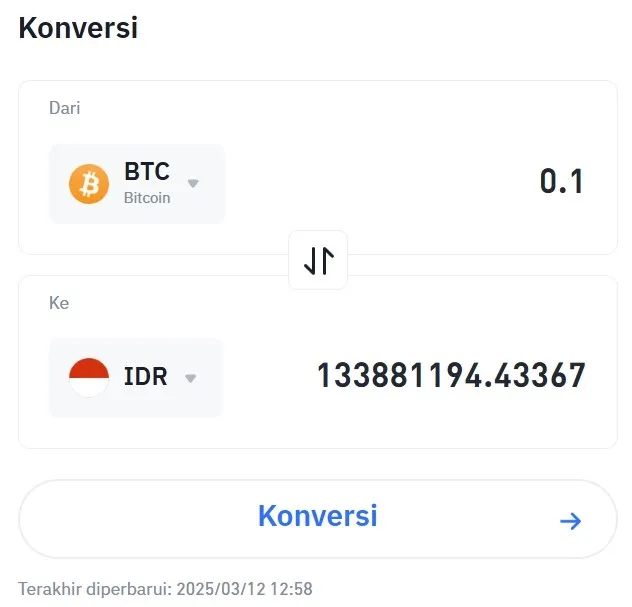
To determine the exact worth of 0.1 Bitcoin, you need to reference its live market price. This is a straightforward calculation once you have the necessary data.
The Real-Time Exchange Rate
The value of 0.1 Bitcoin is directly proportional to the current market price of one full Bitcoin. The calculation is simple multiplication:
Value of 0.1 BTC = Current Price of 1 BTC × 0.1
For example, if the current price of one Bitcoin is $70,000, then:
Value of 0.1 BTC = $70,000 × 0.1 = $7,000
If the price were to rise to $100,000 per Bitcoin, then 0.1 BTC would be worth $10,000. Conversely, if the price dropped to $50,000, 0.1 BTC would be valued at $5,000. This direct relationship underscores the importance of monitoring the market.
Tools for Instant Conversion
Fortunately, you don’t need to manually perform this calculation every time. Numerous platforms and tools provide real-time Bitcoin price data and conversion functionalities:
- Cryptocurrency Exchanges: Platforms like Coinbase, Binance, Kraken, and Gemini display live Bitcoin prices and often have built-in calculators.
- Financial News Websites: Reputable financial news outlets (e.g., Bloomberg, Reuters, CoinDesk, CoinMarketCap) feature dedicated crypto price trackers.
- Crypto Price Tracking Apps: Mobile applications designed specifically for tracking cryptocurrency prices offer convenient, on-the-go access.
- Search Engines: A quick search query like “Bitcoin price” or “0.1 BTC to USD” will usually yield instant results from reliable sources.
When using these tools, always ensure they are pulling data from reputable sources to get the most accurate and up-to-date market information, as prices can vary slightly between exchanges due to liquidity differences.
3. Factors Influencing Bitcoin’s Price Volatility
Bitcoin is notorious for its price volatility. While this can present risks, it also creates opportunities for investors. Understanding the underlying drivers of these fluctuations is key to forming a realistic expectation of 0.1 Bitcoin’s future value.
Supply and Demand Dynamics
At its core, Bitcoin’s price is dictated by basic economic principles of supply and demand.
- Supply: The limited supply of 21 million Bitcoins, coupled with the “halving” events (which reduce the rate of new Bitcoin creation roughly every four years), creates an inherent scarcity that tends to drive prices up over the long term, assuming demand remains constant or increases.
- Demand: Factors influencing demand include:
- Investor Sentiment: General market optimism or pessimism.
- Retail Adoption: More individuals buying Bitcoin.
- Institutional Investment: Large corporations and financial institutions adding Bitcoin to their balance sheets or offering crypto products.
- Utility and Use Cases: Growth in Bitcoin’s use as a medium of exchange or store of value.
Macroeconomic Trends and Geopolitical Events
Bitcoin’s status as a decentralized asset, often dubbed “digital gold,” means it can react to global economic conditions differently than traditional assets.
- Inflation: When fiat currencies experience high inflation, some investors turn to Bitcoin as a hedge against the devaluation of their money.
- Economic Instability: Geopolitical crises or economic uncertainty in traditional markets can sometimes lead investors to seek “safe-haven” assets, which Bitcoin can represent for some.
- Interest Rates: Changes in central bank interest rates can influence investor appetite for riskier assets like Bitcoin.
Regulatory Landscape and Technological Developments
Government regulations and technological advancements play a significant role in shaping Bitcoin’s perceived legitimacy and utility.
- Regulatory Clarity: Positive regulatory frameworks (e.g., clear guidelines for crypto exchanges, approval of Bitcoin ETFs) can boost investor confidence and institutional adoption, pushing prices higher. Conversely, restrictive regulations or bans can trigger sell-offs.
- Technological Upgrades: Improvements to the Bitcoin network (e.g., scaling solutions like the Lightning Network, enhanced security features) can increase its efficiency and attractiveness, thereby impacting its value.
Market Sentiment and Media Hype
Cryptocurrency markets are heavily influenced by sentiment, often amplified by social media and traditional news outlets. Positive news (e.g., a major company announcing Bitcoin adoption) can trigger rallies, while negative news (e.g., a high-profile hack or scam) can lead to sharp declines. Understanding that “FUD” (Fear, Uncertainty, Doubt) and “FOMO” (Fear Of Missing Out) are powerful emotional drivers is essential when observing price movements.
4. Why Invest in a Fraction of Bitcoin?
Given its high per-unit price, investing in a fraction of Bitcoin, like 0.1 BTC, is a common and often strategic approach for many investors.
Accessibility for Smaller Investors
The primary advantage of fractional ownership is accessibility. You don’t need hundreds of thousands of dollars to become a Bitcoin owner. By investing in 0.1 BTC, or even smaller amounts, individuals can:
- Enter the market: Get exposure to the crypto space without a massive initial outlay.
- Learn by doing: Gain practical experience with buying, selling, and securing digital assets.
- Dollar-Cost Averaging: Systematically invest smaller, fixed amounts over time, regardless of Bitcoin’s price, which can reduce the impact of volatility and average out the purchase price.
This lowers the barrier to entry, democratizing access to an asset class that might otherwise seem exclusive.
Portfolio Diversification Strategy
Even a modest holding of 0.1 Bitcoin can contribute to a diversified investment portfolio. For many investors, Bitcoin represents a non-correlated asset—meaning its price movements don’t always align with traditional stocks or bonds. This non-correlation can potentially reduce overall portfolio risk and enhance returns, especially during periods when traditional markets are struggling.
- Alternative Asset Class: Bitcoin offers exposure to a nascent technology and financial system.
- Inflation Hedge (Potential): As discussed, some view Bitcoin as a hedge against inflation, diversifying away from fiat-denominated assets.
A Gateway to the Crypto Ecosystem
Owning 0.1 Bitcoin isn’t just about the monetary value; it’s also an entry point into the broader cryptocurrency ecosystem. It encourages investors to:
- Explore other cryptocurrencies: Understanding Bitcoin often leads to discovering other digital assets and blockchain projects.
- Engage with DeFi and Web3: Fractional ownership can open doors to decentralized finance (DeFi) applications, NFTs, and the emerging Web3 landscape.
- Understand Blockchain Technology: Direct ownership fosters a deeper understanding of the underlying blockchain technology, its implications, and its potential to revolutionize various industries.
5. Navigating the Risks and Opportunities of Fractional Bitcoin Ownership
While 0.1 Bitcoin represents a significant holding with potential upsides, it’s crucial to approach any investment in cryptocurrency with a clear understanding of the associated risks and opportunities.
Understanding Market Volatility
As highlighted, Bitcoin’s price can be extremely volatile. The value of your 0.1 BTC can rise or fall significantly in short periods.
- Risk of Loss: There is no guarantee that Bitcoin will increase in value. You could lose a portion or all of your investment.
- Emotional Investing: Volatility can lead to impulsive decisions based on fear or greed. A disciplined approach, such as dollar-cost averaging and setting clear investment goals, is vital.
It’s imperative to only invest what you can afford to lose and to have a long-term perspective, as short-term price movements are notoriously unpredictable.
Security Considerations for Digital Assets
Owning any amount of Bitcoin requires careful attention to security. Unlike traditional bank accounts, there’s no central authority to reverse transactions or recover lost funds if your private keys are compromised.
- Wallet Security: Choose reputable cryptocurrency exchanges or self-custody solutions (hardware wallets) to store your 0.1 BTC.
- Private Keys: Understand that “not your keys, not your coin.” If you don’t control your private keys, you don’t fully own your Bitcoin.
- Two-Factor Authentication (2FA): Always enable 2FA on your exchange accounts.
- Beware of Scams: The crypto space is unfortunately prone to scams. Be vigilant against phishing attempts and unsolicited offers.
Proper security practices are paramount to protecting your investment, regardless of its size.

Long-Term Potential and Future Outlook
Despite the risks, many investors are drawn to Bitcoin’s long-term potential. Proponents envision Bitcoin as a global, decentralized store of value, a medium of exchange, and a foundational layer for a new internet of finance.
- Continued Adoption: As more institutions, businesses, and individuals adopt Bitcoin, its network effects could strengthen, potentially increasing its value.
- Technological Maturation: Ongoing development and scaling solutions could enhance Bitcoin’s utility and efficiency.
- Inflation Hedge: Its fixed supply continues to make it an attractive asset during periods of monetary expansion.
While past performance is not indicative of future results, the journey of Bitcoin from a niche digital experiment to a global financial asset suggests its enduring relevance. Owning 0.1 Bitcoin is not merely holding a fraction of a digital asset; it’s participating in a groundbreaking financial experiment with the potential for significant long-term growth and impact. For those looking to gain exposure to this transformative technology, starting with a manageable fraction like 0.1 BTC can be a prudent and accessible first step.
aViewFromTheCave is a participant in the Amazon Services LLC Associates Program, an affiliate advertising program designed to provide a means for sites to earn advertising fees by advertising and linking to Amazon.com. Amazon, the Amazon logo, AmazonSupply, and the AmazonSupply logo are trademarks of Amazon.com, Inc. or its affiliates. As an Amazon Associate we earn affiliate commissions from qualifying purchases.