
In the intricate world of personal finance, investing, and business operations, few concepts are as ubiquitous and critical as percentages. From calculating interest on a savings account or loan, to understanding investment returns, discount rates, tax obligations, and profit margins, percentages form the bedrock of countless financial decisions. They provide a standardized way to express proportions, changes, and relationships, making complex financial data digestible and comparable. Without a firm grasp of how to determine and interpret percentages, navigating the modern financial landscape can feel like sailing without a compass. This article delves into the core mechanics of percentage calculation, exploring its indispensable role across various financial domains and empowering you to harness its power for informed decision-making.
The Fundamental Role of Percentages in Finance
At its core, a percentage is a way of expressing a number or a ratio as a fraction of 100. The word “percentage” is derived from “per cent,” meaning “per hundred.” This simple concept is profoundly powerful because it provides a universal benchmark for comparison and understanding.
Understanding the Basics: What a Percentage Really Means
A percentage represents a portion of a whole. When we say “50 percent,” we mean 50 out of 100 parts, or one-half of the whole. This can be expressed as a fraction (50/100), a decimal (0.50), or a percentage (50%). The fundamental formula for calculating a percentage is:
Percentage = (Part / Whole) × 100
For instance, if you have a budget of $1,000 and you spend $200 on groceries, the percentage of your budget spent on groceries would be ($200 / $1,000) × 100 = 20%. This seemingly simple calculation is the gateway to understanding more complex financial scenarios. It allows us to standardize comparisons. Saying “I spent $200” means little without context, but “I spent 20% of my budget” provides immediate insight into the proportion of your spending.
Why Financial Literacy Demands Percentage Proficiency
The ability to accurately determine percentages is not merely an academic exercise; it is a fundamental pillar of financial literacy. Every aspect of financial management, from the mundane to the strategic, is permeated by percentages.
- Interest Rates: Whether it’s the interest you earn on a savings account, the interest you pay on a credit card, or the rate of return on an investment, these are all expressed as percentages. Understanding their calculation is crucial for managing debt and growing wealth.
- Discounts and Sales Tax: Shopping wisely requires you to quickly calculate percentage discounts and assess the total cost after sales tax.
- Budgeting: Allocating income to various categories (housing, food, savings, entertainment) is often done using percentages to ensure a balanced financial plan.
- Investments: Analyzing the performance of stocks, bonds, or mutual funds relies heavily on understanding percentage returns, dividend yields, and expense ratios.
- Inflation: The erosion of purchasing power over time is measured as a percentage, which has significant implications for long-term financial planning.
- Business Metrics: Businesses rely on percentages for profit margins, growth rates, market share, and various financial ratios to assess health and performance.
A miscalculation or misunderstanding of a percentage can lead to suboptimal financial decisions, missed opportunities, or even significant losses. It’s the language of money, and fluency is paramount.
Calculating Core Financial Percentages
Beyond the basic formula, percentages manifest in various forms within the financial landscape, each with specific applications and implications. Mastering these calculations is essential for anyone looking to make sound financial choices.
Interest Rates: Simple vs. Compound Growth
Interest is the cost of borrowing money or the reward for lending it. It’s almost always expressed as an annual percentage rate (APR).
- Simple Interest: This is the most straightforward calculation, where interest is calculated only on the initial principal amount.
Simple Interest = Principal × Rate × Time
For example, if you invest $1,000 at a 5% simple annual interest rate for 3 years, the interest earned would be $1,000 × 0.05 × 3 = $150. The total value after 3 years would be $1,150. - Compound Interest: Often hailed as the “eighth wonder of the world,” compound interest is calculated on the initial principal and also on the accumulated interest from previous periods. This leads to exponential growth.
The formula for compound interest is: A = P(1 + r/n)^(nt), where:- A = the future value of the investment/loan, including interest
- P = the principal investment amount (the initial deposit or loan amount)
- r = the annual interest rate (as a decimal)
- n = the number of times that interest is compounded per year
- t = the number of years the money is invested or borrowed for
For instance, $1,000 invested at 5% interest compounded annually for 3 years would yield: $1,000 * (1 + 0.05/1)^(1*3) = $1,000 * (1.05)^3 = $1,157.63. Notice it’s slightly higher than simple interest, and this difference becomes significant over longer periods and larger amounts.
Understanding the distinction between simple and compound interest is crucial for evaluating loans, savings accounts, and long-term investments like retirement funds.
Discounts, Markups, and Sales Tax: Everyday Transactions
Every consumer and business owner encounters these percentage-based calculations regularly.
- Discounts: When an item is “X% off,” you calculate the discount amount and subtract it from the original price.
Discount Amount = Original Price × Discount Rate
Final Price = Original Price – Discount Amount
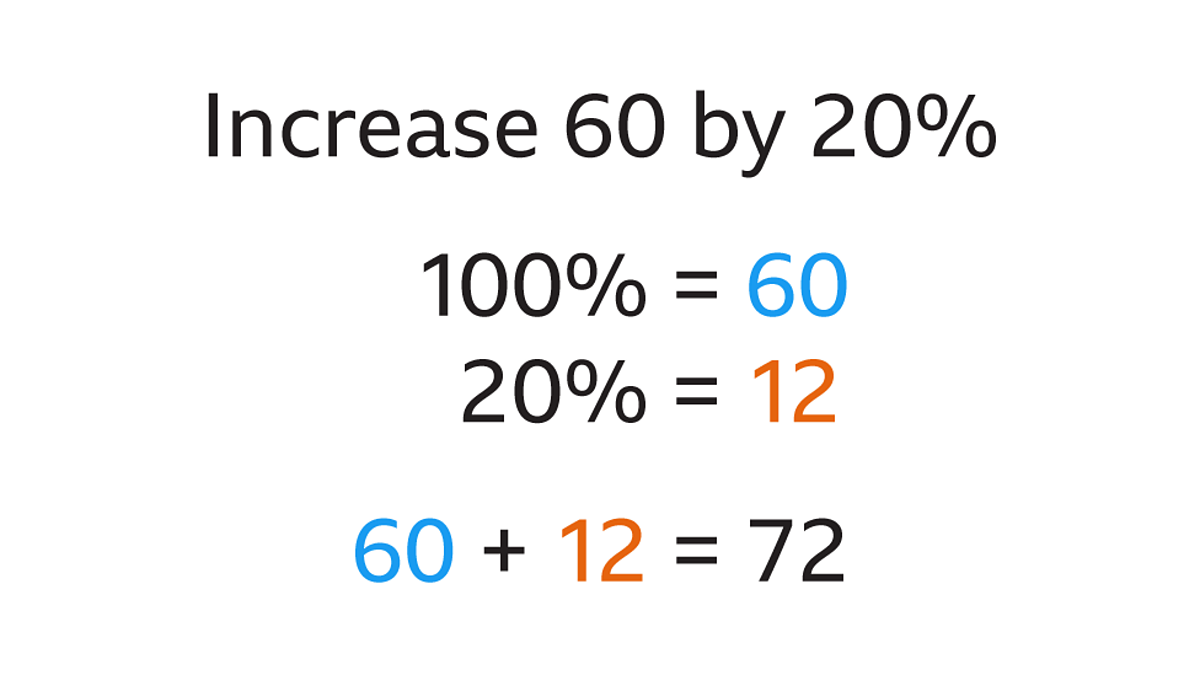
Example: A $200 item with a 25% discount. Discount Amount = $200 × 0.25 = $50. Final Price = $200 – $50 = $150. - Markups: Businesses use markups to price goods above their cost to ensure profitability.
Markup Amount = Cost × Markup Percentage
Selling Price = Cost + Markup Amount
If a product costs a retailer $50 and they apply a 40% markup: Markup Amount = $50 × 0.40 = $20. Selling Price = $50 + $20 = $70. - Sales Tax: Added to the price of goods and services at the point of sale.
Sales Tax Amount = Item Price × Sales Tax Rate
Total Cost = Item Price + Sales Tax Amount
If an item is $100 and the sales tax rate is 7%: Sales Tax Amount = $100 × 0.07 = $7. Total Cost = $100 + $7 = $107.
These everyday calculations underscore the practical necessity of percentage proficiency for managing personal finances and business operations.
Investment Returns and Profit Margins: Measuring Performance
For investors and entrepreneurs, percentages are the key metrics for assessing performance and profitability.

- Investment Returns: This measures the gain or loss on an investment relative to the initial amount invested. Often referred to as Return on Investment (ROI).
ROI % = [(Current Value of Investment – Original Cost of Investment) / Original Cost of Investment] × 100
If you invested $5,000 in a stock that is now worth $6,000: ROI % = [($6,000 – $5,000) / $5,000] × 100 = 20%. - Profit Margins: Crucial for businesses, profit margins indicate how much profit a company makes for every dollar of revenue.
Gross Profit Margin % = (Gross Profit / Revenue) × 100 (Gross Profit = Revenue – Cost of Goods Sold)
Net Profit Margin % = (Net Profit / Revenue) × 100 (Net Profit = Revenue – All Expenses)
If a company has $1,000,000 in revenue and $300,000 in net profit, its net profit margin is ($300,000 / $1,000,000) × 100 = 30%. These margins help assess a company’s efficiency and overall financial health, allowing for comparisons within industries.
Advanced Percentage Applications in Personal & Business Finance
Beyond the fundamental calculations, percentages are integral to more sophisticated financial analysis and strategic planning, influencing everything from debt management to investment diversification.
Debt-to-Income Ratios and Budget Allocation
Financial stability and access to credit are often gauged through percentage-based ratios.
- Debt-to-Income (DTI) Ratio: This ratio compares your total monthly debt payments to your gross monthly income. Lenders use it to assess your ability to manage monthly payments and repay new debts.
DTI Ratio % = (Total Monthly Debt Payments / Gross Monthly Income) × 100
If your total monthly debt payments (mortgage, car loan, credit cards) are $1,500 and your gross monthly income is $5,000, your DTI is ($1,500 / $5,000) × 100 = 30%. A lower DTI is generally more favorable. - Budget Allocation: Many budgeting strategies rely on percentage breakdowns. A popular example is the 50/30/20 rule:
- 50% for Needs: Housing, utilities, groceries, transportation.
- 30% for Wants: Dining out, entertainment, shopping.
- 20% for Savings & Debt Repayment: Emergency fund, retirement, extra debt payments.
Applying these percentages requires continuously calculating what portion of your income falls into each category to ensure you stay within your financial goals.
Inflation and Purchasing Power Erosion
Inflation, defined as the rate at which the general level of prices for goods and services is rising, and subsequently, purchasing power is falling, is always expressed as a percentage.
- The Consumer Price Index (CPI) is a common measure of inflation, indicating the average percentage change over time in the prices paid by urban consumers for a market basket of consumer goods and services.
- Understanding the current inflation rate is vital because it determines how much your money will be worth in the future. If inflation is 3% per year, your money effectively loses 3% of its purchasing power annually.
- For investors, this means their investment returns must outpace the inflation rate to achieve real growth in wealth. A 5% investment return when inflation is 3% results in a real return of only 2%. This concept directly impacts retirement planning and long-term financial projections.
Understanding Stock Performance and Portfolio Diversification
In the investment world, percentages are the language of performance and risk management.
- Stock Performance: The daily, weekly, or annual change in a stock’s price is shown as a percentage change:
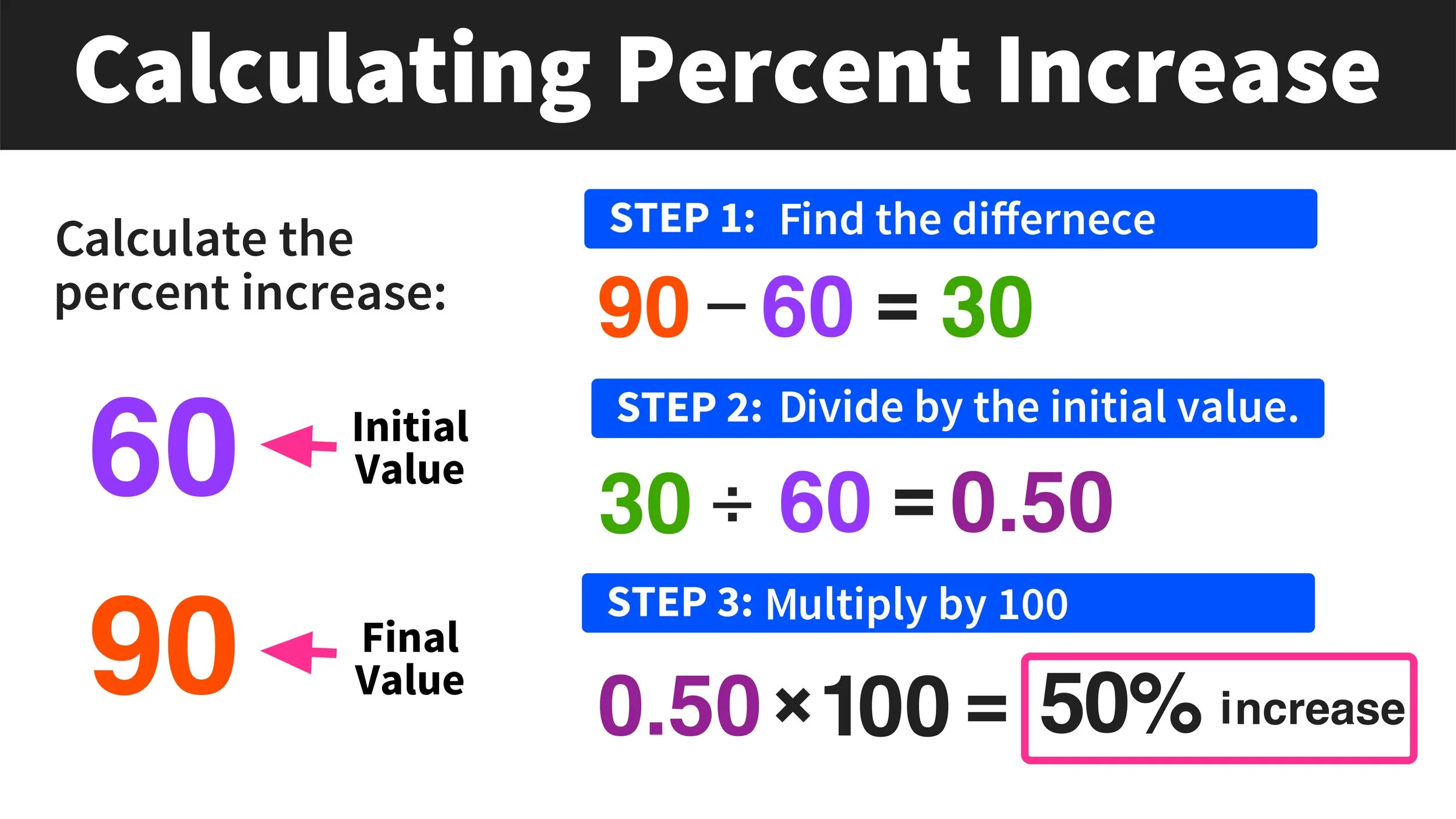
% Change = [(Current Price – Previous Price) / Previous Price] × 100
Additionally, dividend yield – the annual dividend per share divided by the share price – is a percentage that helps investors understand the income generated by a stock. - Portfolio Diversification: A core strategy for managing investment risk involves spreading investments across various asset classes (stocks, bonds, real estate, commodities). This is typically expressed using percentages.
An investor might aim for a portfolio of “60% stocks, 30% bonds, 10% cash,” adjusting these percentages based on age, risk tolerance, and financial goals. Rebalancing the portfolio periodically involves selling assets that have grown beyond their target percentage and buying assets that have fallen below their target, maintaining the desired allocation.
Leveraging Tools and Strategies for Percentage Calculations
While mental math and basic calculators suffice for simple percentages, accuracy and efficiency become paramount for complex financial analyses. Modern tools and an awareness of common pitfalls can significantly enhance your percentage proficiency.
The Power of Spreadsheets and Financial Calculators
For anyone serious about financial management, spreadsheets like Microsoft Excel or Google Sheets are indispensable.
- Spreadsheet Functions: They allow you to automate percentage calculations, build complex financial models, and perform sensitivity analysis. Functions like
RATE,PV(Present Value),FV(Future Value),PMT(Payment), and simple percentage formulas can handle everything from compound interest to loan amortization schedules. By inputting variables, you can instantly see the impact of changing interest rates, investment amounts, or timeframes. - Financial Calculators: Dedicated physical or online financial calculators (e.g., HP 12c, BA II Plus) are pre-programmed with financial functions, making quick work of time value of money calculations, interest conversions, and various other percentage-based problems. Many online tools also provide calculators for specific scenarios like loan payments, retirement savings, or tax estimates.
These tools not only save time but also significantly reduce the risk of manual calculation errors, providing greater confidence in your financial decisions.
Common Pitfalls to Avoid in Percentage Calculations
Even experienced professionals can sometimes stumble over nuances in percentage calculations. Awareness of these common traps is key:
- Percentage Points vs. Percentage Change: This is a frequent source of confusion. If an interest rate increases from 5% to 6%, it’s an increase of “1 percentage point.” However, it’s a “20% increase” in the rate itself (calculated as [(6-5)/5] * 100). Misunderstanding this distinction can lead to significant misinterpretations of financial data.
- Base Value Errors: Always ensure you are calculating the percentage relative to the correct “whole” or starting value. For example, if a stock drops 10% one day and rises 10% the next, it does not return to its original value because the 10% increase is calculated on a smaller base.
- Cumulative vs. Individual Percentages: When dealing with multiple discounts or sequential changes, it’s crucial to apply them correctly. A “20% off plus an additional 10% off” does not mean 30% off the original price. It means 20% off the original price, and then 10% off the reduced price.
- Ignoring the Time Factor: Especially with interest, inflation, and investment returns, the duration over which the percentage applies is critical. An annual interest rate needs to be annualized, and a monthly return cannot be simply multiplied by 12 to get an annual return if compounding is involved.
Mastering Percentages for Financial Empowerment
Percentages are far more than just mathematical constructs; they are the fundamental language of finance, permeating every transaction, investment, and economic indicator. From the simple act of calculating a retail discount to the complex process of evaluating a multi-year investment portfolio, the ability to accurately determine and interpret percentages is a non-negotiable skill.
By understanding the basics of how a percentage works, familiarizing yourself with its various applications in interest, taxes, profits, and returns, and utilizing modern tools while avoiding common pitfalls, you equip yourself with an invaluable skillset. Mastering percentages transforms you from a passive observer of financial data into an active, informed decision-maker. This proficiency empowers individuals to budget effectively, manage debt strategically, invest wisely, and navigate the broader economic landscape with confidence, ultimately paving the way towards greater financial security and prosperity.
aViewFromTheCave is a participant in the Amazon Services LLC Associates Program, an affiliate advertising program designed to provide a means for sites to earn advertising fees by advertising and linking to Amazon.com. Amazon, the Amazon logo, AmazonSupply, and the AmazonSupply logo are trademarks of Amazon.com, Inc. or its affiliates. As an Amazon Associate we earn affiliate commissions from qualifying purchases.