
In the world of personal and business finance, numbers are the language of progress. Whether you are tracking the growth of a retirement portfolio, evaluating a year-over-year salary bump, or analyzing the scaling potential of a startup, one specific metric stands above the rest: the percentage increase. While a simple “percentage increase calculator” might seem like a basic utility, it is actually one of the most powerful tools in a financially literate individual’s arsenal. Understanding not just the how but the why behind these calculations allows you to move beyond surface-level accounting and into the realm of strategic wealth management.
The Role of Percentage Increase in Personal Financial Planning
At its core, personal finance is the management of growth over time. We save today so that we can have more tomorrow. However, the raw dollar amount of that “more” is often less important than the rate at which it grew. Using a percentage increase calculator helps individuals contextualize their progress relative to their goals and the broader economy.
Tracking Your Purchasing Power Against Inflation
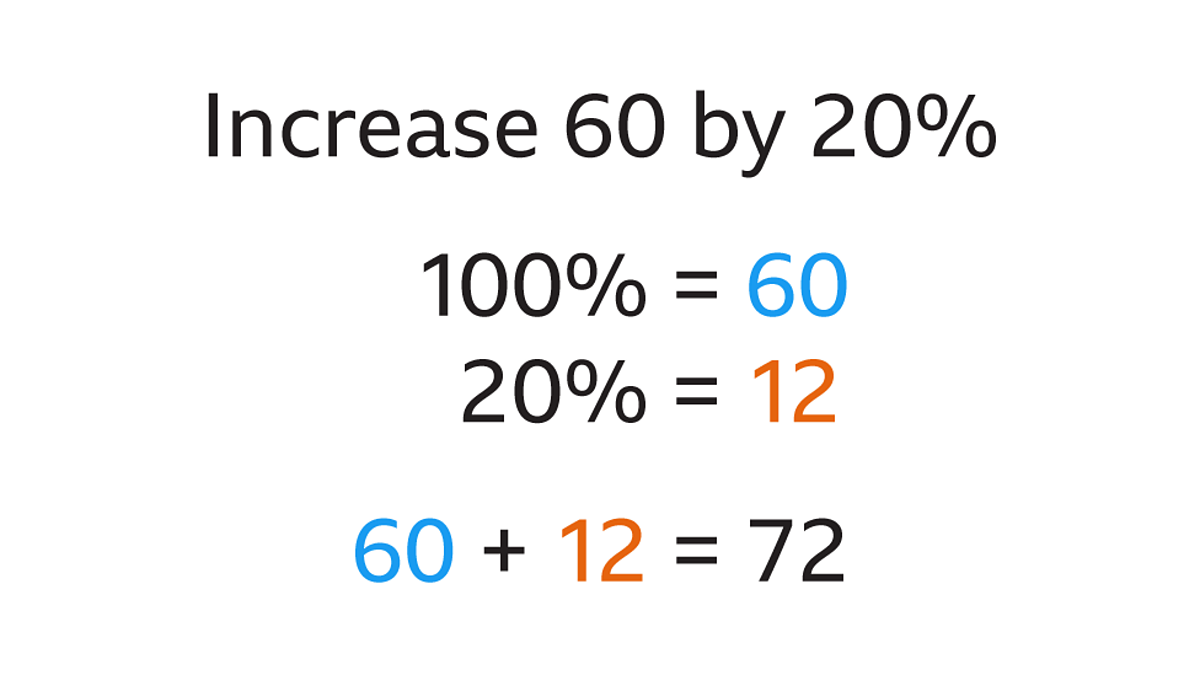
One of the most critical applications of a percentage increase calculation is measuring your income against inflation. If you receive a 3% raise at work, but the Consumer Price Index (CPI) indicates that the cost of living has increased by 5%, a percentage increase calculator reveals a harsh reality: your purchasing power has actually decreased.
By regularly calculating the percentage increase of your essential expenses—such as rent, groceries, and insurance—you can determine if your lifestyle is becoming more expensive at a rate that outpaces your earnings. This insight is the foundation of a proactive budget. It allows you to identify “lifestyle creep” or external economic pressures before they result in debt.
Negotiating Raises and Bonuses
When it comes to career advancement, the percentage increase is the primary metric used by HR departments and hiring managers. When you enter a salary negotiation, framing your request in percentages often carries more weight than raw numbers. For instance, asking for a $5,000 raise might feel arbitrary to an employer. However, demonstrating that your responsibilities have grown by 30% while requesting a 10% salary increase provides a data-driven justification for your value.
A percentage increase calculator allows you to look at your historical earnings. If you see that your income has only increased by 2% annually over five years while the industry average is 5%, you have the statistical evidence needed to advocate for a market adjustment.
Investment Analysis: Measuring Growth and ROI
For investors, the percentage increase is the ultimate yardstick for performance. Whether you are trading stocks, holding real estate, or investing in cryptocurrencies, your success is measured by the percentage return on your initial capital.
Calculating Annualized Returns and Portfolio Performance
While it is exciting to see a portfolio grow from $10,000 to $15,000, the timeframe in which that growth occurred is the deciding factor in whether the investment was “good.” A $5,000 gain (a 50% increase) over one year is legendary; over twenty years, it is underperforming the market.
Investors use percentage increase calculators to determine the “Rate of Return” (RoR). By inputting the starting value and the ending value, you can see the total growth. To find the true efficiency of your capital, you then divide that by the number of years to find the annualized growth rate. This allows for an apples-to-apples comparison between different asset classes, such as comparing a high-yield savings account’s 4% increase to the S&P 500’s historical 10% average increase.
The Impact of Compound Growth
The magic of compounding is essentially the “percentage increase” of a “percentage increase.” When your investments grow by 7% this year, and then that new total grows by another 7% next year, you aren’t just gaining interest on your principal; you are gaining interest on your interest.
A percentage increase calculator helps investors visualize the “Rule of 72,” a shortcut to estimate how long it will take for an investment to double. By understanding that a consistent 7% annual increase will double your money in approximately ten years, you can better plan for long-term milestones like retirement or a child’s education fund.
Business Finance and Profit Margin Optimization
For business owners and entrepreneurs, the percentage increase calculator is an indispensable tool for operational health. In a business context, growth is rarely linear, and understanding the rate of change is vital for scaling.
Evaluating Revenue Trends and Scalability
A business that earns $1 million in revenue might seem successful, but if that $1 million represents only a 1% increase from the previous year, the business may be stagnating or losing market share to more aggressive competitors. Conversely, a startup that earns only $100,000 but represents a 200% increase from the previous year is on a high-growth trajectory that will likely attract venture capital.
Business owners use percentage calculations to track “Month-over-Month” (MoM) and “Year-over-Year” (YoY) growth. These metrics smooth out seasonal fluctuations. For example, a retail business might expect a massive increase in sales in December. By using a calculator to compare December of this year to December of last year, the owner can see if the business is actually growing or if the holiday surge is simply a recurring pattern.
Managing Cost of Goods Sold (COGS) and Overhead
Profitability isn’t just about how much you make; it’s about how much you keep. A common trap for growing businesses is “revenue-masked inefficiency.” This occurs when revenue increases, but the costs associated with generating that revenue increase at an even higher percentage.
If a company’s revenue increases by 20%, but its shipping and manufacturing costs increase by 35%, the net profit margin is shrinking. A percentage increase calculator allows a CFO to pinpoint exactly where costs are spiraling out of control. By calculating the percentage change in overhead, labor, and materials, management can make informed decisions about raising prices or switching suppliers to protect the bottom line.
How to Manually Calculate Percentage Increase (and Why It Matters)
While digital calculators provide instant results, understanding the underlying formula is essential for any financial professional. It allows for “back-of-the-napkin” math during meetings and provides a deeper intuition for how numbers interact.
The Standard Formula
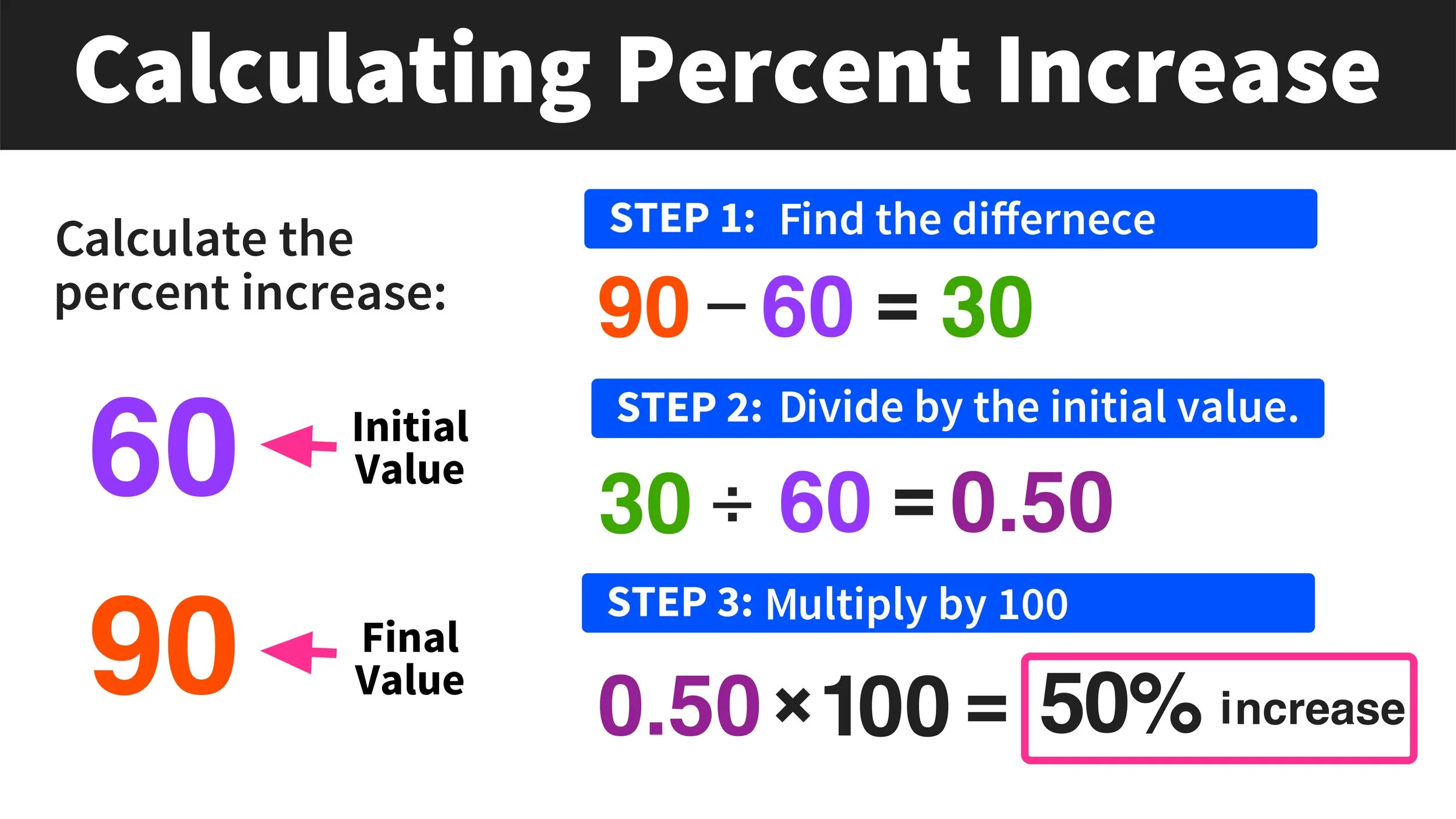
The formula for percentage increase is straightforward but requires a specific order of operations:
- Subtract the original value from the new value to find the “increase.”
- Divide that increase by the original value.
- Multiply the result by 100 to convert it into a percentage.
Formula: [(New Value - Old Value) / Old Value] x 100 = Percentage Increase
For example, if a stock was $50 last year and is $75 today:
- $75 – $50 = $25 (The raw increase)
- $25 / $50 = 0.5
- 0.5 x 100 = 50% increase.
Avoiding Common Mathematical Pitfalls
A common mistake in financial calculations is confusing “percentage points” with “percentage increase.” If an interest rate moves from 4% to 5%, it has increased by one percentage point, but the percentage increase of the rate itself is actually 25% (1 divided by 4).
Another pitfall is the “asymmetry of loss.” If an investment drops by 50%, it requires a 100% increase just to get back to the original starting point. Understanding this mathematical reality via a percentage increase calculator is why risk management and capital preservation are so vital in professional investing.
Strategic Decision-Making Using Percentage Metrics
Ultimately, the percentage increase calculator is a tool for decision-making. In finance, we are constantly faced with choices: Should I pay off my mortgage or invest in the stock market? Should I expand my business or sit on cash?
Opportunity Cost and Comparative Growth
Strategic finance relies on comparing the percentage increase of different options. If your mortgage interest rate is 3%, and the historical percentage increase of a diversified index fund is 8%, the math suggests that your money is more “productive” in the market than it is paying down low-interest debt.
Similarly, for a business, if investing in a new marketing campaign yields a 15% increase in sales, but upgrading machinery yields a 25% increase in production efficiency, the calculator points toward the machinery as the superior allocation of capital.

Setting Realistic Financial Milestones
Finally, percentage increases help in setting “SMART” (Specific, Measurable, Achievable, Relevant, Time-bound) financial goals. Rather than saying “I want to make more money next year,” a savvy financial planner will say, “I aim for a 15% increase in my net worth.” This provides a clear, measurable benchmark that can be tracked monthly.
By breaking down large, intimidating goals into annual or quarterly percentage increases, the path to financial independence becomes a series of manageable steps. Whether you are a student, a mid-career professional, or a seasoned business owner, mastering the percentage increase is the first step toward mastering your financial future. It turns the fog of “big numbers” into a clear map of growth, risk, and opportunity.
aViewFromTheCave is a participant in the Amazon Services LLC Associates Program, an affiliate advertising program designed to provide a means for sites to earn advertising fees by advertising and linking to Amazon.com. Amazon, the Amazon logo, AmazonSupply, and the AmazonSupply logo are trademarks of Amazon.com, Inc. or its affiliates. As an Amazon Associate we earn affiliate commissions from qualifying purchases.