
The stock market is often viewed as a complex, intimidating labyrinth of numbers, flashing screens, and rapid-fire jargon. However, at its core, the mechanism of the stock market is one of the most powerful tools ever created for wealth building and capital allocation. For the individual investor, understanding how stocks work is the first step toward financial literacy and long-term independence. To demystify the market, one must look past the volatility and understand the fundamental relationship between a business, its owners, and the public marketplace.
The Fundamentals of Equity: What It Means to Own a Stock
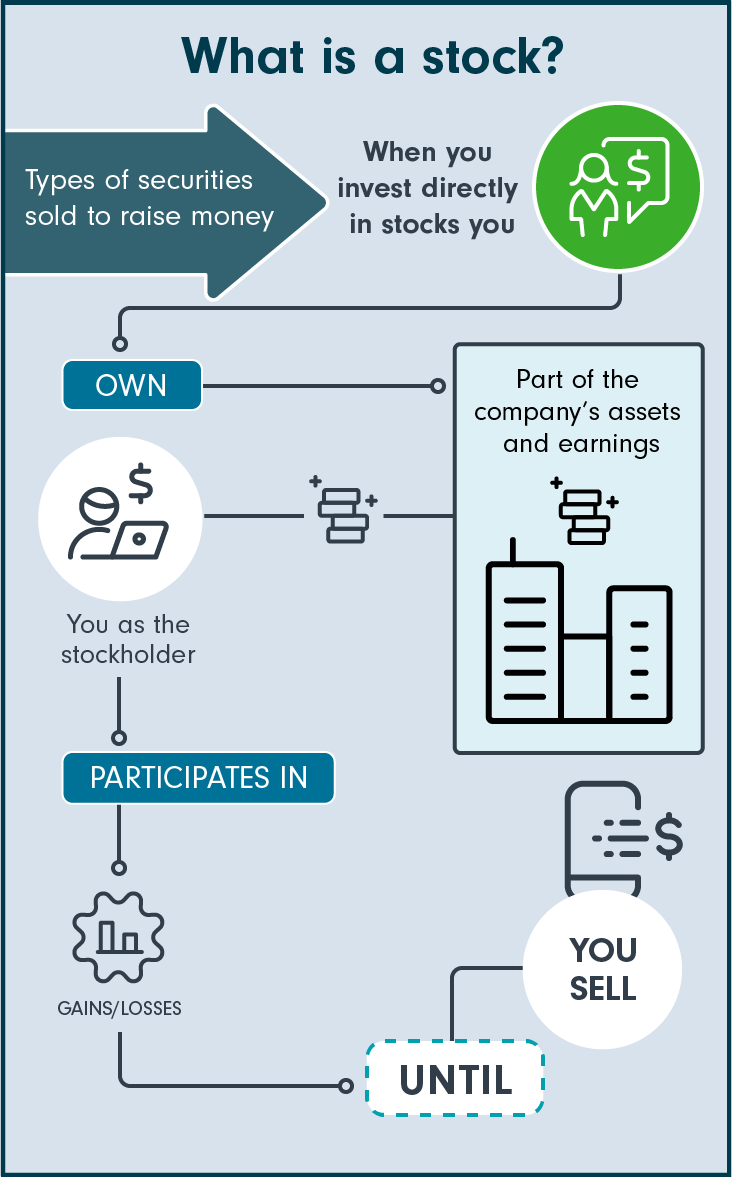
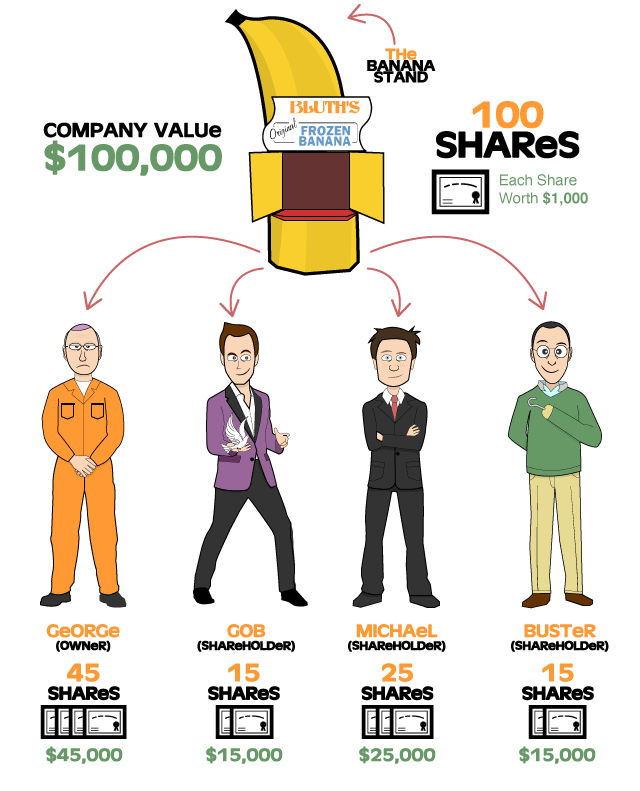
When you buy a stock, you are purchasing a piece of a company. This ownership stake is known as “equity.” In the simplest terms, if a company is divided into a million pieces, and you buy one share, you own one-millionth of that business. This ownership grants you specific rights, including a claim on a portion of the company’s assets and earnings.
The Concept of Shares and Ownership
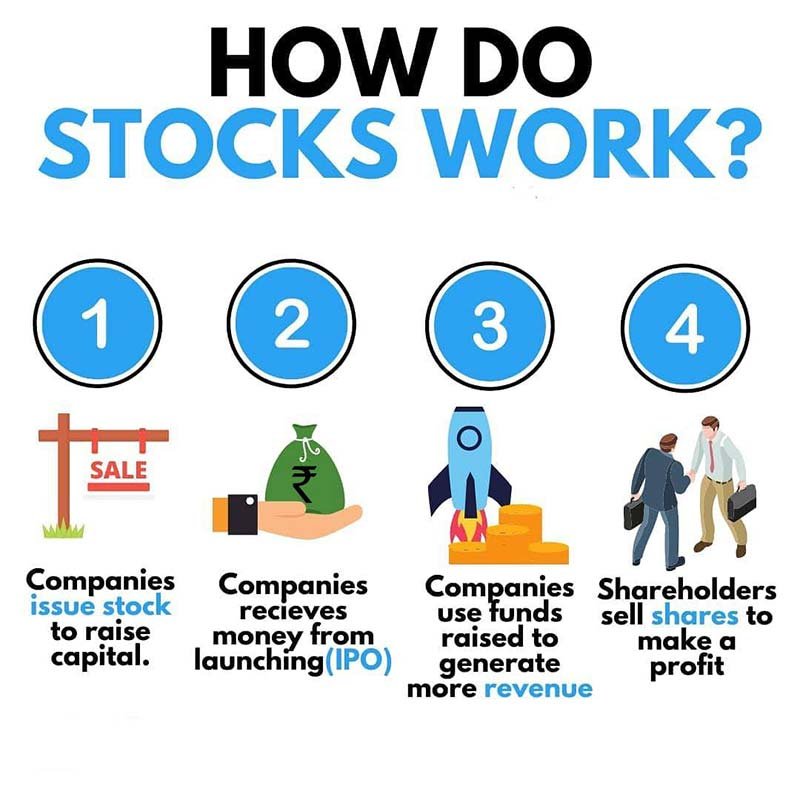
Companies issue shares to raise capital. Instead of taking out a massive loan from a bank—which requires paying back interest—a company can sell pieces of itself to the public. For the company, this is “permanent” capital that doesn’t need to be repaid. For the investor, it represents a “seat at the table.” As an owner, you benefit from the company’s successes, though you also share in the risks of its failures.
The Initial Public Offering (IPO)
The transition from a private company to a public one happens through an Initial Public Offering (IPO). This is the “primary market.” During an IPO, a company works with investment banks to price their shares and sell them to an initial group of investors. Once the IPO is complete, the shares begin trading on a “secondary market,” such as the New York Stock Exchange (NYSE) or the Nasdaq. This is where most individual investors interact with the market, buying and selling shares from other investors rather than from the company itself.
Common vs. Preferred Stock
Not all shares are created equal. Most individual investors buy “common stock,” which provides the potential for capital appreciation and dividends, along with voting rights at shareholder meetings. “Preferred stock,” on the other hand, functions more like a hybrid between a stock and a bond. Preferred shareholders usually don’t have voting rights, but they have a higher claim on assets and earnings—receiving dividends before common shareholders do—and have a fixed dividend rate.
How Investors Build Wealth: Capital Gains and Dividends
The primary goal of investing in stocks is to generate a return on investment (ROI). There are two main ways an investor makes money in the stock market: through the increase in the share price and through direct payments from the company.
Capital Appreciation (Buy Low, Sell High)
The most common way to profit from stocks is through capital gains. If you purchase a share of a company for $50 and its value increases to $75 due to the company’s growth, you have a “paper gain” of $25. If you sell the stock at that price, you realize a capital gain. This growth is driven by the company’s ability to increase its profits over time, making each share more valuable to future buyers.
Dividend Distributions: Passive Income
Some companies, particularly established ones with steady cash flows, choose to distribute a portion of their profits directly to shareholders. These payments are called dividends. Dividends are typically paid quarterly and are a way for companies to reward loyal investors. For many, dividends represent a source of passive income that can be spent or, more effectively, reinvested to buy more shares, fueling a cycle of wealth accumulation.
The Power of Compounding
One of the most critical concepts in finance is compounding. When you earn dividends or capital gains and reinvest that money back into the market, you begin to earn returns on your returns. Over decades, this “snowball effect” can turn modest monthly contributions into a significant retirement nest egg. The earlier an investor starts, the more time compounding has to work its magic, which is why time in the market is often more important than timing the market.
What Drives Stock Prices? Understanding Market Dynamics
If you look at a stock ticker, the price changes every second. Why does a stock cost $100 today and $102 tomorrow? The answer lies in the intersection of mathematics, economics, and human psychology.
Earnings and Corporate Performance
In the long run, a stock’s price is generally tied to the company’s earnings. Every quarter, public companies release financial statements detailing their revenue, expenses, and net profit. If a company consistently grows its earnings, investors are willing to pay more for its shares. Conversely, if a company loses money or fails to meet growth expectations, the stock price usually drops.
Macroeconomic Factors and Interest Rates
Stocks do not exist in a vacuum; they are influenced by the broader economy. Interest rates set by central banks (like the Federal Reserve) play a massive role. When interest rates are low, it is cheaper for companies to borrow money to expand, and stocks generally become more attractive than bonds. When interest rates rise, borrowing costs go up, and investors may move money out of stocks and into “safer” fixed-income assets, leading to downward pressure on stock prices.
Investor Sentiment and Market Psychology
In the short term, stock prices are driven by supply and demand, which are often fueled by emotion. News cycles, geopolitical events, and even social media trends can cause investors to buy or sell in a panic. This is often referred to as “market sentiment.” While a company’s fundamentals might be strong, its stock price can still drop if the overall market is “bearish” (pessimistic) or rise if the market is “bullish” (optimistic).
Diversification and Investment Vehicles
For a beginner, picking individual stocks can be risky. If you put all your money into one company and it goes bankrupt, you lose everything. This is why financial professionals emphasize the importance of diversification.
Individual Stocks vs. Basket Investing
Investing in individual stocks requires significant research and an understanding of balance sheets. For those who do not have the time to analyze every company, “basket” investments are a popular alternative. These allow you to own a small piece of hundreds or thousands of companies simultaneously, spreading your risk across different sectors and industries.
Mutual Funds and ETFs
Mutual funds and Exchange-Traded Funds (ETFs) are the primary tools for diversification. A mutual fund is a pool of money managed by a professional who picks stocks on behalf of the investors. An ETF is similar but trades on an exchange like a regular stock. Many investors choose “Index Funds,” which are ETFs that track a specific market index, like the S&P 500 (the 500 largest companies in the U.S.). This provides instant diversification and has historically outperformed many actively managed funds over the long term.
Growth vs. Value Investing Styles
Within the money niche, there are different philosophies on how to pick stocks. “Growth investors” look for young companies in expanding industries that are expected to grow at an above-average rate. These stocks are often volatile but offer high potential rewards. “Value investors” look for established companies that are currently undervalued by the market—essentially looking for a bargain. Understanding your own risk tolerance will determine which of these strategies (or a blend of both) is right for your portfolio.
Risk Management: The Reality of Market Volatility
No discussion of how stocks work is complete without addressing risk. Investing in the stock market is not a guaranteed way to make money; it is a calculated risk.
Understanding Volatility
Volatility refers to the frequency and severity of price swings. It is a natural part of the market cycle. Prices go up, and prices go down. For a long-term investor, volatility is not necessarily a threat—it is an opportunity to buy shares at a lower price. However, for those who need their money in the short term, volatility can be a significant risk.
The Importance of an Exit Strategy and Time Horizon
The “Golden Rule” of personal finance is to never invest money in the stock market that you will need in the next three to five years. Because the market can crash unexpectedly, you need a long enough “time horizon” to wait for a recovery. Having a clear exit strategy—knowing when you will sell and for what purpose—helps prevent emotional decision-making during market downturns.
Risk vs. Reward
In finance, there is a direct correlation between risk and reward. To achieve higher returns, you generally must be willing to accept higher levels of risk and volatility. Stocks are considered riskier than savings accounts or government bonds, but they also offer much higher historical returns. By balancing your portfolio with different types of assets, you can manage your “risk profile” to match your financial goals and your ability to sleep at night during a market dip.
The stock market remains one of the most accessible paths to wealth creation for the average person. By understanding that a stock is a piece of a business, recognizing the drivers of price, and utilizing diversification to manage risk, you can navigate the financial markets with confidence. Stocks are not a “get rich quick” scheme; they are a long-term vehicle for participating in the growth of the global economy.
aViewFromTheCave is a participant in the Amazon Services LLC Associates Program, an affiliate advertising program designed to provide a means for sites to earn advertising fees by advertising and linking to Amazon.com. Amazon, the Amazon logo, AmazonSupply, and the AmazonSupply logo are trademarks of Amazon.com, Inc. or its affiliates. As an Amazon Associate we earn affiliate commissions from qualifying purchases.