
Navigating the landscape of tax obligations can often feel like deciphering a complex code, especially for those whose income doesn’t come neatly packaged with W-2 withholdings. Estimated quarterly taxes are a cornerstone of financial responsibility for a significant portion of the workforce, from freelancers and small business owners to investors and retirees receiving substantial non-wage income. The very idea of calculating and proactively remitting taxes throughout the year can be daunting, leading to the crucial question: “How do I pay estimated quarterly taxes?” This guide aims to demystify the process, providing a professional, insightful, and engaging roadmap for understanding, calculating, and effectively paying your estimated tax liabilities, ensuring compliance and peace of mind.
Estimated quarterly taxes are essentially a pay-as-you-go system designed to ensure that taxpayers with income not subject to sufficient withholding throughout the year contribute their fair share to federal and, often, state coffers. Failure to accurately estimate and pay these taxes can result in penalties, making a clear understanding of the ‘how’ as critical as the ‘why.’ Whether you’re a burgeoning entrepreneur, a seasoned gig worker, or an individual with substantial investment returns, mastering the quarterly tax routine is an indispensable financial skill.
Understanding Estimated Quarterly Taxes: Who Needs to Pay?
Before diving into the mechanics of payment, it’s essential to grasp the fundamental concepts of estimated quarterly taxes, including what they are, who is required to pay them, and the critical deadlines that govern this system. This foundational knowledge is the first step toward effective tax management.
What Are Estimated Quarterly Taxes?
Estimated taxes are the method used to pay tax on income that is not subject to withholding. This includes income from self-employment, interest, dividends, rent, alimony, and gains from the sale of assets, among other sources. The U.S. tax system operates on a pay-as-you-go basis, meaning taxpayers are generally required to pay tax as they earn income throughout the year, rather than settling their entire tax bill on April 15th. For employees, this is typically handled through payroll withholding. For others, estimated quarterly payments fulfill this obligation. These payments cover income tax, self-employment tax (Social Security and Medicare), and often, alternative minimum tax (AMT).
Criteria for Payment
The IRS generally requires you to pay estimated taxes if you expect to owe at least $1,000 in tax for the year from sources other than wages or if your withholding is otherwise insufficient. For corporations, the threshold is typically $500. This often applies to:
-
Self-Employed Individuals: Sole proprietors, partners in a partnership, and S-corporation shareholders who actively work in the business.
-
Gig Economy Workers: Freelancers, independent contractors, and those earning income through platforms like Uber, Airbnb, or Etsy.
-
Investors: Individuals with significant investment income from dividends, interest, or capital gains.
-
Retirees: Those receiving pension or annuity income, or Social Security benefits that are taxable, and choose not to have tax withheld from these payments.
-
Landlords: Individuals with substantial rental income.
It’s crucial to consider all sources of income when determining if you meet the criteria. If you have both wage income and self-employment income, your wage withholding might cover a portion of your total tax liability, reducing the estimated tax burden.
Key Deadlines
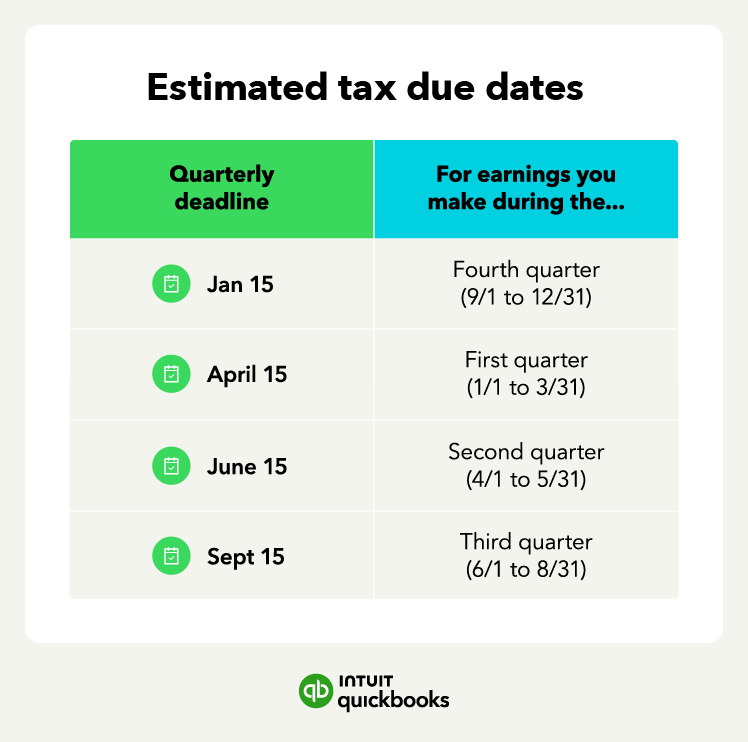
The tax year is divided into four payment periods for federal estimated taxes, each with a specific due date. While the payments are due quarterly, the periods are not evenly spaced:
-
April 15: For income earned January 1 to March 31.
-
June 15: For income earned April 1 to May 31.
-
September 15: For income earned June 1 to August 31.
-
January 15 (of next year): For income earned September 1 to December 31.
If any of these dates fall on a weekend or holiday, the deadline shifts to the next business day. It’s imperative to mark these dates on your calendar, as late payments can incur penalties. State estimated tax deadlines often mirror federal ones but can vary, so always check your specific state’s tax agency for precise dates.
Calculating Your Estimated Tax Liability
The most challenging aspect of estimated taxes for many is accurately calculating the amount owed. This isn’t a one-time calculation at the beginning of the year; it often requires periodic review and adjustment as your income and expenses fluctuate. Precision in this step is vital to avoid both underpayment penalties and overpaying the government unnecessarily.
Estimating Your Income
The cornerstone of your estimated tax calculation is a realistic projection of your annual income. This involves:
-
Historical Data: If you’ve been self-employed or had similar income sources in previous years, use your past tax returns as a starting point.
-
Current Projections: Account for anticipated growth, new contracts, seasonal variations, or significant changes in your business or investments.
-
Multiple Income Streams: Compile all expected income from wages (if any), self-employment, investments, rentals, and other taxable sources. Be as detailed as possible, even if it requires making educated guesses.
It’s generally safer to slightly overestimate your income than to underestimate it, as it provides a buffer against penalties.
Deductions and Credits
Once you have an estimated gross income, the next step is to subtract your anticipated deductions and credits. These can significantly reduce your taxable income and, consequently, your tax liability.
-
Business Expenses: For the self-employed, track all ordinary and necessary business expenses, such as home office deductions, supplies, advertising, mileage, and health insurance premiums.
-
Itemized Deductions vs. Standard Deduction: Determine whether you expect to itemize deductions (e.g., mortgage interest, state and local taxes, charitable contributions) or take the standard deduction.
-
Tax Credits: Identify any tax credits you might qualify for, such as the Child Tax Credit, education credits, or credits for retirement savings. Credits directly reduce the tax you owe, dollar for dollar.
Maintaining meticulous records throughout the year is crucial for accurately estimating and substantiating these deductions and credits.
Using Form 1040-ES
The IRS provides Form 1040-ES, Estimated Tax for Individuals, which includes a worksheet designed to help you calculate your estimated tax. While you don’t file this form itself (unless you’re mailing in payments with the vouchers), the worksheet walks you through the steps to estimate your adjusted gross income, deductions, credits, and ultimately, your total estimated tax. Many tax software programs and online calculators also offer similar functionalities, often simplifying the process.

It’s also essential to consider your state’s estimated tax requirements. Most states with income tax also require estimated payments, and their forms and calculation methods might differ.
Adjusting Estimates Throughout the Year
Your initial estimate might not hold true for the entire year. Life happens – new clients appear, investments fluctuate, or significant expenses arise. It’s prudent to review your income and expense projections each quarter, especially before each payment deadline. If your financial situation changes substantially, adjust your estimated payments accordingly. You can increase or decrease subsequent payments to account for these changes, preventing a large underpayment or overpayment at year-end. This flexibility is a key feature of the estimated tax system.
Methods for Making Your Estimated Quarterly Tax Payments
Once you’ve calculated your estimated tax liability, the next step is to actually remit the funds to the IRS and your state tax authority. Fortunately, there are several convenient and secure methods available for making these payments, catering to different preferences and technological comfort levels.
IRS Direct Pay
For federal estimated tax payments, IRS Direct Pay is a popular and straightforward option. This free, secure web service allows you to make payments directly from your checking or savings account. You don’t need to pre-register; simply visit the IRS website, select “estimated tax” as the payment type, and follow the prompts to enter your bank account information and the payment amount. You’ll receive an email confirmation once the payment is scheduled and another when it’s completed. This method is highly recommended for its ease of use and immediate confirmation.
Electronic Federal Tax Payment System (EFTPS)
EFTPS is another robust electronic payment system offered by the U.S. Department of the Treasury. Unlike IRS Direct Pay, EFTPS requires a one-time enrollment process that can take a few days, as the IRS mails you a PIN for security. Once enrolled, you can schedule payments up to 365 days in advance, making it ideal for setting up recurring quarterly payments. EFTPS is widely used by businesses for various federal tax payments, including estimated taxes, and offers a comprehensive payment history. It’s secure and reliable for both individuals and businesses.
Paying by Mail
While electronic payments are generally preferred for their speed and traceability, you can still pay your federal estimated taxes by mail using a check or money order. If you choose this method, you must include a payment voucher from Form 1040-ES. Each quarterly payment has its own specific voucher (e.g., Voucher 1 for the April 15th payment). Ensure the check or money order is made payable to the “U.S. Treasury” and includes your name, address, Social Security number, daytime phone number, and “20XX Form 1040-ES” (replace XX with the tax year). Mail the payment to the IRS address specified in the Form 1040-ES instructions for your state. Keep in mind that mail payments take longer to process and you won’t receive immediate confirmation, so it’s wise to mail them well in advance of the deadline.
Paying by Debit or Credit Card
You also have the option to pay your estimated taxes using a debit or credit card through third-party payment processors. The IRS lists approved processors on its website. While this offers convenience and the potential to earn rewards points (for credit cards), it typically incurs a processing fee, which can range from 1.87% to 2.25% for credit cards and a flat fee for debit cards. For large payments, these fees can add up, so weigh the convenience and potential rewards against the additional cost.
State Estimated Taxes
Remember to consider your state estimated tax obligations. Most states with an income tax have their own separate systems for estimated payments. These often include online portals, direct debit options, and payment by mail with state-specific vouchers. Always refer to your state’s Department of Revenue or equivalent tax agency website for their specific payment methods and instructions, as they can vary significantly from federal procedures.
Avoiding Penalties and Common Pitfalls
Understanding how to pay estimated taxes is only half the battle; knowing how to avoid common pitfalls and potential penalties is equally crucial. The IRS is serious about its pay-as-you-go system, and non-compliance can lead to financial consequences.
Underpayment Penalties
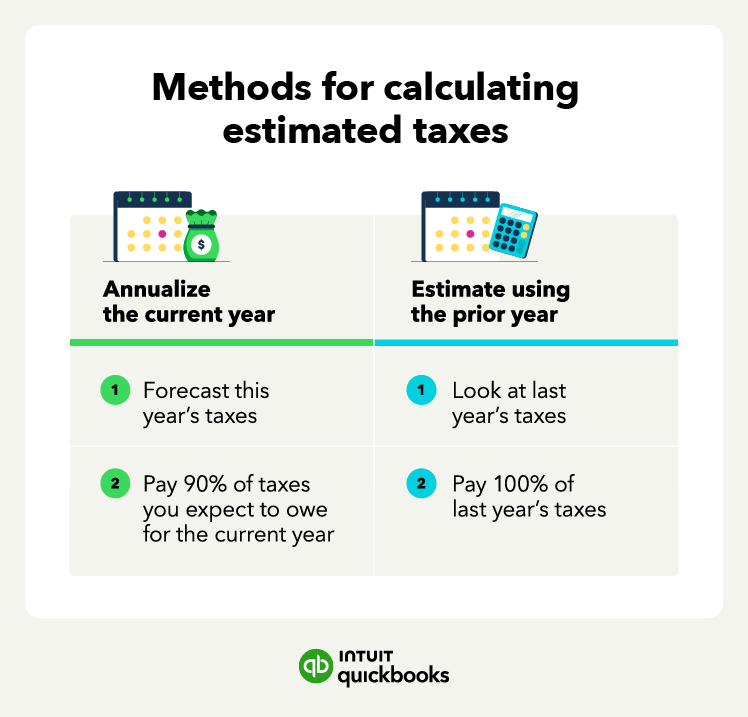
The most common penalty associated with estimated taxes is the underpayment penalty. This penalty is assessed if you don’t pay enough tax throughout the year through withholding or estimated payments. The penalty is essentially interest charged on the amount of underpayment for the period it was unpaid. It applies if your total tax payments (from withholding and estimated taxes) are less than 90% of the tax shown on your current year’s return or 100% of the tax shown on your prior year’s return (110% for high-income taxpayers with AGI over $150,000), whichever is smaller.
Safe Harbor Rules
To help taxpayers avoid underpayment penalties, the IRS provides “safe harbor” rules. If you meet one of these conditions, you generally won’t be subject to an underpayment penalty:
-
90% Rule: You pay at least 90% of the tax you owe for the current year.
-
100%/110% Prior Year Rule: You pay 100% of the tax shown on your prior year’s tax return (if your Adjusted Gross Income was $150,000 or less). If your AGI was more than $150,000 in the prior year, you must pay 110% of that prior year’s tax.
Meeting either of these safe harbor thresholds, even if you still owe tax at year-end, will prevent an underpayment penalty. This makes the prior year’s tax liability a very useful benchmark for planning your estimated payments.
Keeping Meticulous Records
The importance of good record-keeping cannot be overstated. Maintain detailed records of all income and expenses related to your self-employment, investments, or other income sources. Keep copies of all estimated tax payment confirmations, whether electronic or mailed. This documentation is invaluable for calculating your tax liability, substantiating deductions, and defending yourself in case of an IRS inquiry. Digital tools, spreadsheets, and accounting software can greatly simplify this process. Regularly reconciling your financial records will also help you adjust your estimated payments more accurately throughout the year.
Seeking Professional Guidance
While this guide provides a comprehensive overview, tax laws are complex and can change frequently. If your financial situation is particularly intricate, if you’re new to self-employment, or if you simply feel overwhelmed by the process, don’t hesitate to seek professional guidance. A qualified tax advisor or Certified Public Accountant (CPA) can help you accurately calculate your estimated taxes, navigate specific deductions and credits, and ensure you’re in full compliance with all federal and state regulations. Their expertise can save you time, reduce stress, and potentially prevent costly penalties.
Paying estimated quarterly taxes is a fundamental responsibility for many taxpayers, crucial for maintaining financial health and avoiding legal repercussions. By understanding who needs to pay, how to calculate your liability, and the various methods available for payment, you can confidently fulfill your obligations. Proactive planning, meticulous record-keeping, and leveraging available resources, including professional advice, are your best tools in managing estimated taxes effectively. Embrace this aspect of financial management, and you’ll find yourself better prepared and more secure in your financial future.
aViewFromTheCave is a participant in the Amazon Services LLC Associates Program, an affiliate advertising program designed to provide a means for sites to earn advertising fees by advertising and linking to Amazon.com. Amazon, the Amazon logo, AmazonSupply, and the AmazonSupply logo are trademarks of Amazon.com, Inc. or its affiliates. As an Amazon Associate we earn affiliate commissions from qualifying purchases.