
In the world of finance, percentages are the universal language. Whether you are analyzing the performance of a stock portfolio, determining the tax liability on a corporate windfall, or simply trying to figure out how much to set aside for a rainy-day fund, the ability to calculate a percentage of a number is a foundational skill. While the math itself may seem elementary, its application within the realms of personal finance, investing, and business strategy is profound. Mastering this calculation allows you to move beyond guesswork and make data-driven decisions that can significantly impact your net worth and professional trajectory.

The Arithmetic of Growth: Understanding Percentages in Business Finance
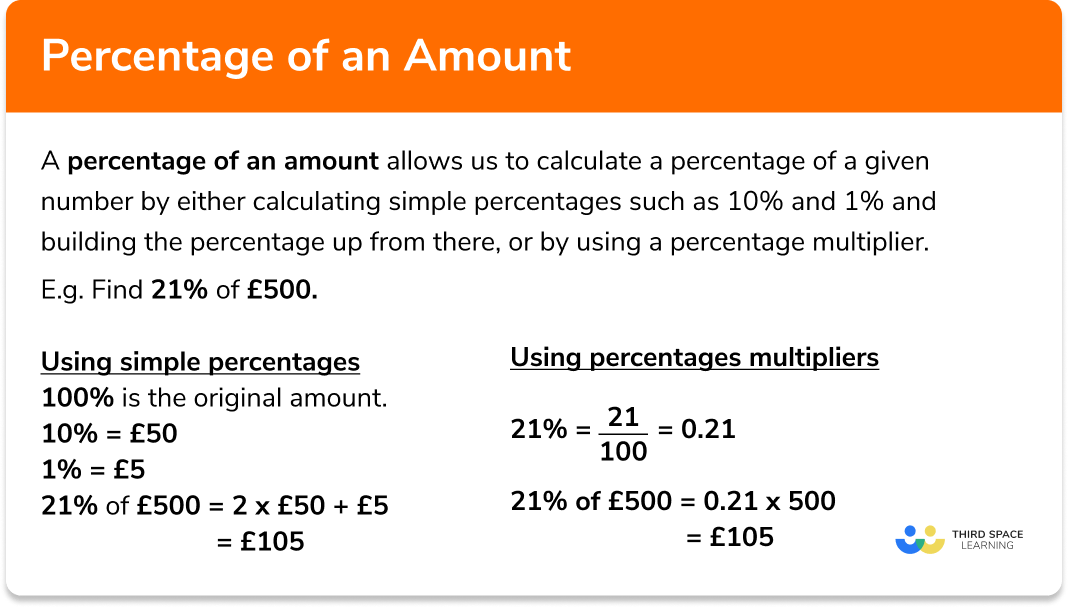
At its core, calculating a percentage of a number is the process of finding a specific portion of a whole. In a business context, this is rarely an academic exercise; it is a vital tool for assessing health and viability. The basic formula is straightforward:
Percentage Value = (Percentage / 100) × Total Amount
For example, if a business owner wants to calculate a 15% dividend from a $200,000 profit, the calculation is $(15 / 100) times 200,000 = 30,000$. However, the true value lies in how this formula is applied to different financial metrics.
Calculating Profit Margins and Markup
One of the most critical applications of percentage calculation is determining profit margins. A profit margin tells you what percentage of your total sales revenue is kept as profit after all expenses are paid. To find this, you divide your net income by your total revenue and then multiply by 100. Understanding how to work backward from a desired percentage is also key. If you know you need a 40% gross margin to remain sustainable, you must be able to calculate the necessary markup on your cost of goods sold (COGS).
Markup is often confused with margin, but they are mathematically distinct. While margin is calculated based on the selling price, markup is calculated based on the cost. If an item costs $100 and you want a 25% markup, you add $25 to the price. However, that $25 profit only represents a 20% profit margin on the $125 sale price. Distinguishing between these percentages is the difference between a profitable enterprise and one that bleeds cash.
Sales Commissions and Performance Incentives
In business finance, percentages are frequently used to incentivize growth. Sales teams often operate on commission structures where they earn a percentage of the total contract value. For a manager, calculating these figures accurately is essential for budgeting and cash flow forecasting. If a salesperson earns a tiered commission—perhaps 5% on the first $50,000 and 8% on anything above that—the ability to slice and dice these numbers ensures that the business remains profitable while the high-performers are appropriately rewarded.
Strategic Personal Finance: The Power of Percentage-Based Budgeting
In personal finance, the “how” of calculating a percentage is less important than the “why.” Successful wealth builders often move away from fixed-dollar budgeting and toward percentage-based budgeting. This approach allows your financial plan to scale automatically as your income increases.
The 50/30/20 Rule of Thumb
The 50/30/20 rule is a popular financial framework that suggests allocating 50% of your after-tax income to “Needs,” 30% to “Wants,” and 20% to “Savings and Debt Repayment.” To implement this, you must first calculate the percentage of your total take-home pay for each category. If your monthly income is $6,000, you would calculate your needs budget by multiplying $6,000 by 0.50 ($3,000). By viewing your life through these percentage lenses, you can quickly identify “lifestyle creep”—the tendency for spending to rise alongside income—and keep your financial goals on track.
Building an Emergency Fund through Fixed Percentages
Setting a goal to save a “percentage of income” rather than a “fixed amount” can be psychologically empowering. For many, saving $500 a month feels like a chore, but committing to saving 10% of every paycheck feels like a strategic investment in oneself. If you receive a bonus or a raise, the 10% rule ensures that your savings grow in tandem with your prosperity. Calculating this is simple: take the amount of the check and multiply it by 0.10. This disciplined application of percentage math is what builds robust emergency funds that can withstand market volatility or personal setbacks.
Tax Planning: Understanding Marginal vs. Effective Tax Rates
Taxation is perhaps the most complex area where percentage calculation is required. Many people mistakenly believe that if they “move into a higher tax bracket,” all of their income is taxed at that higher percentage. In reality, most systems use marginal tax rates. This means you only pay the higher percentage on the portion of your income that falls within that specific range.
To understand your true tax burden, you must calculate your effective tax rate, which is the total tax paid divided by your total earned income. Knowing how to find this percentage allows you to make better decisions regarding tax-advantaged accounts like 401(k)s or IRAs. For instance, if you are in a 24% marginal bracket but your effective rate is only 15%, your strategy for traditional versus Roth contributions might change significantly.
Investment Analysis: Measuring Returns and Risk
In the arena of investing, percentages are the primary yardstick for success. When you look at a stock ticker or a real estate prospectus, the most important numbers are rarely the raw prices; they are the percentage changes and yields.
Calculating Return on Investment (ROI)
The Return on Investment (ROI) is the ultimate metric for any investor. It allows you to compare the efficiency of different investments, regardless of the asset class. The formula is:
ROI = [(Current Value – Original Cost) / Original Cost] × 100
If you invested $5,000 in a mutual fund and it is now worth $6,500, your gain is $1,500. To find the percentage return, you divide $1,500 by $5,000 to get 0.30, or 30%. This percentage tells you more than the $1,500 figure does; it allows you to compare that mutual fund’s performance against a high-yield savings account or a piece of real estate over the same period.
The Impact of Compound Interest
Compound interest is often called the eighth wonder of the world, and it is entirely driven by percentages. When you earn interest on an investment, that interest is expressed as a percentage of your principal. In the next period, you earn that same percentage on the new, higher total.
To calculate how long it will take for an investment to double at a certain percentage rate, investors use the “Rule of 72.” By dividing 72 by the annual percentage rate of return, you get a rough estimate of the number of years required for your money to double. For example, at a 10% annual return, your money doubles in approximately 7.2 years ($72 / 10 = 7.2$). Understanding this percentage-based relationship is essential for long-term retirement planning.
Factoring in Inflation and Real Rates of Return
Investors must also calculate the “real” rate of return, which accounts for inflation. If your portfolio grows by 8% in a year, but inflation is at 3%, your purchasing power has only increased by a net percentage of 5%. Failing to calculate this percentage can lead to a false sense of security, as your “nominal” gains might be eroded by the rising costs of goods and services.
Leveraging Financial Tools for Precision
While knowing how to calculate a percentage manually (or with a basic calculator) is a vital skill, the modern financial landscape requires speed and precision. Professional investors and business owners rely on digital tools to handle these calculations at scale.
Spreadsheet Formulas for Financial Analysts
In programs like Microsoft Excel or Google Sheets, calculating a percentage of a number is a daily task. To find a percentage in a cell, you simply use the formula =Cell_Reference * Percentage. For example, if cell A1 contains $50,000 and you want to find 20%, you would type =A1 * 0.20.
Spreadsheets also allow for more complex percentage analysis, such as “percent change” formulas: =(New_Value - Old_Value) / Old_Value. This is the standard way to track portfolio growth over time. By automating these calculations, you reduce the risk of human error, which is crucial when dealing with significant sums of money.
Using Online Financial Calculators
For complex financial scenarios—such as calculating the percentage-based interest on a mortgage or the “internal rate of return” (IRR) for a business project—online financial calculators are indispensable. These tools often allow you to input variables like “Annual Percentage Rate” (APR) and “Compounding Frequency” to see the total cost of a loan over 30 years. Understanding the underlying math of how to get a percentage of a number helps you interpret the results these calculators provide, ensuring you aren’t misled by marketing jargon or “teaser” rates.

Conclusion: The Bottom Line on Percentages
The ability to calculate a percentage of a number is more than just a math trick; it is a fundamental pillar of financial literacy. In the world of money, those who understand percentages are the ones who control the narrative of their wealth. By applying these calculations to your business margins, your personal budget, and your investment returns, you move from being a passive observer of your finances to an active, informed strategist. Whether you are aiming for a 10% increase in your side-hustle revenue or a 4% withdrawal rate in retirement, your success begins with mastering the simple, yet powerful, percentage.
aViewFromTheCave is a participant in the Amazon Services LLC Associates Program, an affiliate advertising program designed to provide a means for sites to earn advertising fees by advertising and linking to Amazon.com. Amazon, the Amazon logo, AmazonSupply, and the AmazonSupply logo are trademarks of Amazon.com, Inc. or its affiliates. As an Amazon Associate we earn affiliate commissions from qualifying purchases.