
In the world of finance, whether you are managing a household budget, overseeing a corporate portfolio, or building a side hustle, numbers are the primary language of progress. Among the various mathematical tools available to the modern investor and business owner, the “percentage increase” is perhaps the most vital. It serves as a universal barometer for measuring growth, evaluating the health of an investment, and making informed decisions about future financial trajectories. Understanding how to figure percentage increase is not merely a classroom exercise; it is a fundamental skill for anyone looking to achieve financial literacy and long-term wealth.
The Foundations of Financial Growth: Understanding the Formula
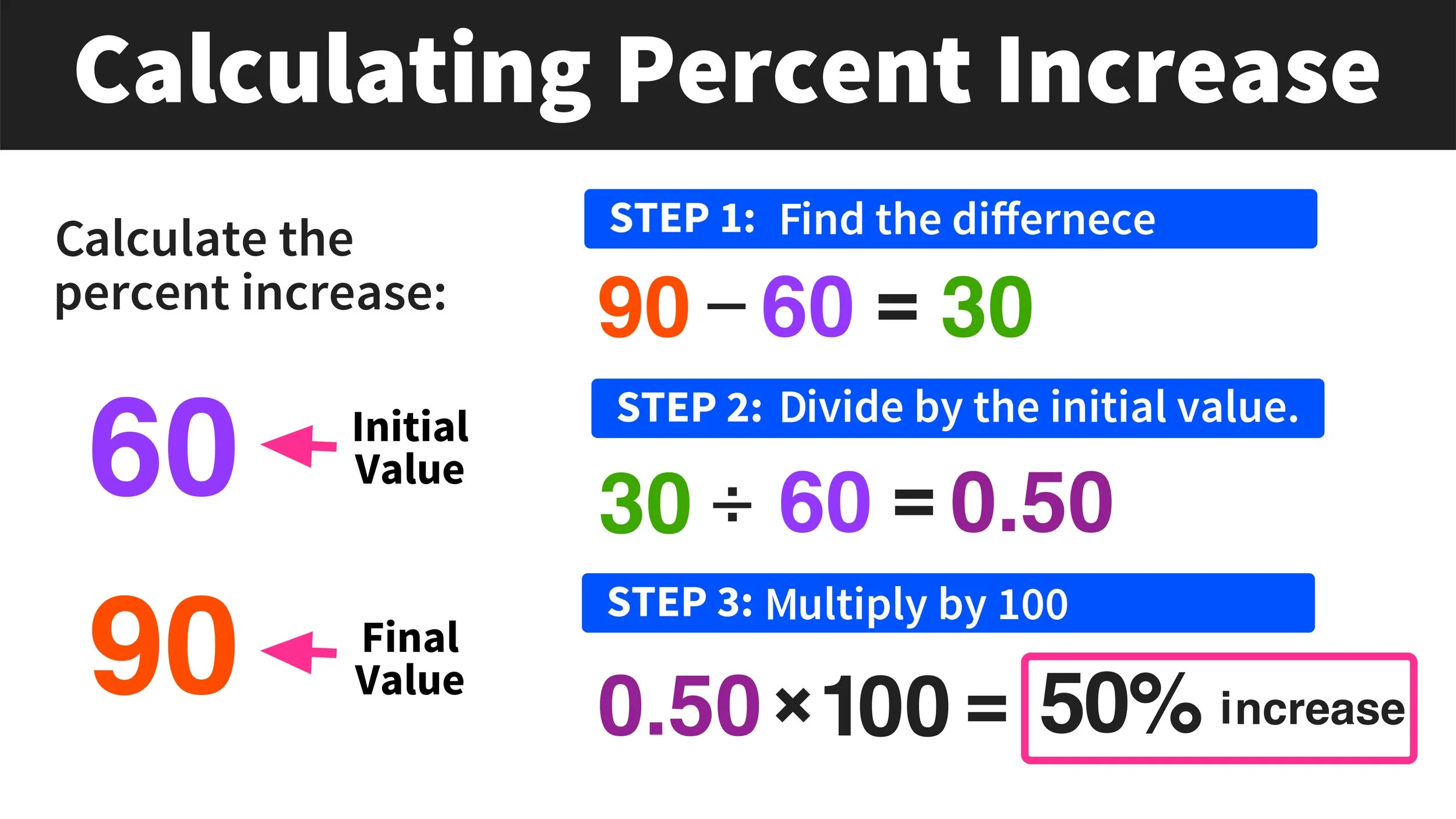
Before diving into complex market analyses, one must master the basic mechanics of how percentage increase is derived. At its core, a percentage increase measures the relative change between an initial value and a final value, expressed as a fraction of one hundred.
The Basic Formula Explained
To calculate the percentage increase, you follow a straightforward three-step process. First, subtract the original value from the new value to find the “absolute increase.” Second, divide that increase by the original value. Finally, multiply the resulting decimal by 100 to convert it into a percentage.
The formula looks like this:
((New Value – Original Value) / Original Value) × 100 = Percentage Increase
For example, if you purchased a share of stock for $150 and its current market value is $195, the calculation would be:
- $195 – $150 = $45 (The absolute increase)
- $45 / $150 = 0.3
- 0.3 × 100 = 30%
This 30% figure tells you exactly how much your capital has grown relative to your initial stake, providing a clearer picture of performance than the $45 figure alone.
Why Context Matters in Personal Finance
While the formula remains constant, the context in which you apply it determines its value. In personal finance, calculating percentage increase helps in budgeting and expense tracking. If your monthly utility bill increases from $100 to $120, a 20% increase might signal a need to audit your energy consumption or investigate provider rate hikes. Conversely, seeing a 5% increase in your savings rate year-over-year indicates positive momentum toward financial independence. By converting raw dollar amounts into percentages, you can compare different categories of your financial life on a level playing field.
Measuring Investment Performance and Portfolio Gains
For investors, the percentage increase is the ultimate metric for Return on Investment (ROI). It allows for the comparison of disparate asset classes—such as real estate, stocks, and cryptocurrencies—to determine which is working hardest for your money.
Evaluating Portfolio Returns
When managing a diverse portfolio, calculating the percentage increase of individual assets allows you to identify “winners” and “losers.” However, seasoned investors also look at the weighted percentage increase of their entire portfolio. If your total portfolio value grows from $50,000 to $57,500 over a year, you have achieved a 15% annual return.
Understanding this percentage is crucial for benchmarking. If the broader market (such as the S&P 500) grew by 10% in the same period, your 15% increase indicates that your investment strategy is outperforming the market average. Without the ability to figure percentage increase, you would be “flying blind,” unable to tell if your gains are truly impressive or merely trailing behind the economy.
Factoring in Inflation and Real Returns
A critical nuance in money management is the distinction between “nominal” and “real” percentage increases. If your savings account offers a 4% interest rate (nominal increase), but inflation is running at 5%, your purchasing power is actually decreasing despite the numerical growth.
To find your “real” percentage increase, you must subtract the inflation rate from your nominal gain. In this scenario, 4% – 5% = -1%. This realization often shifts an individual’s financial strategy from passive saving to active investing, as they recognize that a nominal percentage increase does not always equate to a real-world increase in wealth.
Percentage Increase in Business Finance and Entrepreneurship
For business owners and those involved in corporate finance, percentage increase is the heartbeat of the organization. It is used to track everything from revenue growth to customer acquisition and profit margins.
Tracking Revenue and Profit Growth
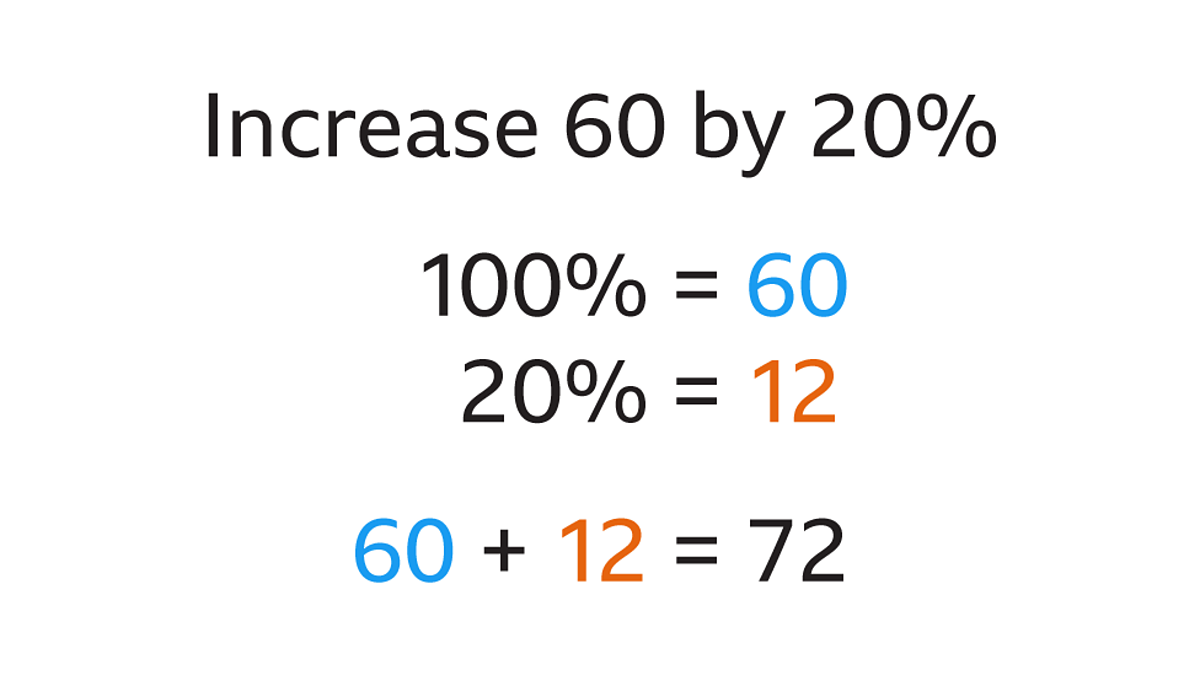
In business, “Year-over-Year” (YoY) and “Quarter-over-Quarter” (QoQ) growth are standard metrics. If a business generated $1 million in revenue last year and $1.2 million this year, it has seen a 20% revenue increase.
However, professional financial analysis goes deeper. An entrepreneur must also look at the percentage increase in expenses. If revenue increased by 20% but operating costs increased by 30%, the business is actually becoming less efficient and potentially less profitable. Mastering these calculations allows a business owner to pivot strategies—perhaps by cutting costs or raising prices—before the trend becomes unsustainable.
Analyzing Profit Margins and Scalability
The “Markup” vs. “Margin” distinction is another area where percentage calculations are vital. When a business increases the price of a product, they are looking at a percentage increase in the selling price to bolster the bottom line. If a product costs $50 to make and is sold for $75, the markup is 50%. If the business decides to increase the price to $85, they have implemented a 13.3% increase in the sale price, which significantly impacts the net profit margin. Understanding how these percentages interact is the difference between a struggling side hustle and a scalable enterprise.
Avoiding Common Pitfalls in Financial Calculations
Mathematics in finance can be deceptive if not applied with precision. There are several common traps that even experienced professionals can fall into when calculating or interpreting percentage increases.
The Difference Between Percentage Point and Percentage
This is one of the most frequent errors in financial reporting. If an interest rate moves from 5% to 6%, it has increased by one percentage point, but the percentage increase of the rate itself is 20% (since 1 is 20% of 5).
Confusing these two can lead to massive errors in financial projections. For instance, if a bank tells you your loan rate is “increasing by 1%,” you need to clarify if they mean the rate is becoming 6% (a one-point increase) or if they are adding 1% to the existing 5% (making it 5.05%). In the world of high-stakes lending, this distinction involves thousands of dollars.
The Asymmetry of Gains and Losses
One of the most sobering lessons in finance is that a percentage decrease requires a larger percentage increase to break even. If your investment portfolio drops by 50%, you do not need a 50% increase to get back to where you started—you need a 100% increase.
If you start with $1,000 and lose 50%, you have $500. To get back to $1,000, that $500 must double (a 100% increase). Understanding this mathematical asymmetry is why wealth preservation and risk management are just as important as growth. It emphasizes why calculating the percentage increase needed for recovery is a vital part of any “exit strategy” in investing.
Leveraging Tools for Faster Financial Analysis
While knowing the manual formula is essential for a deep understanding, modern financial tools can automate these calculations, allowing for more complex “what-if” scenarios and long-term planning.
Using Spreadsheets for Compounding Calculations
Programs like Microsoft Excel or Google Sheets are the gold standard for financial modeling. The formula =(New_Value - Old_Value) / Old_Value can be applied across thousands of rows of data instantly.
Furthermore, spreadsheets allow you to visualize “Compound Annual Growth Rate” (CAGR). Unlike a simple percentage increase, CAGR provides the mean annual growth rate of an investment over a specified period longer than one year, assuming the profits were reinvested. This is a more accurate way to view the long-term percentage increase of a retirement fund or a business’s valuation over a decade.
Online Financial Calculators and Digital Apps
For the on-the-go entrepreneur or the casual investor, various financial apps and online calculators can figure percentage increase instantly. These tools are particularly useful for calculating “Yield to Maturity” on bonds or the “Internal Rate of Return” (IRR) on real estate projects.
However, technology should complement, not replace, financial literacy. By understanding the “why” behind the percentage increase, you become a more critical consumer of financial news. When a headline screams that a stock is “Up 200%,” you will have the presence of mind to ask: “Over what time period, and what was the starting value?”

Conclusion: The Strategic Value of Percentage Growth
Figuring percentage increase is more than a simple division problem; it is a lens through which we view financial health and potential. In personal finance, it helps us track our path to security. In investing, it allows us to measure performance against the world’s most successful benchmarks. In business, it provides the data necessary to scale and thrive in competitive markets.
By mastering this calculation and understanding the nuances of how it applies to different monetary scenarios, you empower yourself to make decisions based on data rather than emotion. Whether you are aiming for a 10% increase in your savings or a 50% increase in your business revenue, the journey begins with understanding the math of growth. Wealth is built on percentages, and the better you are at calculating them, the better you will be at growing them.
aViewFromTheCave is a participant in the Amazon Services LLC Associates Program, an affiliate advertising program designed to provide a means for sites to earn advertising fees by advertising and linking to Amazon.com. Amazon, the Amazon logo, AmazonSupply, and the AmazonSupply logo are trademarks of Amazon.com, Inc. or its affiliates. As an Amazon Associate we earn affiliate commissions from qualifying purchases.