
In the complex world of finance, often the most powerful tools are the simplest. Understanding percentages, particularly how to swiftly calculate 10 percent of any given number, stands as a cornerstone skill for financial literacy and effective money management. Far from being a mere academic exercise, this fundamental calculation is a real-world financial superpower, enabling individuals and businesses alike to make quick, informed decisions on everything from budgeting and savings to investments and debt.
This article delves into the straightforward methods for finding 10 percent of a number, illustrating its profound utility across various financial scenarios. We’ll explore why this seemingly small mathematical trick can lead to significant financial advantages, helping you navigate daily transactions, plan for the future, and gain greater control over your financial destiny.
Why 10 Percent is Your Financial Superpower
The ability to quickly calculate 10 percent of a number might seem trivial at first glance, but its applications permeate nearly every aspect of personal and business finance. It’s a mental shortcut that can save you time, prevent overspending, and help you grasp financial implications on the fly.
The Ubiquity of 10% in Everyday Finance
Think about your daily financial interactions. Discounts are often quoted as percentages. Tips at restaurants are standard percentages. Sales taxes, while varying, can often be quickly estimated using a 10% base. Understanding how to find 10% provides an immediate reference point for these common occurrences. If you’re eyeing an item discounted by 10%, or need to calculate a 15% tip, knowing 10% instantly gives you a close approximation, empowering you to make decisions without fumbling for a calculator. This quick mental agility translates into smarter spending and more efficient budgeting.
Beyond immediate transactions, 10% often appears in financial advice. The recommendation to save “10% of every paycheck” is a classic financial wisdom. Understanding how to calculate this figure effortlessly helps you put that advice into practice, making abstract goals tangible and actionable. Similarly, when considering investment returns or interest rates, being able to quickly estimate 10% of your principal can provide a crucial sense of scale and potential growth or cost.
Building Financial Acumen: A Gateway to Deeper Understanding
Mastering the 10% calculation isn’t just about quick math; it’s about building foundational financial acumen. It sharpens your numerical intuition, making you more comfortable with financial figures and percentages in general. This comfort is invaluable when you’re faced with more complex financial decisions, such as analyzing loan interest rates, evaluating investment portfolios, or understanding profit margins.
By developing a strong grasp of this basic principle, you cultivate a mindset that naturally questions and quantifies financial information. You move beyond passively accepting numbers to actively engaging with them, asking “What does that 10% actually mean in dollars for me?” This proactive approach is a hallmark of financial literacy and empowers you to critically assess financial products, services, and opportunities, ultimately leading to better decision-making and enhanced financial well-being. It transforms you from a financial spectator into an active participant, giving you greater control and confidence in managing your money.
The Simple Math Behind 10 Percent: Your Go-To Method
At its core, finding 10 percent of a number is surprisingly simple. There are two primary methods, both intuitive, that you can employ depending on the context and the numbers involved. Once you grasp these, you’ll be able to calculate 10% in seconds, whether in your head or with a quick glance.
The Decimal Shift Method: Your Quickest Mental Math Trick
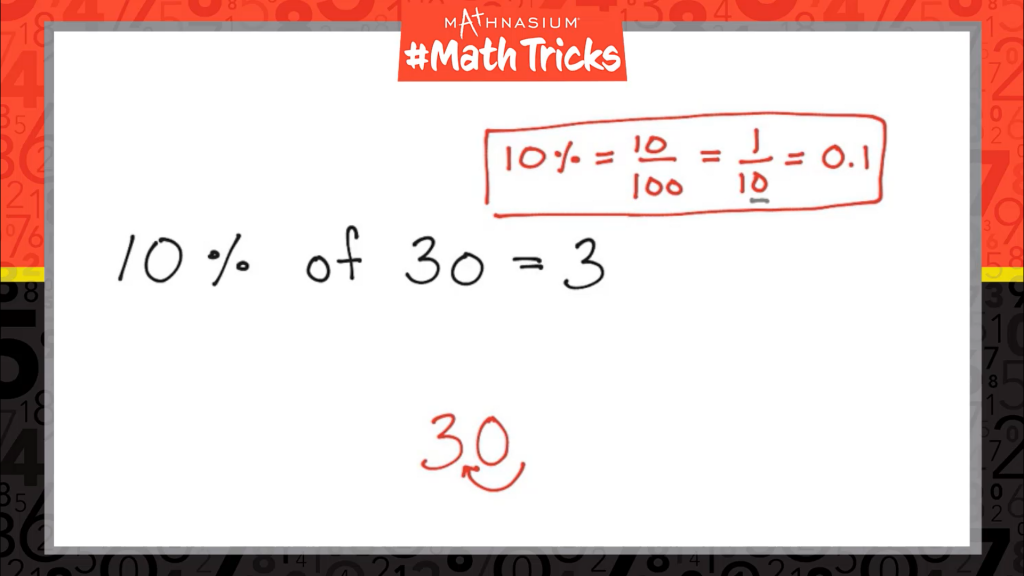
The absolute fastest way to find 10 percent of any number is to shift the decimal point one place to the left. This method works every time and is incredibly efficient for mental calculations.
How it works:
Every number, even whole numbers, has an implied decimal point. For whole numbers, it’s at the end (e.g., 100 is 100.0). When you divide a number by 10, which is what finding 10% essentially is (10/100 = 1/10), you effectively move the decimal one place to the left.
-
Example 1: Discounts and Sales
Imagine you see a jacket priced at $150, and it’s 10% off. To find 10% of $150:
Original number: 150.00
Shift the decimal one place to the left: 15.00
So, 10% of $150 is $15. The jacket is discounted by $15. -
Example 2: Estimating Tips
Your dinner bill comes to $78.50, and you want to leave a 10% tip.
Original number: 78.50
Shift the decimal one place to the left: 7.85
A 10% tip would be $7.85. This provides a quick base to calculate higher tips, like 15% (add half of the 10% value) or 20% (double the 10% value).
The Division Method: The Foundational Understanding
While the decimal shift is a shortcut, the division method provides the conceptual foundation. Ten percent literally means “10 out of every 100,” or 10/100, which simplifies to 1/10. Therefore, to find 10% of a number, you simply divide that number by 10.
How it works:
Percentage is a fraction of a whole, where the whole is 100. So, 10% of X is (10/100) * X, which simplifies to (1/10) * X, or X / 10.
-
Example 1: Calculating Loan Interest (Simplified)
Let’s say you have a small business loan of $5,000, and the monthly interest rate is 1%. While this isn’t directly 10%, understanding 10% helps. If your annual interest was 10%, you’d quickly divide $5,000 by 10 to get $500 in annual interest. For more typical rates, knowing 10% allows you to quickly gauge if the quoted interest seems high or low. For example, if you borrow $5,000 and the interest is $500, that’s exactly 10%, which might be very high for an annual rate. This mental benchmark helps you quickly assess financial commitments. -
Example 2: Budgeting for Savings Goals
You earn $3,200 per month after taxes, and your financial advisor recommends saving 10% of your income.
To calculate 10% of $3,200:
$3,200 / 10 = $320
This means you should aim to save $320 each month. This concrete number makes your savings goal actionable and measurable. The division method reinforces the idea of carving out a tenth of your resources for a specific purpose.
Both methods lead to the same result, but the decimal shift is superior for speed, especially in mental math. The division method offers a deeper understanding of what “10 percent” actually represents. Incorporating both into your financial toolkit will make you exceptionally adept at quick financial assessments.
Real-World Financial Applications of the 10 Percent Rule
The practical utility of being able to find 10 percent of a number extends far beyond simple calculations. It empowers you to make smarter financial decisions in a multitude of real-world scenarios, fostering a proactive approach to managing your money.
Budgeting and Savings: Fueling Your Financial Future
One of the most common applications of the 10 percent rule is in personal budgeting and savings. Many financial experts advocate for saving at least 10% of your net income. By quickly calculating this figure, you can:
- Set Realistic Savings Goals: If your monthly take-home pay is $4,500, you immediately know that a 10% savings goal means putting aside $450. This concrete number is easier to integrate into your budget than an abstract percentage.
- Fund Emergency Accounts: Building an emergency fund is critical. If your target is three months’ worth of expenses totaling $9,000, knowing how much 10% of your income is helps you estimate how many months it will take to reach that goal if you save consistently.
- Track Progress: Periodically, you can check your savings against 10% of your accumulated income to ensure you’re on track. It’s a quick benchmark to assess financial discipline.
Investing Insights: Quick Checks and Growth Estimations

While investing involves many variables, the 10 percent rule can offer quick insights and estimations:
- Estimating Simple Returns: If you’re considering an investment of $10,000 and anticipate a 10% annual return, you can instantly estimate earning $1,000 in the first year. This provides a tangible figure for evaluating potential gains.
- Understanding Growth Rates: When presented with various investment options or historical growth rates, being able to quickly calculate 10% helps you contextualize the numbers. Is a fund growing at 8% or 12%? How does that translate into actual dollars on your principal? The 10% rule provides a helpful anchor.
- Portfolio Rebalancing: If your portfolio has grown significantly, you might decide to trim gains from an overperforming asset class. You might decide to sell 10% of your position in a particular stock to rebalance, and quickly knowing what that 10% represents in dollar value is crucial.
Understanding Debt and Interest: Managing Your Liabilities
Debt management is another area where the 10% rule shines. Understanding interest rates and how they impact your total debt burden is crucial.
- Estimating Interest Payments: While actual interest calculations on loans are more complex (compounding interest), the 10% rule can provide a quick, rough estimate of the cost of borrowing. If you have a credit card balance of $2,500 and an annual interest rate of 19.99%, you know that 10% would be $250. This helps you understand the magnitude of interest charges over a year, prompting you to prioritize repayment.
- Assessing Loan Offers: When comparing loan offers, quickly calculating 10% of the principal can help you gauge how significant the interest charges will be, especially for short-term loans where a seemingly small percentage can translate to a substantial dollar amount.
- Identifying High-Interest Debt: If you have multiple debts, you can use the 10% rule to quickly identify which ones are costing you the most in interest, allowing you to prioritize paying down high-interest liabilities first.
Smart Shopping and Discounts: Maximizing Your Purchasing Power
Shopping efficiently means understanding discounts and sales. The 10 percent rule makes you a savvier consumer:
- Rapidly Calculating Sale Prices: A shirt is $45, and it’s 10% off. You instantly know the discount is $4.50, and the new price is $40.50. This speed prevents you from second-guessing or needing a calculator for every item.
- Comparing Deals: When stores offer different percentage discounts, being able to quickly estimate 10% allows you to mentally compare deals more effectively, even if the base prices vary significantly.
- Spotting “Good” vs. “Bad” Discounts: Is 10% off a $5,000 appliance a significant saving ($500), or is 10% off a $15 item merely a few dollars? The rule helps you put discounts into perspective.
By integrating the 10 percent rule into these financial facets of your life, you transform it from a simple mathematical trick into a powerful tool for informed decision-making and enhanced financial control.
Beyond 10 Percent: Scaling Your Financial Calculations
While 10 percent is a fantastic starting point, its true power lies in its scalability. Once you’ve mastered finding 10% of a number, you’ve unlocked the ability to quickly calculate many other common percentages, often with just one or two more simple steps. This extends your financial agility and makes you even more capable of rapid assessments.
Leveraging 10% for Other Percentages (20%, 5%, 1%)
The 10% rule acts as a mental anchor, from which you can easily navigate to other percentage calculations. This ‘building block’ approach significantly reduces the perceived complexity of percentage math.
-
Calculating 20% (Double 10%): If you know 10%, finding 20% is as simple as doubling that amount.
- Example: A service costs $300, and you want to calculate a 20% fee.
10% of $300 is $30.
20% of $300 is $30 * 2 = $60.
This is particularly useful for things like higher tips, taxes, or commission rates that are often around the 20% mark.
- Example: A service costs $300, and you want to calculate a 20% fee.
-
Calculating 5% (Half of 10%): Similarly, 5% is exactly half of 10%.
- Example: You’re looking at a product priced at $60, and it has a 5% sales tax.
10% of $60 is $6.
5% of $60 is $6 / 2 = $3.
This is invaluable for sales tax, smaller discounts, or understanding certain financial charges that might hover around this percentage.
- Example: You’re looking at a product priced at $60, and it has a 5% sales tax.
-
Calculating 1% (10% of 10%): Finding 1% of a number can also be derived from 10%. It’s simply 10% of the 10% value, or more directly, moving the decimal two places to the left from the original number.
- Example: You need to find 1% of $8,000 for a small fee.
10% of $8,000 is $800.
1% of $8,000 is 10% of $800, which is $80. (Or, $8,000 with decimal shifted two places left is $80.00).
This is useful for very precise calculations, or when dealing with smaller percentage fees or interest rates on large sums.
- Example: You need to find 1% of $8,000 for a small fee.
By mastering the 10% rule, you gain a versatile tool that quickly extends to 1%, 5%, 20%, and even other combinations (e.g., 15% is 10% + 5%; 25% is 10% + 10% + 5%). This foundational skill transforms you into a human calculator for many common financial scenarios.
Integrating with Financial Tools: Knowing When to Go Digital
While mental math is powerful, there are times when precision or complexity demands the use of digital tools. The 10% rule doesn’t replace them; it complements them, providing a quick check or an initial estimate.
- When to Use Calculators: For exact figures, especially involving large sums, multiple percentages, or intricate interest calculations (like compound interest), a calculator is indispensable. Your mental 10% calculation can serve as a sanity check. If your calculator tells you 10% of $1,234.56 is $123.456, and your mental math told you “around $123.40,” you know you’re on the right track.
- Leveraging Spreadsheets (e.g., Excel/Google Sheets): For budgeting, tracking investments, or financial modeling, spreadsheets are powerful. They automate calculations, track historical data, and allow for “what-if” scenarios. You might use a spreadsheet to automatically calculate 10% of your income for savings each month, or to show 10% growth year-over-year on an investment.
- Utilizing Financial Apps: Many banking and budgeting apps automatically categorize spending and provide percentage breakdowns. While they do the math for you, understanding the underlying 10% principle helps you interpret the data they present and identify areas for improvement. For instance, if an app shows you’re spending 15% of your income on dining out, you can quickly benchmark that against a hypothetical 10% target to see how much you’re exceeding.
The goal isn’t to shun technology but to use it wisely. Your ability to quickly find 10% empowers you to interact with these tools more intelligently, providing context and allowing you to verify their outputs, making you a more effective manager of your finances.
Cultivating a Percentage Mindset for Financial Success
Ultimately, mastering “how to find 10 percent of a number” is more than just a mathematical trick; it’s a stepping stone toward a more financially aware and empowered existence. It’s about cultivating a mindset that sees numbers not as abstract figures, but as tangible representations of value, cost, and opportunity.
From Estimation to Precision: Knowing When Enough is Enough
A key aspect of financial intelligence is understanding when an estimate is sufficient and when precise calculations are paramount. The 10% rule excels at providing rapid, reliable estimates that can guide immediate decisions.
- Quick Decisions: When deciding on a tip, estimating a discount in a store, or making a quick budget adjustment, a mental 10% calculation is often “good enough.” It helps you move forward without paralysis by analysis.
- Benchmarking and Verification: As discussed, your mental estimate can serve as a powerful benchmark. If a financial statement shows a 10% fee, you can quickly verify if the dollar amount matches your expectation. If it doesn’t, it’s a red flag to investigate further.
- When Precision is Needed: For tax filings, significant investment decisions, or calculating exact loan repayments, relying solely on mental estimates is unwise. These are the moments to engage with calculators, spreadsheets, or consult with financial professionals. The percentage mindset ensures you know what to calculate and why, even when using tools for accuracy.

Empowering Financial Decisions: Taking Control of Your Money
The true value of this skill lies in the empowerment it brings. By becoming adept at simple percentage calculations, you gain greater control and confidence in your financial life:
- Reduced Anxiety: Financial decisions often come with anxiety. By being able to quickly interpret numbers, you reduce the mystery and fear, approaching financial choices with clarity.
- Proactive Planning: Whether it’s saving for a down payment, planning for retirement, or managing debt, the ability to break down large goals into understandable percentages allows for more effective and proactive planning.
- Improved Negotiation: Understanding percentages strengthens your position in financial negotiations, whether it’s discussing a salary increase (e.g., a 10% raise), a discount on a purchase, or the terms of a loan.
- Enhanced Literacy: You become more fluent in the language of money, enabling you to better understand financial news, product disclosures, and advice from experts.
In conclusion, the simple act of learning “how to find 10 percent of a number” unlocks a cascade of benefits in your financial journey. It’s a foundational skill that enhances your ability to budget, save, invest, and manage debt with greater ease and confidence. Embrace this powerful, yet straightforward, tool, and watch as your financial acumen and decision-making capabilities flourish.
aViewFromTheCave is a participant in the Amazon Services LLC Associates Program, an affiliate advertising program designed to provide a means for sites to earn advertising fees by advertising and linking to Amazon.com. Amazon, the Amazon logo, AmazonSupply, and the AmazonSupply logo are trademarks of Amazon.com, Inc. or its affiliates. As an Amazon Associate we earn affiliate commissions from qualifying purchases.