
Understanding your potential Social Security benefits is a cornerstone of prudent financial planning, yet for many, the system remains shrouded in complexity. Far from being a simple, fixed payment, your Social Security benefit is a dynamic figure, shaped by decades of your work history, earnings, and critical decisions made as you approach retirement. This comprehensive guide aims to demystify the process, empowering you to accurately estimate your future benefits and make informed choices to optimize your financial security.
Demystifying Social Security: The Core Principles
Before diving into the intricacies of benefit calculation, it’s crucial to grasp the fundamental principles upon which the Social Security program operates. It’s more than just a retirement check; it’s a vital social insurance program designed to provide a safety net for millions of Americans.

What is Social Security and Who is Eligible?
Social Security is a federal program that provides financial protection to millions of Americans, including retirees, people with disabilities, and survivors of deceased workers. It is primarily funded through payroll taxes, known as the Federal Insurance Contributions Act (FICA) tax, contributed by employees and employers.
Eligibility for Social Security benefits is determined by a system of “credits.” You earn credits throughout your working life by paying Social Security taxes on your earnings. In 2024, you earn one credit for every $1,730 in earnings, up to a maximum of four credits per year. Most people need 40 credits (10 years of work) to be eligible for retirement benefits. These credits do not need to be consecutive; they accumulate over your working lifetime.
The Different Types of Benefits
While often associated with retirement, Social Security provides several crucial types of benefits, each with its own eligibility requirements and calculation methods:
- Retirement Benefits: The most common type, paid to eligible workers who have reached a certain age.
- Disability Benefits: Provided to workers who have a severe medical condition that prevents them from working for a year or more, or that is expected to result in death.
- Survivor Benefits: Paid to the spouse, children, or parents of a deceased worker who earned enough Social Security credits. These benefits offer critical financial support during a difficult time.
- Spousal Benefits: In some cases, a spouse can receive benefits based on their living or deceased spouse’s work record, even if they never worked or had low earnings.
- Divorced Spousal Benefits: A former spouse may also be eligible for benefits based on their ex-spouse’s record under specific conditions (e.g., marriage lasted 10 years or more).
Understanding which types of benefits you or your family members might be eligible for is the first step in assessing your overall Social Security picture.
Understanding Your Full Retirement Age (FRA)
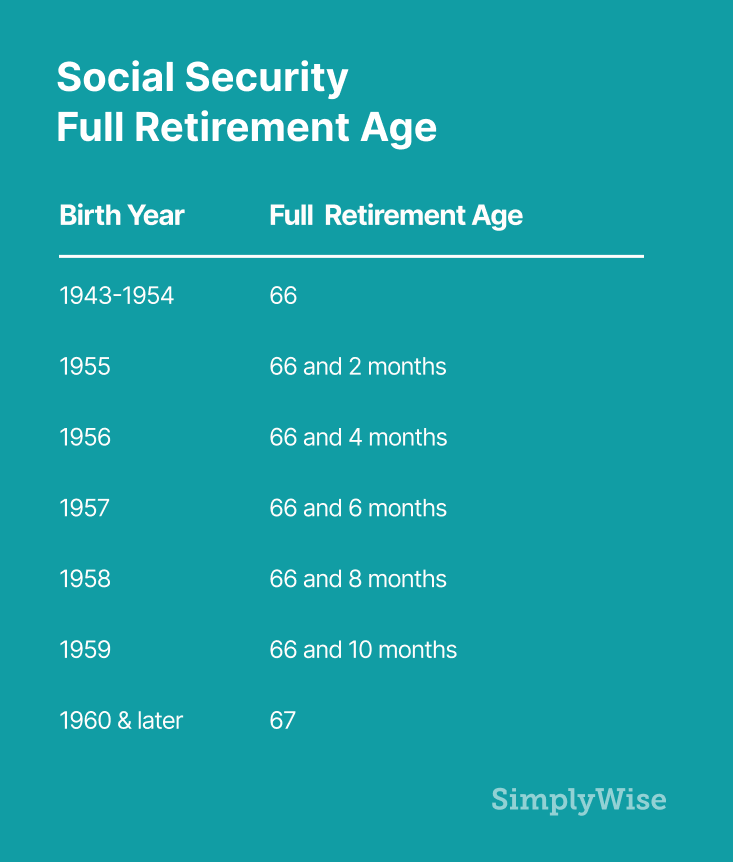
Your Full Retirement Age (FRA) is a critical concept in Social Security. It is the age at which you are entitled to receive 100% of your Primary Insurance Amount (PIA), which is your basic benefit amount calculated by the Social Security Administration (SSA). Your FRA is determined by your birth year:
- Born 1943-1954: FRA is 66
- Born 1955: FRA is 66 and 2 months
- Born 1956: FRA is 66 and 4 months
- Born 1957: FRA is 66 and 6 months
- Born 1958: FRA is 66 and 8 months
- Born 1959: FRA is 66 and 10 months
- Born 1960 or later: FRA is 67
Knowing your FRA is crucial because claiming benefits before or after this age significantly impacts the amount you receive.
The Formula Behind Your Future: Key Calculation Factors
Your Social Security benefit isn’t an arbitrary number. It’s the result of a precise formula that takes into account your entire earnings history. The more you earned (up to a certain limit) and the longer you worked, the higher your potential benefits.
Your Earnings Record: The 35-Year Snapshot
The Social Security Administration calculates your retirement benefit based on your highest 35 years of “indexed” earnings. This means that if you worked for 40 years, only the 35 years with the highest earnings will be considered. If you worked fewer than 35 years, “zeroes” will be averaged in for the missing years, which can significantly reduce your benefit amount.
“Indexing” is an important concept. Social Security doesn’t just use the raw dollar amounts you earned decades ago. Instead, it adjusts your past earnings to account for changes in the national average wage level over time. This ensures that your past earnings are expressed in terms of their current value, providing a fair basis for calculating benefits. For example, $10,000 earned in 1980 will be indexed to a much higher amount in today’s dollars before it’s included in your calculation.
Average Indexed Monthly Earnings (AIME) and Primary Insurance Amount (PIA)
The two most critical components in the Social Security benefit formula are the Average Indexed Monthly Earnings (AIME) and the Primary Insurance Amount (PIA).
-
Average Indexed Monthly Earnings (AIME):
- First, the SSA takes your earnings from your highest 35 years and indexes them to reflect wage growth over time.
- These 35 years of indexed earnings are then totaled and divided by 420 (the number of months in 35 years) to arrive at your Average Indexed Monthly Earnings (AIME). This figure represents your average monthly earnings over your highest-earning career years, adjusted for inflation.
-
Primary Insurance Amount (PIA):
- Your AIME is then used to calculate your Primary Insurance Amount (PIA). The PIA is the benefit you would receive if you start collecting Social Security benefits exactly at your Full Retirement Age.
- The SSA uses a “bend point” formula to calculate PIA, which is progressive. This means that lower earners replace a higher percentage of their pre-retirement income than higher earners. The formula involves applying different percentages to specific segments of your AIME. For example, for benefits becoming payable in 2024, the formula is:
- 90% of the first $1,174 of AIME, plus
- 32% of AIME between $1,174 and $7,078, plus
- 15% of AIME over $7,078.
- These bend points are adjusted annually based on changes in the national average wage index.
Your PIA is the foundation of your benefit. All other adjustments, such as claiming early or late, or receiving spousal benefits, are calculated as a percentage of your PIA.
The Impact of Claiming Age: Early vs. Delayed Benefits
When you decide to start receiving Social Security benefits is one of the most impactful decisions you’ll make, as it directly affects your monthly payment for life.
- Claiming Early (Age 62): You can start receiving retirement benefits as early as age 62. However, if you claim before your Full Retirement Age (FRA), your benefits will be permanently reduced. The reduction is approximately 5/9 of 1% for each month you claim before FRA, up to 36 months, and then 5/12 of 1% for each additional month. For someone with an FRA of 67, claiming at 62 means a permanent reduction of about 30%.
- Claiming at Full Retirement Age (FRA): If you wait until your FRA, you receive 100% of your Primary Insurance Amount (PIA). This is the benchmark against which early or delayed claiming is measured.
- Delayed Claiming (Up to Age 70): For every month you delay claiming benefits past your FRA, up to age 70, your benefits increase. These are called Delayed Retirement Credits (DRCs). DRCs accrue at a rate of 8% per year (or 2/3 of 1% per month) for those born in 1943 or later. This means if your FRA is 67 and you delay until 70, you could receive 124% of your PIA (3 years x 8% per year = 24% increase). There’s no additional benefit increase for delaying past age 70.
The decision of when to claim depends on various factors, including your health, other sources of income, life expectancy, and spousal considerations.
Essential Tools for Estimating Your Benefits
While the calculation of Social Security benefits involves complex formulas, the Social Security Administration provides excellent tools to help you estimate your future payments with reasonable accuracy.
The “my Social Security” Online Account and Your Statement
The single most valuable resource for understanding your Social Security benefits is your personal “my Social Security” online account. Creating an account (if you haven’t already) allows you to:
- Access your Social Security Statement: This statement provides a detailed record of your earnings history, year by year, as reported to the SSA. It also gives you estimated benefit amounts at different claiming ages (early, full, and delayed retirement), as well as estimated disability and survivor benefits. Reviewing your earnings history regularly is crucial to ensure accuracy; errors could impact your future benefits.
- Get personalized estimates: The online platform uses your actual earnings record to provide up-to-date benefit estimates.
- Check the status of an application: If you’ve applied for benefits, you can track its progress.
- Manage your benefits: Once you’re receiving benefits, you can change your address, direct deposit information, or request a replacement Medicare card.
Historically, the SSA mailed statements periodically, but now the online account is the primary and most efficient way to access this critical information.
Leveraging the SSA’s Online Calculators
Beyond your personalized statement, the SSA offers a suite of online calculators to help you explore different scenarios:
- Retirement Estimator: This interactive tool allows you to plug in different retirement dates and future earnings scenarios to see how your benefit estimates change. It’s an excellent way to experiment with the impact of working longer or delaying retirement.
- Benefit Calculators: The SSA website also hosts various detailed benefit calculators (e.g., Early or Late Retirement Calculators, a Life Expectancy Calculator) that can provide more granular insights into how specific choices affect your payments.
- Quick Calculator: For a fast, basic estimate using limited information.
These calculators are based on the same official formulas the SSA uses, ensuring accuracy in your projections. Be wary of third-party calculators that may not be updated or fully comprehensive.
Direct Assistance from the Social Security Administration
If you have specific questions, complex situations (like divorced spousal benefits, government pension offset, or windfalls), or simply prefer to speak with a human, the Social Security Administration offers direct assistance:
- Phone: You can call the SSA’s national toll-free number. Be prepared for potentially long wait times, especially during peak hours.
- In-person: Visiting a local Social Security office can be beneficial for detailed discussions. It’s often advisable to call ahead and schedule an appointment to ensure you get dedicated time with a representative.
- Mail: You can also correspond with the SSA by mail, though this is typically the slowest method.
SSA representatives are trained to provide accurate information specific to your situation, helping clarify any ambiguities or complexities in your benefit calculations.
Strategies to Optimize Your Social Security Income
While Social Security is designed to be a fundamental safety net, there are proactive steps you can take to maximize your benefits, making it a more substantial part of your retirement income.
Maximizing Your Earning Years
Since your benefit is based on your highest 35 years of indexed earnings, one of the most direct ways to increase your Social Security payment is to ensure you have 35 years of solid earnings. If you have fewer than 35 years of work, or if some of your earlier working years were low-earning, working a few extra years at a higher salary can significantly boost your Average Indexed Monthly Earnings (AIME) by replacing those low-earning or zero-earning years. Even if you have 35 high-earning years, continuing to work can replace an earlier, lower-earning year, further increasing your AIME.
The Power of Delayed Claiming
As discussed, delaying the start of your benefits past your Full Retirement Age (FRA) up to age 70 results in a substantial increase in your monthly payment due to Delayed Retirement Credits (DRCs). For those born in 1943 or later, this means an 8% increase per year. This strategy is particularly powerful for individuals who anticipate a long lifespan, are in good health, or have sufficient other income to cover their expenses until age 70. The compounding effect of this increase can add thousands of dollars to your annual income throughout retirement.
Navigating Spousal and Survivor Benefits
Social Security offers valuable benefits for spouses and survivors, which can be strategically utilized:
- Spousal Benefits: If your spouse has a higher earnings record, you might be able to claim a spousal benefit that is up to 50% of their PIA (if you claim at your FRA), even if your own benefit is lower or non-existent. You generally must be at least 62, and your spouse must have already filed for their own benefits.
- Survivor Benefits: If your spouse passes away, you may be eligible for survivor benefits, which can be up to 100% of their benefit amount. The claiming age rules for survivor benefits are different than for retirement benefits, allowing some to claim as early as age 60 (or 50 if disabled) without permanent reductions as severe as those for retirement benefits.
- Coordination for Married Couples: Married couples have unique opportunities to optimize their combined Social Security income. Strategies like “file and suspend” (no longer available to most) or the “restricted application” for spousal benefits (only for those born before January 2, 1954) have complex rules. For couples where both spouses have their own work records, coordinating when each spouse claims can yield a higher lifetime income. Often, the higher earner delays claiming, while the lower earner claims earlier or claims a spousal benefit. Professional financial advice is often invaluable for these complex scenarios.
Beyond the Numbers: Integrating Social Security into Your Financial Plan
Understanding how to figure your Social Security benefits is not just an academic exercise; it’s a critical component of your overall financial strategy. Social Security, for most Americans, will form a significant portion of their retirement income, but it’s rarely sufficient on its own.
The Role of Social Security in Retirement Planning
Treat Social Security as the foundation, not the entirety, of your retirement plan. Once you have a clear estimate of your projected Social Security income, you can then determine how much additional savings you’ll need from 401(k)s, IRAs, pensions, and other investments to meet your desired lifestyle in retirement. The reliability of Social Security, combined with its Cost-of-Living Adjustments (COLAs), makes it an invaluable inflation-protected income stream. Integrate your estimated benefits into your long-term cash flow projections and adjust your savings strategy accordingly.

Staying Informed About Program Changes
The Social Security program is subject to ongoing legislative discussion and potential adjustments. While the core benefit structure has remained stable for decades, future changes to aspects like the Full Retirement Age, taxation of benefits, or COLA calculation methods are always possible. Regularly checking the Social Security Administration’s website for news and updates, consulting reliable financial news sources, and reviewing your “my Social Security” account annually are essential steps to stay informed and adapt your financial plans as needed.
In conclusion, figuring out your Social Security benefits requires a proactive approach, leveraging the resources provided by the SSA, and understanding the key factors that influence your payments. By taking the time to understand your earnings history, Full Retirement Age, and claiming options, you can transform this complex system into a powerful tool for securing your financial future.
aViewFromTheCave is a participant in the Amazon Services LLC Associates Program, an affiliate advertising program designed to provide a means for sites to earn advertising fees by advertising and linking to Amazon.com. Amazon, the Amazon logo, AmazonSupply, and the AmazonSupply logo are trademarks of Amazon.com, Inc. or its affiliates. As an Amazon Associate we earn affiliate commissions from qualifying purchases.