
In the dynamic world of finance, where numbers tell stories of growth, stagnation, and sometimes, contraction, understanding how to interpret these figures is paramount. One of the most fundamental yet frequently misunderstood concepts is the percentage decrease. Whether you’re a meticulous budgeter, a keen investor, a burgeoning entrepreneur, or simply someone trying to make sense of a financial report, knowing how to calculate a percentage decrease isn’t just a mathematical exercise; it’s a vital skill for informed decision-making.
A percentage decrease provides a standardized way to measure the relative change downwards between two values. It transforms raw numbers into a universally comparable metric, allowing us to grasp the true magnitude of change in anything from stock prices and sales figures to personal expenses and debt levels. Without this tool, we’d be left staring at absolute figures, often missing the broader context and significance of financial shifts. This article will demystify the process, guiding you through the calculation with clarity and illustrating its indispensable applications across personal and business finance.
The Fundamentals: Understanding Percentage Decrease
Before diving into the mechanics, it’s essential to build a solid conceptual foundation. What exactly is a percentage decrease, and why does it hold such sway in financial analysis?
What is a Percentage Decrease?
At its core, a percentage decrease quantifies how much a value has gone down in relation to its original state, expressed as a proportion of 100. It’s not merely the difference between two numbers; it’s that difference relative to where you started. For instance, if your investment account drops from $10,000 to $9,000, the absolute decrease is $1,000. However, the percentage decrease tells you that this $1,000 drop represents a 10% reduction of your initial capital, providing a much clearer picture of the impact.
This relative measurement is crucial because a $1,000 drop is far more significant if your original amount was $2,000 (a 50% decrease) than if it was $100,000 (a 1% decrease). The percentage allows for an apples-to-apples comparison across different scales and scenarios, making it an indispensable tool for financial comparisons and trend analysis.
Why is it Important in Finance?
The importance of percentage decrease in finance cannot be overstated. It serves as a powerful diagnostic tool, helping individuals and businesses identify trends, assess performance, and make strategic adjustments.
- For Individuals: It helps in tracking budget adherence (e.g., “I decreased my dining out expenses by 15%”), evaluating investment losses, or monitoring progress in debt reduction. Without it, you might know your credit card balance went down by $100, but not fully appreciate that it represents a significant 20% chunk of your original debt.
- For Businesses: It’s critical for analyzing sales declines, cost efficiencies, profit margin erosion, or asset depreciation. A marketing team might report that their latest campaign led to a 5% decrease in customer churn, while a finance department might be tasked with achieving a 10% decrease in operational costs.
- For Investors: Understanding percentage decreases is vital for grasping market corrections, stock volatility, and the performance of individual assets or an entire portfolio during downturns. It helps differentiate between minor fluctuations and significant losses that might warrant a reevaluation of investment strategy.
Ultimately, percentage decrease provides context and meaning to numerical changes, enabling more insightful analysis and better financial decisions.
The Core Formula: A Simple Breakdown
The beauty of calculating a percentage decrease lies in its straightforward formula. Once you understand its components, applying it becomes second nature.
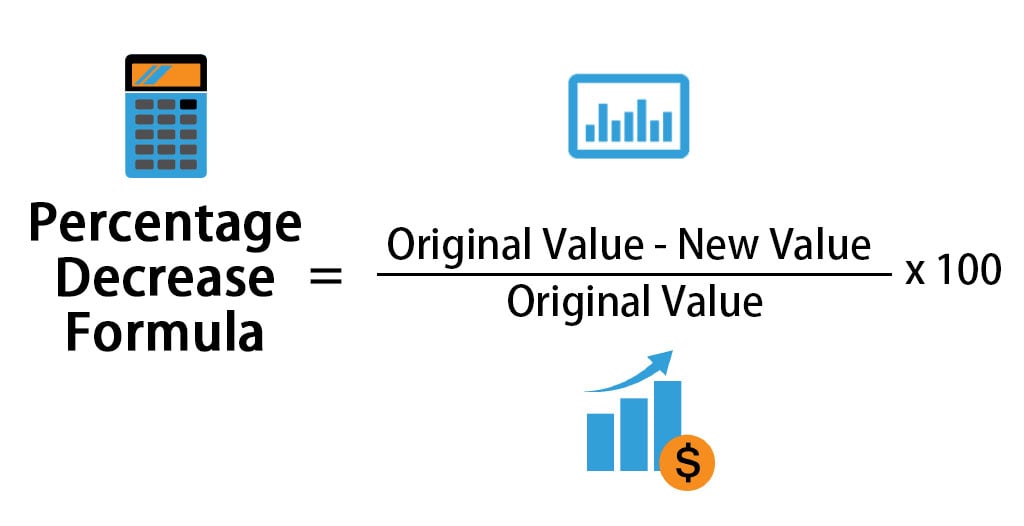
The formula is:
Percentage Decrease = ((Original Value – New Value) / Original Value) * 100
Let’s break down each part:
- Original Value: This is your starting point, the baseline against which you’re measuring the change. It could be last month’s budget, the initial price of a stock, or the revenue from the previous quarter.
- New Value: This is the current or ending value after the decrease has occurred.
- Original Value – New Value: This first step calculates the absolute decrease. It tells you the raw numerical difference between the start and end points.
- (Absolute Decrease / Original Value): Dividing the absolute decrease by the original value gives you a decimal, representing the proportion of the decrease relative to the starting amount. This decimal will always be between 0 and 1 for a decrease.
- * 100: Multiplying by 100 converts this decimal proportion into a percentage, making it easier to read and compare.
Mastering this formula is your gateway to unlocking a deeper understanding of financial shifts.
Step-by-Step Calculation Guide with Financial Examples
Let’s put the formula into action with clear, sequential steps and practical financial scenarios.
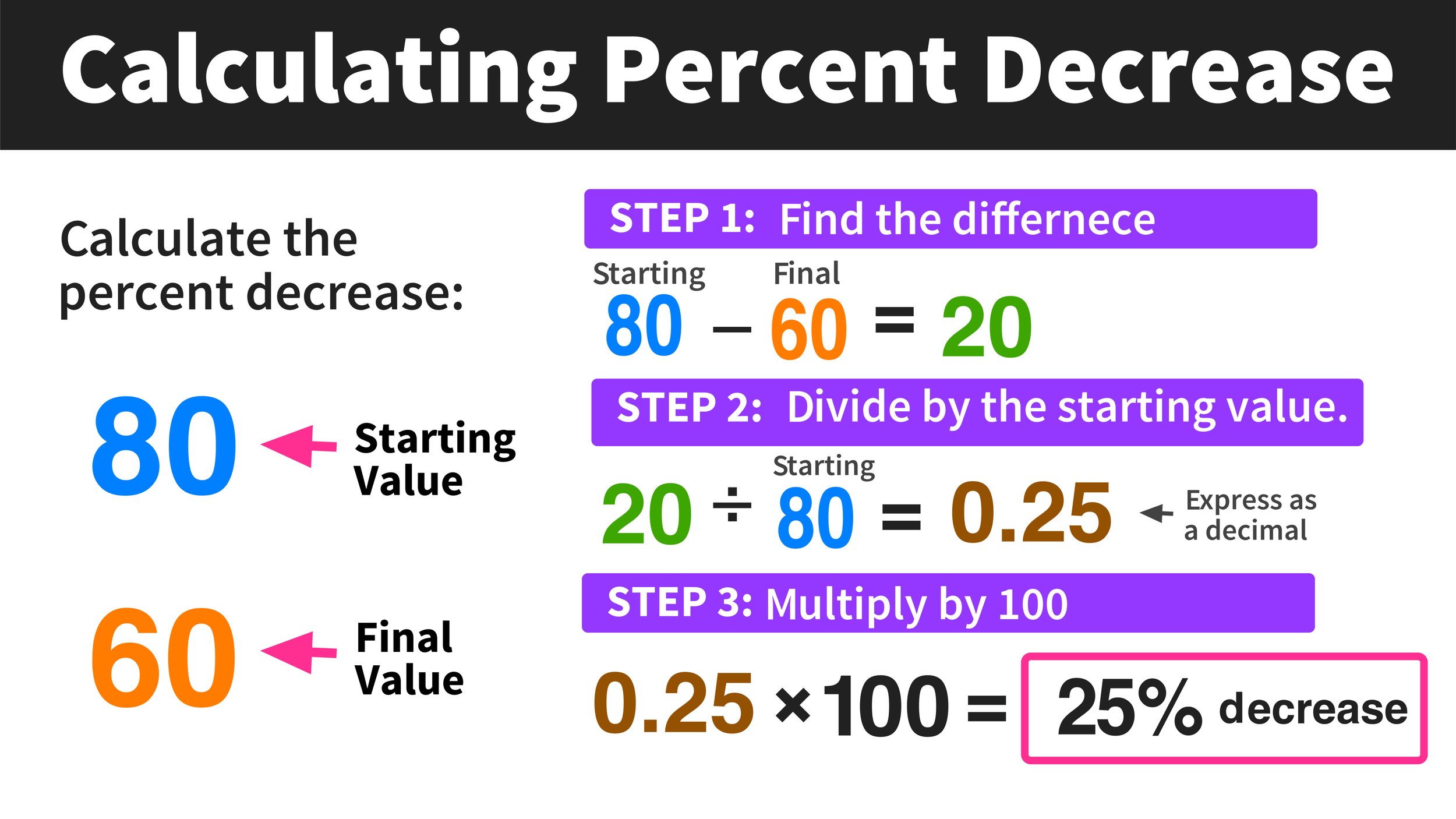
Step 1: Identify Your Original and New Values
This is often the most critical, yet sometimes overlooked, step. Clearly define what your “Original Value” (OV) and “New Value” (NV) are. The OV must always be the larger number for a percentage decrease.
- Example 1 (Personal Finance): Your monthly utility bill was $150 last month (OV). This month, after being more mindful of energy use, it’s $120 (NV).
- Example 2 (Investing): You bought shares in a company for $50 each (OV). Due to market fluctuations, the price has dropped to $45 per share (NV).
- Example 3 (Business Finance): A small business generated $10,000 in sales last quarter (OV). This quarter, sales dropped to $8,500 (NV).
Step 2: Calculate the Absolute Decrease
Subtract the New Value from the Original Value. This gives you the raw dollar amount (or unit amount) of the decrease.
- Example 1 (Utilities): $150 (OV) – $120 (NV) = $30 (Absolute Decrease)
- Example 2 (Investing): $50 (OV) – $45 (NV) = $5 (Absolute Decrease)
- Example 3 (Sales): $10,000 (OV) – $8,500 (NV) = $1,500 (Absolute Decrease)
Step 3: Divide by the Original Value
Take the absolute decrease you calculated in Step 2 and divide it by the Original Value. This will give you a decimal representing the proportion of the decrease.
- Example 1 (Utilities): $30 / $150 = 0.20
- Example 2 (Investing): $5 / $50 = 0.10
- Example 3 (Sales): $1,500 / $10,000 = 0.15
Step 4: Convert to a Percentage
Finally, multiply the decimal result from Step 3 by 100 to express it as a percentage. Don’t forget to add the ‘%’ symbol!
- Example 1 (Utilities): 0.20 * 100 = 20% (Your utility bill decreased by 20%)
- Example 2 (Investing): 0.10 * 100 = 10% (The stock price decreased by 10%)
- Example 3 (Sales): 0.15 * 100 = 15% (Sales decreased by 15% this quarter)
By following these steps, you can accurately calculate percentage decreases for any financial scenario.
Practical Applications in Personal Finance
Understanding percentage decrease empowers individuals to take greater control over their personal financial health.
Budgeting and Expense Management
Percentage decrease is an indispensable tool for mindful spending and achieving financial goals.
- Tracking Spending Habits: If your discretionary spending dropped from $500 last month to $400 this month, that’s a 20% decrease. This metric tells you whether your efforts to cut back are effective and by how much.
- Identifying Areas for Savings: By comparing expenses month-over-month or year-over-year, you can pinpoint categories where spending has declined (good!) or, conversely, where it hasn’t, helping you target future reductions. For instance, seeing a 10% decrease in your grocery bill due to meal planning can be a powerful motivator.
- Setting Financial Goals: To save for a down payment, you might aim to decrease your entertainment budget by 30%. Percentage decrease helps you quantify this goal and track your progress.
Debt Reduction Strategies
For those managing debt, percentage decrease offers a clear measure of progress and motivation.
- Monitoring Loan Balances: If your credit card balance goes from $2,500 to $2,000, that’s a 20% decrease. This percentage allows you to track your momentum in paying down debt, providing a tangible sense of achievement beyond just the absolute dollar amount.
- Assessing Interest Rate Impact: While less direct, understanding how a decrease in your interest rate (e.g., from 18% to 15%) might decrease your overall cost of borrowing involves a similar proportional thinking, impacting the total amount you repay over time.
Monitoring Investment Performance
Investing inherently involves fluctuations, and percentage decrease is crucial for understanding downturns.
- Stock Price Drops: When a stock you own falls from $100 to $90, it’s a 10% decrease. Knowing this helps you assess the impact on your portfolio and compare it to broader market movements or industry averages.
- Portfolio Value Dips: If your entire investment portfolio decreases from $50,000 to $48,000, that’s a 4% decrease. This helps you contextualize market corrections or individual asset underperformance without panicking over large absolute numbers. It also aids in rebalancing decisions, knowing how much of an asset class has depreciated.
Practical Applications in Business and Investment Finance
Beyond personal finance, percentage decrease is a cornerstone of business analysis and investment strategy, offering insights into operational efficiency, market dynamics, and profitability.
Sales and Revenue Analysis
For businesses, analyzing revenue changes is paramount to understanding market position and operational health.
- Tracking Performance: A company might report that Q3 sales decreased by 7% compared to Q2, or that year-over-year revenue dropped by 12%. These percentages alert management to potential issues like increased competition, waning customer demand, or ineffective marketing strategies.
- Market Share Shifts: If a company’s market share decreases from 20% to 18%, it’s a 10% relative decrease in its slice of the market. This can prompt strategic reviews to regain lost ground.
- Product Performance: Identifying products whose sales have decreased significantly helps businesses make decisions about product lifecycle management, discontinuation, or re-investment.
Cost Reduction and Profitability
Optimizing costs is a constant objective for businesses, and percentage decrease is the metric used to measure success.
- Operational Efficiency: A manufacturing firm might aim for a 5% decrease in production costs by streamlining processes or negotiating better supplier deals. Tracking this percentage directly reflects efficiency improvements and impacts the bottom line.
- Overhead Expenses: If administrative expenses decreased by 8% due to adopting new software or reducing office space, this directly boosts profitability.
- Gross and Net Profit Margins: While these are ratios, understanding how a decrease in the cost of goods sold (COGS) impacts the gross profit margin (e.g., a 2% decrease in COGS could lead to a significant percentage increase in profit margin) involves appreciating these relative changes.
Financial Statement Analysis
Investors and analysts routinely use percentage decrease to scrutinize a company’s financial health.
- Balance Sheet Changes: A decrease in inventory levels (e.g., a 10% decrease year-over-year) might signal more efficient stock management or, conversely, a drop in demand. A decrease in accounts receivable could indicate better collection practices.
- Income Statement Trends: Observing a percentage decrease in research and development (R&D) spending might suggest a shift in strategy or a potential lack of innovation investment. A decrease in selling, general, and administrative (SG&A) expenses might point to cost-cutting measures.
- Cash Flow Statements: Analyzing percentage decreases in certain cash outflows can highlight areas of improved financial management.
Valuing Investments and Assets
For investment professionals and individuals managing significant assets, percentage decrease is key for risk assessment and valuation.
- Real Estate Market Analysis: If property values in a specific area decrease by 15% over a year, it signals a downturn that impacts investment decisions, property taxes, and loan-to-value ratios.
- Asset Depreciation: While depreciation is often calculated using specific accounting methods, understanding the percentage decrease in an asset’s book value over time is crucial for financial reporting and assessing asset worth.
- Portfolio Risk Management: Investors use percentage decrease to set stop-loss orders (e.g., “sell if the stock decreases by 10%”) and evaluate the downside risk of various investments.
Common Pitfalls and Advanced Considerations
While seemingly straightforward, there are nuances and potential misinterpretations when working with percentage decreases.
When to Use Percentage Decrease (and When Not To)
Percentage decrease is incredibly useful for relative comparisons, but it’s not always the best metric.
- Comparing Vastly Different Scales: A 50% decrease from $10 to $5 is numerically less significant than a 5% decrease from $1,000,000 to $950,000. Always consider the absolute numbers alongside the percentage.
- Beware of Small Numbers: A decrease from 2 units to 1 unit is a 50% decrease, which sounds dramatic. However, the absolute change is only 1 unit, which might be negligible in a larger context.
- Starting from Zero or Negative: The formula
(Original - New) / Originalbreaks down if the original value is zero, or if you’re dealing with negative numbers (e.g., comparing losses). In such cases, absolute change or a different proportional measure might be more appropriate.
The Importance of Context and Timeframes
A percentage decrease alone rarely tells the whole story. Context is king.
- Time Horizon: A 5% decrease in stock value over a single day might be concerning volatility, but a 5% decrease over a year in a broadly growing market could indicate significant underperformance. Conversely, a 5% decrease during a major economic recession might be considered resilient.
- Industry Benchmarks: A 10% decrease in revenue might be alarming for a fast-growing tech company but normal or even acceptable for a mature utility company. Always compare against industry averages and competitors.
- Underlying Causes: Why did the decrease happen? Was it a strategic decision to cut an unprofitable product line (a good decrease), or was it due to losing customers to a competitor (a bad decrease)? The “why” is as important as the “how much.”
Tools and Resources for Calculation
While manual calculation is fundamental, in the age of digital finance, various tools can streamline the process:
- Financial Calculators: Many scientific and financial calculators have dedicated percentage functions.
- Spreadsheets (Excel/Google Sheets): These are invaluable. You can easily set up columns for Original Value, New Value, and then apply the formula
=(A2-B2)/A2in a third column, formatted as a percentage. This allows for quick calculations across large datasets. - Online Calculators: Numerous websites offer free percentage decrease calculators for quick, one-off calculations.
- Financial Software and Apps: Most personal finance and business accounting software will automatically track and report percentage changes for various metrics.
Understanding the underlying calculation empowers you to verify these tools’ outputs and customize your analysis.
In conclusion, the ability to calculate and interpret a percentage decrease is an essential skill in your financial toolkit. It transforms raw numbers into meaningful insights, enabling you to make more informed decisions about your personal finances, investments, or business operations. By mastering this simple yet powerful concept, you gain a clearer lens through which to view the ebb and flow of the financial world, leading to greater financial literacy and strategic acumen.
aViewFromTheCave is a participant in the Amazon Services LLC Associates Program, an affiliate advertising program designed to provide a means for sites to earn advertising fees by advertising and linking to Amazon.com. Amazon, the Amazon logo, AmazonSupply, and the AmazonSupply logo are trademarks of Amazon.com, Inc. or its affiliates. As an Amazon Associate we earn affiliate commissions from qualifying purchases.