
Cash App, a ubiquitous name in the world of peer-to-peer payments and personal finance, has redefined how millions manage their money. Launched by Block Inc. (formerly Square Inc.), it has evolved far beyond a simple money transfer service into a comprehensive financial ecosystem. Its explosive growth and widespread adoption naturally lead to a fundamental question: how exactly does Cash App, a service that often appears “free” to its users, generate substantial revenue? The answer lies in a sophisticated, multi-pronged monetization strategy that capitalizes on a diverse array of financial services and user behaviors.
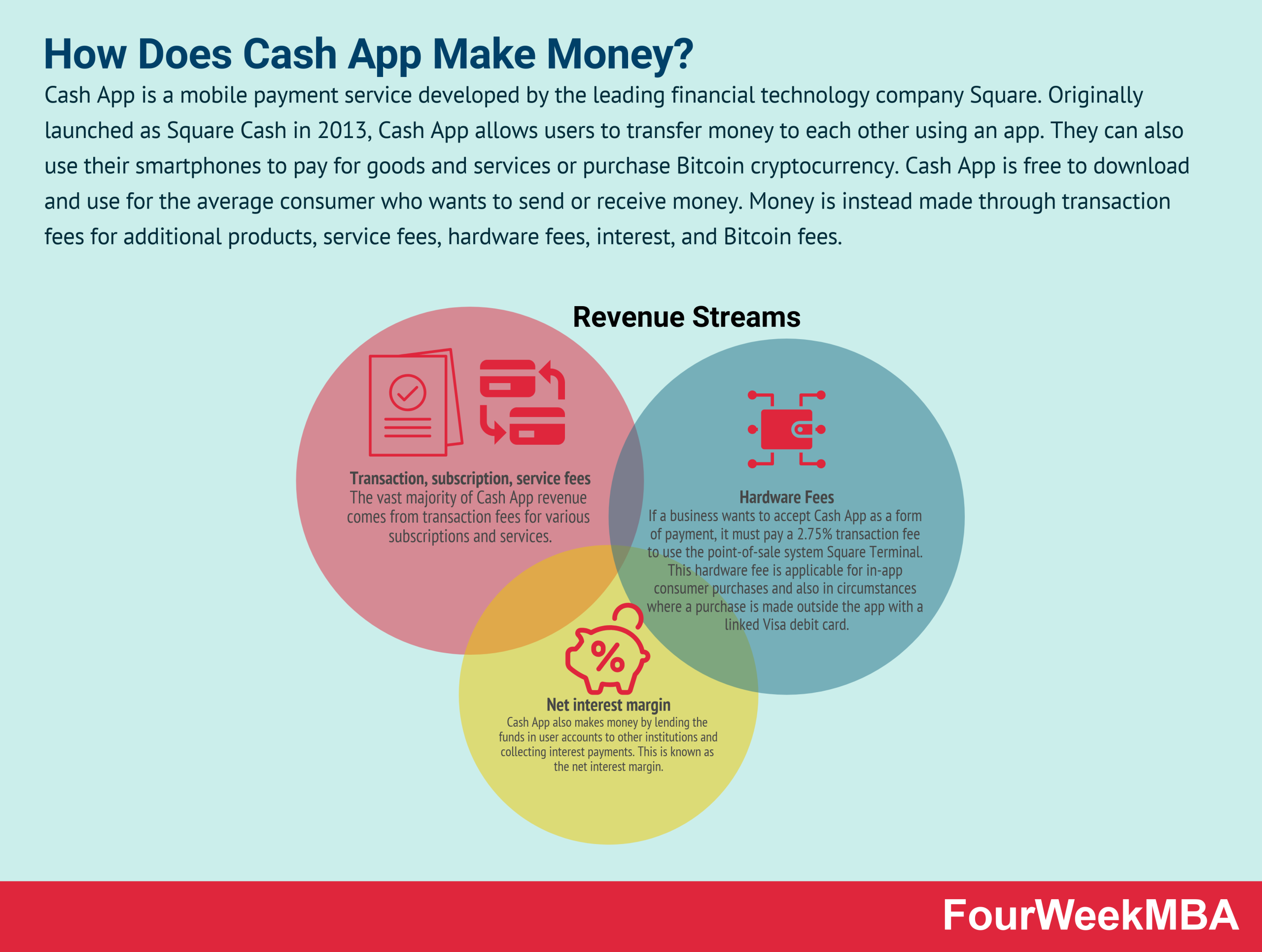
At its core, Cash App’s profitability stems from strategically integrating various financial instruments, each designed to capture a small percentage of value from different user interactions. From instant deposits to investing in volatile assets like Bitcoin, the platform meticulously builds an intricate web of revenue streams. Understanding these mechanisms offers not only insight into Cash App’s business model but also a broader perspective on how modern fintech companies are redefining financial services and profitability.
Core Transactional Fees: The Foundation of Profitability
While the most basic peer-to-peer (P2P) transfers on Cash App are indeed free for standard transactions, the company has strategically introduced fees for specific expedited services or transactions that involve different financial instruments. These transactional charges form a foundational layer of its revenue.
Instant Deposit Fees
One of the most common ways Cash App generates direct revenue is through its instant deposit feature. Users who link their Cash App balance to an external bank account have the option to transfer funds instantly, rather than waiting the standard one to three business days. For this convenience, Cash App typically charges a fee, often around 0.5% to 1.75% of the transaction amount. While seemingly small on an individual basis, the sheer volume of these instant transfers by millions of users accumulates into a significant revenue stream. This fee caters to the immediate financial needs of users, demonstrating how convenience can be monetized effectively in the digital age.
ATM Withdrawal Fees and Cash Card Usage
The Cash Card, a free debit card linked to a user’s Cash App balance, provides another avenue for revenue. While the card itself is free to order, Cash App generates income from its usage in several ways. Firstly, using the Cash Card at an ATM that is not part of Cash App’s fee-free network often incurs a direct ATM withdrawal fee, which Cash App may share or mark up. Secondly, and perhaps more significantly, Cash App profits from interchange fees. Whenever a user makes a purchase with their Cash Card, the merchant pays an interchange fee to the card issuer’s network (in this case, Visa, working with Cash App). Cash App, as the card issuer, receives a portion of this fee. This model is standard across debit and credit card providers and provides a consistent, high-volume revenue stream. The more users spend using their Cash Cards, the greater Cash App’s earnings from these backend transaction fees.
Business Account Fees and Service Charges
While personal P2P payments are free, Cash App also supports business accounts. When businesses use Cash App to accept payments for goods and services, they are typically subject to a transaction fee, often around 2.75% of the transaction amount. This positions Cash App as a competitor to traditional point-of-sale systems and other payment processors, offering a streamlined solution for small businesses and sole proprietors. By facilitating commercial transactions, Cash App taps into the lucrative market of merchant services, generating revenue from every sale processed through its platform. This is a clear example of monetizing convenience and utility for commercial entities.
Expanding Beyond P2P: Advanced Financial Services as Revenue Drivers
Cash App’s evolution into a multifaceted financial platform has been marked by its foray into more complex financial services, each with its own distinct monetization strategy. These services cater to a broader range of user needs, significantly diversifying the company’s income portfolio.
Bitcoin Trading: Volatility and Spreads
A pioneering move for Cash App was integrating Bitcoin trading directly into its platform, making it accessible to a mainstream audience. While users can buy and sell Bitcoin with relative ease, Cash App primarily generates revenue from two key mechanisms in this segment. Firstly, it applies a service fee on each Bitcoin purchase or sale, which is transparently displayed to the user. Secondly, and often more lucratively, Cash App profits from the “spread” between the price at which it buys Bitcoin from exchanges and the slightly higher price at which it sells it to users, or vice-versa. This small differential, applied across millions of transactions, accumulates rapidly. Given the volatility and popularity of cryptocurrency, Bitcoin trading has become a substantial and dynamic revenue stream for Cash App, allowing it to capitalize on the growing interest in digital assets.
Stock Investing: Micro-Commissions and Order Flow
Emulating the trend of commission-free trading, Cash App also introduced stock investing, allowing users to buy fractional shares of public companies. While it advertises “commission-free” trading, the revenue generation is more nuanced. Like many other brokerage apps, Cash App likely participates in “payment for order flow” (PFOF). This means that instead of charging users directly, it routes customer orders through market makers who pay Cash App for the privilege. Market makers profit from the tiny difference between the bid and ask prices and share a portion of this profit with the brokers who send them orders. Additionally, Cash App might earn interest on uninvested cash balances held by users. By democratizing stock market access, Cash App not only attracts a new demographic but also leverages sophisticated financial mechanics to generate revenue from their investment activities.
Cash App Borrow: Short-Term Lending Opportunities
For eligible users, Cash App offers a short-term lending feature called “Borrow.” This service allows users to borrow small amounts, typically between $20 to $200, for a set period, usually four weeks. For this convenience, Cash App charges a flat fee, often around 5% of the borrowed amount. This functions much like a short-term, small-dollar loan with an explicit cost. The “Borrow” feature addresses immediate liquidity needs for users and provides Cash App with a direct interest-like income stream. While the amounts per loan are small, the aggregate volume across millions of users seeking quick funds can represent a notable revenue component. This further positions Cash App as a broader financial services provider, extending beyond just payments and investments into lending.
Strategic Partnerships and Value-Added Services
Beyond direct fees for transactions and financial products, Cash App strategically leverages partnerships and offers value-added services that enhance user engagement while simultaneously contributing to its bottom line. These indirect revenue streams are crucial for long-term growth and profitability.
Cash App Boosts and Merchant Partnerships
One of Cash App’s popular features is “Boosts,” which offer instant discounts at specific merchants when users pay with their Cash Card. While appearing as a benefit to users, this is a clever monetization strategy. Merchants typically pay Cash App to be featured in these “Boosts” because it drives customer traffic and increases sales. By acting as an advertising and loyalty platform, Cash App generates revenue from these merchant partnerships. It creates a win-win scenario: users get discounts, merchants get customers, and Cash App earns from facilitating these connections. This strategy demonstrates how a platform can monetize its user base’s spending habits through strategic alliances.
Direct Deposit and Payroll Integration
Although Cash App doesn’t typically charge for direct deposits, enabling users to receive paychecks directly into their Cash App account is a vital indirect revenue driver. By becoming a primary banking solution for many, Cash App ensures a steady influx of funds into user accounts. This increased balance makes users more likely to use other monetized features like the Cash Card, Bitcoin trading, stock investing, or instant deposits. The integration of direct deposit deepens user engagement and transforms Cash App from a secondary payment tool into a primary financial hub, ultimately increasing the likelihood of users engaging with fee-generating services. It’s a classic example of offering a free core service to draw users into a broader ecosystem where monetization opportunities abound.
Affiliate Marketing and Promotional Deals
Given its vast user base, Cash App is an attractive platform for various promotions and affiliate marketing endeavors. While less overt, Cash App can forge partnerships with other financial service providers, businesses, or even content creators, earning referral fees or a share of revenue for driving traffic or sign-ups through its platform. This could range from promoting specific financial products to offering exclusive deals within the app that have an underlying revenue-sharing agreement. These often subtle integrations contribute to a diversified income portfolio, leveraging Cash App’s influence and reach within the digital finance landscape.
The Ecosystem Approach: User Growth and Monetization Synergy
Cash App’s overarching strategy is to build a comprehensive financial ecosystem where users can manage almost all aspects of their money. This ecosystem approach fosters user loyalty, encourages cross-service adoption, and ultimately maximizes overall revenue per user.
Cultivating a Large and Engaged User Base
The foundation of Cash App’s success and monetization is its massive and highly engaged user base. With millions of active users, even small fees on individual transactions or services can accumulate into substantial profits. The network effect of P2P payments initially drew users in, and subsequent feature additions have kept them within the Cash App ecosystem. The company consistently invests in user acquisition and retention, understanding that a large, active user base is the most valuable asset, providing ample opportunities for monetization across its diverse service offerings.
Cross-Selling Financial Products
A key strength of Cash App’s business model is its ability to seamlessly cross-sell various financial products to its users. A user who initially joined for P2P payments might later try Bitcoin trading, then get a Cash Card, and perhaps even explore stock investing or the Borrow feature. Each new service a user adopts represents another potential revenue stream for Cash App. By integrating these services intuitively within a single app, Cash App lowers the barrier to entry for users to explore and adopt new financial behaviors, thereby maximizing the lifetime value of each customer. This synergistic approach ensures that different revenue streams reinforce each other.
Data Insights and Strategic Value (Indirect Revenue)
While not a direct fee-based revenue stream, the aggregated, anonymized data collected from millions of users provides immense strategic value to Cash App. Understanding user spending habits, investment patterns, and financial needs allows Cash App to refine its existing offerings, develop new products, and identify market trends. This data can inform strategic partnerships and potentially be leveraged for broader market intelligence (always adhering to privacy regulations). This indirect value contributes to the company’s competitive advantage and long-term profitability by enabling smarter business decisions and more effective product development.
Conclusion
Cash App’s journey from a simple peer-to-peer payment application to a comprehensive financial platform highlights a sophisticated and highly effective approach to monetization. Its revenue model is not reliant on a single stream but rather a strategic blend of direct transactional fees, revenue from advanced financial services like cryptocurrency and stock trading, and income generated through strategic partnerships and value-added features. By carefully layering these diverse income streams – from instant deposit fees and interchange fees on its Cash Card, to spreads on Bitcoin, payment for order flow in stock trading, and fees on short-term loans – Cash App has engineered a robust and resilient business.
The genius of Cash App lies in its ability to offer a compelling “free” core service (P2P payments) to attract a massive user base, then gently guide those users towards a rich array of monetized financial tools. This ecosystem approach not only addresses a wide spectrum of user financial needs but also ensures that Cash App captures value at numerous points within the user’s financial journey, solidifying its position as a major player in the fintech landscape and demonstrating a powerful model for sustained profitability in the digital economy.
aViewFromTheCave is a participant in the Amazon Services LLC Associates Program, an affiliate advertising program designed to provide a means for sites to earn advertising fees by advertising and linking to Amazon.com. Amazon, the Amazon logo, AmazonSupply, and the AmazonSupply logo are trademarks of Amazon.com, Inc. or its affiliates. As an Amazon Associate we earn affiliate commissions from qualifying purchases.