
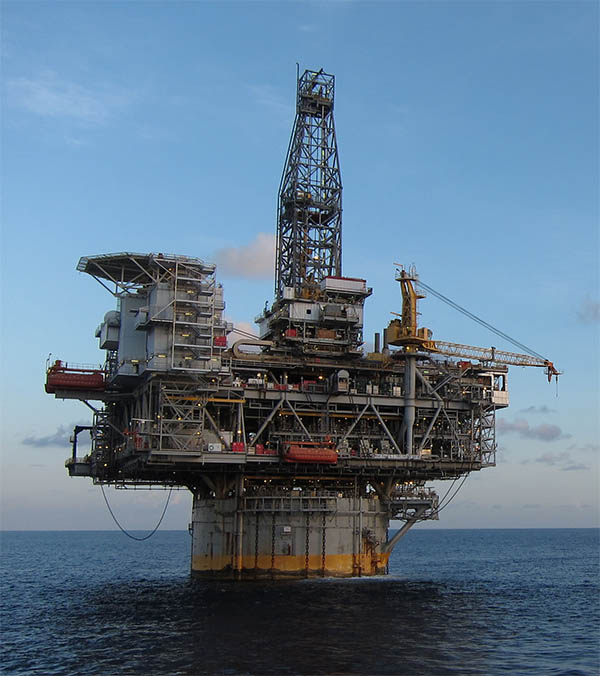
An oil rig, at its core, is a sophisticated piece of industrial technology designed to drill wells into the Earth’s surface or seabed to extract crude oil and natural gas. Far from a simple machine, it represents a culmination of complex engineering, advanced material science, and cutting-edge digital systems, operating in some of the world’s most challenging environments. These structures are pivotal to the global energy landscape, embodying the relentless pursuit of hydrocarbon resources through technological innovation. Understanding an oil rig involves dissecting its structural integrity, its intricate operational mechanics, and the digital nervous system that orchestrates its formidable power.

Engineering Foundations: The Structure of Extraction
The design and construction of oil rigs are testaments to human ingenuity, tailored to specific geological conditions and environmental demands. Whether on land or at sea, each rig type features a distinct engineering profile to achieve the singular goal of accessing subterranean reservoirs.
Onshore Drilling Rigs: Terrestrial Operations
Onshore rigs are typically modular structures, designed for assembly, disassembly, and transport across land. They range from smaller, truck-mounted units for shallower wells to massive land rigs capable of drilling several miles deep. Key components include a derrick (a tall frame that supports the drilling assembly), a drawworks (the hoisting mechanism), a rotary table (or top drive system) to rotate the drill string, and a powerful mud pump system. The technology here focuses on mobility, robust drilling power, and systems to manage the substantial weight of drill pipe and casing. Advancements in horizontal drilling and hydraulic fracturing technologies, largely enabled by sophisticated steerable drilling systems and high-pressure pumping units, have revolutionized onshore production, allowing access to previously unrecoverable tight oil and shale gas reserves.
Offshore Drilling Rigs: Mastering Marine Environments
Offshore rigs represent an even greater feat of engineering, confronting the dynamic forces of the ocean. Their designs vary significantly based on water depth and operational requirements:
- Fixed Platforms: These are permanently installed structures, typically in shallower waters (up to a few hundred meters), anchored to the seabed with concrete or steel legs. They are robust production facilities capable of supporting multiple wells and processing equipment.
- Jack-up Rigs: Mobile platforms with extendable legs that can be lowered to the seabed, lifting the hull above the water. Ideal for moderate water depths (up to about 150 meters), they offer stability once “jacked up,” effectively creating a temporary artificial island. Their mobility allows for relocation between drilling sites.
- Semi-submersible Rigs: Floaters designed for deeper waters (up to thousands of meters), kept stable by submerging pontoons and anchoring to the seabed or using dynamic positioning systems. Their semi-submerged design reduces wave motion, making them suitable for rougher seas.
- Drillships: Resembling large cargo vessels, drillships are equipped with a drilling rig in the center. They are highly mobile and use dynamic positioning systems (thrusters and GPS) to maintain their position over the wellbore, making them ideal for ultra-deepwater exploration and drilling in remote locations.
The technological challenges offshore include managing buoyancy, resisting extreme weather, preventing corrosion in saline environments, and ensuring the structural integrity of risers and subsea equipment that connect the rig to the seafloor wellhead.
From Exploration to Production: Different Rig Types
The lifecycle of an oil well often involves different technologies. Exploration rigs (like drillships or semi-submersibles) are designed for mobility and deep drilling to locate reservoirs. Once a reservoir is deemed commercially viable, development rigs are used to drill multiple production wells. Finally, production platforms are installed to extract, process, and export the hydrocarbons over decades, integrating advanced separation, compression, and pipeline technologies. Modern rigs often combine these functions to streamline operations.
Core Technological Systems: Powering the Drill
At the heart of every oil rig are integrated technological systems that enable the complex process of drilling, maintaining well integrity, and ensuring operational safety. These systems are under constant innovation to enhance efficiency, reduce environmental impact, and overcome geological hurdles.
The Drilling Mechanism: Rotary Systems and Bits
The fundamental technology involves rotating a drill bit at the end of a long drill string. Modern drilling systems are powered by powerful engines (often diesel-electric), which drive a rotary table or, more commonly in contemporary rigs, a top drive system. The top drive rotates the drill string directly from above, allowing for continuous rotation and more efficient handling of drill pipe. Drill bits themselves are technological marvels, made from hardened steel and often tipped with industrial diamonds or tungsten carbide inserts, designed to cut through various rock formations at high speeds and temperatures. Directional drilling technology, including steerable downhole motors and measurement-while-drilling (MWD) tools, allows operators to guide the drill bit precisely, creating complex well paths, including horizontal and multilateral wells, to maximize reservoir contact.
Fluid Management: Drilling Mud and Casing
Drilling mud, a specially engineered fluid, is critical to the drilling process. It serves multiple functions: cooling and lubricating the drill bit, carrying rock cuttings to the surface, and, crucially, maintaining hydrostatic pressure in the wellbore to prevent uncontrolled influx of oil, gas, or water (a “kick”). Sophisticated mud pumps circulate thousands of gallons of this fluid, and advanced sensor technology monitors its properties in real-time. As drilling progresses, steel casing pipes are cemented into the wellbore to reinforce its walls, prevent collapse, and isolate different geological formations, protecting both the well and the environment. The cementation process is a precise engineering operation, critical for long-term well integrity.
Well Control Systems: Ensuring Safety and Integrity
Safety is paramount in drilling, and well control systems are designed to prevent blowouts—uncontrolled releases of formation fluids. The most critical component is the blowout preventer (BOP) stack, a massive, multi-valve device installed at the wellhead. BOPs are capable of sealing off the wellbore quickly under extreme pressure, acting as a last line of defense. These devices are hydraulically operated and can be controlled remotely. Integrated with the BOPs are pressure sensors, alarm systems, and real-time monitoring software that constantly assess downhole conditions, allowing operators to react swiftly to any pressure anomalies.
Power Systems and Automation
Modern oil rigs are essentially self-contained power plants. Large generators, typically diesel-fueled but increasingly incorporating natural gas or even renewable energy sources, provide electricity for all operations: drilling motors, pumps, lighting, HVAC, and sophisticated electronic equipment. Automation plays an increasingly vital role, with Programmable Logic Controllers (PLCs) and Distributed Control Systems (DCS) managing everything from engine speed to pipe handling, reducing human intervention in hazardous tasks and improving precision and consistency.
Digital Integration: Data, Automation, and Remote Operations
The digital revolution has profoundly transformed oil rig operations, moving them towards a more automated, data-driven, and remotely managed future. This integration of digital technologies enhances efficiency, safety, and decision-making capabilities.
Real-Time Data Acquisition and Analytics
Oil rigs are massive data generators. Thousands of sensors deployed throughout the rig and downhole collect data on parameters like drill bit pressure, rotation speed, torque, mud flow rates, gas detection, temperature, and geological formation characteristics. This data is transmitted in real-time to control rooms on the rig and often to remote operations centers onshore. Advanced analytics, often leveraging big data platforms and machine learning algorithms, process this information to optimize drilling parameters, predict equipment failures, identify potential well control issues, and interpret subsurface geology for more precise well placement. This predictive capability significantly reduces non-productive time (NPT) and operational risks.
Advanced Robotics and Automated Drilling
Robotics are increasingly being deployed on rig floors to handle routine, repetitive, and hazardous tasks such as pipe handling, making connections, and operating tools. Robotic arms and automated pipe-racking systems minimize human exposure to heavy machinery and high-pressure equipment, drastically improving safety records. Automated drilling systems, guided by complex algorithms, can autonomously control drilling parameters like weight on bit, rotary speed, and mud flow, optimizing penetration rates and reducing wear on equipment based on real-time feedback. This level of automation ensures consistent performance, often surpassing manual control in complex drilling scenarios.
Digital Twins and Predictive Modeling
The concept of a “digital twin”—a virtual replica of a physical asset or system—is gaining traction in rig operations. A digital twin of an oil rig can simulate its performance, predict potential issues, and test operational changes in a virtual environment before implementation. This technology integrates real-time sensor data with engineering models, allowing for predictive maintenance, optimization of energy consumption, and proactive identification of structural fatigue or equipment degradation. Predictive modeling, driven by AI and machine learning, extends beyond equipment to anticipate geological challenges, optimize reservoir drainage, and forecast production profiles, enabling more informed strategic decisions.
Innovation and Future Trends in Rig Technology
The oil and gas industry is continuously pushing the boundaries of technology to address the challenges of resource depletion, environmental concerns, and economic pressures. The future of oil rigs lies in greater autonomy, efficiency, and a reduced footprint.
Enhanced Efficiency and Environmental Technologies
Future rigs will feature even greater energy efficiency, employing hybrid power systems that integrate renewable energy sources (solar, wind) alongside traditional generators. Waste heat recovery systems and advanced combustion technologies aim to minimize emissions. Water treatment and recycling systems are becoming standard to reduce reliance on freshwater. The focus on reducing the overall environmental footprint extends to technologies that minimize noise pollution, light pollution, and ecological disturbance, especially in sensitive operating areas.
Subsea Autonomous Systems
As drilling moves into deeper and more remote waters, there’s a growing trend towards subsea processing and autonomous systems. These include remotely operated vehicles (ROVs) and autonomous underwater vehicles (AUVs) for inspection, maintenance, and intervention tasks on subsea equipment, reducing the need for human divers or expensive surface vessels. The development of fully autonomous subsea factories, where oil and gas are extracted, processed, and transported without any surface intervention, is a long-term goal, promising unprecedented safety and efficiency for ultra-deepwater fields.

Cyber-Physical Security for Critical Infrastructure
With increasing digitalization and automation, oil rigs become more susceptible to cyber threats. Future technology will heavily invest in robust cyber-physical security systems to protect operational technology (OT) networks from attacks that could disrupt drilling, compromise well control, or steal sensitive data. This includes advanced encryption, intrusion detection systems, and secure remote access protocols, ensuring the integrity and reliability of these critical energy infrastructures in an increasingly connected world. The convergence of IT and OT security is paramount to safeguarding these complex, high-value assets.
aViewFromTheCave is a participant in the Amazon Services LLC Associates Program, an affiliate advertising program designed to provide a means for sites to earn advertising fees by advertising and linking to Amazon.com. Amazon, the Amazon logo, AmazonSupply, and the AmazonSupply logo are trademarks of Amazon.com, Inc. or its affiliates. As an Amazon Associate we earn affiliate commissions from qualifying purchases.