
Purchasing a vehicle is often the second-largest financial commitment a consumer makes, trailing only the purchase of a home. While much of the negotiation focus typically lands on the “sticker price,” the most significant factor in the total cost of ownership is often the interest rate attached to the financing. Understanding how car interest rates work is not merely a matter of academic interest; it is a critical skill in personal finance that can save a borrower thousands of dollars over the life of a loan.
At its core, an interest rate is the price a lender charges you for the privilege of using their money to purchase an asset. However, in the automotive world, this rate is influenced by a complex interplay of personal financial health, macroeconomic trends, and the specific characteristics of the vehicle being purchased.
The Fundamental Mechanics of Auto Loan Interest
To understand how interest works, one must first look at the mathematical structure of the loan. Most modern auto loans are structured as simple interest loans, though the way they are marketed can sometimes obscure the true cost.
Simple Interest vs. Precomputed Interest
The vast majority of reputable lenders use a simple interest formula. In this model, interest is calculated daily based on the remaining principal balance of the loan. As you make payments and the principal decreases, the amount of your monthly payment allocated toward interest also decreases, while the portion going toward the principal increases. This is a favorable structure for the borrower because it allows for interest savings if the loan is paid off early or if extra payments are made toward the principal.
Conversely, precomputed interest—though rarer and often associated with subprime lenders—calculates the total interest for the life of the loan at the outset. This total is then added to the principal. In this scenario, even if you pay the loan off early, you are often still responsible for a significant portion of the total interest originally calculated, making it a much more expensive and less flexible option.
The Difference Between Interest Rate and APR
One of the most common points of confusion in personal finance is the distinction between the “interest rate” and the “Annual Percentage Rate” (APR). While they are related, they represent different figures. The interest rate is the specific percentage charged on the principal. The APR, however, is a broader measure of the cost of borrowing. It includes the interest rate plus any additional fees, such as loan origination fees, documentation fees, or prepaid interest.
When comparing loan offers, the APR is the most accurate metric to use. A loan might boast a lower base interest rate but carry high administrative fees that result in a higher APR than a competing offer. In the eyes of the law, lenders are required to disclose the APR to ensure transparency, allowing consumers to make an apples-to-apples comparison.
The Key Variables That Influence Your Rate
Lenders are in the business of managing risk. Every interest rate quote is essentially a reflection of how much risk the lender believes they are taking by handing over capital. Several key variables dictate this risk assessment.
Your Credit Profile: The Primary Driver
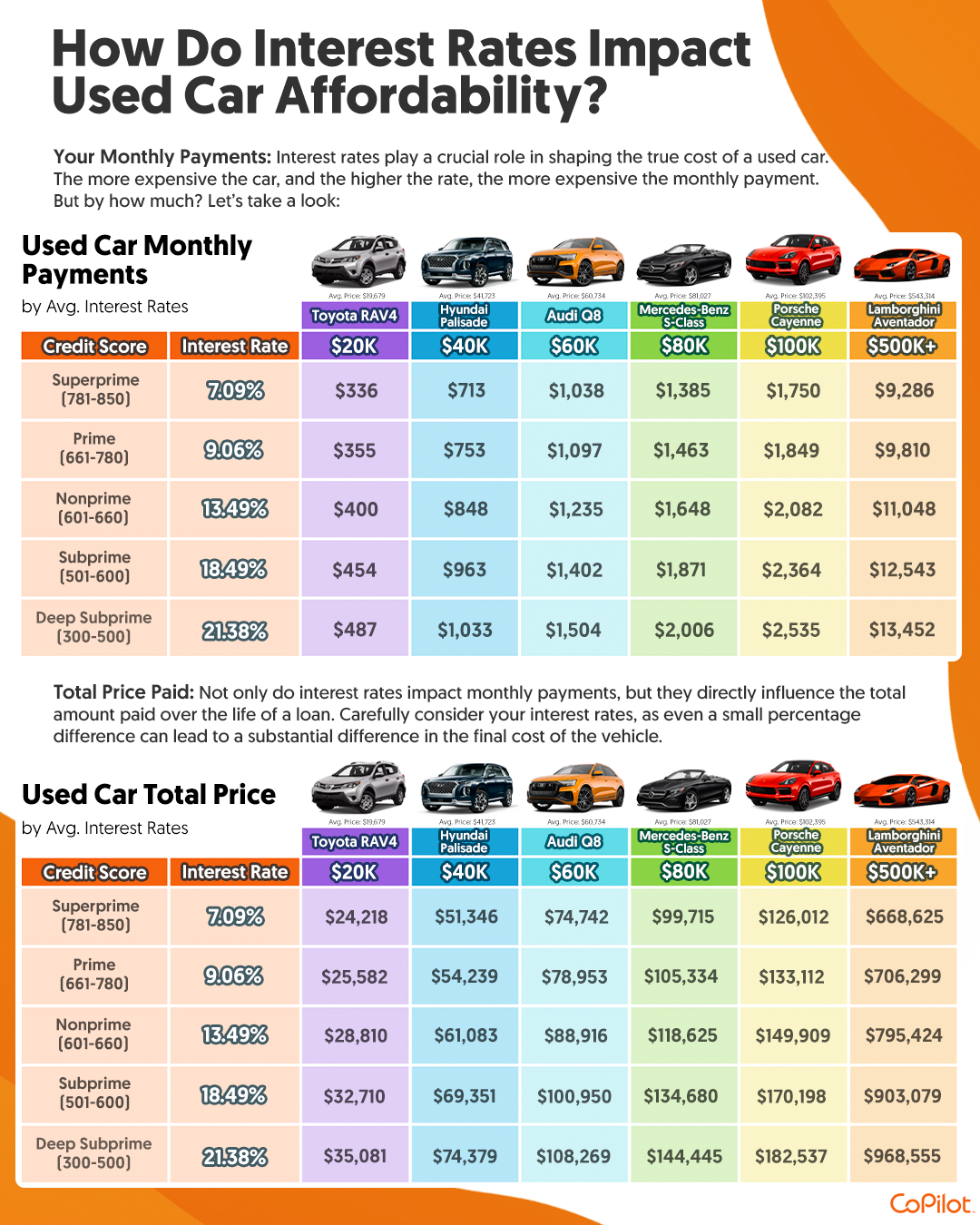
Your credit score is the single most influential factor in determining your interest rate. Lenders typically categorize borrowers into “tiers” ranging from Superprime (scores above 780) to Deep Subprime (scores below 580).
A Superprime borrower might secure an interest rate of 4% or 5%, while a Deep Subprime borrower might be looking at rates exceeding 15% or even 20%. This discrepancy exists because a lower credit score suggests a higher statistical probability of default. Over a 60-month loan for a $30,000 car, the difference between a 5% rate and a 15% rate can amount to over $9,000 in additional interest payments. This underscores the financial necessity of maintaining a healthy credit profile.
Macroeconomic Factors and the Federal Reserve
While your personal habits dictate your relative standing, the “floor” of interest rates is set by the broader economy. The Federal Reserve influences the federal funds rate, which is the rate at which commercial banks borrow from each other. When the Fed raises rates to combat inflation, it becomes more expensive for banks to source capital. Consequently, they pass those costs onto consumers through higher auto loan rates. Even a borrower with perfect credit will see their potential rates rise if the Federal Reserve is in a tightening cycle.
Loan Term Length and Risk Assessment
There is a direct correlation between the length of the loan and the interest rate. Shorter terms, such as 36 or 48 months, typically carry lower interest rates. Longer terms, such as 72 or 84 months, carry higher rates.
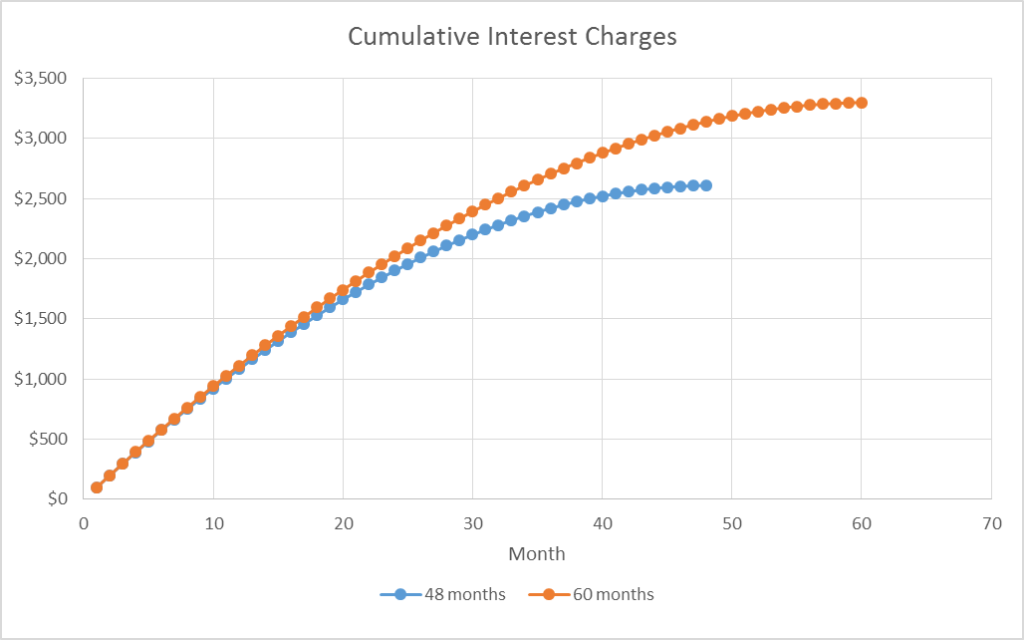
From a lender’s perspective, a longer term represents increased risk. More time provides more opportunities for the borrower to experience financial hardship, such as job loss or medical emergencies. Furthermore, because cars are depreciating assets, a longer loan term increases the likelihood that the borrower will end up “upside down” or in “negative equity”—meaning they owe more on the car than it is worth. To compensate for this extended exposure, lenders charge a premium on the interest rate.
The Down Payment and Loan-to-Value (LTV) Ratio
The Loan-to-Value (LTV) ratio is a calculation of the loan amount divided by the value of the vehicle. If you buy a $40,000 car and put $10,000 down, your loan is $30,000, resulting in an LTV of 75%. If you put $0 down and finance the taxes and fees, your LTV might be 105%.
Lenders prefer lower LTV ratios because the borrower has “skin in the game.” If a borrower has invested $10,000 of their own money, they are statistically less likely to walk away from the loan. High LTV ratios often trigger higher interest rates because the lender has no buffer if they have to repossess and sell the vehicle.
How Interest Impacts the Lifecycle of the Loan
Interest doesn’t just add to the monthly payment; it changes the way equity is built in the vehicle.
The Front-Loading of Interest
Even in simple interest loans, the interest paid in the early months is higher than in the later months because the principal balance is at its peak. This is known as the amortization schedule. For the first year or two of a car loan, a significant portion of every dollar you pay goes toward interest rather than paying down the car itself. This is why many people are surprised to find that after two years of payments, their loan balance has barely moved.
Depreciation and Negative Equity
Vehicles typically lose 15% to 20% of their value in the first year and roughly 10% to 15% every year thereafter. If your interest rate is high and your loan term is long, the rate of depreciation may outpace the rate at which you are paying down the principal. This leads to negative equity. Understanding the interest rate is vital here; a high rate makes it much harder to “catch up” to the car’s falling value, potentially trapping the borrower in the loan until the very end of the term.
Sourcing Your Financing: Where You Get the Loan Matters
Where you obtain your loan can be just as important as your credit score. There are two primary avenues: direct and indirect lending.
Direct Lending: Banks and Credit Unions
Direct lending involves working directly with a financial institution. Credit unions, in particular, are known for offering some of the most competitive auto loan rates. Because they are member-owned non-profits, they often return profits to members in the form of lower interest rates. Getting a pre-approval from a bank or credit union before visiting a dealership is one of the most effective ways to ensure you are getting a fair market rate. It provides a baseline that the dealership must beat to earn your business.
Indirect Lending: Dealership Financing
When you finance through a dealership, the dealer acts as an intermediary between you and a network of lenders. While this is convenient, it can be more expensive. Dealerships often engage in “rate markup.” If a lender approves you for a 6% rate (the “buy rate”), the dealership may present you with a 7.5% rate (the “sell rate”). The 1.5% difference is a commission kept by the dealership for facilitating the loan. While not inherently predatory, it highlights why consumers must be informed about their credit standing and current market averages.
Strategies to Secure the Best Possible Rate
Lowering your interest rate by even one or two percentage points can have a profound impact on your long-term financial health.
Rate Shopping and the 14-Day Window
One common fear is that applying for multiple loans will damage your credit score. However, credit scoring models (like FICO) are designed to recognize “rate shopping.” As long as all your auto loan inquiries happen within a short window—typically 14 to 45 days depending on the model—they are treated as a single “hard inquiry.” This allows you to gather quotes from multiple banks, credit unions, and online lenders to find the absolute lowest rate available to you.

The Power of Refinancing
Interest rates are not permanent. If you were forced to take a high-interest loan because your credit was poor at the time of purchase, you are not stuck with that rate for the next five years. If you make on-time payments for 6 to 12 months and your credit score improves, you can refinance the loan with a different lender. Refinancing into a lower rate can significantly reduce your monthly overhead and total interest paid, provided you don’t extend the term of the loan unnecessarily.
By viewing a car interest rate not as a fixed number, but as a variable that can be managed through credit discipline, strategic shopping, and an understanding of market mechanics, you can transform car ownership from a financial drain into a well-managed component of your personal wealth strategy. Knowing the “why” and “how” behind the numbers is the first step toward financial agency in the automotive marketplace.
aViewFromTheCave is a participant in the Amazon Services LLC Associates Program, an affiliate advertising program designed to provide a means for sites to earn advertising fees by advertising and linking to Amazon.com. Amazon, the Amazon logo, AmazonSupply, and the AmazonSupply logo are trademarks of Amazon.com, Inc. or its affiliates. As an Amazon Associate we earn affiliate commissions from qualifying purchases.