
Understanding your tax obligations is a fundamental aspect of sound financial management, and Social Security tax is a significant component of most individuals’ contributions to the federal system. Often appearing as FICA (Federal Insurance Contributions Act) on your pay stub, Social Security tax funds a vital program that provides retirement, disability, and survivor benefits to millions of Americans. However, for many, the actual calculation of this tax remains a mystery. This comprehensive guide aims to demystify the process, providing a clear, insightful, and engaging breakdown of how Social Security tax is calculated for both employees and self-employed individuals, empowering you with the knowledge to better understand your paycheck and financial future.
Understanding the Basics of Social Security Tax
Before delving into the specifics of calculation, it’s crucial to grasp the foundational concepts behind Social Security and its corresponding tax. This understanding sets the stage for appreciating why these contributions are so important and how they fit into the broader economic landscape.
What is Social Security?
Social Security is a comprehensive federal program in the United States designed to provide financial protection to millions of Americans. It functions as a social insurance program, meaning that workers contribute a portion of their earnings throughout their working lives, and in return, they (and their eligible family members) receive benefits later in life. These benefits primarily cover three areas: retirement income for those aged 62 and older, disability payments for individuals unable to work due to a severe medical condition, and survivor benefits for families of deceased workers. It’s not a savings account in the traditional sense, but rather a pay-as-you-go system where today’s workers fund today’s beneficiaries.
The Purpose of Social Security Tax
The Social Security tax is specifically earmarked to fund the Social Security program. Without these mandatory contributions from workers and their employers, the program would be unable to provide benefits. This tax is a cornerstone of American social welfare, designed to ensure a basic level of financial security for citizens who might otherwise face destitution in old age, disability, or after the loss of a primary wage earner. It represents a collective effort to share risk and provide a safety net across generations, underpinning a sense of economic stability for the nation.
Who Pays Social Security Tax?
Virtually all working Americans are subject to Social Security tax, though the method of payment differs based on employment status.
- Employees: For those working for an employer, both the employee and the employer contribute to Social Security. This “split” payment often makes the employee’s portion feel less burdensome as it’s only half of the total.
- Self-Employed Individuals: Entrepreneurs, freelancers, and small business owners who work for themselves are responsible for paying the entire Social Security tax amount, known as the Self-Employment (SE) tax. This is typically paid through estimated tax payments throughout the year.
- Exceptions: While most workers pay into the system, there are some limited exceptions, such as certain government employees covered by different retirement systems (e.g., Railroad Retirement or some state/local government plans), and nonresident aliens under specific conditions. For the vast majority, however, Social Security tax is an unavoidable and essential part of their financial contributions.
The Calculation Mechanism for Employees
For most Americans, Social Security tax is automatically withheld from their paychecks. While this simplifies the process for the employee, understanding the underlying calculation is crucial for financial literacy and verifying the accuracy of your deductions.
Identifying Taxable Wages
The first step in calculating Social Security tax is to determine your “taxable wages.” For most employees, this includes gross wages, salaries, bonuses, commissions, and tips. Importantly, certain pre-tax deductions, such as contributions to a 401(k) or traditional IRA, generally do not reduce your taxable wages for Social Security purposes. However, contributions to a Section 125 cafeteria plan (like health insurance premiums or Flexible Spending Accounts) can reduce your Social Security taxable wages. Your W-2 form, specifically Box 3, will show your total Social Security wages for the year.
The Social Security Tax Rate
As of current federal law, the Social Security tax rate for employees is 6.2%. Your employer also pays an equivalent 6.2% on your behalf, bringing the total contribution for your earnings to 12.4%. This employer matching is a significant benefit to being an employee, as it effectively halves your personal contribution compared to being self-employed. It’s worth noting that this rate has remained relatively stable for many years, providing consistency in financial planning.
The Annual Wage Base Limit
A critical component of Social Security tax calculation is the annual wage base limit. This is the maximum amount of earnings subject to Social Security tax in a given year. Any income earned above this limit is not subject to Social Security tax. The wage base limit is adjusted annually to account for inflation and changes in average wages. For example, if the limit is $168,600 (as it was for 2024), and you earn $200,000, only the first $168,600 of your income will be subject to the 6.2% Social Security tax. This cap exists to balance the progressive nature of the tax (everyone pays the same rate up to the limit) with the objective of maintaining the program’s solvency.
Practical Example: Employee Tax Calculation
Let’s illustrate with an example:
-
Scenario 1: Income Below Wage Base Limit
- An employee earns $60,000 in taxable wages for the year.
- The Social Security wage base limit for the year is $168,600.
- Since $60,000 is below the limit, the entire amount is taxable.
- Social Security Tax = $60,000 (Taxable Wages) * 0.062 (Tax Rate) = $3,720
-
Scenario 2: Income Above Wage Base Limit
- An employee earns $200,000 in taxable wages for the year.
- The Social Security wage base limit for the year is $168,600.
- Only the first $168,600 is subject to tax.
- Social Security Tax = $168,600 (Wage Base Limit) * 0.062 (Tax Rate) = $10,453.20
This demonstrates how the wage base limit protects high-income earners from contributing an ever-increasing amount to Social Security, though they still contribute more than lower-income earners up to that cap.
Calculating Social Security Tax for Self-Employed Individuals
For the self-employed, the calculation of Social Security tax is a bit more involved, as they are responsible for both the employee and employer portions. This combined tax is generally referred to as Self-Employment (SE) tax.
Introduction to Self-Employment Tax
Self-Employment tax is a tax consisting of Social Security and Medicare taxes primarily for individuals who work for themselves. It is similar to the FICA tax withheld from the wages of most employees. When you are self-employed, you are both the employer and the employee, so you pay both halves of the FICA tax. This means the overall rate is effectively double that of an employee’s contribution, though a special deduction helps offset some of this burden.
Components of Self-Employment Tax (Social Security & Medicare)
The full Self-Employment tax rate is 15.3%. This rate is broken down into two parts:
- Social Security: 12.4% on net earnings up to the annual wage base limit.
- Medicare: 2.9% on all net earnings, with no wage base limit.
While this article focuses on Social Security tax, it’s important to remember that these two components are inseparable when calculating SE tax.
Determining Net Earnings from Self-Employment

Unlike employees who have “wages,” self-employed individuals have “net earnings.” To calculate this, you start with your gross income from your business or profession and subtract all allowable business expenses. The resulting figure is your net profit (or loss). However, for SE tax purposes, you don’t pay tax on 100% of your net earnings. The IRS allows you to multiply your net earnings by 92.35% (or 0.9235) to arrive at the amount subject to SE tax. This adjustment is a way of accounting for the fact that employees don’t pay FICA on the employer’s portion of their taxes.
Applying the Tax Rate and Wage Base Limit
Once you have your “net earnings subject to SE tax” (which is your net earnings multiplied by 0.9235), you then apply the Social Security portion of the SE tax rate (12.4%) up to the annual wage base limit.
- If your net earnings subject to SE tax are below the wage base limit, multiply the full amount by 0.124.
- If your net earnings subject to SE tax are above the wage base limit, you only multiply the wage base limit by 0.124 for the Social Security portion. The Medicare portion (2.9%) will apply to the entire net earnings subject to SE tax.
Deduction for One-Half of Self-Employment Tax
To mitigate the burden of paying both halves of the FICA tax, the IRS allows self-employed individuals to deduct one-half of their total Self-Employment tax from their gross income when calculating their adjusted gross income (AGI). This deduction helps to put self-employed individuals on a more equal footing with employees, who benefit from their employer paying half of their FICA taxes. This deduction is a significant consideration in overall tax planning.
Practical Example: Self-Employed Tax Calculation
Let’s work through an example for a self-employed individual:
- A self-employed individual has gross business income of $100,000 and $20,000 in allowable business expenses.
- Step 1: Calculate Net Earnings.
- Net Earnings = $100,000 (Gross Income) – $20,000 (Expenses) = $80,000
- Step 2: Calculate Net Earnings Subject to SE Tax.
- Net Earnings Subject to SE Tax = $80,000 * 0.9235 = $73,880
- Step 3: Calculate Social Security Tax.
- Assume the wage base limit is $168,600. Since $73,880 is below the limit:
- Social Security Tax Portion = $73,880 * 0.124 = $9,161.12
- (For completeness, the Medicare portion would be $73,880 * 0.029 = $2,142.52)
- (Total SE Tax = $9,161.12 + $2,142.52 = $11,303.64)
- Step 4: Calculate the Deduction.
- Deductible SE Tax = $11,303.64 / 2 = $5,651.82 (This amount would be deducted on Schedule 1 of Form 1040)
This example highlights the multi-step process for self-employed individuals, emphasizing the importance of accurate record-keeping for income and expenses.
Key Considerations and Exceptions
While the core calculations cover most scenarios, several nuances and exceptions can affect how Social Security tax is applied. Being aware of these can prevent surprises and aid in more precise financial planning.
The Impact of High-Income Earners
The annual wage base limit means that high-income earners stop contributing to Social Security tax once their cumulative earnings for the year hit the threshold. This can be particularly noticeable for individuals with fluctuating income or multiple employers. If you work for two different employers and each withholds Social Security tax up to the annual limit, you might end up overpaying Social Security tax. In such cases, you can claim a credit for the excess Social Security tax paid when you file your federal income tax return. However, if you are self-employed and also have W-2 income, the calculations become more complex, as your self-employment income combines with your W-2 wages when determining if you hit the wage base limit.
Social Security Tax on Investment Income
A common misconception is that all income is subject to Social Security tax. It’s crucial to understand that Social Security tax (and Medicare tax) is levied only on earned income – that is, wages, salaries, tips, and net earnings from self-employment. Investment income, such as interest, dividends, capital gains from stocks or real estate, rental income (unless you’re a real estate professional actively involved in rentals), and most pension income, is not subject to Social Security tax. This distinction is vital for investors and retirees, as it impacts their overall tax burden and financial planning strategies.
Exemptions and Special Circumstances
While most workers contribute to Social Security, specific circumstances can lead to exemptions or alternative tax treatments:
- Certain Government Employees: Some federal, state, and local government employees who are covered by alternative retirement systems (e.g., specific state pension plans established before 1983) may not pay into Social Security.
- Nonresident Aliens: Individuals who are not U.S. citizens or green card holders and meet certain conditions may be exempt from Social Security and Medicare taxes on their U.S. earnings.
- Religious Exemptions: Members of certain religious groups who are conscientiously opposed to public or private insurance benefits may be exempt from Social Security tax if they meet strict IRS criteria.
- Students: Certain foreign students working in the U.S. on specific visa types may also be exempt.
These exceptions are relatively narrow, but they highlight the complexity of the tax code and underscore the importance of professional advice if you fall into one of these categories.
How Social Security Benefits Are Determined
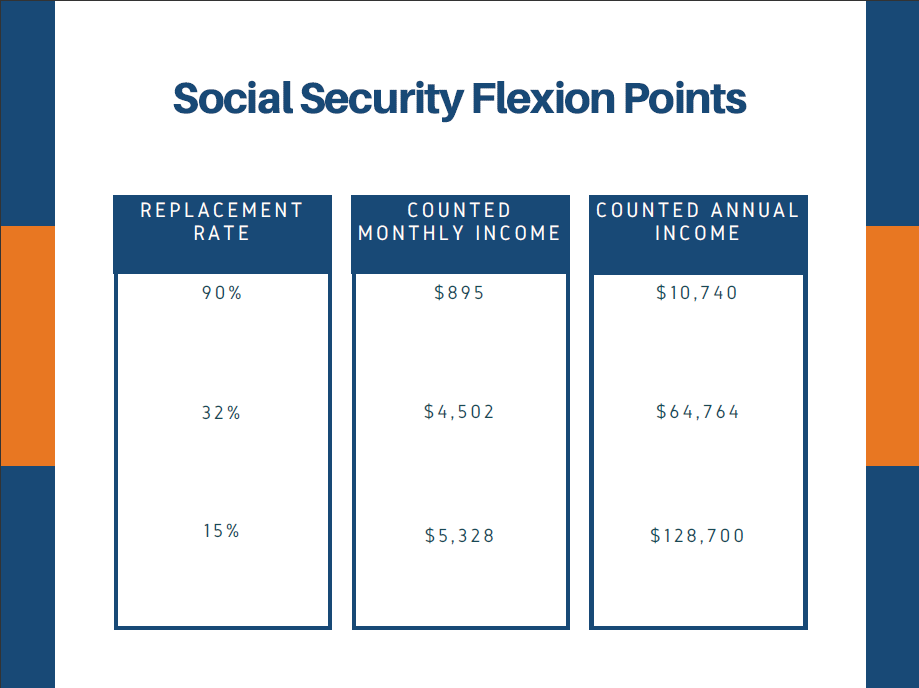
While not directly part of the calculation of the tax itself, understanding how Social Security benefits are determined provides critical context for why you pay these taxes. Your Social Security benefits are calculated based on your “average indexed monthly earnings” (AIME) over your 35 highest-earning years. The more you earn and contribute (up to the wage base limit) over your career, the higher your potential future benefits will be. This direct link between contributions and future benefits underscores the long-term investment you’re making with each paycheck.
Navigating Your Social Security Obligations and Planning
Beyond simply understanding the calculation, actively managing your Social Security obligations and incorporating them into your broader financial plan is a mark of astute money management.
Importance of Accurate Withholding and Estimated Payments
For employees, ensuring your W-4 form is accurately filled out with your employer helps ensure the correct amount of Social Security (and other payroll taxes) is withheld. For self-employed individuals, making timely and accurate estimated tax payments is crucial to avoid penalties. The IRS generally requires you to pay estimated tax if you expect to owe at least $1,000 in tax for the year. This involves calculating your projected income and expenses and paying your estimated tax in quarterly installments throughout the year using Form 1040-ES. Proactive management of these payments prevents large tax bills and potential penalties at tax time.
Utilizing Financial Tools and Resources
Several tools and resources can help you understand and manage your Social Security tax. The Social Security Administration (SSA) offers an online “my Social Security” account, where you can view your earnings record, estimate future benefits, and verify that your employers have reported your wages correctly. Tax software (like TurboTax or H&R Block) and professional tax advisors are invaluable for complex situations, especially for self-employed individuals or those with multiple income streams. These resources can help you accurately calculate your obligations, identify potential deductions, and ensure compliance.
Long-Term Financial Planning and Social Security
Finally, understanding Social Security tax is a vital piece of your overall long-term financial planning. While Social Security provides a foundational safety net, it’s generally not designed to be your sole source of retirement income. By understanding your contributions and estimated benefits, you can better plan for additional savings and investments (e.g., 401(k)s, IRAs, personal investment accounts) to achieve your desired retirement lifestyle. Integrating Social Security into your financial plan allows for a more holistic approach to securing your future, ensuring you’re not solely relying on one income stream during your golden years.
In conclusion, knowing how to calculate Social Security tax is more than just a numbers exercise; it’s about understanding a critical pillar of your personal finance and the broader economy. Whether you’re an employee seeing deductions on your paycheck or a self-employed individual making quarterly payments, a clear grasp of these calculations empowers you to manage your money more effectively, plan for your future with greater confidence, and appreciate the social contract that underpins the Social Security system.
aViewFromTheCave is a participant in the Amazon Services LLC Associates Program, an affiliate advertising program designed to provide a means for sites to earn advertising fees by advertising and linking to Amazon.com. Amazon, the Amazon logo, AmazonSupply, and the AmazonSupply logo are trademarks of Amazon.com, Inc. or its affiliates. As an Amazon Associate we earn affiliate commissions from qualifying purchases.