
The stock market, a pulsing nerve center of global commerce, is designed for continuous operation. Yet, occasionally, the electronic ticker tapes go silent, trading floors empty, and screens display “market closed.” While often a scheduled event, an unexpected closure can spark investor curiosity and even concern. Understanding the various reasons behind these closures—whether routine or extraordinary—is crucial for investors, traders, and anyone interested in the mechanics of the financial world. This article delves into why the stock market might be closed on any given day, exploring the common and rare circumstances, the regulatory frameworks governing these decisions, and their broader implications for financial markets and the economy.

Scheduled Holidays: The Most Common Reason for Market Silence
The vast majority of stock market closures are entirely predictable, serving as designated breaks for market participants and allowing time for reflection and personal commitments. These scheduled holidays are a standard feature across global financial calendars.
Federal and Exchange-Observed Holidays
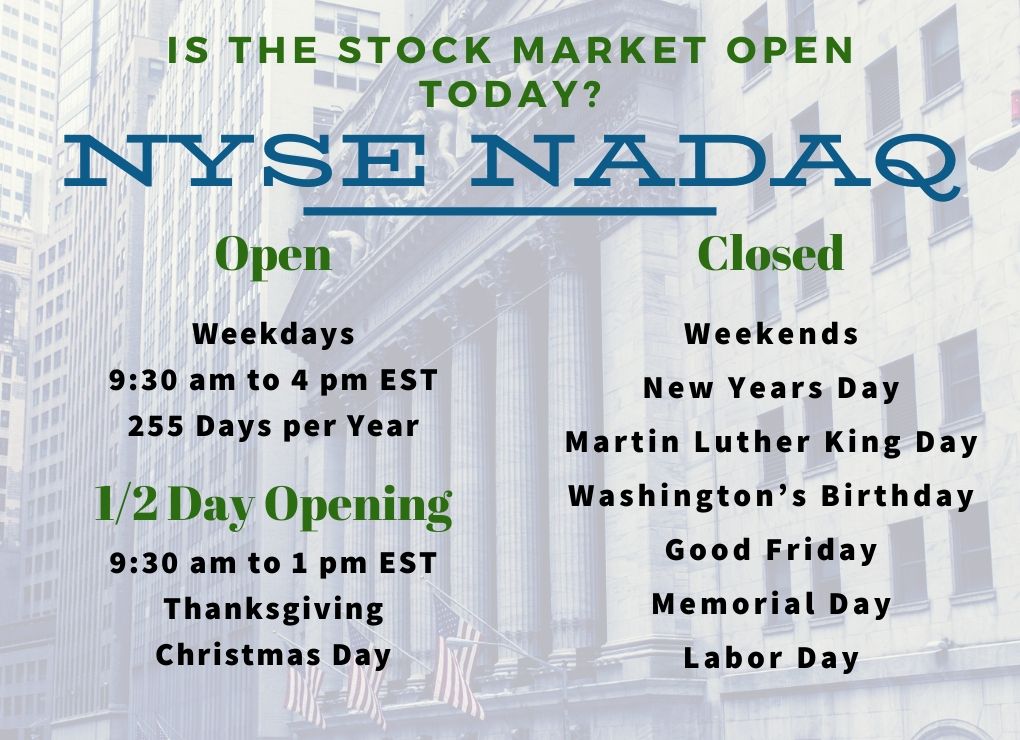
Major stock exchanges in the United States, such as the New York Stock Exchange (NYSE) and NASDAQ, observe a set list of federal holidays. These include:
- New Year’s Day: January 1st marks the start of the new calendar year.
- Martin Luther King, Jr. Day: Observed on the third Monday of January, honoring the civil rights leader.
- Presidents’ Day: Celebrated on the third Monday of February, commemorating U.S. presidents.
- Good Friday: The Friday before Easter Sunday, a significant religious observance.
- Memorial Day: The last Monday of May, honoring military personnel who died in service.
- Juneteenth National Independence Day: June 19th, commemorating the emancipation of enslaved African Americans.
- Independence Day: July 4th, celebrating the signing of the Declaration of Independence.
- Labor Day: The first Monday of September, recognizing the American labor movement.
- Thanksgiving Day: The fourth Thursday of November, a national day of gratitude.
- Christmas Day: December 25th, celebrating Christmas.
These closures provide a collective pause, allowing financial professionals a respite and ensuring that markets operate in sync with broader national observances. While these are full-day closures, it’s also worth noting that some holidays, like the day after Thanksgiving (Black Friday), might see markets close early, reflecting reduced trading volume and staffing.
Weekends: The Default Non-Trading Days
Perhaps the most fundamental reason the stock market is “closed today” is simply that it’s a Saturday or Sunday. Stock markets globally primarily operate on a five-day trading week, typically Monday through Friday. This tradition dates back to the very origins of organized exchanges, offering participants a period away from active trading to process information, strategize, and attend to other responsibilities. Weekends provide a critical buffer, allowing for the settlement of trades, system maintenance, and a general cooling-off period, preventing round-the-clock speculative pressures that could lead to greater instability.
Unscheduled Closures: When the Unexpected Happens
While scheduled holidays are routine, unscheduled market closures are far rarer and typically indicative of extraordinary circumstances that threaten the orderly functioning or integrity of the financial system. These events underscore the fragility of complex market mechanisms in the face of unforeseen disruptions.
Extreme Weather Events
Nature’s fury can occasionally compel market authorities to shut down trading. Severe weather, such as hurricanes, blizzards, or floods, can directly impact the physical infrastructure required to run an exchange or, more critically, prevent personnel from safely reaching trading floors and data centers. For instance, Hurricane Sandy in 2012 caused the NYSE and NASDAQ to close for two consecutive days, marking the first weather-related multi-day closure in decades. The primary rationale for such closures is not just to protect physical assets but also to ensure the safety of employees and to prevent trading under conditions where a significant portion of market participants might be unable to act, leading to unfair or chaotic price discovery.
National Mourning and Commemoration
In instances of profound national tragedy or the passing of highly significant national figures, markets may close as a mark of respect and a period of national mourning. Historically, the U.S. stock markets have closed on the day of a former President’s funeral. For example, markets closed in December 2018 for the funeral of former President George H.W. Bush, and similarly for President Gerald Ford in 2007. These closures are symbolic, reflecting a collective pause to honor a leader or acknowledge a shared moment of grief, prioritizing national sentiment over continuous trading.
Technical Failures and Operational Issues
The sophisticated electronic systems that power modern stock exchanges are incredibly robust, but they are not infallible. Technical glitches, software bugs, or even cybersecurity incidents can necessitate a temporary halt or full closure of trading. The imperative here is to prevent chaotic or unfair trading conditions that could arise from system malfunctions. If data feeds are compromised, order matching algorithms fail, or network connectivity is lost, authorities may deem it necessary to close the market to prevent erroneous trades, ensure data integrity, and allow technicians to resolve the underlying issues without the pressure of live trading. Such closures, though rare, highlight the critical reliance of financial markets on stable and secure technological infrastructure.
Major Geopolitical or Economic Crises
In the most extreme circumstances, major national or international crises, geopolitical events, or severe economic instability can prompt market closures. The most notable recent example was the closure of U.S. markets for four trading days following the September 11, 2001, terrorist attacks. This decision was driven by multiple factors: the physical damage and safety concerns in Lower Manhattan, the profound psychological impact on the nation, and the need for regulators and government officials to assess the full scope of the crisis and formulate an appropriate economic response without the added pressure of a potentially freefalling market. While less common, the threat of widespread panic selling or a complete breakdown of confidence can lead authorities to implement closures as a circuit breaker for the entire system, allowing time for calm to return and policy measures to be enacted.
Understanding Market Halts vs. Full Closures
It’s crucial for investors to distinguish between a full market closure and a trading halt. While both temporarily stop trading, their scope and implications differ significantly.
Circuit Breakers: Preventing Market Freefall
Circuit breakers are pre-defined mechanisms designed to automatically halt trading across an entire exchange or market index if prices fall too sharply within a short period. These are implemented at different “tiers” (e.g., a 7%, 13%, or 20% drop in the S&P 500 index) and are intended to:
- Mitigate Panic Selling: Give investors a pause to process information, rather than making rash decisions in a rapidly declining market.
- Restore Order: Allow liquidity to re-enter the market and reduce volatility.
- Prevent Cascading Failures: Stop a rapid sell-off from triggering a wider systemic crisis.
Circuit breakers typically result in temporary halts lasting from 15 minutes to the remainder of the trading day, depending on the severity and time of day the threshold is breached. They are not full market closures in the sense of a non-trading day but rather controlled interruptions to maintain market integrity during extreme volatility.
Single Stock Halts
Beyond market-wide circuit breakers, individual stocks can also be halted from trading. These halts are usually initiated for specific reasons related to that company or security:
- News Pending: To allow the market to absorb significant news (e.g., earnings announcements, merger news, regulatory approvals) before trading resumes, ensuring fair information dissemination.
- Volatility: If a stock experiences extreme, unexplained price swings, a halt might be imposed to investigate the cause and prevent manipulative trading.
- Regulatory Reasons: To address issues like non-compliance, delisting proceedings, or other regulatory concerns.
These targeted halts ensure fair and orderly trading for specific securities without affecting the broader market.
The Impact of Market Closures on Investors and the Economy
While market closures are sometimes necessary, they are not without consequences, impacting investors directly and reverberating through the broader economy.
Investor Implications
For individual and institutional investors, a closed market means the inability to execute trades. This can be particularly problematic in a rapidly evolving economic or geopolitical landscape, where investors might want to:
- Manage Risk: Close out positions to limit losses or hedge against perceived threats.
- Rebalance Portfolios: Adjust asset allocations in response to new information.
- Seize Opportunities: Buy into a perceived dip or capitalize on positive news.
When markets are closed, these actions are impossible. Information continues to accumulate, and when the market reopens, there can be significant price “gaps”—where the opening price is dramatically different from the previous closing price—leading to heightened volatility. This can be especially challenging for derivatives markets and foreign exchange, where instruments might be traded internationally even if a domestic equity market is closed, creating mismatches.
Economic Repercussions
From a broader economic perspective, market closures disrupt the fundamental mechanisms of capital formation and liquidity. Financial markets serve as a critical conduit for businesses to raise capital and for investors to allocate savings. When these channels are closed, even temporarily, it can:
- Signal Uncertainty: Unscheduled closures, in particular, can be interpreted as a sign of significant underlying problems, potentially eroding business and consumer confidence.
- Hinder Price Discovery: The absence of continuous trading means that real-time price discovery, which reflects collective investor sentiment and information, is suspended. This can make it harder for businesses and policymakers to gauge economic health.
- Increase Operational Costs: Financial institutions incur costs related to system readiness, staff management, and contingency planning for both anticipated and unanticipated closures.
While scheduled closures are factored into financial planning, unexpected ones can cause ripple effects, potentially slowing economic activity and introducing an element of unpredictability.
The Decision-Making Process: Who Calls the Shots?
Closing a stock market is a momentous decision, one that is not taken lightly and involves a layered process with input from various authorities.
Exchange Authorities
The primary decision-makers for day-to-day operations, including scheduled holidays and most operational closures, are the stock exchanges themselves (e.g., NYSE Group, NASDAQ). Their internal rules and protocols dictate when and how holidays are observed, and they have the immediate authority to halt trading due to technical issues or local emergencies like severe weather impacting their physical facilities. These decisions are typically made in consultation with member firms and market participants to ensure smooth transitions.
Regulatory Bodies
Government regulatory bodies, most notably the Securities and Exchange Commission (SEC) in the U.S., play a critical oversight role. While exchanges have autonomy over their operational schedules, the SEC’s mandate is to protect investors and maintain fair, orderly, and efficient markets. In times of national crisis or systemic threat, the SEC can mandate closures or provide guidance to exchanges, ensuring that any decision serves the broader public interest and market stability. Their involvement typically occurs when the reasons for closure extend beyond a single exchange’s operational issues to encompass broader financial or national security concerns.
Government Intervention
In exceptionally rare circumstances, the federal government itself, usually through the Department of the Treasury or in consultation with the Federal Reserve, might have a say in market closures. This level of intervention is reserved for situations of national emergency or profound economic peril that could overwhelm market mechanisms. The multi-day closure after 9/11 is a prime example where government agencies worked closely with exchanges and regulators to manage the crisis response. Such decisions are highly coordinated, involving an assessment of national security, economic stability, and public confidence.
Protocols and Transparency
Regardless of who makes the final call, transparency and clear communication are paramount. For scheduled closures, extensive advance notice is always provided. For unscheduled events, authorities strive to inform the public and market participants as quickly and clearly as possible, detailing the reasons for closure and the anticipated reopening schedule. This commitment to transparency helps to mitigate uncertainty and prevent panic, reinforcing trust in the financial system.
Conclusion
The stock market, despite its image as an ever-vigilant financial engine, does indeed close its doors from time to time. Whether it’s for a pre-scheduled national holiday, a severe weather event, a solemn day of national mourning, or a critical technical intervention, each closure serves a specific purpose. These decisions, made by a hierarchy of exchange operators, regulators, and sometimes government officials, are ultimately aimed at preserving market integrity, ensuring the safety of participants, and maintaining the broader stability of the financial ecosystem. While an unexpected closure can be inconvenient for investors, understanding the underlying reasons offers valuable insight into the robust yet adaptable framework that governs the world’s most vital financial markets.
aViewFromTheCave is a participant in the Amazon Services LLC Associates Program, an affiliate advertising program designed to provide a means for sites to earn advertising fees by advertising and linking to Amazon.com. Amazon, the Amazon logo, AmazonSupply, and the AmazonSupply logo are trademarks of Amazon.com, Inc. or its affiliates. As an Amazon Associate we earn affiliate commissions from qualifying purchases.