
In the world of finance, percentages are more than just mathematical expressions; they are the fundamental language of value, growth, and risk. Whether you are an individual managing a household budget, an investor evaluating a stock portfolio, or an entrepreneur scaling a business, understanding how to calculate and interpret percentages is an essential survival skill.
Money is rarely static. It moves, grows, shrinks, and shifts based on various economic factors. Percentages allow us to normalize these movements, providing a clear perspective regardless of whether we are dealing with hundreds of dollars or millions. This guide explores the essential methods for calculating percentages within the “Money” niche, focusing on personal finance, investment strategies, and business operations.
The Fundamentals of Percentages in Personal Finance
At its core, a percentage is a way of expressing a number as a fraction of 100. In personal finance, this simple concept helps us categorize our spending, track our savings progress, and understand the cost of the goods we consume.
The Basic Formula: Part over Whole
The most fundamental calculation in finance is determining what portion of a total sum a specific amount represents. The formula is:
(Part / Whole) × 100 = Percentage
For example, if your monthly take-home pay is $5,000 and your rent is $1,500, you calculate the percentage of your income spent on housing by dividing 1,500 by 5,000, which equals 0.3. Multiplying by 100 gives you 30%. This “30% rule” is a common benchmark used by financial advisors to determine housing affordability.
Calculating Sales Tax and Gratuities
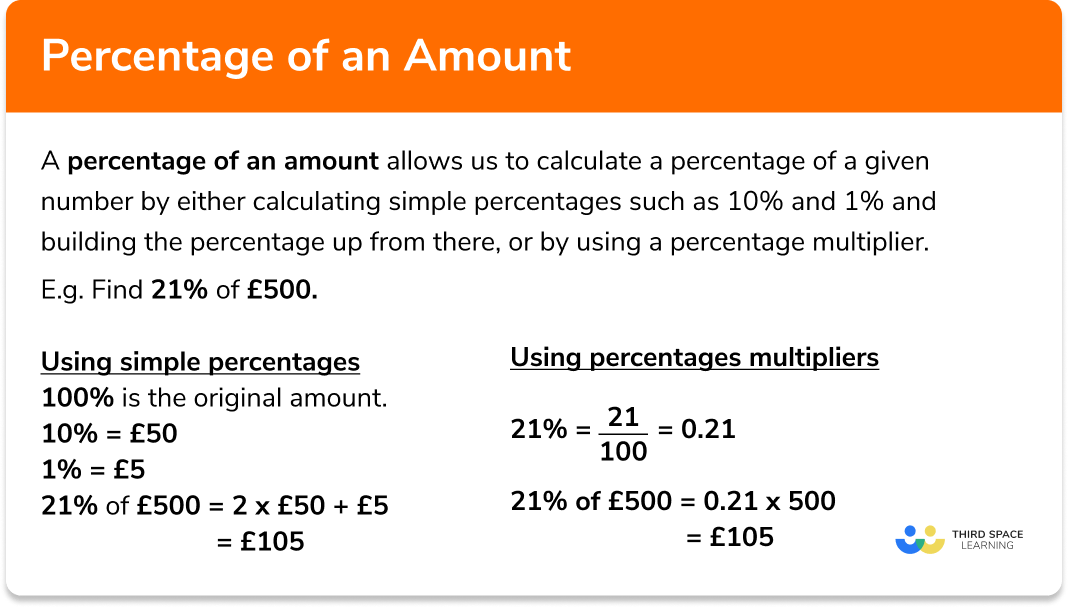
Daily transactions often require quick percentage calculations. To calculate sales tax or a tip, you multiply the base price by the decimal version of the percentage.
- Formula: Total Cost × (Percentage / 100) = Tax/Tip Amount.
If you are at a restaurant and the bill is $85, and you wish to leave an 18% tip, you multiply 85 by 0.18 to get $15.30. Understanding this ensures you are always in control of your discretionary spending.
Tracking Your Savings Rate
Perhaps the most important percentage in personal finance is your savings rate. This is calculated by taking your total monthly savings and dividing it by your gross or net income. A 20% savings rate is widely considered the gold standard for long-term financial security. By monitoring this percentage monthly, you can adjust your lifestyle to ensure you stay on track for retirement or major purchases.
Navigating Investment Returns and Growth
Investing is perhaps the area where percentage calculations are most critical. Investors use these figures to compare the performance of different asset classes, such as stocks, bonds, and real estate.
Calculating Return on Investment (ROI)
ROI is the ultimate metric for any investor. it tells you how much profit or loss you have realized relative to the amount of money you invested.
- Formula: [(Current Value – Original Value) / Original Value] × 100 = ROI.
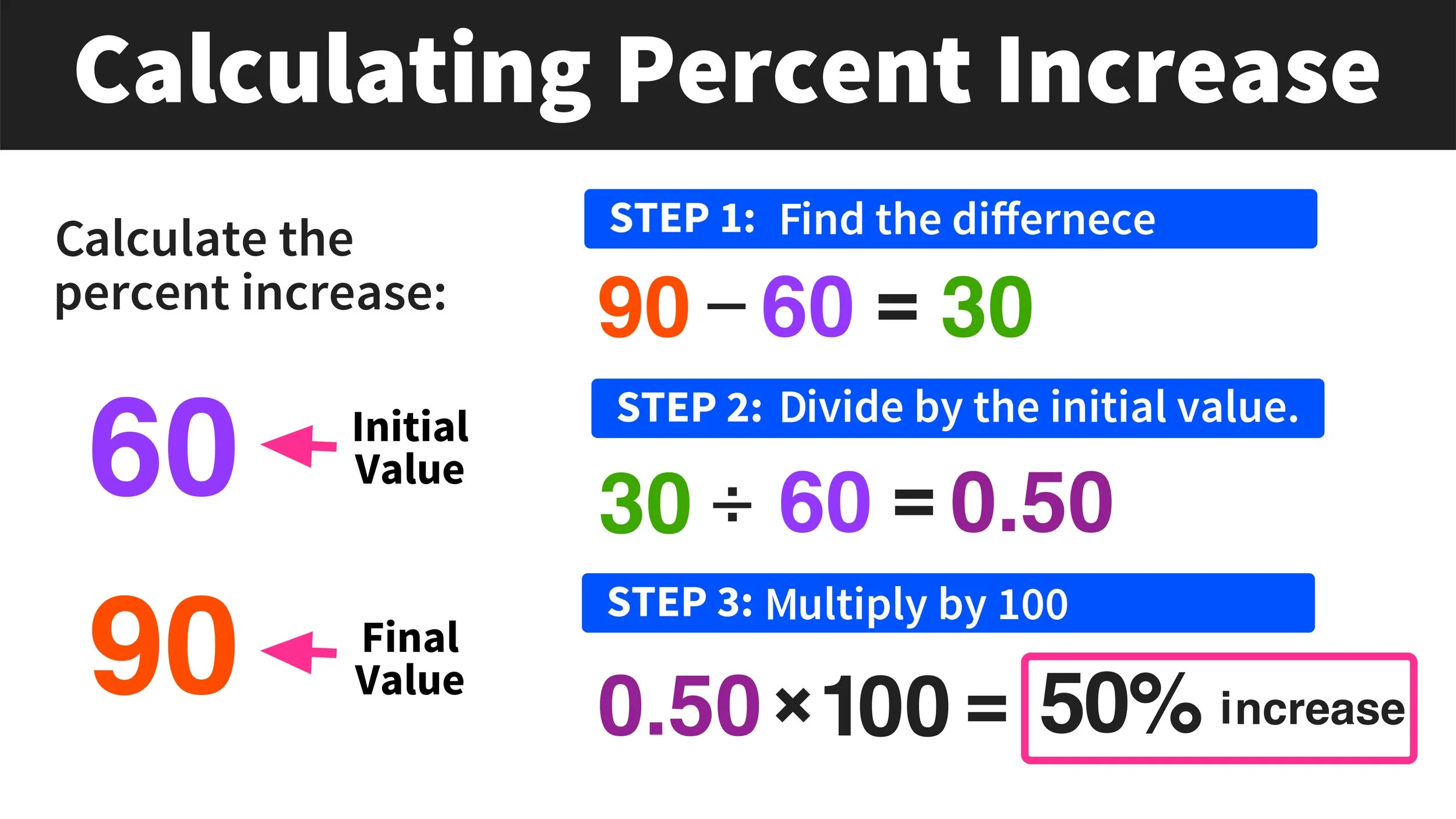
If you bought a share of a tech company for $150 and it is now worth $210, your profit is $60. Dividing $60 by the original $150 gives you 0.4, or a 40% ROI. This calculation allows you to compare a 40% gain in a high-risk stock against a 5% gain in a low-risk savings account, helping you make informed decisions about risk tolerance.

Understanding Percentage Change: Gains vs. Losses
One of the most misunderstood concepts in finance is the asymmetry of percentage gains and losses. If a stock portfolio drops by 50%, it does not simply need a 50% gain to get back to even; it needs a 100% gain.
- The Math: If $100 drops by 50%, you have $50. To get that $50 back to $100, you must add $50, which is 100% of your current $50 balance.
Understanding this math is vital for risk management. It illustrates why preventing large losses (downside protection) is often more important for long-term wealth than chasing high-percentage gains.
The Impact of Compound Interest
While simple interest is calculated only on the principal, compound interest is calculated on the principal plus the accumulated interest of previous periods. This is often referred to as “the eighth wonder of the world.”
- Annual Percentage Yield (APY): When looking at savings accounts or certificates of deposit (CDs), the APY tells you the real rate of return taking into account the effect of compounding. Calculating the future value of an investment involves an exponential percentage formula, highlighting how even a small 1% difference in interest rates can lead to a massive difference in wealth over 20 or 30 years.
Business Finance: Profit Margins and Markups
For business owners, percentages are the tools used to measure efficiency and set pricing strategies. Miscalculating these can lead to the difference between a thriving enterprise and bankruptcy.
Gross vs. Net Profit Margins
Profit margins indicate what percentage of sales a company keeps as profit after paying its expenses.
- Gross Profit Margin: Measures the percentage of revenue exceeding the Cost of Goods Sold (COGS).
- Formula: [(Revenue – COGS) / Revenue] × 100.
- Net Profit Margin: The “bottom line.” It measures how much of every dollar earned translates into actual profit after all taxes, interest, and operating expenses are paid.
- Formula: (Net Income / Revenue) × 100.
A high gross margin but low net margin suggests that while the product is priced well, the company’s overhead costs (rent, salaries, marketing) are too high.
- Formula: (Net Income / Revenue) × 100.
Markup Percentage for Pricing Strategy
Many entrepreneurs confuse markup with margin. While margin is based on the selling price, markup is based on the cost.
- Markup Formula: [(Selling Price – Cost) / Cost] × 100.
If a product costs $50 to make and you sell it for $75, your markup is 50% ($25 is half of $50). However, your profit margin is only 33.3% ($25 is one-third of $75). Knowing the difference is crucial for ensuring that your pricing covers all operational costs and leaves room for profit.
Managing Debt-to-Income Ratios
In both business and personal finance, the Debt-to-Income (DTI) ratio is a percentage that lenders use to measure your ability to manage monthly payments.
- Formula: (Total Monthly Debt Payments / Gross Monthly Income) × 100.
For a business, a high DTI percentage indicates financial fragility. For an individual, a DTI over 43% usually makes it difficult to qualify for a mortgage. Keeping this percentage low is a hallmark of strong financial health.
Advanced Financial Tools for Percentage Calculation
In the modern era, we rarely do these calculations by hand on a napkin. Professional finance relies on tools that handle complex percentage modeling with precision.
Using Spreadsheets for Financial Ratios
Applications like Excel or Google Sheets are the backbone of financial analysis. Using the percentage format feature allows users to input raw decimals (like 0.07) and instantly view them as percentages (7%). Advanced users leverage formulas like =PPMT or =IPMT to calculate what percentage of a monthly loan payment is going toward the principal versus the interest. This level of granularity is essential for debt-shredding strategies.
The Rule of 72
The Rule of 72 is a fast, “back-of-the-envelope” calculation used to estimate how long an investment will take to double given a fixed annual percentage rate of return.
- Formula: 72 / Annual Interest Rate = Years to Double.
If you are earning a 6% return on your mutual fund, 72 divided by 6 equals 12. This means your money will double every 12 years. It is a powerful conceptual tool for understanding the velocity of money and the power of compounding percentages.
Conclusion: Developing Financial Intuition
Calculating percentages is not merely a technical exercise; it is about developing a “financial intuition.” When you can look at a credit card offer with a 24% APR and immediately understand that you are paying nearly a quarter of your balance in interest annually, your behavior changes. When you see a “20% off” sale and realize it only brings the price down to what it was three months ago before inflation, you become a smarter consumer.
Mastering the math of money allows you to strip away the noise of raw numbers and see the underlying reality of your financial situation. By consistently applying the formulas for ROI, profit margins, and savings rates, you move from being a passive observer of your finances to an active, informed architect of your wealth. Whether you are balancing a checkbook or analyzing a corporate balance sheet, the humble percentage remains your most powerful tool for clarity and growth.
aViewFromTheCave is a participant in the Amazon Services LLC Associates Program, an affiliate advertising program designed to provide a means for sites to earn advertising fees by advertising and linking to Amazon.com. Amazon, the Amazon logo, AmazonSupply, and the AmazonSupply logo are trademarks of Amazon.com, Inc. or its affiliates. As an Amazon Associate we earn affiliate commissions from qualifying purchases.