
For the modern investor, opening a brokerage app to see a sea of red can be a jarring experience. Whether you are a seasoned portfolio manager or a retail investor just starting your journey into index funds, the question “Why was the market down today?” is one of the most frequently asked queries in the financial world.
Market fluctuations are an inherent part of the capitalist ecosystem. Prices do not move in a straight line; they breathe, expanding during periods of optimism and contracting when uncertainty takes hold. However, understanding the why behind a specific downturn is crucial for maintaining a rational perspective and avoiding the pitfalls of emotional trading. To demystify these movements, we must look at the convergence of macroeconomic policy, corporate health, geopolitical stability, and the psychological temperament of the investing public.
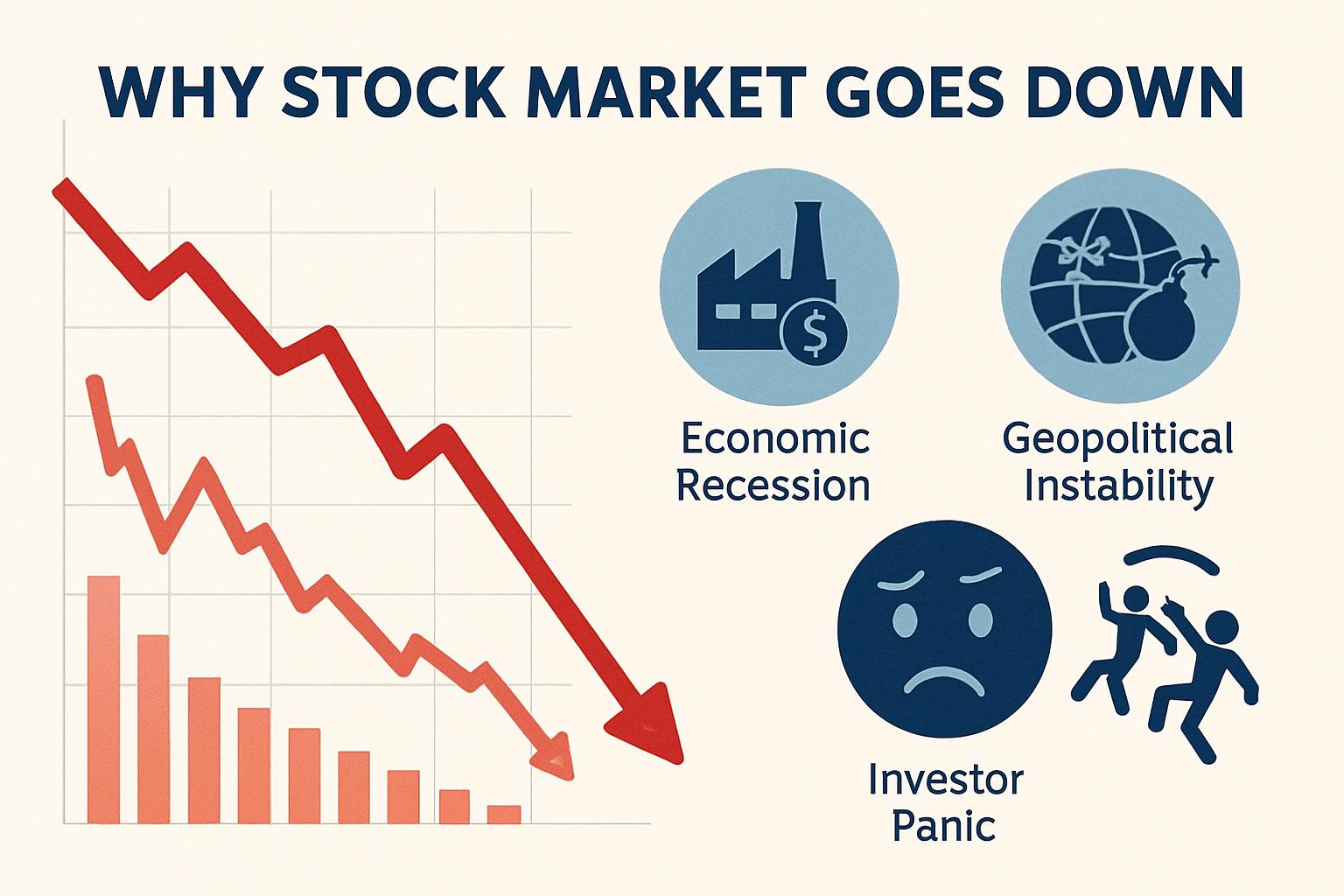
1. The Shadow of Macroeconomics: Central Banks and Inflation
The most significant driver of daily market movement in the current era is the macroeconomic environment, specifically the actions and rhetoric of central banks like the Federal Reserve.
Interest Rates and the Cost of Capital
The relationship between interest rates and the stock market is generally inverse. When the Federal Reserve hints at or implements interest rate hikes, the “risk-free” rate of return (usually tied to Treasury bonds) increases. This makes stocks—which are inherently riskier—less attractive by comparison. Furthermore, higher interest rates increase the cost of borrowing for corporations. When it becomes more expensive for a company to fund its operations or expand through debt, its future earnings potential is dampened, leading investors to revalue the stock at a lower price point.
Inflation Data and the Consumer Price Index (CPI)
Inflation is the silent killer of purchasing power, and the market views it as a harbinger of central bank intervention. On days when the Bureau of Labor Statistics releases the Consumer Price Index (CPI) or the Producer Price Index (PPI), the market often experiences heightened volatility. If inflation comes in “hotter” than expected, investors immediately price in the likelihood of more aggressive interest rate hikes. This fear of a “hawkish” central bank can trigger a rapid sell-off across all sectors.
Employment Reports and Economic Growth
Paradoxically, “good news” in the labor market can sometimes be “bad news” for the stock market. A robust jobs report suggests that the economy is running hot, which could lead to wage-push inflation. If the labor market is too tight, central banks may keep interest rates higher for longer to cool the economy down. Consequently, a strong employment print can cause the market to dip as investors weigh the benefits of a strong economy against the drawbacks of restrictive monetary policy.
2. Corporate Fundamentals: The Weight of Earnings Season
While the “macro” view sets the stage, individual company performance provides the specific drama. During earnings season, the market’s daily direction is often dictated by the reports of heavyweight corporations.
Earnings Misses and Forward Guidance
A company can report record-breaking profits and still see its stock price tumble. This happens when the results fail to meet the “whisper numbers” or analyst expectations. More importantly, the market is a forward-looking mechanism. If a CEO provides “soft” guidance—suggesting that the next quarter might see a slowdown in growth due to rising costs or cooling demand—investors will sell the stock today to avoid future losses. Because the largest companies (like those in the S&P 500 or Nasdaq 100) carry so much weight, a few bad reports from influential names can drag the entire index down.
The Tech Influence and Growth Valuations
In recent decades, the market has become increasingly concentrated in high-growth technology sectors. These companies are often valued based on their projected cash flows far into the future. When interest rates rise or economic growth slows, the “discount rate” applied to those future earnings increases, making the current valuation look bloated. If the tech sector faces a correction due to overvaluation, it creates a gravitational pull that affects the broader market.
Sector Rotation and Profit Taking
Sometimes, the market is down not because of bad news, but because of a “rotation.” Institutional investors may decide to take profits from high-performing sectors (like Tech or Energy) to move capital into “defensive” sectors (like Utilities or Consumer Staples) or into cash. This massive movement of capital can cause the major indices to drop as the selling pressure in growth stocks outweighs the buying pressure in value stocks.
3. Geopolitical Tensions and Global Stability
Markets loathe uncertainty. While domestic economic data is predictable in its timing, geopolitical events are often sudden and disruptive, leading to “shocks” that cause immediate market downturns.
International Conflict and Energy Prices
War or civil unrest in regions critical to global energy production can send shockwaves through the financial markets. An increase in the price of crude oil acts as a de facto tax on both consumers and businesses. It raises the cost of transportation, manufacturing, and heating, which eventually feeds back into inflation. On days when geopolitical tensions escalate, the market often enters a “risk-off” mode, where investors flee equities in favor of “safe-haven” assets like gold or government bonds.
Trade Policies and Currency Fluctuations
We live in a globalized economy where supply chains are intricately linked. Changes in trade policy, such as the imposition of tariffs or the breakdown of trade agreements, can threaten the profit margins of multinational corporations. Additionally, a “strong dollar” can be a headwind for domestic companies that earn a significant portion of their revenue overseas. When the dollar rises sharply against other currencies, those foreign earnings are worth less when converted back, leading to lower reported profits and downward pressure on stock prices.
Global Supply Chain Disruptions
The modern “just-in-time” manufacturing model is efficient but fragile. Any event that threatens the flow of goods—be it a pandemic, a blocked shipping canal, or a shortage of critical components like semiconductors—creates a bottleneck. These disruptions lead to increased costs and delayed revenue, both of which are viewed negatively by the market.
4. Market Psychology and Technical Triggers
Not all market moves are based on hard data or news. Sometimes, the market is down simply because of the way it is structured and the way humans (and machines) react to price movement.
The Fear and Greed Index
Investor sentiment is a powerful force. When the market has been on a long winning streak, “complacency” sets in. However, once a small decline starts, it can trigger a cascade of fear. The “Fear and Greed Index” measures these emotions. On days when the market is down, it is often because a “negative feedback loop” has begun: prices drop, which causes fear, which causes more selling, which causes prices to drop further.
Algorithmic Trading and Technical Levels
Today, a vast majority of market trades are executed by algorithms rather than humans. These “black box” systems are programmed to sell when certain technical levels are breached. For example, if the S&P 500 falls below its 200-day moving average, it may trigger a wave of automated sell orders. These technical triggers can turn a minor dip into a significant intraday sell-off, regardless of whether there was any “news” to justify the move.
The “Wait and See” Approach
Market liquidity—the ease with which assets can be bought and sold—also plays a role. Ahead of major events, such as a Federal Reserve meeting or a presidential election, buyers often move to the sidelines. When there are fewer buyers in the market, even a small amount of selling pressure can cause prices to drop more significantly than they otherwise would. This “thin” market often experiences higher volatility and downward drifts.
5. Navigating the Downturn: The Investor’s Perspective
Understanding why the market is down is only half the battle; the other half is knowing how to respond. For the disciplined investor, a down day is rarely a reason for panic.
Reassessing Risk Tolerance
A down market serves as a “stress test” for your portfolio. If a 2% or 3% drop in a single day causes you significant emotional distress, your portfolio may be too aggressive for your risk tolerance. Use these days to evaluate your asset allocation. Are you over-leveraged? Are you too concentrated in one sector? A well-diversified portfolio is designed to weather these storms.
The Power of Dollar-Cost Averaging
For long-term investors, market downturns can actually be beneficial. Through dollar-cost averaging—investing a fixed amount of money at regular intervals—you buy more shares when prices are low and fewer shares when prices are high. Over time, this lowers your average cost per share. Instead of asking “Why is the market down?” with dread, some investors view these days as an opportunity to “buy the dip” and accumulate assets at a discount.
Focusing on Fundamentals Over Noise
It is essential to distinguish between “market noise” and “fundamental change.” A daily drop driven by a tweet, a technical glitch, or a temporary geopolitical flare-up is often noise. However, a drop driven by a fundamental shift in interest rates or a permanent decline in a company’s competitive advantage is something that requires a strategic response. By keeping your eyes on the long-term horizon and the fundamental health of your investments, you can navigate the daily fluctuations of the market with confidence and clarity.
In conclusion, the market is a complex, living entity influenced by a myriad of factors. While a “down day” can feel discouraging, it is often a necessary recalibration in an ever-changing economic landscape. By understanding the roles of macroeconomics, corporate performance, global events, and investor psychology, you move from being a reactive participant to an informed observer of the financial world.
aViewFromTheCave is a participant in the Amazon Services LLC Associates Program, an affiliate advertising program designed to provide a means for sites to earn advertising fees by advertising and linking to Amazon.com. Amazon, the Amazon logo, AmazonSupply, and the AmazonSupply logo are trademarks of Amazon.com, Inc. or its affiliates. As an Amazon Associate we earn affiliate commissions from qualifying purchases.