
In the relentless pursuit of technological advancement, the seemingly abstract concept of “physical property” underpins every circuit board, every touchscreen, and every integrated system that defines our digital world. Far from being a mere academic curiosity, understanding the physical properties of materials is the bedrock upon which all innovation in tech is built. It dictates whether a device will be fast or slow, durable or fragile, efficient or power-hungry. Without a profound appreciation for these inherent characteristics of matter, the groundbreaking gadgets and sophisticated infrastructure we rely on would simply cease to function, or indeed, cease to exist. This article delves into what physical properties are, why they are indispensable to the technology sector, and how their manipulation continues to drive the next wave of innovation.

The Fundamental Role of Physical Properties in Technology
At its core, technology is the application of scientific knowledge for practical purposes, often involving the manipulation of materials. Every component, from a semiconductor in a microprocessor to the casing of a smartphone, is chosen and engineered based on its unique set of physical properties. These properties are intrinsic characteristics of a substance that can be observed and measured without changing its chemical composition. They are the silent architects of functionality, performance, and reliability across the tech landscape.
Defining Physical Properties in a Tech Context
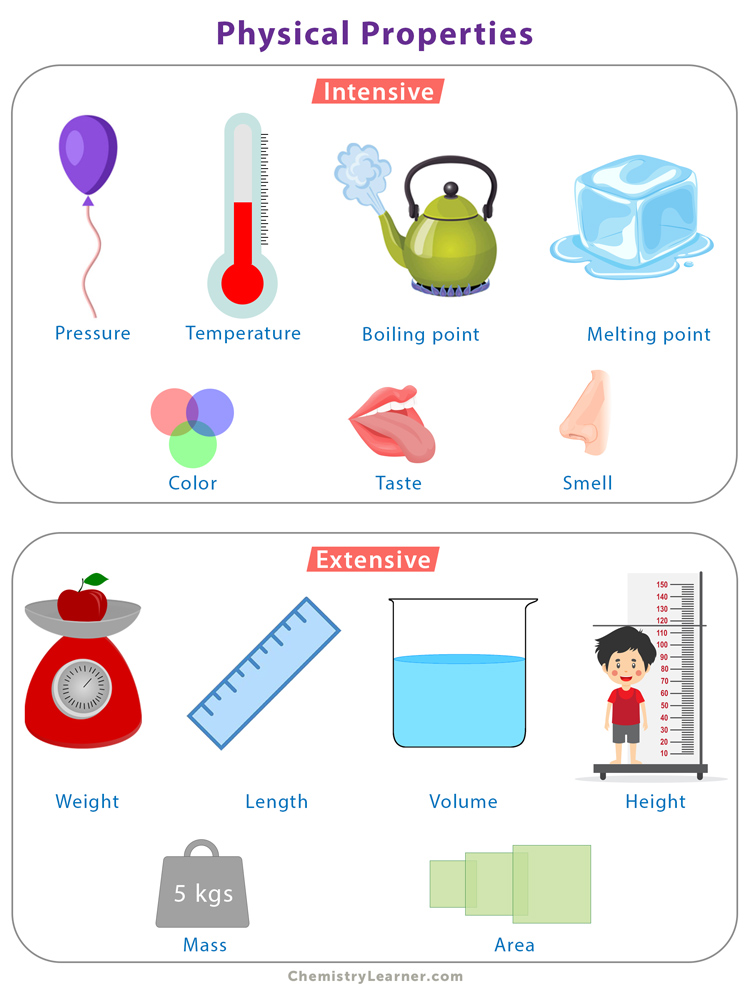
For engineers and designers in the tech industry, physical properties are the essential data points that inform material selection and design choices. These can include:
- Mechanical Properties: Hardness, tensile strength, elasticity, malleability, ductility, fatigue resistance. These determine how a material responds to external forces – crucial for structural integrity and durability in devices.
- Thermal Properties: Melting point, boiling point, thermal conductivity, specific heat capacity, coefficient of thermal expansion. These govern how materials interact with heat, vital for managing operating temperatures and preventing device failure.
- Electrical Properties: Electrical conductivity, resistivity, dielectric strength. These are paramount for electronics, influencing current flow, insulation capabilities, and energy efficiency.
- Optical Properties: Transparency, opacity, refractive index, reflectivity, light absorption/emission. These are critical for displays, cameras, sensors, and fiber optics.
- Magnetic Properties: Permeability, coercivity, saturation magnetization. These are essential for data storage, motors, and magnetic sensors.
- Density: The mass per unit volume, affecting weight and portability of devices.
Understanding these properties allows engineers to predict how a material will behave under specific conditions, ensuring that a smartphone survives a drop, a server doesn’t overheat, or a fiber optic cable transmits data at light speed.
From Raw Materials to Revolutionary Gadgets
The journey from a raw element or compound to a sophisticated technological device is a testament to the precise control and understanding of physical properties. Silicon, for instance, a humble semiconductor, has revolutionized computing due to its specific electrical properties that allow it to be a controllable switch. Glass, once a simple window material, has been engineered for extreme hardness and clarity in smartphone screens. Every advancement in technology is, in essence, an advancement in material science – discovering, refining, or manipulating physical properties to meet new demands.
Key Physical Properties Driving Modern Tech Innovation
Modern technology is a symphony of diverse materials, each playing a crucial role dictated by its physical properties. Let’s explore some prime examples that highlight their profound impact.
Electrical Conductivity and Resistivity: The Heartbeat of Electronics
Perhaps no physical property is more central to technology than electrical conductivity. It describes a material’s ability to conduct an electric current. Conversely, resistivity measures its opposition to current flow.
- Example 1: Copper (High Conductivity)
Copper’s high electrical conductivity makes it the material of choice for wiring in virtually all electronic devices and power transmission. Its low resistance minimizes energy loss, ensuring efficient power delivery to components. - Example 2: Silicon (Semiconducting Properties)
Silicon is the cornerstone of modern electronics due to its unique semiconducting properties. Its conductivity can be precisely controlled by doping it with impurities, allowing it to act as a switch (transistor) or amplify signals. This property is fundamental to microprocessors, memory chips, and integrated circuits. - Example 3: Insulators (High Resistivity)
Materials like ceramics, plastics, and specialized polymers possess high electrical resistivity, making them excellent insulators. They prevent unwanted current flow, protecting users and ensuring circuits operate correctly. Without effective insulation, short circuits and device failures would be rampant.
The precise manipulation of conductivity and resistivity is what enables the miniaturization, speed, and power efficiency of contemporary electronics.
Mechanical Strength and Durability: Building Robust Devices
In an age where devices are constantly handled and subjected to wear and tear, mechanical properties like tensile strength, hardness, and fracture toughness are paramount.
- Example 1: Aluminum Alloys (Lightweight and Strong)
Aluminum alloys are widely used for the casings of laptops, smartphones, and tablets. They offer an excellent strength-to-weight ratio, providing structural integrity without adding excessive bulk, and are resistant to corrosion. - Example 2: Gorilla Glass (Hardness and Scratch Resistance)
The specialty glass used in smartphone screens (e.g., Corning Gorilla Glass) is engineered for exceptional hardness and scratch resistance. Its high Young’s modulus and fracture toughness mean it can withstand impacts and daily abrasions, significantly enhancing device durability and user experience. - Example 3: Carbon Fiber Composites (High Strength-to-Weight)
Used in high-performance computing components and some premium device chassis, carbon fiber composites offer incredible strength and stiffness for minimal weight. This property is vital for aerospace tech and ultra-portable, robust professional equipment.
These properties ensure that our devices can withstand the rigors of daily life, extending their lifespan and maintaining their aesthetic appeal.
Thermal Properties: Managing Heat in High-Performance Systems
As devices become more powerful and compact, heat generation becomes a critical challenge. Thermal properties determine how effectively materials conduct, store, and dissipate heat.
- Example 1: Copper and Aluminum (High Thermal Conductivity)
Materials like copper and aluminum are excellent thermal conductors. They are extensively used in heat sinks, pipes, and cooling plates within computers, servers, and gaming consoles to draw heat away from hot components (CPUs, GPUs) and dissipate it into the environment, preventing overheating and throttling. - Example 2: Thermal Pastes (Gap Fillers for Heat Transfer)
Thermal pastes, often composed of ceramic or metal particles suspended in a silicone base, have high thermal conductivity. They are applied between a processor and its heat sink to fill microscopic air gaps, maximizing the efficiency of heat transfer and ensuring components run optimally. - Example 3: Phase-Change Materials (PCM) (Thermal Storage)
Advanced cooling systems for data centers and high-end electronics sometimes utilize PCMs. These materials absorb and release large amounts of latent heat during their phase transition (e.g., from solid to liquid), providing effective temperature stabilization.
Effective thermal management, driven by understanding these properties, is crucial for maintaining performance, extending component lifespan, and ensuring device reliability.
Optical Properties: Shaping Our Digital Vision
Our interaction with technology is often visual, making optical properties fundamental to displays, cameras, and communication.
- Example 1: Liquid Crystals and OLEDs (Light Modulation and Emission)
The ability of liquid crystals to rotate polarized light, or Organic Light Emitting Diodes (OLEDs) to emit light directly, are distinct optical properties. These underpin the vivid, energy-efficient displays found in smartphones, televisions, and virtual reality headsets, delivering unparalleled visual experiences. - Example 2: Lenses (Refraction and Focus)
The refractive index of glass and other transparent polymers is critical for camera lenses. This property allows light to be bent and focused onto image sensors, enabling sharp photographs and videos in devices from smartphones to surveillance cameras. - Example 3: Fiber Optics (Total Internal Reflection)
Fiber optic cables rely on the principle of total internal reflection, an optical property, to transmit data over vast distances at the speed of light. The specific refractive index difference between the core and cladding of the fiber ensures light signals remain confined and travel efficiently.
These optical properties are not just about aesthetics; they are about enabling precise data capture, vivid information display, and high-speed global communication.
Advanced Materials and the Future of Tech through Physical Properties
The future of technology is inextricably linked to the discovery and engineering of new materials with unprecedented physical properties. Researchers are constantly pushing boundaries, creating substances that challenge conventional limits.
Nanomaterials: Unlocking New Property Frontiers
Materials engineered at the nanoscale often exhibit drastically different physical properties compared to their bulk counterparts, opening up entirely new possibilities.
- Example: Graphene (Exceptional Conductivity, Strength, and Flexibility)
Graphene, a single layer of carbon atoms arranged in a hexagonal lattice, is an extraordinary nanomaterial. It possesses exceptional electrical and thermal conductivity, incredible strength (200 times stronger than steel by weight), and is highly flexible and transparent. These properties make it a candidate for next-generation flexible electronics, ultra-fast processors, highly efficient batteries, and advanced sensors. The quantum mechanical behavior at this scale gives rise to properties not seen in macroscopic carbon.
Nanomaterials promise to revolutionize everything from computing power and energy storage to medical diagnostics and wearable technology.
Smart Materials: Adapting to Their Environment
Smart materials are a class of advanced materials whose physical properties can be significantly altered in a controlled fashion by external stimuli, such as stress, temperature, moisture, pH, electric, or magnetic fields.
- Example: Shape-Memory Alloys (Actuation and Self-Healing)
Shape-memory alloys (SMAs), like Nitinol, can “remember” an original shape and return to it when heated, even after being plastically deformed. This property is used in actuators for micro-robotics, self-deploying structures, and even in some medical devices. Beyond simple actuation, research into self-healing polymers, which can repair small damages autonomously, points to future devices with extended lifespans and reduced waste.
Smart materials lay the groundwork for adaptive devices, self-healing systems, and more intuitive human-technology interfaces.
Computational Materials Science: Designing Properties Virtually
The advent of powerful computing and AI has ushered in a new era of computational materials science. This field uses simulations and machine learning algorithms to predict and design materials with desired physical properties before they are synthesized in a lab.
- Example: Accelerating Material Discovery
Instead of trial-and-error experimentation, scientists can simulate the atomic structure and quantum mechanics of potential new compounds, predicting their electrical conductivity, thermal expansion, or mechanical strength with high accuracy. This significantly accelerates the discovery of novel alloys, catalysts, superconductors, and battery materials. It allows engineers to virtually “tune” properties like bandgap for semiconductors or piezoelectric response for sensors.
Computational materials science is streamlining the innovation pipeline, enabling the rapid development of materials tailored for specific technological challenges, from more efficient solar cells to groundbreaking quantum computing components.
The Imperative of Understanding Physical Properties for Tech Professionals
For anyone involved in the tech industry—from hardware engineers and product designers to software developers and quality assurance specialists—a foundational understanding of physical properties is not just beneficial, but essential.
Informed Design and Engineering Choices
Engineers must select materials that optimally balance cost, performance, and reliability. This requires a deep understanding of how different physical properties interact and influence the overall functionality of a device. For instance, choosing a material with high thermal conductivity might be crucial for a processor’s heat sink, while selecting a polymer with specific dielectric properties is vital for insulating high-voltage components. These choices directly impact product viability and market success.
Quality Control and Reliability
Ensuring products meet stringent performance and safety standards hinges on consistent material properties. Quality control processes in manufacturing heavily rely on testing physical properties to detect flaws, predict lifespan, and guarantee that components will perform reliably under specified operating conditions. A slight deviation in the hardness of a casing or the conductivity of a trace can lead to catastrophic failure.

Driving Innovation and Sustainability
The next generation of technological breakthroughs will inevitably stem from innovations in materials science. Developing lighter, stronger, more energy-efficient, or entirely new materials with unique physical properties will unlock capabilities we can only currently imagine. Furthermore, understanding these properties is critical for designing more sustainable technology – identifying materials that are recyclable, require less energy to produce, or have a lower environmental impact throughout their lifecycle.
In conclusion, “what is an example of a physical property?” is far more than a simple academic question. In the realm of technology, it is the gateway to understanding how our devices work, why they are designed the way they are, and where future innovations will originate. From the electrons flowing through conductive pathways to the light emanating from our screens, every facet of modern tech is a direct manifestation of the physical properties of the materials we manipulate. Mastery over these fundamental characteristics will continue to define the pace and direction of technological progress, shaping the digital future for generations to come.
aViewFromTheCave is a participant in the Amazon Services LLC Associates Program, an affiliate advertising program designed to provide a means for sites to earn advertising fees by advertising and linking to Amazon.com. Amazon, the Amazon logo, AmazonSupply, and the AmazonSupply logo are trademarks of Amazon.com, Inc. or its affiliates. As an Amazon Associate we earn affiliate commissions from qualifying purchases.