
The ebb and flow of financial markets are a fundamental aspect of global economics. While periods of sustained growth often dominate headlines, market downturns – characterized by widespread asset price declines – are an equally integral, albeit often more anxiety-inducing, part of this cycle. When markets fall, the natural human inclination is to seek immediate answers: What’s happening? Why now? Is it temporary or systemic? Understanding the confluence of factors that contribute to these periods of contraction is crucial for investors, businesses, and policymakers alike. It allows for a more informed perspective, separating transient noise from significant shifts and ultimately fostering more resilient financial strategies.
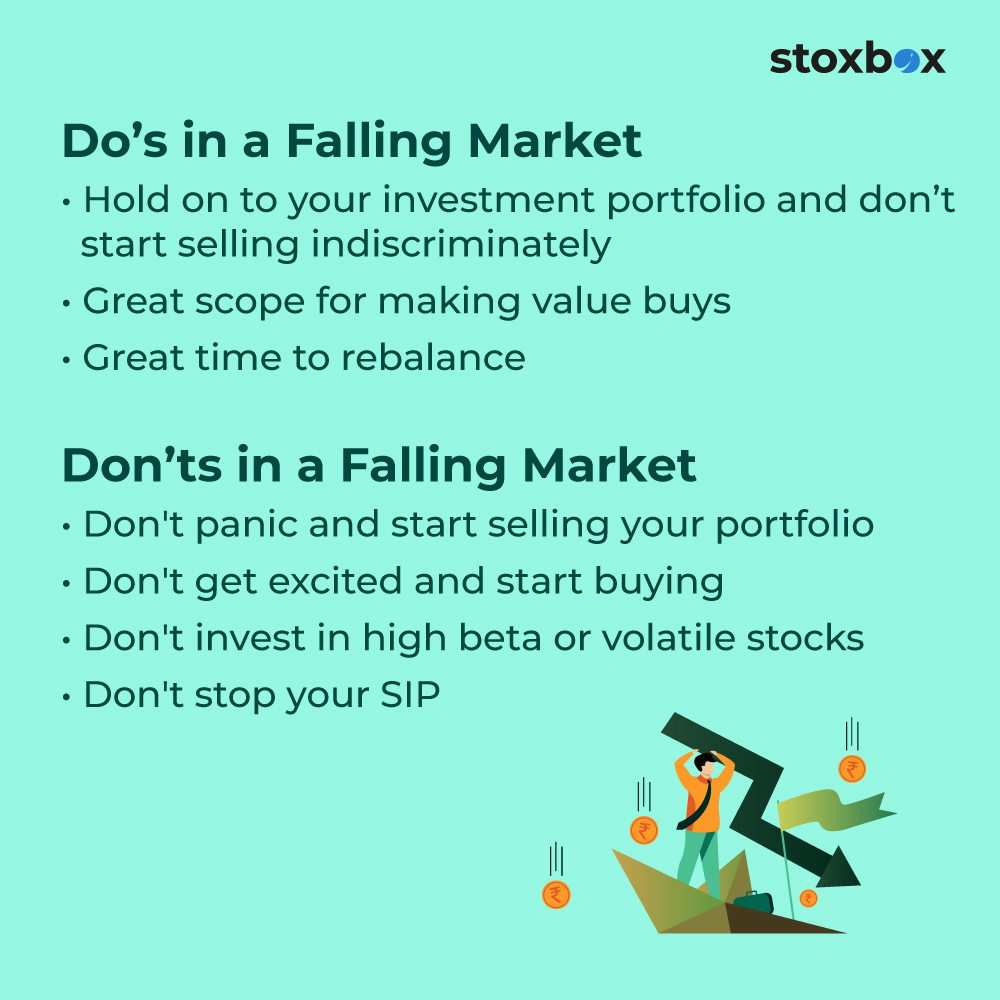
A market correction or bear market is rarely the result of a single cause. Instead, it typically emerges from a complex interplay of macroeconomic forces, geopolitical events, shifts in investor psychology, and underlying structural weaknesses. From the specter of inflation and the tightening grip of central banks to the geopolitical chessboard and the re-evaluation of asset bubbles, numerous powerful currents can converge to create the perfect storm that sends markets tumbling. Unpacking these multifaceted drivers is not just an academic exercise; it’s an essential step in navigating the often tumultuous waters of modern finance.
Macroeconomic Headwinds and Monetary Policy
One of the most potent forces behind market downturns often originates in the broader macroeconomic environment and the subsequent policy responses from central banks. These foundational elements dictate the cost of capital, the pace of economic growth, and the overall liquidity within the financial system, profoundly impacting asset valuations.
Inflationary Pressures
Inflation, the persistent rise in the general price level of goods and services, acts as a corrosive force on economic stability and market confidence. When inflation accelerates beyond a comfortable range, it erodes the purchasing power of consumers and increases the operational costs for businesses. This dynamic forces consumers to spend more on essentials, leaving less disposable income for discretionary purchases, which can dampen corporate revenues and profit margins. For investors, high inflation diminishes the real return on investments, as the future value of earnings or dividends is reduced by the higher cost of living. Companies struggle to maintain margins, leading to less attractive earnings forecasts and a subsequent re-evaluation of their stock prices. Furthermore, sticky inflation can signal an economy overheating, prompting central banks to step in with restrictive measures.
Central Bank Responses and Interest Rate Hikes
The primary mandate of most central banks, such as the U.S. Federal Reserve or the European Central Bank, is to maintain price stability and foster maximum sustainable employment. When inflation becomes a threat, central banks typically resort to raising benchmark interest rates. Higher interest rates increase the cost of borrowing for both businesses and consumers. For companies, this means more expensive capital for expansion, investment, and even day-to-day operations, often leading to scaled-back growth plans and reduced profitability. For consumers, higher rates translate to more expensive mortgages, car loans, and credit card debt, further curbing spending.
From an investing perspective, higher interest rates also make future corporate earnings less valuable in present terms, as they are discounted at a higher rate. This phenomenon disproportionately affects growth stocks, whose valuations often rely heavily on distant future earnings projections. Moreover, rising interest rates make less risky fixed-income assets, like government bonds, more attractive, drawing capital away from riskier equities. The withdrawal of “easy money” from the system effectively tightens financial conditions, making speculative investments less appealing and leading to a broad repricing of assets.
Recessionary Fears and Economic Slowdown
The cumulative effect of persistent inflation and aggressive interest rate hikes often fuels fears of an impending economic recession – a significant decline in economic activity spread across the economy, lasting more than a few months. Indicators such as declining Purchasing Managers’ Indexes (PMI), plummeting consumer confidence, and a rising unemployment rate can signal a looming downturn. In anticipation of reduced demand and profit contraction during a recession, businesses often cut back on investments, hiring, and sometimes even issue profit warnings. These warnings, coupled with the general uncertainty about future economic growth, cause investors to flee riskier assets, selling off stocks and moving into safer havens like cash or government bonds. The prospect of an economic slowdown directly impacts corporate earnings expectations, which are a primary driver of stock valuations.
Geopolitical Instability and Global Shocks
Beyond the internal dynamics of an economy, external shocks and geopolitical tensions frequently introduce significant volatility and uncertainty into financial markets, disrupting global supply chains, affecting commodity prices, and denting investor confidence.
International Conflicts and Trade Tensions
Major international conflicts, such as regional wars or prolonged geopolitical standoffs, can have immediate and far-reaching consequences for global markets. They introduce a level of unpredictability that markets inherently dislike. Conflicts can disrupt critical trade routes, lead to direct damage to infrastructure, and prompt the imposition of sanctions, all of which hinder international commerce. For instance, the Russia-Ukraine conflict dramatically impacted energy markets and agricultural commodity prices, creating inflationary pressures worldwide. Trade tensions, characterized by tariffs and protectionist policies between major economic powers, likewise impede global supply chains, increase costs for businesses, and reduce overall economic efficiency. These disruptions cascade through economies, impacting corporate profitability and investor sentiment.
Energy and Commodity Market Volatility
Energy and commodity markets are particularly sensitive to geopolitical events. Disruptions in the supply of critical resources like oil, natural gas, and essential metals can lead to rapid and dramatic price spikes. These price surges directly impact industrial production costs, transportation expenses, and consumer budgets, acting as a direct inflationary input. For example, a sudden increase in oil prices raises fuel costs for businesses (e.g., airlines, logistics) and consumers, reducing discretionary spending and profit margins. Similarly, volatility in agricultural commodities can lead to food price inflation, disproportionately affecting lower-income populations and potentially triggering social unrest, which further destabilizes markets. The dependence of modern economies on global commodity flows means that even localized disruptions can have global market repercussions.
Supply Chain Disruptions and Reshoring Trends
The fragility of global supply chains, starkly exposed during the pandemic, continues to be a source of market concern. Geopolitical tensions exacerbate these vulnerabilities, as countries reassess their reliance on specific regions for critical components or finished goods. This can lead to efforts to “reshoring” production (bringing manufacturing back home) or “friend-shoring” (moving production to allied nations). While these strategies aim to enhance national security and supply resilience in the long term, they often entail higher immediate costs due to increased labor expenses, infrastructure investments, and less efficient global specialization. These added costs can squeeze corporate profits, contribute to inflationary pressures, and create uncertainty around future profitability, all of which weigh negatively on market valuations.
Valuations and Investor Sentiment
Beyond the fundamental economic and geopolitical realities, the subjective elements of market valuations and the collective psychology of investors play an equally critical role in precipitating downturns. Markets are not just driven by data but also by perception, expectation, and emotion.
Overextended Valuations and Market Corrections
During periods of sustained economic growth and low interest rates, investor enthusiasm can drive asset prices to levels that may be disconnected from underlying fundamentals. This phenomenon often leads to “overextended valuations,” where metrics like price-to-earnings (P/E) ratios, price-to-sales ratios, or market capitalization relative to GDP reach historical highs. When such valuations become unsustainable, often fueled by speculative fervor, a market correction becomes increasingly likely. A correction is essentially the market “right-sizing” itself, bringing asset prices back in line with their intrinsic value. What triggers such a correction can vary – it might be a shift in monetary policy, a negative earnings report from a bellwether company, or a simple recognition that prices have simply gone too far, too fast. This “mean reversion” is a natural, healthy process in market cycles, purging excess and setting the stage for more sustainable growth, but it is painful in the short term.
Fear, Uncertainty, and Doubt (FUD)
Investor sentiment is a powerful, often irrational, force. In times of stress, fear, uncertainty, and doubt (FUD) can take hold, amplifying negative news and leading to widespread panic selling. The human tendency for herd mentality means that when some investors start selling, others follow suit, fearing they will be left behind if they don’t. This can create a downward spiral, where asset prices fall not necessarily due to new fundamental data, but because of a collective loss of confidence. Media narratives, social media chatter, and financial pundits can significantly influence and accelerate these sentiment-driven moves. The psychological aspect of market downturns underscores that markets are not purely rational mechanisms but also reflections of collective human emotion.
Quantitative Tightening and Liquidity Withdrawal
Following periods of quantitative easing (QE), where central banks inject liquidity into the financial system by buying assets, “quantitative tightening” (QT) represents the reverse. QT involves central banks reducing their balance sheets by selling off assets or letting matured bonds roll off without reinvestment. This process effectively withdraws liquidity from the financial system. Less liquidity means less capital available for investment, which can put downward pressure on asset prices, especially in riskier segments. When central banks are actively reducing their balance sheets, it signals a move towards tighter monetary policy, complementing interest rate hikes and further reinforcing the shift away from easy money conditions that often buoyed markets during expansionary phases.
Sector-Specific Weaknesses and Innovation Cycles
While broad macroeconomic and geopolitical factors often drive overall market trends, specific sectors can experience unique pressures or re-evaluations, contributing disproportionately to a market fall. These sector-specific weaknesses can stem from technological shifts, changing consumer behavior, or evolving regulatory landscapes.
Tech Sector Revaluation
The technology sector, particularly growth stocks within it, is highly sensitive to changes in interest rates. During periods of low interest rates, the promise of future earnings, even if distant, holds significant present value. However, when interest rates rise, those future earnings are discounted more heavily, making tech stocks with high valuations and limited current profitability less attractive. Furthermore, the post-pandemic normalization of demand for certain digital services and products, which saw explosive growth during lockdowns, has led to a re-evaluation of their sustainable growth trajectories. The venture capital landscape also tightens during market downturns, impacting startups and privately held tech companies, which can have ripple effects on public markets. This re-rating of the tech sector often leads to significant declines in market capitalization, given its substantial weighting in major indices.
Real Estate Market Cooling
Rising interest rates directly impact the real estate market. Higher mortgage rates increase the cost of homeownership, reducing affordability and dampening buyer demand. This can lead to a cooling or even a contraction in residential real estate prices. Commercial real estate faces additional challenges, particularly with the lasting impact of remote work trends reducing demand for office space. Rising vacancy rates and declining rental income can lead to significant revaluations of commercial properties, impacting real estate investment trusts (REITs) and financial institutions with heavy exposure to the sector. A slowdown in real estate can have broader economic consequences, as it impacts construction, related industries, and household wealth.
Emerging Market Volatility
Emerging markets are often more susceptible to global economic shifts and capital outflows during periods of rising global interest rates and a strengthening U.S. dollar. As developed markets offer higher yields, capital tends to flow out of emerging economies, weakening their currencies and making their dollar-denominated debt more expensive to service. Additionally, emerging markets can face unique political instability, high levels of public debt, or dependence on volatile commodity exports, making them particularly vulnerable to external shocks. While offering potential for higher growth, their inherent volatility means they frequently experience sharper downturns when global risk sentiment sours.

Conclusion
Market downturns, while challenging, are an inevitable and indeed healthy component of long-term economic cycles. The reasons for markets falling are multifaceted, rarely attributable to a single factor. Instead, they typically arise from a complex interplay of macroeconomic forces like inflation and central bank policy, geopolitical instabilities that disrupt global trade and commodity prices, the inherent psychology of investor sentiment that can lead to overextended valuations and panic, and specific vulnerabilities within key economic sectors.
Understanding these drivers is not about predicting the exact timing or depth of a market decline, which is often an impossible feat. Rather, it’s about recognizing the underlying dynamics that shape market behavior. For individuals and businesses, this insight underscores the importance of a well-diversified portfolio, robust financial planning, and a long-term perspective. Short-term volatility, while unsettling, often presents opportunities for astute investors who remain disciplined and focus on fundamental value.
Ultimately, while the causes of a market fall can be diverse and complex, the enduring lesson is one of resilience. Economies and markets have a remarkable capacity to adapt, innovate, and recover. By remaining informed, strategic, and calm during periods of turbulence, participants can better navigate the rough waters and position themselves for the eventual return to growth.
aViewFromTheCave is a participant in the Amazon Services LLC Associates Program, an affiliate advertising program designed to provide a means for sites to earn advertising fees by advertising and linking to Amazon.com. Amazon, the Amazon logo, AmazonSupply, and the AmazonSupply logo are trademarks of Amazon.com, Inc. or its affiliates. As an Amazon Associate we earn affiliate commissions from qualifying purchases.