
Minecraft, a global phenomenon that has captivated millions across generations, stands as a monumental achievement in interactive entertainment. Its seemingly simple blocky aesthetic belies a sophisticated underlying architecture, a testament to thoughtful design and continuous technological evolution. For enthusiasts and aspiring developers alike, understanding the foundational programming languages and technologies that brought this digital sandbox to life offers a compelling look into its enduring success. At its core, Minecraft’s story is one of dual development, beginning with Java and later embracing C++ to achieve unparalleled reach.
The Genesis: Java’s Indispensable Role
The journey of Minecraft began with a single vision and a powerful, versatile programming language: Java. This choice shaped the game’s initial trajectory and laid the groundwork for its subsequent explosion in popularity.
Minecraft Java Edition: A Legacy Begins
Markus Persson, widely known as Notch, the original creator of Minecraft, started development in 2009. His foundational choice of Java was both pragmatic and forward-thinking for an indie developer at the time. Java, developed by Sun Microsystems (now Oracle), was renowned for its “write once, run anywhere” philosophy. This meant that code written in Java could, in theory, run on any device equipped with a Java Virtual Machine (JVM), regardless of the underlying operating system. For a game aiming for broad accessibility without the overhead of compiling for multiple platforms, Java offered a compelling solution.
The Java ecosystem provided a rich set of tools and libraries, simplifying many aspects of game development. While Java might not have been the immediate go-to for high-performance 3D games in the era of C++ dominance, its ease of use, robust garbage collection, and strong community support made it an attractive option for rapid prototyping and iterative development. Notch leveraged these strengths to build the early alpha and beta versions of Minecraft, allowing players on Windows, macOS, and Linux to experience the nascent block world without platform-specific hurdles. The game’s early success on diverse operating systems was a direct result of Java’s platform independence, enabling a viral spread that transcended traditional gaming console or PC platform limitations. While early Java games were often criticized for performance issues or high memory consumption, Mojang, the studio behind Minecraft, continuously optimized the Java Edition over the years, refining the game engine and resource management to deliver a smoother experience while maintaining its core Java identity.
The Bedrock Revolution: Expanding Horizons
As Minecraft’s popularity soared, the ambition to bring the game to an even wider audience—particularly on mobile devices and consoles—necessitated a significant architectural shift. This led to the creation of what is now known as the Bedrock Edition.
C++ for Cross-Platform Dominance
The strategic decision to rewrite Minecraft in C++ for its multi-platform editions was driven by the desire for enhanced performance, a unified codebase, and deeper integration with platform-specific hardware and services. This initiative, which began with the Pocket Edition for mobile devices, evolved into the Bedrock Edition, encompassing versions for iOS, Android, Xbox, PlayStation, Nintendo Switch, and Windows 10/11 (non-Java). C++, a language known for its high performance, direct memory management, and close-to-hardware access, offered significant advantages for reaching these new platforms.
Unlike Java, which runs on a virtual machine, C++ compiles directly into machine code, allowing for greater control over system resources and often resulting in superior performance, especially critical for memory-constrained mobile devices and consoles. The Bedrock Edition thus offered a more optimized experience, smoother frame rates, and better graphics capabilities across a wider array of hardware. Furthermore, by standardizing on C++, Mojang could develop new features once and deploy them across all Bedrock platforms simultaneously, fostering a more consistent experience. This rewrite also facilitated seamless integration with proprietary platform services like Xbox Live, PlayStation Network, and Nintendo Switch Online, enabling cross-play functionality that united players regardless of their chosen device. The Bedrock Edition also introduced its own custom game engine, RenderDragon, further enhancing graphical fidelity and performance across its diverse range of supported platforms. While maintaining two distinct versions (Java and Bedrock) presents its own set of development and synchronization challenges, this architectural divergence was crucial for Minecraft to achieve its status as one of the most ubiquitous games ever created.
Architectural Philosophy: Why These Choices?
The evolution of Minecraft’s core programming languages from Java to C++ reflects a pragmatic approach to development, adapting to the game’s growth and the expanding technological landscape. Each choice was a deliberate response to the challenges and opportunities presented at different stages of its life cycle.
Pragmatism in Early Development
Notch’s initial reliance on Java was a masterstroke of pragmatism. For an independent developer operating with limited resources, Java offered a robust, relatively easy-to-learn environment that prioritized rapid development and broad compatibility over raw, bleeding-edge performance. Its extensive standard library meant that many common programming tasks were already abstracted, reducing development time. The JVM provided a safe, managed execution environment, handling memory management (via garbage collection) automatically, which minimized common pitfalls like memory leaks that can plague C++ projects. This allowed Notch to focus more on game mechanics and iterative design, quickly bringing new features and updates to players. The open-source nature of many Java tools and the vibrant community also fostered an environment where an indie game could thrive, attracting early adopters who could run the game on almost any desktop or laptop they owned, fueling its organic growth.

Scalability and Performance for Global Reach
As Minecraft transitioned from an indie darling to a global sensation, the demands on its technical foundation shifted dramatically. The need to scale to millions of concurrent players across an unprecedented variety of hardware platforms—from low-power mobile phones to high-end gaming consoles—necessitated a move towards a more performant and resource-efficient language. C++ was the natural choice. Its ability to interact directly with hardware, manage memory explicitly, and execute code closer to the metal provided the performance headroom required for sophisticated graphics, complex physics calculations, and stable multiplayer experiences across a vast ecosystem of devices. The C++ rewrite enabled Mojang to unify the codebase for all non-Java versions, streamlining development for new features and updates across an ever-growing list of platforms. This architectural decision was not about replacing Java, but about strategically expanding Minecraft’s reach, ensuring its longevity and accessibility to an even wider audience, ultimately cementing its status as a cultural phenomenon played by hundreds of millions worldwide.
Beyond the Core: A Wider Tech Stack
While Java and C++ form the foundational pillars of Minecraft’s codebase, the modern game’s operations extend far beyond these primary languages. A complex ecosystem of technologies supports everything from server infrastructure to player content creation.
Server Infrastructure and Cloud Services
The multiplayer aspect of Minecraft, a cornerstone of its appeal, relies on sophisticated server technology. For the Java Edition, multiplayer servers are predominantly written in Java, benefiting from the same platform independence as the client. Popular server software like Spigot and Paper are Java-based, providing extensive customization and plugin support. For the Bedrock Edition, dedicated servers are typically written in C++, aligning with its client-side architecture for optimal performance and integration.
Behind the scenes, Mojang leverages robust cloud computing services to power Minecraft Realms, authentication systems, marketplace, and other backend functionalities. Cloud providers like Microsoft Azure (unsurprisingly, given Microsoft’s ownership of Mojang) and Amazon Web Services (AWS) are instrumental in hosting the global infrastructure that supports millions of players. These platforms handle everything from player data storage using various database technologies (SQL for transactional data, NoSQL for scalable player profiles), to user authentication and content delivery networks (CDNs) for distributing game assets efficiently worldwide. This reliance on scalable cloud infrastructure ensures high availability, low latency, and robust security for the entire Minecraft ecosystem.
Tools for Creation and Modding
The vibrant modding community, especially prominent in the Java Edition, is itself a testament to the game’s flexible architecture and the power of its programming language. Java’s object-oriented nature and reflection capabilities made it relatively easier for modders to decompile, analyze, and inject custom code, leading to an explosion of user-generated content, from new items and creatures to entirely new game mechanics. Developers in this space often use Java-based Integrated Development Environments (IDEs) like IntelliJ IDEA or Eclipse.
For the Bedrock Edition, Mojang introduced an “Add-Ons” system, which, while more structured and sandboxed than Java mods, allows players to modify game behavior and create custom content using JSON files, behavior packs, and resource packs. This system, along with custom scripting APIs, offers a more controlled but still powerful way for creators to extend the game. For official development, C++ developers typically use powerful IDEs like Visual Studio. Furthermore, the game’s rendering pipeline utilizes shader languages such as GLSL (OpenGL Shading Language) for the Java Edition and HLSL (High-Level Shading Language) through DirectX for parts of the Bedrock Edition, allowing for complex visual effects and graphical enhancements. These tools, alongside various asset creation software for textures, models, and sound, complete the broad technical landscape that contributes to Minecraft’s ongoing evolution and its thriving creative community.
The Legacy of Code: Lessons for Developers
Minecraft’s technical journey offers invaluable insights into software development, illustrating how flexibility, strategic evolution, and the right architectural choices can contribute to long-term success in the dynamic world of technology.
The Power of Iteration and Evolution
One of the most profound lessons from Minecraft’s development is the importance of iteration and the courage to evolve a project’s core technology. Starting with Java allowed Notch to rapidly prototype and launch a unique concept, gathering a passionate community around it. This early agility, facilitated by Java’s developer-friendliness, was critical for establishing the game’s identity. As the game matured and its audience diversified, the strategic decision to rewrite significant portions in C++ for the Bedrock Edition demonstrated a willingness to adapt the underlying technology to meet new performance demands, target new platforms, and achieve unprecedented scale. This wasn’t a rejection of Java but an acknowledgement that different stages of a product’s lifecycle and different market segments might require distinct technical approaches. Minecraft serves as a powerful case study for how a project can successfully pivot its tech stack while maintaining its core appeal, ensuring its longevity and relevance in an ever-changing tech landscape.
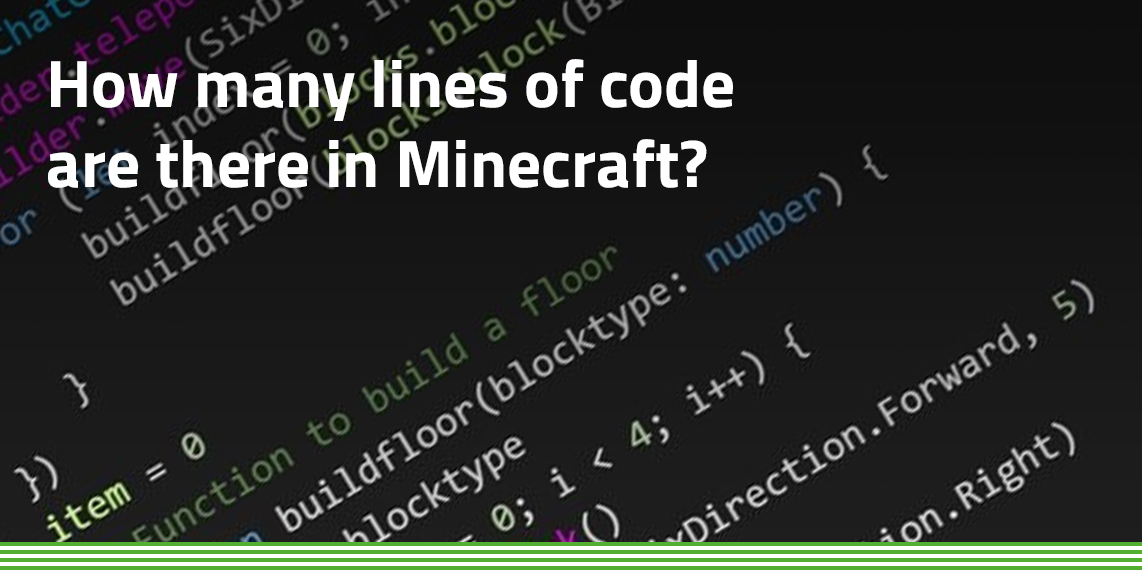
Maintaining Multiple Codebases
The existence of both Java and Bedrock editions, each with its own programming language foundation, presents a unique challenge and opportunity. Mojang effectively manages two parallel development tracks, continuously updating and synchronizing features across both versions where feasible. This strategy caters to distinct player bases: the Java Edition largely serves a PC-centric audience known for its deep modding culture and established server communities, while the Bedrock Edition provides a unified, cross-platform experience optimized for consoles, mobile, and Windows desktop users, with a strong focus on marketplace content and official add-ons.
This dual codebase approach highlights the complexities of modern software development, particularly for a product with such widespread adoption. It underscores the importance of clear communication, robust testing pipelines, and a deep understanding of each version’s target audience and technical constraints. Ultimately, Minecraft’s enduring success is not just a testament to its compelling gameplay but also to the foresight and adaptability of its developers, who skillfully leveraged different programming languages and technologies to build a truly universal gaming experience that continues to thrive across the digital world.
aViewFromTheCave is a participant in the Amazon Services LLC Associates Program, an affiliate advertising program designed to provide a means for sites to earn advertising fees by advertising and linking to Amazon.com. Amazon, the Amazon logo, AmazonSupply, and the AmazonSupply logo are trademarks of Amazon.com, Inc. or its affiliates. As an Amazon Associate we earn affiliate commissions from qualifying purchases.