
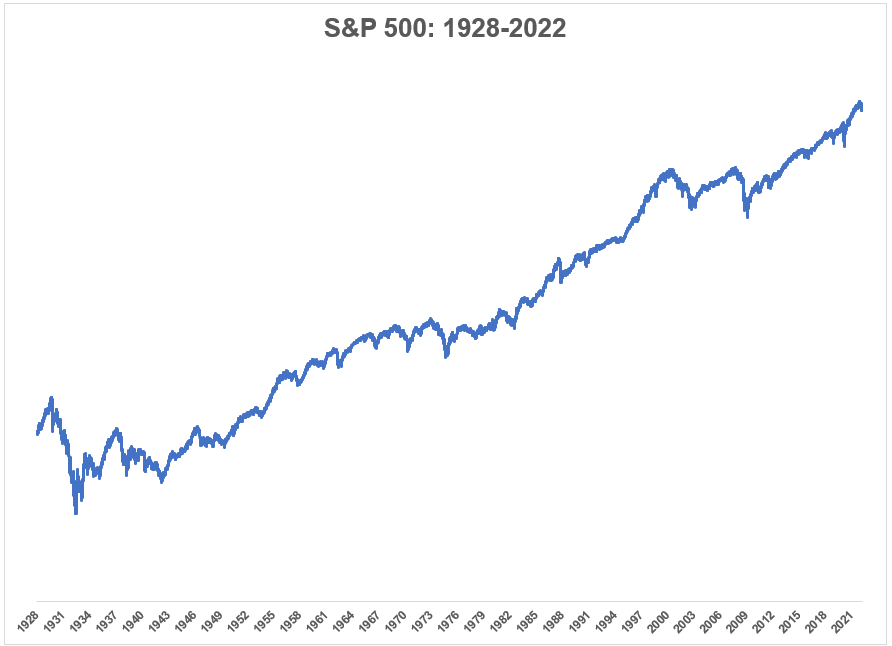
In the complex ecosystem of global finance, the upward trajectory of the stock market often appears counterintuitive to the average observer. We frequently see a disconnect between the somber headlines of the daily news cycle—ranging from geopolitical tensions to inflationary pressures—and the green numbers flashing across trading screens. Understanding why the market is going up requires a deep dive into the structural, psychological, and economic pillars that support asset valuations. While many look for a single “smoking gun,” the reality is that a bull market is usually the result of a confluence of factors: robust corporate earnings, shifts in monetary policy, the transformative impact of technology, and the relentless flow of global capital.

The Dominance of Corporate Earnings and Fundamental Growth
At its most basic level, the stock market is a collection of businesses. Therefore, the primary driver of rising stock prices is the growth of corporate earnings. When companies report higher profits than anticipated, their valuations naturally rise. In recent cycles, we have witnessed a remarkable display of corporate resilience, where major firms have successfully navigated supply chain disruptions and rising input costs to maintain, and even expand, their profit margins.
Resilient Margins in a High-Interest Rate Environment
One of the most surprising aspects of recent market climbs is that they occurred during a period of rising interest rates. Historically, higher rates act as a brake on the economy, making borrowing more expensive for companies. However, modern corporations—particularly those in the S&P 500—have become incredibly efficient at managing their balance sheets. Many large-cap firms locked in low-interest, long-term debt during the previous decade of “easy money,” insulating them from the immediate effects of a tightening cycle.
Furthermore, the shift toward digital business models has allowed companies to scale without the heavy capital expenditures of the past. This “capital-light” growth means that a larger percentage of revenue flows directly to the bottom line, fueling the earnings per share (EPS) growth that investors crave.
The Role of Market Concentration and Quality Leaders
The upward movement of the broader market is often disproportionately driven by a handful of high-performance companies, frequently referred to as “mega-cap” stocks. These firms possess “moats”—competitive advantages like proprietary technology, massive user bases, or unrivaled distribution networks—that allow them to generate consistent cash flow regardless of the broader economic climate. When these market leaders post strong quarterly results, they drag the entire index upward, creating a “halo effect” that boosts investor confidence across various sectors.
Macroeconomic Stability and the Pivot in Monetary Policy
The relationship between the market and the Federal Reserve (and other central banks) is perhaps the most influential factor in short-term price action. Investors are inherently forward-looking; they don’t trade on what is happening today, but on what they expect will happen in six to twelve months.
Inflation Cooling and the “Soft Landing” Narrative
A significant driver of recent market gains has been the cooling of inflation from its peak levels. As the Consumer Price Index (CPI) begins to stabilize, the market starts to price in the end of the Federal Reserve’s hiking cycle. The prospect of a “soft landing”—a scenario where inflation is brought under control without triggering a deep recession—is a powerful catalyst for equity prices.
When the threat of aggressive rate hikes diminishes, the “discount rate” applied to future corporate earnings decreases. In financial modeling, a lower discount rate makes future cash flows more valuable today, which justifies higher Price-to-Earnings (P/E) multiples. This expansion of multiples is a core reason why the market can go up even if earnings growth is modest.
The Anticipation of Interest Rate Cuts
Markets are often fueled by the “anticipation of ease.” If investors believe that the central bank will soon pivot to cutting interest rates, they begin to move capital out of safe-haven assets like Treasury bonds and into riskier assets like stocks. Lower interest rates reduce the “cost of capital” for businesses and lower mortgage rates for consumers, which stimulates spending and investment. The mere signal that the peak of the interest rate cycle has passed is often enough to ignite a significant rally.
The Transformative Power of Artificial Intelligence and Innovation
We are currently living through a period of immense technological upheaval, which has profound implications for the financial markets. The emergence of generative Artificial Intelligence (AI) has provided a fresh narrative for investors, reminiscent of the early days of the internet, but with more immediate revenue generation for infrastructure providers.
Beyond Hype: Real-World Productivity Gains
The reason AI is driving the market up is not just “hype”; it is the potential for a massive leap in labor productivity. Historically, periods of high productivity growth have coincided with strong bull markets. If AI can help a software developer write code twice as fast, or an accountant process data in a fraction of the time, the profit potential for the employer increases significantly.
Investors are currently betting on the “pick and shovel” providers of this revolution—semiconductor manufacturers and cloud computing giants. However, the market is also starting to reward companies in traditional sectors—such as healthcare, finance, and logistics—that are successfully integrating these tools to lower costs and improve service delivery.
Capital Expenditures and Infrastructure Spending
The market is also being pushed higher by a surge in capital expenditure. To support the AI revolution, companies are spending billions of dollars on data centers, specialized chips, and energy infrastructure. This massive injection of capital into the economy acts as a stimulus. One company’s “spending” is another company’s “revenue,” creating a circular flow of capital that supports higher valuations across the tech and industrial sectors.
Investor Sentiment, Liquidity, and the “Fear of Missing Out” (FOMO)
The stock market is as much a psychological phenomenon as it is a mathematical one. Once a market starts moving upward, it often gains its own momentum, regardless of the underlying fundamentals. This is driven by several behavioral and structural factors.
Retail Participation and Institutional Capital Flows
There is currently a significant amount of “dry powder” in the financial system. During periods of high interest rates, many investors moved their money into high-yield savings accounts and money market funds. As the market begins to climb, the opportunity cost of holding cash becomes too high. When these trillions of dollars of sidelined capital begin to flow back into equities, it creates a “bid” under the market, pushing prices higher.
The psychological element of “FOMO” cannot be ignored. When retail investors and fund managers see the indexes hitting new all-time highs, there is a pressure to participate to avoid underperforming their benchmarks. This creates a self-fulfilling prophecy where buying leads to higher prices, which attracts more buying.
The Role of Share Buybacks and Dividends
Another internal mechanism pushing the market up is the prevalence of share buybacks. When a company uses its excess cash to buy back its own shares, it reduces the total number of shares outstanding. This automatically increases the earnings per share, making the stock more attractive to investors even if the total net income remains flat. In many ways, corporate buybacks act as a constant source of demand for stocks, providing a “floor” during downturns and an “engine” during upswings.
Future Outlook: Identifying Potential Headwinds and Tailwinds
While the current market ascent is supported by strong pillars, a professional investor must always look at the horizon for potential shifts. The market is currently operating in a “Goldilocks” zone—where the economy is neither too hot (causing inflation) nor too cold (causing a recession).
Potential Tailwinds
If the labor market remains strong while inflation continues to moderate, we could see a broadening of the market rally. Up until now, much of the gain has been concentrated in tech. A “rotation” into undervalued sectors like small-cap stocks, value-oriented industrials, and energy could provide the next leg of the bull market. Additionally, if international markets—particularly in Europe and emerging economies—start to recover, global diversification could drive further inflows into equities.

Potential Headwinds
The primary risk to the current upward trend is a “re-acceleration” of inflation, which would force central banks to keep interest rates high for longer than the market expects. Furthermore, geopolitical instability can cause sudden spikes in energy prices, which acts as an unofficial tax on both consumers and corporations. Finally, from a valuation perspective, if the “P/E multiples” expand too far ahead of actual earnings growth, the market becomes vulnerable to a correction.
In conclusion, the market is going up because the global economy has proven to be more resilient than many predicted. Corporate profits are holding steady, the threat of runaway inflation is receding, and a new era of technological innovation is promising a future of higher productivity. While volatility is an inherent part of the investing journey, the structural drivers of today’s market suggest that the appetite for equity ownership remains strong, fueled by both fundamental strength and the strategic anticipation of a more favorable monetary environment. For the disciplined investor, understanding these layers of growth is essential for navigating the complexities of the modern financial landscape.
aViewFromTheCave is a participant in the Amazon Services LLC Associates Program, an affiliate advertising program designed to provide a means for sites to earn advertising fees by advertising and linking to Amazon.com. Amazon, the Amazon logo, AmazonSupply, and the AmazonSupply logo are trademarks of Amazon.com, Inc. or its affiliates. As an Amazon Associate we earn affiliate commissions from qualifying purchases.