
In the landscape of modern commerce, few metrics are as scrutinized by investors, analysts, and competitors as the total number of Amazon Prime members. What began in 2005 as a simple $79-per-year loyalty program focused on expedited shipping has evolved into the most formidable subscription engine in business history. Understanding how many Prime members Amazon currently sustains is not merely a statistical exercise; it is a fundamental deep dive into the company’s valuation, its competitive moat, and the broader shift toward a subscription-based global economy.

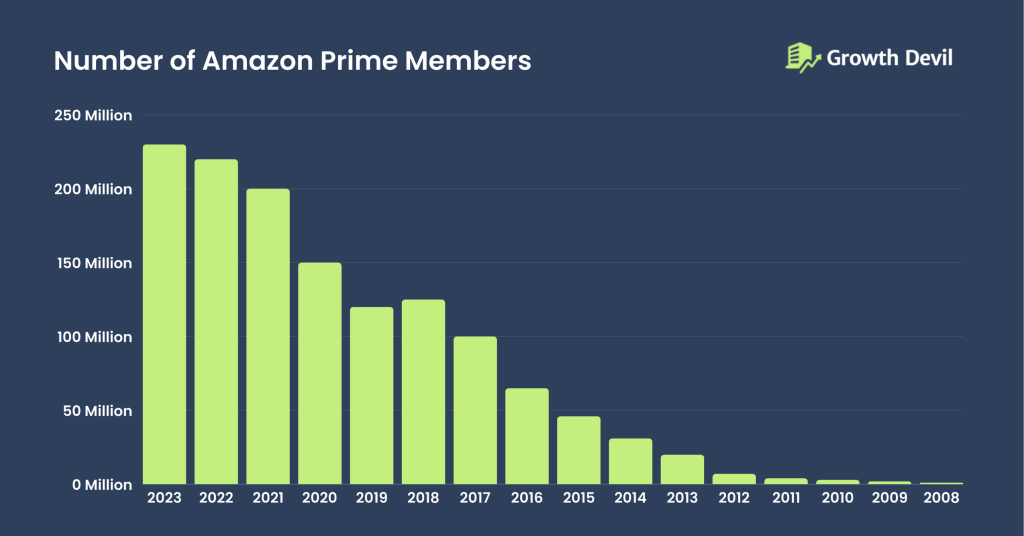
As of the most recent quarterly reports and industry projections, Amazon Prime boasts over 200 million members worldwide. While the company is famously protective of specific regional breakdowns, the trajectory of these numbers provides a masterclass in business finance and consumer psychology. For any investor or business strategist, these figures represent the bedrock of Amazon’s market dominance.
The Global Scale: Quantifying the Membership Base
The journey to 200 million members was decades in the making, but the acceleration seen in the last five years has been unprecedented. In 2018, Jeff Bezos first publicly disclosed that Prime had surpassed the 100 million member mark. By 2021, that number had doubled. Today, estimates suggest the figure continues to climb, bolstered by international expansion and an increasingly diversified service offering.
North American Market Penetration
The United States remains the crown jewel of the Prime ecosystem. Market research indicates that more than 170 million Americans have access to a Prime membership, representing a staggering percentage of US households. In many ways, the US market has reached a level of “Prime saturation,” where growth is no longer about finding new customers but about increasing the value extracted from existing ones. From a financial perspective, this saturation necessitates the price hikes we have seen in recent years—moving from $119 to $139 annually—to maintain revenue growth in a mature market.
International Expansion and Emerging Markets
While the US market is mature, Amazon’s international segment represents the frontier for membership growth. Markets such as India, the United Kingdom, Germany, and Japan have become critical pillars for the Prime program. In India specifically, Amazon has utilized tiered pricing models and mobile-only plans to capture a demographic that is rapidly transitioning to digital commerce. This geographic diversification is a key component of Amazon’s long-term financial health, ensuring that a slowdown in one region can be offset by rapid adoption in another.
The Revenue Engine: Why Membership Numbers Matter to Investors
For those analyzing Amazon’s balance sheet, the “Subscription Services” line item is one of the most attractive features. This category, which primarily consists of Prime fees, generates tens of billions of dollars in high-margin, recurring revenue. Unlike retail sales, which are subject to the ebbs and flows of consumer spending and supply chain costs, subscription revenue provides a predictable cash flow that allows Amazon to reinvest aggressively in infrastructure and new technologies.
The Predictability of Recurring Revenue
In the world of finance, recurring revenue is prized above all else. It reduces the cost of customer acquisition and creates a “locked-in” user base. When Amazon reports its quarterly earnings, the growth of subscription services often outpaces its traditional retail growth. This transition toward a service-oriented model has been a primary driver of the company’s stock valuation over the past decade. Investors are willing to pay a premium for Amazon’s earnings because they are backed by the stability of 200 million recurring payments.
Average Revenue Per User (ARPU) and Spending Habits
The true value of a Prime member is not found in the $139 annual fee, but in their subsequent spending behavior. Internal data and third-party studies consistently show that Prime members spend significantly more on the platform than non-members. Estimates suggest that the average Prime member spends roughly $1,400 per year on Amazon, compared to approximately $600 for non-members.
This discrepancy creates a powerful multiplier effect. Every new Prime member added to the ecosystem doesn’t just represent a subscription fee; they represent a significant increase in Gross Merchandise Volume (GMV). From an investment standpoint, the growth in membership numbers acts as a leading indicator for future retail revenue.
The “Flywheel” Effect: Strategy and Market Dominance
The success of the Prime membership program is built upon what Amazon calls the “Flywheel Effect.” This is a virtuous cycle where a better customer experience leads to more traffic, which attracts more third-party sellers, which leads to a larger selection of goods, which further improves the customer experience. Prime is the grease that allows this flywheel to spin faster.
Ecosystem Lock-in Beyond Shipping
Amazon has strategically layered services onto the Prime membership to increase its “stickiness.” Prime Video, Amazon Music, Prime Reading, and exclusive gaming content via Twitch are not just perks; they are financial barriers to exit. When a household relies on Prime for their grocery deliveries (via Whole Foods), their evening entertainment (via Prime Video), and their cloud storage, the “churn rate”—the rate at which members cancel—drops significantly.
For a business, a low churn rate is a financial fortress. It means the company can spend less on defensive marketing and more on offensive innovation. The expansion into healthcare with Amazon Clinic and RxPass further demonstrates this strategy: by solving more of the consumer’s problems within a single subscription, Amazon makes the cost of leaving the ecosystem prohibitively high.
Prime Day as a Financial Catalyst
No discussion of Prime membership numbers is complete without mentioning Prime Day. This annual event serves two primary financial purposes: it acts as a massive customer acquisition tool and a mid-year liquidity event. By offering deep discounts exclusive to members, Amazon drives a surge in new sign-ups. Historically, Prime Day has broken sales records year after year, often generating more revenue in a 48-hour period than many major retailers generate in an entire quarter. This event reinforces the value proposition of the membership and ensures that the “Flywheel” maintains its momentum during typically slower retail months.
Challenges to Future Growth in the Subscription Economy
Despite the impressive numbers, Amazon faces significant headwinds as it seeks to expand its membership base further. The financial climate of the 2020s is characterized by “subscription fatigue,” where consumers are beginning to audit their monthly outlays across streaming, software, and retail services.
Market Saturation and Price Sensitivity
In North America, the primary challenge is no longer competition from other retailers, but the limit of the market itself. With a large majority of high-income households already subscribed, Amazon must find ways to appeal to lower-income demographics or find new ways to extract value from the existing base. The decision to increase the membership price to $139 was a calculated risk. While it boosted short-term revenue, it also tested the price elasticity of the consumer. Any future price hikes could lead to a diminishing return if the perceived value of the services does not keep pace with the cost.
Competitive Pressures: The Rise of Walmart+
For the first time in the history of the Prime program, a legitimate competitor has emerged in the form of Walmart+. Leveraging its massive physical footprint, Walmart offers a subscription that mirrors many of Prime’s benefits, including free shipping and streaming (via Paramount+). From a business finance perspective, this competition forces Amazon to spend more on content acquisition for Prime Video and logistics infrastructure to maintain its lead. The battle for “The Desktop of the Consumer” is becoming increasingly expensive, which may impact Amazon’s operating margins in the retail sector.

The Future Outlook: Can Amazon Sustain Its Upward Trajectory?
The question of “how many Prime members” will remain a central theme in Amazon’s financial narrative for the foreseeable future. To sustain growth, Amazon is looking toward “Prime as a Service” and the integration of artificial intelligence to personalize the shopping experience.
By extending Prime benefits to third-party websites through “Buy with Prime,” Amazon is essentially de-coupling the membership from its own storefront. This allows the company to monetize transactions that occur elsewhere on the internet, effectively turning Prime into a global logistics and payment layer. From an investing standpoint, this move expands the addressable market for Prime significantly, moving it beyond a retail membership and into a foundational utility for all of e-commerce.
Furthermore, the integration of generative AI is expected to optimize the value of the membership. By predicting what members need before they even search for it, Amazon can reduce the time-to-purchase and increase the efficiency of its logistics network. This operational efficiency translates directly to the bottom line, ensuring that the Prime program remains a profitable endeavor despite rising costs.
In conclusion, the 200 million+ Amazon Prime members represent more than just a customer list; they are the heart of a financial powerhouse. Through strategic ecosystem building, geographic expansion, and a relentless focus on recurring revenue, Amazon has created a model that is the envy of the corporate world. While challenges like market saturation and competition loom, the financial data suggests that the Prime membership remains the most effective tool for market dominance ever devised in the digital age. For anyone tracking the pulse of global business and finance, the growth, retention, and monetization of these members will continue to be the definitive metric of success.
aViewFromTheCave is a participant in the Amazon Services LLC Associates Program, an affiliate advertising program designed to provide a means for sites to earn advertising fees by advertising and linking to Amazon.com. Amazon, the Amazon logo, AmazonSupply, and the AmazonSupply logo are trademarks of Amazon.com, Inc. or its affiliates. As an Amazon Associate we earn affiliate commissions from qualifying purchases.