
Taiwan Semiconductor Manufacturing Company (TSM), often referred to as TSMC, is an undisputed giant in the global technology landscape. As the world’s largest dedicated independent semiconductor foundry, it manufactures chips for virtually every major tech company, from Apple and Nvidia to Qualcomm and AMD. Given its pivotal role, any significant movement in its stock price sends ripples across the financial markets and raises pertinent questions among investors. When a company of TSM’s caliber experiences a notable decline in its stock value, it’s rarely due to a single isolated factor but rather a confluence of macroeconomic forces, industry-specific challenges, company-specific developments, and shifting market sentiment. Understanding these intricate dynamics is crucial for investors seeking to make informed decisions in a volatile market.
This article delves into the multi-layered reasons that could contribute to a drop in TSM’s stock price, offering an insightful analysis for both seasoned and novice investors.
Macroeconomic Headwinds and Their Ripple Effects
The performance of even the most robust companies like TSM is inextricably linked to the broader global economic environment. Periods of economic uncertainty, rising inflation, and tightening monetary policies can create significant headwinds that directly impact corporate earnings and investor confidence.
Global Economic Slowdown and Recession Fears
A pervasive concern for the global economy is the prospect of a slowdown or even a recession in major markets like the United States, Europe, and China. When economic activity contracts, consumer spending on discretionary items, particularly electronics like smartphones, laptops, and gaming consoles, tends to decline. Since TSM is the foundational supplier for many of the chips powering these devices, a slump in end-product demand directly translates to reduced orders for its advanced wafers. Businesses also become more cautious with capital expenditure, further impacting demand for enterprise-grade chips.
Inflation and Interest Rate Impact
Persistent inflation across economies has forced central banks worldwide to aggressively raise interest rates. While intended to cool inflation, higher interest rates increase the cost of borrowing for companies, potentially slowing expansion plans and reducing profitability. For consumers, higher rates can diminish disposable income, further curbing demand for tech products. Furthermore, in an environment of rising rates, investors often re-evaluate the valuation of growth stocks, which are typically valued based on future earnings potential. Higher discount rates used in financial models can lead to lower present valuations for companies like TSM, even if their long-term growth prospects remain strong. This can prompt a rotation out of growth stocks into more value-oriented or defensive assets.
Semiconductor Industry Cyclicality and Oversupply Concerns
The semiconductor industry is renowned for its inherent cyclicality, characterized by periods of robust demand and potential oversupply. These cycles are driven by a complex interplay of innovation, manufacturing capacity, and demand fluctuations.
Inventory Corrections and Demand Normalization
The COVID-19 pandemic spurred an unprecedented surge in demand for personal electronics as remote work and online education became the norm. This led to a significant chip shortage and a robust order book for TSM. However, as the world normalized and supply chains improved, many companies in the electronics value chain found themselves with excess inventory. Customers, having double-ordered during the shortage, began to pare down their stockpiles, leading to a reduction in new chip orders for foundries like TSM. This “inventory correction” period is a common phenomenon in the semiconductor cycle and can temporarily suppress revenue growth and profitability.
Geopolitical Tensions and Supply Chain Diversification
TSM’s primary manufacturing base in Taiwan, while a strategic advantage in terms of advanced technology, also introduces a layer of geopolitical risk. Tensions between Taiwan and mainland China periodically escalate, creating uncertainty about the stability of the region and, by extension, the global semiconductor supply chain. While such risks are often priced into the stock, any perceived increase in the likelihood of disruption can trigger investor concern and put downward pressure on the stock. Furthermore, major customers and governments are increasingly pushing for supply chain diversification outside of Taiwan, prompting TSM and its competitors to invest in new fabs in regions like the U.S. and Europe. While strategically important for long-term resilience, these investments often come with higher capital expenditures and potentially lower margins initially, impacting short-to-medium term financial performance.
Company-Specific Developments and Competitive Landscape
Beyond macro and industry-wide factors, specific operational details and competitive dynamics within the foundry market can also influence TSM’s stock performance.
Capital Expenditure (CapEx) and Profitability Concerns
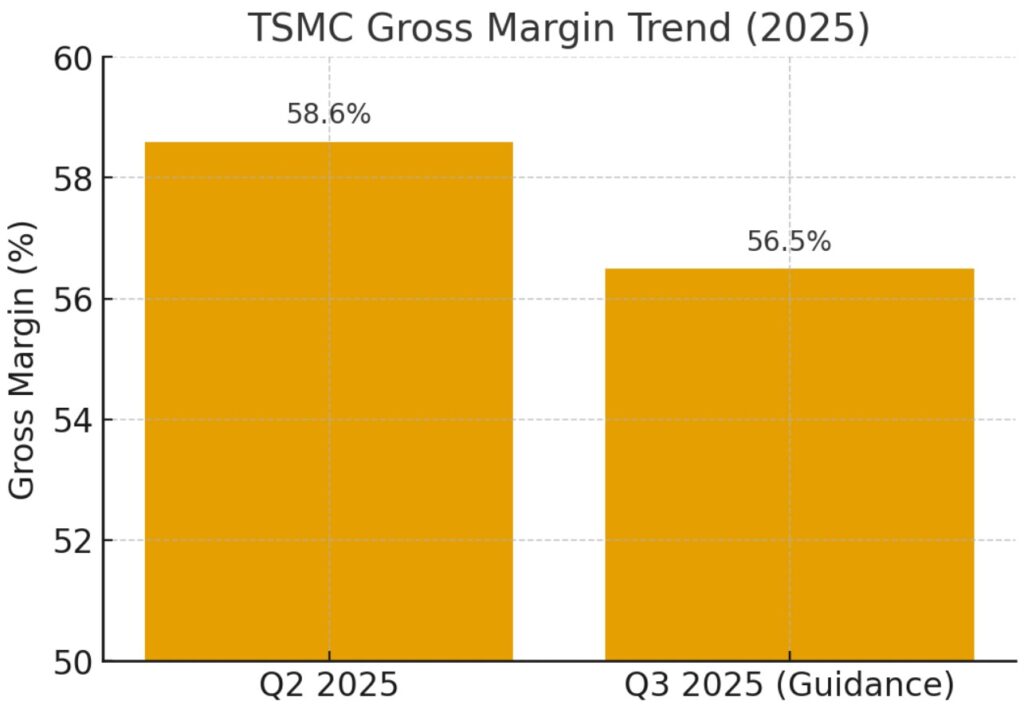
TSM’s leadership in advanced chip manufacturing requires continuous, massive investments in research and development and new fabrication plants (fabs). These capital expenditures can run into tens of billions of dollars annually. While essential for maintaining technological leadership, exceptionally high CapEx can sometimes weigh on short-term free cash flow and profitability, especially if revenue growth moderates. Investors closely watch TSM’s CapEx guidance for signs of either aggressive expansion that might strain margins or a slowdown that could signal reduced confidence in future demand. Moreover, the costs of building new fabs in politically sensitive or geographically diverse locations (e.g., Arizona, Japan) are often higher than in Taiwan, potentially impacting overall profitability margins.
Evolving Foundry Utilization Rates and Customer Orders
TSM operates on a foundry model, meaning its revenue is directly tied to the utilization rate of its fabs and the volume of orders from its clients. During periods of strong demand, utilization rates are high, leading to optimal economies of scale and strong profitability. Conversely, during a downturn or inventory correction, utilization rates can drop, increasing the fixed cost burden per wafer and compressing margins. Changes in orders from major customers, such as a shift in demand for Apple’s iPhones or a delay in new product launches by Nvidia, can have a direct and significant impact on TSM’s revenue outlook. Any whispers or official announcements regarding reduced order volumes from key clients can trigger a negative reaction in the stock.
Valuation Adjustments and Market Sentiment
Finally, the perception and valuation of TSM’s stock within the broader investment community play a critical role, often influenced by the preceding factors and the prevailing market mood.
Over-Valuation Correction
Following years of exceptional growth and a significant rally during the pandemic, TSM’s stock might have reached what some investors consider an “over-valued” state based on traditional metrics like price-to-earnings (P/E) ratios or future growth projections. When growth expectations temper, or the cost of capital rises, the market often undergoes a re-rating process. This can lead to a correction where the stock price adjusts downwards to reflect a more conservative valuation multiple, even if the company’s fundamentals remain strong in the long run. Investors might rotate out of perceived “expensive” growth stocks into those with more attractive valuations or stronger immediate cash flows.
Broader Market Downturns and Risk Aversion
Even a fundamentally sound company like TSM is not immune to broader market movements. During periods of significant market downturns, such as bear markets or recessions, investor sentiment often turns highly risk-averse. In such environments, even high-quality, market-leading companies can see their stock prices decline as investors shed risk across the board, moving into safer assets like bonds or cash. The semiconductor sector, being cyclical and somewhat sensitive to economic fluctuations, can be particularly susceptible to such broad market sell-offs. Negative analyst reports, downgrades, or even general negative news flow about the tech sector can further exacerbate selling pressure.
Conclusion
The question “Why is TSM stock dropping?” is rarely answered with a single, simple explanation. Instead, it typically points to a complex interplay of macroeconomic forces, the cyclical nature of the semiconductor industry, company-specific operational developments, and shifts in market sentiment and valuation perspectives. Global economic slowdowns, rising interest rates, inventory corrections across the tech supply chain, geopolitical risks, significant capital expenditure requirements, and a broader market shift away from growth stocks can all contribute to downward pressure on TSMC’s share price.
Despite any short-term volatility or price declines, it is crucial for investors to remember TSM’s strategic importance and technological dominance in the global semiconductor ecosystem. Its role as the foundational manufacturer for the vast majority of advanced chips places it at the heart of nearly every technological innovation, from AI and 5G to high-performance computing and automotive electronics. While understanding the reasons for a stock drop is essential, long-term investors often weigh these factors against the company’s enduring competitive advantages, technological roadmap, and strategic importance. As with any investment, thorough due diligence and a comprehensive understanding of both the challenges and the long-term prospects remain paramount.
aViewFromTheCave is a participant in the Amazon Services LLC Associates Program, an affiliate advertising program designed to provide a means for sites to earn advertising fees by advertising and linking to Amazon.com. Amazon, the Amazon logo, AmazonSupply, and the AmazonSupply logo are trademarks of Amazon.com, Inc. or its affiliates. As an Amazon Associate we earn affiliate commissions from qualifying purchases.