
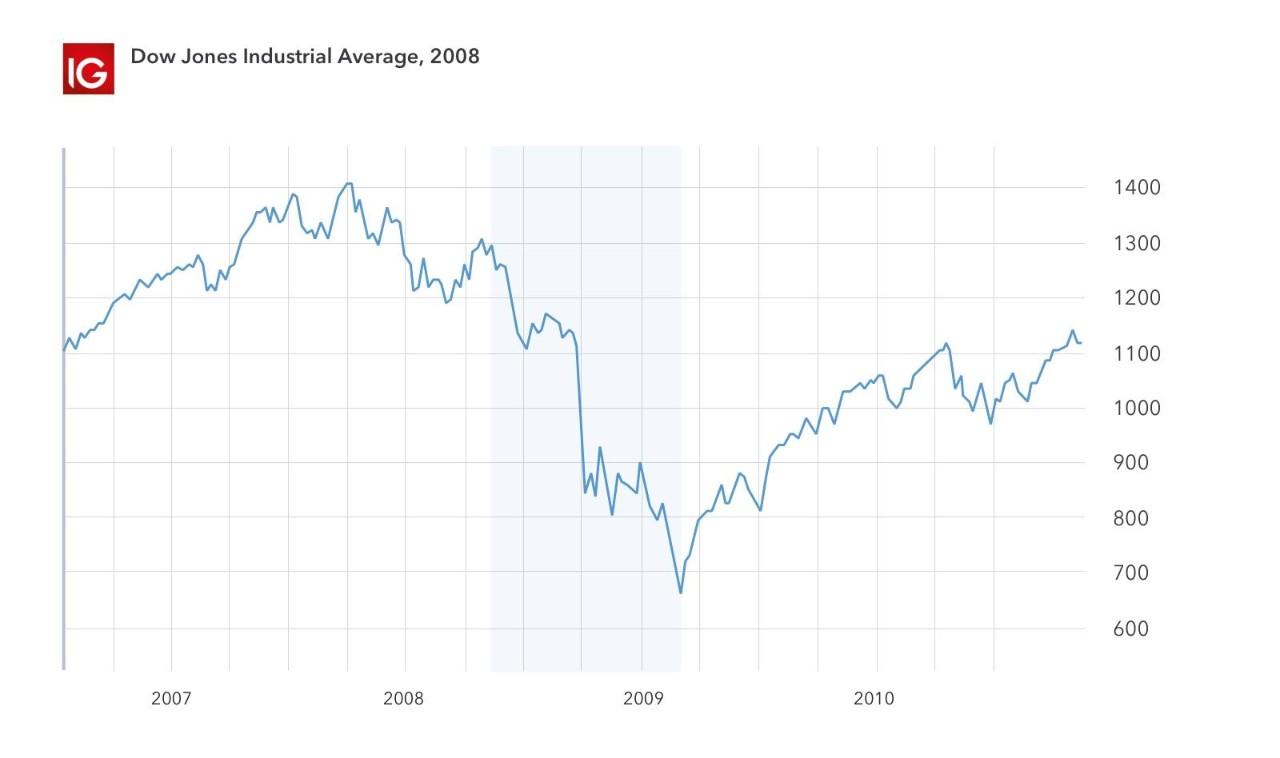
Market volatility is an inherent characteristic of the financial world, yet few events trigger as much visceral anxiety as a sudden, sharp decline in stock prices. When headlines scream about “market crashes” or “bear markets,” investors often feel a sense of impending doom. However, a stock market crash is rarely a random event. It is typically the culmination of various economic, geopolitical, and psychological factors converging at once. To navigate these turbulent waters, an investor must look beyond the red numbers on a screen and understand the structural mechanics that cause the market to buckle.
The Macroeconomic Catalyst: Interest Rates and Inflationary Pressures
At the heart of almost every major market correction lies the interplay between inflation and the response of central banks. For the past decade, investors enjoyed an era of “cheap money,” characterized by near-zero interest rates and massive liquidity injections. When this environment shifts, the stock market often reacts violently.
The Role of Central Banks and the Cost of Capital
Central banks, such as the Federal Reserve in the United States, use interest rates as a primary tool to control the economy. When inflation rises too quickly, central banks raise rates to cool down spending. For the stock market, higher interest rates are a double-edged sword. First, they increase the cost of borrowing for corporations, which eats into profit margins and slows down expansion. Second, they change the “discount rate” used to value future earnings. Since growth stocks—like those in the technology sector—rely on the promise of future profits, higher rates make those future dollars less valuable today, leading to a sharp repricing of stock valuations.
Inflationary Impact on Consumer Spending and Corporate Margins
Inflation doesn’t just trigger rate hikes; it fundamentally alters the landscape of commerce. When the cost of raw materials, labor, and energy spikes, companies face “margin compression.” If a business cannot pass these costs onto the consumer, its earnings suffer. Conversely, if they do pass the costs along, consumer demand may drop as the average person’s purchasing power is eroded. When investors see a trend of declining consumer confidence combined with shrinking corporate profits, they begin to sell off equities in favor of safer assets, accelerating a market decline.
Geopolitical Instability and the Fragility of Global Supply Chains
Modern markets are more interconnected than ever before. While this globalization has historically driven efficiency and growth, it also means that a localized crisis can have immediate, cascading effects on global stock exchanges.
The Energy Crisis and Commodity Volatility
Energy is the lifeblood of the global economy. Significant geopolitical conflicts in oil- or gas-producing regions can lead to supply shocks that ripple through every sector. When energy prices skyrocket, the cost of manufacturing and shipping goods increases globally. For example, a spike in crude oil doesn’t just affect the gas station; it affects the airline industry, the chemical industry, and the cost of every plastic product on the shelf. The uncertainty surrounding energy security often leads to a “flight to quality,” where investors dump stocks and move into commodities like gold or government bonds.
Global Trade Tensions and Tech Sovereignty
We live in an age of “just-in-time” manufacturing, which relies on seamless trade between nations. When trade wars erupt or nations impose export bans on critical components like semiconductors, the “gears” of the global economy begin to grind. If a major smartphone manufacturer cannot source the chips it needs due to a diplomatic spat, its revenue projections collapse. The market hates uncertainty, and nothing creates uncertainty quite like shifting geopolitical alliances and the threat of trade protectionism.
Corporate Earnings and the Correction of Overextended Valuations

Sometimes, the market crashes simply because it has become too expensive. Markets often move in cycles of “irrational exuberance,” where stock prices grow much faster than the actual earnings of the companies they represent.
The Realignment of Price-to-Earnings (P/E) Ratios
The Price-to-Earnings ratio is a standard metric used to determine if a stock is fairly valued. During bull markets, it is common for P/E ratios to expand to historic highs as investors chase growth at any cost. However, gravity eventually sets in. When a sector—such as the “dot-com” companies of the late 90s or the high-growth tech stocks of the early 2020s—reaches a valuation that is no longer supported by its cash flow, a correction is inevitable. A “crash” in this context is often a healthy, albeit painful, return to mean valuations.
Forward Guidance and the “Missed” Expectation
The stock market is a forward-looking mechanism; it prices in what it thinks will happen in six to twelve months. Because of this, even if a company reports record-breaking profits today, its stock price can crash if its “forward guidance” is weak. If a CEO suggests that the next quarter will be difficult due to slowing demand or rising costs, institutional investors will sell immediately to lock in gains. When several “bellwether” companies (industry leaders) all provide negative outlooks simultaneously, it can trigger a broad market sell-off.
The Psychological Element: Fear, Panic, and Algorithmic Trading
While economic data provides the “why” for a crash, human and machine behavior provide the “how.” The speed at which a market can lose value is often dictated by the psychological state of the investing public and the automated systems that manage billions of dollars.
Market Sentiment and the Fear & Greed Index
Investing is as much about psychology as it is about mathematics. When a few negative catalysts align, fear can become contagious. This is known as “herd mentality.” As prices start to dip, retail investors—fearing they will lose their life savings—begin to sell. This selling creates more downward pressure, which scares more investors, creating a self-fulfilling prophecy of decline. In these moments, the “Fear & Greed Index” swings toward extreme fear, and rational analysis is often discarded in favor of survival instincts.
Margin Calls and Cascading Liquidations
A significant amount of market activity is conducted using “leverage” or borrowed money. When stock prices fall to a certain level, brokers issue “margin calls,” demanding that investors deposit more cash or sell their positions to cover the loss. If an investor cannot provide the cash, the broker automatically sells their stocks. This forced selling happens regardless of the stock’s fundamental value, adding massive “sell volume” to the market. Furthermore, high-frequency trading (HFT) algorithms are often programmed to sell when certain technical support levels are broken, leading to a “flash crash” where the market drops significantly in a matter of minutes.
Strategic Resilience: How to Respond to a Market Downturn
For the individual investor, a market crash is a test of discipline. Understanding why the market is falling is the first step toward making rational decisions rather than emotional ones.
The Importance of Asset Allocation and Diversification
A crashing market highlights the flaws in a portfolio. Those who are overly concentrated in a single sector—such as tech or crypto—suffer the most during a downturn. Professional wealth management emphasizes asset allocation: the balance between stocks, bonds, real estate, and cash. Diversification ensures that while one part of your portfolio is declining, another part (like defensive stocks in consumer staples or healthcare) may remain stable or even gain value.
Staying the Course and the Cost of Market Timing
History has shown that the stock market has a 100% recovery rate from every crash it has ever experienced. The greatest risk to an investor is not the crash itself, but the decision to “sell at the bottom” and miss the subsequent recovery. “Time in the market” is almost always superior to “timing the market.” Most of the market’s biggest gains occur in the days immediately following its biggest losses. If you are not in the market during those recovery days, your long-term returns can be decimated.
In conclusion, a stock market crash is a complex event driven by a cocktail of rising interest rates, geopolitical friction, valuation corrections, and human panic. While the experience is undoubtedly stressful, it is also a natural part of the economic cycle. By maintaining a professional perspective and focusing on long-term financial goals, investors can transform a period of crisis into a period of strategic opportunity. Markets may crash, but for the patient and informed investor, they also invariably rise again.
aViewFromTheCave is a participant in the Amazon Services LLC Associates Program, an affiliate advertising program designed to provide a means for sites to earn advertising fees by advertising and linking to Amazon.com. Amazon, the Amazon logo, AmazonSupply, and the AmazonSupply logo are trademarks of Amazon.com, Inc. or its affiliates. As an Amazon Associate we earn affiliate commissions from qualifying purchases.