
The Standard & Poor’s 500 (S&P 500) index, a cornerstone of global investing, represents 500 of the largest U.S. publicly traded companies by market capitalization. When this bellwether index experiences a downturn, it sends ripples across portfolios and prompts investors to seek answers. Understanding the multifaceted reasons behind a decline in the S&P 500 requires a comprehensive look at macroeconomic forces, corporate performance, and prevailing market sentiment. While the specific catalysts for any single day’s dip can vary, persistent pressures often reveal underlying systemic issues or shifts in investor confidence that warrant close examination.
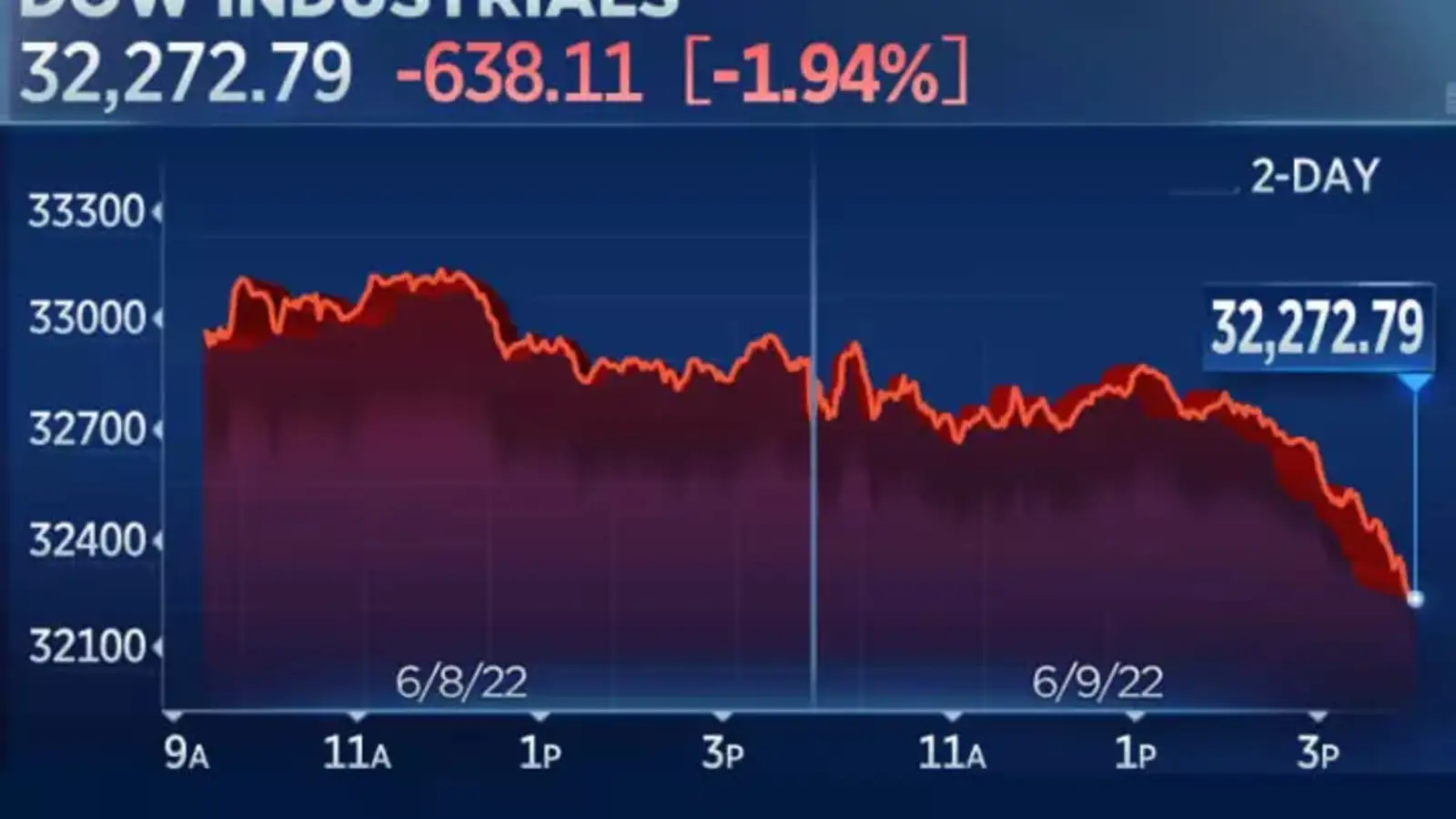
Understanding the S&P 500’s Volatility
The S&P 500 is not merely a collection of stocks; it’s a dynamic reflection of the broader U.S. economy and, by extension, global economic trends. Its movements are influenced by an intricate web of factors, ranging from company-specific news to international geopolitical events.
The S&P 500 as a Market Barometer
Comprising companies from diverse sectors like technology, finance, healthcare, and industrials, the S&P 500 offers a broad snapshot of corporate America’s health. Its performance is often seen as a proxy for the overall stock market’s direction and investor sentiment. A decline in the index usually signals that a significant portion of these leading companies are facing headwinds, or that investors are broadly anticipating weaker economic conditions ahead. This collective movement makes it a powerful indicator, with its fluctuations often dictating the general mood of financial markets.
Inherent Market Dynamics and Risk
Stock markets are inherently volatile, driven by a continuous interplay of supply and demand. Every trade reflects a buyer and a seller agreeing on a price, and these prices are constantly adjusted based on new information, expectations, and perceptions of risk. On any given day, an S&P 500 decline could be a normal part of market ebb and flow, a “pullback” or “correction” after a period of strong gains, or it could signal a more profound shift in the economic landscape. Factors like liquidity, algorithmic trading, and futures contracts also contribute to short-term price movements, sometimes amplifying small shifts into larger daily declines. Understanding that volatility is a constant companion of investing is crucial for maintaining a long-term perspective.
Macroeconomic Headwinds Driving Recent Declines
Often, the most significant drivers of an S&P 500 downturn are macroeconomic in nature. These broad economic forces can overshadow individual company performance and influence entire sectors or the market as a whole.
Inflationary Pressures and Interest Rate Hikes
One of the most potent forces impacting markets recently has been persistent inflation. When the cost of goods and services rises rapidly, it erodes purchasing power for consumers and increases operational costs for businesses, potentially squeezing profit margins. Central banks, like the U.S. Federal Reserve, typically respond to high inflation by raising benchmark interest rates. Higher interest rates make borrowing more expensive for companies, which can curtail investment, slow expansion, and reduce future earnings potential. For consumers, higher rates mean more expensive mortgages, car loans, and credit card debt, leading to reduced discretionary spending. Moreover, higher rates make bonds more attractive relative to stocks, as they offer a better risk-free return, prompting some investors to shift capital away from equities. This combination of higher costs and reduced growth expectations often pressures equity valuations downwards.
Geopolitical Tensions and Global Supply Chain Disruptions
Uncertainty stemming from geopolitical conflicts, trade disputes, or international crises can significantly dampen market enthusiasm. Such events can disrupt global supply chains, leading to shortages, increased transportation costs, and production delays for companies. For instance, conflicts in key resource-producing regions can drive up commodity prices, impacting industries reliant on those raw materials. Trade wars can impose tariffs, making goods more expensive and reducing international demand. These disruptions create a ripple effect, impacting the revenue and profitability of multinational corporations within the S&P 500 and causing investors to shy away from risk assets due to the unpredictable nature of such events.
Economic Slowdown Fears and Recessionary Concerns
Perhaps the most impactful macroeconomic headwind is the fear of an economic slowdown or outright recession. Investors continuously analyze economic data – such as GDP growth, unemployment rates, manufacturing output, and consumer confidence – to gauge the health of the economy. Signs of weakening demand, declining corporate investments, or a contraction in economic activity can lead to widespread selling. A recession implies lower consumer spending, reduced corporate profits, and increased unemployment, all of which directly negatively impact the earnings prospects of S&P 500 companies, making their shares less attractive. The yield curve inversion, where short-term bond yields surpass long-term yields, is often cited as a historical predictor of impending recessions, further fueling investor anxiety.

Corporate Earnings and Sector-Specific Impacts
Beyond the broad macroeconomic landscape, the performance of individual companies within the S&P 500, particularly their earnings reports, plays a critical role in determining the index’s direction.
Disappointing Earnings Reports
Companies regularly report their financial results, including revenues, profits, and future guidance. When a significant number of S&P 500 companies miss their earnings estimates or provide a weaker-than-expected outlook for future quarters, it can trigger a market-wide sell-off. Investors interpret poor earnings as a sign that business conditions are deteriorating, or that the companies are struggling to adapt to economic challenges. This can lead to downward revisions in analysts’ forecasts and a subsequent re-evaluation of stock prices across the board. A few high-profile misses from influential companies can particularly impact sentiment, even if the majority perform adequately.
Valuation Concerns in Growth Sectors
Certain sectors, particularly technology and other growth-oriented industries, often trade at higher valuations based on expectations of strong future growth. However, in an environment of rising interest rates, future earnings are discounted more heavily, making these high valuations harder to justify. If growth prospects dim due to economic slowdowns or increased competition, investors may rotate out of these “growth stocks” and into more “value-oriented” or defensive sectors. This rotation can lead to significant declines in the market capitalization of the largest components of the S&P 500, given the heavy weighting of tech giants in the index, thus pulling the overall index down.
Impact of Consumer Spending Shifts
Consumer spending accounts for a substantial portion of economic activity in the U.S. Any shift in consumer behavior, whether due to inflation, job market concerns, or changes in preferences, directly impacts companies within the S&P 500. For instance, if consumers cut back on discretionary items like electronics, travel, or apparel, companies in those sectors will see reduced sales and profits. Conversely, a shift towards essential goods might bolster consumer staples companies while others suffer. These sector-specific impacts can collectively influence the S&P 500, especially if large consumer-facing companies are among the hardest hit.
Investor Sentiment and Market Psychology
Even with strong fundamentals, market movements are heavily influenced by the collective mood and psychological biases of investors. Fear and greed are powerful emotions that can drive prices beyond what might be justified by economic data alone.
The Role of Fear and Uncertainty
During periods of heightened uncertainty – whether due to economic data, geopolitical events, or corporate news – fear often dominates the market. Investors, fearing further losses, may rush to sell their holdings, creating a downward spiral. Negative news can be amplified by financial media and social media, contributing to a “herd mentality” where investors follow the actions of others, regardless of individual research. This can lead to oversold conditions, where stock prices fall below their intrinsic value, primarily driven by panic. The VIX index, often called the “fear gauge,” measures expected market volatility and typically spikes during periods of S&P 500 decline, reflecting this underlying sentiment.
Technical Indicators and Momentum Trading
Many traders and institutional investors rely on technical analysis, studying historical price patterns and trading volumes to predict future movements. When key support levels are broken, or momentum indicators turn negative, it can trigger automated selling programs or encourage trend-following traders to offload positions, exacerbating a downturn. Similarly, large institutional selling or “program trading” can generate significant downward pressure irrespective of fundamental value. This momentum can be self-fulfilling, as falling prices lead to more selling, creating a cascade effect that pushes the S&P 500 lower in the short term.

The Long-Term Investor’s Perspective
While daily fluctuations and the reasons behind them are crucial for understanding market dynamics, long-term investors often view downturns differently. Historically, the S&P 500 has demonstrated resilience, recovering from every major bear market and reaching new highs over time. For those with a multi-year investment horizon, periods when the S&P 500 is down can be seen as opportunities to buy quality assets at potentially lower prices. Maintaining a diversified portfolio, dollar-cost averaging, and focusing on one’s financial goals rather than daily market noise are strategies often employed to navigate volatility and leverage the long-term growth potential of the S&P 500.
aViewFromTheCave is a participant in the Amazon Services LLC Associates Program, an affiliate advertising program designed to provide a means for sites to earn advertising fees by advertising and linking to Amazon.com. Amazon, the Amazon logo, AmazonSupply, and the AmazonSupply logo are trademarks of Amazon.com, Inc. or its affiliates. As an Amazon Associate we earn affiliate commissions from qualifying purchases.