
Tesla, Inc. has carved out a unique, and often bewildering, position in the global financial markets. Its valuation frequently dwarfs that of automotive titans producing millions more vehicles annually, prompting both awe and skepticism among investors, analysts, and the general public. To understand “why Tesla is worth so much,” one must look beyond traditional automotive metrics and delve into a complex interplay of future potential, technological disruption, market narrative, and innovative financial strategies. This article will dissect the multifaceted financial drivers contributing to Tesla’s extraordinary market capitalization, examining how its unique position in the automotive, energy, and technology sectors fuels its valuation from a purely monetary perspective.
The Disruption Premium: Valuation Beyond Traditional Metrics
Tesla’s market capitalization has repeatedly surpassed that of established automakers with significantly higher sales volumes and longer histories of profitability. This divergence signals that investors are valuing Tesla not just on its current financial performance but on its anticipated future dominance and transformative potential across multiple industries.
Market Capitalization vs. Fundamental Performance
Traditional financial analysis often relies on metrics like Price-to-Earnings (P/E) ratios, sales multiples, and dividend yields to assess a company’s value. For years, Tesla’s P/E ratio has been astronomical compared to its peers, or even negative during periods of unprofitability. This suggests that the market is assigning a substantial “disruption premium” to Tesla. Investors are effectively betting on exponential growth in earnings, market share, and technological leadership far into the future, rather than just extrapolating its present-day financial statements. They perceive Tesla not merely as an automaker but as a technology and energy company with a hardware component, fundamentally altering the valuation framework applied to it. This premium is a monetary reflection of investor confidence in its long-term vision and execution capability.
The Role of Future Growth and Scalability
A significant portion of Tesla’s valuation is tied to its projected growth trajectory. Investors believe Tesla possesses unparalleled scalability, not just in vehicle production but across its entire ecosystem. This includes Gigafactories designed for rapid, efficient scaling, sophisticated software that can be updated over-the-air, and a vertical integration strategy that controls everything from battery cell production to sales and service. From a financial standpoint, this anticipated scalability translates into future revenue growth, margin expansion, and ultimately, higher earnings potential. The market is pricing in Tesla’s ability to significantly increase its free cash flow generation over the next decade, justifying its current “expensive” valuation as an investment in hyper-growth.
Comparative Analysis: Beyond Automotive Peers
While often compared to traditional automakers like Ford, GM, or Toyota, a more apt financial comparison for Tesla, according to its proponents, might be high-growth tech companies from previous eras, such as Amazon or Apple during their rapid expansion phases. These companies also commanded seemingly irrational valuations based on their disruptive potential and ability to capture new markets. Tesla’s foray into energy storage (Powerwall, Megapack), solar, and its advanced AI and robotics initiatives suggest a diversified future revenue stream that extends far beyond just selling cars. Investors are therefore factoring in these potential future markets, assigning a monetary value to Tesla’s optionality and its ability to replicate its technological edge in adjacent, high-margin sectors. This broader scope justifies a valuation framework more akin to a diversified tech conglomerate than a pure-play automotive manufacturer.
Igniting the Future: Innovation, Technology, and Investor Conviction
Tesla’s financial success is inextricably linked to its reputation as an innovator and technological leader. Investors are willing to pay a premium for a company perceived to be at the forefront of multiple disruptive technologies.
Beyond EVs: AI, Batteries, and Energy Ecosystems
While initially lauded for popularizing electric vehicles, Tesla’s valuation transcends merely being an EV manufacturer. Investors are assigning significant monetary value to its leadership in battery technology, which underpins not only its vehicles but also its burgeoning energy storage solutions. Moreover, its advanced work in artificial intelligence, particularly with its Full Self-Driving (FSD) software, is viewed as a potential game-changer. The future monetization of FSD through subscriptions, robotaxi networks, and enhanced safety features represents a substantial, yet unactualized, revenue stream that the market is factoring into its current valuation. This forward-looking financial assessment anticipates a future where Tesla’s AI and battery IP could be licensed or generate entirely new business models, providing long-term growth runways independent of vehicle sales volume.
Manufacturing Innovation and Efficiency
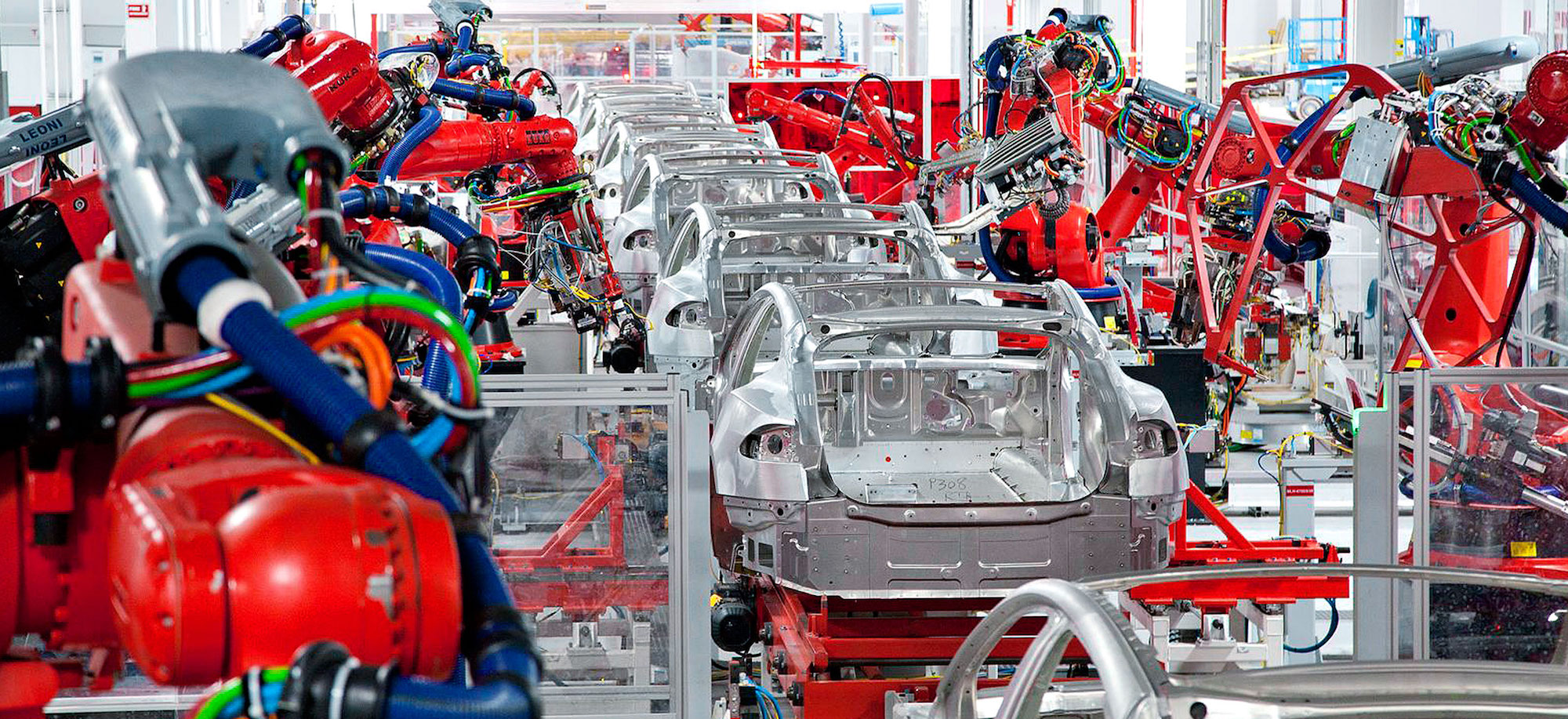
Tesla’s approach to manufacturing, often dubbed “the machine that builds the machine,” involves radical innovations in gigafactory design, automation, and supply chain vertical integration. From a financial perspective, these innovations are crucial because they promise unprecedented economies of scale, lower production costs, and higher profit margins in the long run. The market rewards companies that can demonstrate a clear path to cost leadership and operational efficiency, and Tesla’s manufacturing prowess is seen as a key differentiator that will allow it to maintain competitive pricing while expanding profitability as production scales globally. This operational leverage is a significant financial draw for investors.
Intellectual Property and Competitive Moats

The sheer breadth and depth of Tesla’s intellectual property, from its battery chemistry and manufacturing processes to its advanced software and AI algorithms, create substantial competitive moats. These moats make it difficult for competitors to quickly replicate Tesla’s technological advantages, preserving its market lead and pricing power. Financially, strong IP translates into sustainable competitive advantages, higher gross margins, and long-term earnings power. Investors are paying for the durability of Tesla’s business model, knowing that its proprietary technologies provide a buffer against rapidly emerging competition and justify a premium valuation based on future earnings potential.
The Musk Factor: Leadership, Narrative, and Market Dynamics
Elon Musk, Tesla’s CEO, plays an outsized role in its valuation. His vision, unconventional communication style, and ability to rally both retail investors and engineers have created a powerful narrative that profoundly impacts market sentiment and, consequently, the stock price.
Visionary Leadership and Investor Confidence
Elon Musk is arguably one of the most recognized and influential CEOs in the world. His ambitious vision for a sustainable future, combined with a track record of executing seemingly impossible projects (SpaceX, PayPal), instills a high degree of confidence among a significant portion of the investor community. This confidence translates directly into a willingness to invest in Tesla for the long haul, overlooking short-term volatility or traditional valuation concerns. Financially, a charismatic leader capable of articulating a compelling future story can attract significant capital, drive up demand for shares, and create a powerful “belief premium” that elevates the stock price beyond what current financials alone might suggest.
The Power of Narrative and Retail Investor Engagement
Tesla has cultivated an exceptionally strong brand narrative centered on innovation, sustainability, and disruption. This narrative, amplified by social media and Musk’s direct engagement, has fostered an incredibly loyal and engaged retail investor base. These investors often view Tesla as more than just a stock; it’s an investment in a mission. This strong retail participation provides a unique financial dynamic: it creates a dedicated buying pressure that can help support the stock price, reduce short-selling effectiveness, and contribute to significant momentum during bull markets. The collective belief of this vast investor base forms a crucial, albeit intangible, financial asset for Tesla.
Short Squeezes and Volatility: A Peculiar Financial Dance
Tesla has historically been one of the most heavily shorted stocks, attracting significant bets against its success. However, the strong support from long-term investors and the fervent belief in Musk’s vision have often led to dramatic short squeezes. These events, where short sellers are forced to buy back shares to cover their positions, can trigger rapid, sharp increases in the stock price. From a market dynamics perspective, this creates a volatile yet often upward-biased trajectory. While not a fundamental driver of intrinsic value, these market mechanics have played a tangible role in Tesla’s price appreciation, demonstrating how strong conviction can financially punish those betting against the prevailing narrative.
Profitability, Cash Flow, and Future Earnings Potential
While much of Tesla’s valuation rests on future potential, its journey towards consistent profitability and strong cash flow generation has been a critical turning point for its financial legitimacy and further stock appreciation.
Revenue Growth and Margin Expansion
Tesla’s ability to demonstrate robust revenue growth, year over year, has been crucial for justifying its high valuation. As production scales, the company has also shown a commendable ability to expand its gross and operating margins, especially in its automotive segment. This margin expansion is a key financial indicator for investors, signaling that the company is becoming more efficient, its technology costs are decreasing, and its pricing power remains strong. Higher margins translate directly into greater potential for future earnings and free cash flow, which are the ultimate drivers of intrinsic value.
Generating Free Cash Flow
Perhaps one of the most significant milestones for Tesla’s financial standing has been its transition to consistent free cash flow (FCF) generation. FCF is the cash a company generates after accounting for cash outflows to support operations and maintain its capital assets. Positive and growing FCF is a strong indicator of a healthy, self-sustaining business. It allows Tesla to fund its ambitious expansion plans without relying solely on external capital raises, strengthening its balance sheet and reducing dilution for existing shareholders. Investors highly value FCF as it represents the cash truly available to shareholders or for strategic reinvestment, directly contributing to long-term shareholder value.
Balance Sheet Strength and Debt Management
Despite its rapid growth, Tesla has managed its balance sheet effectively, significantly reducing its debt load and strengthening its cash position. A robust balance sheet provides financial resilience, enabling the company to weather economic downturns, invest heavily in R&D, and pursue strategic acquisitions. From an investment perspective, a strong balance sheet reduces risk and enhances the company’s ability to execute its long-term vision, making it a more attractive investment. This financial discipline, coupled with its growth trajectory, further solidifies the monetary rationale behind its elevated valuation.
In conclusion, Tesla’s formidable market worth is not merely a reflection of current sales or traditional automotive success. It is a complex financial equation built on immense future potential across multiple disruptive technologies, an unparalleled brand narrative driven by visionary leadership, and a growing track record of improving financial fundamentals like profitability and free cash flow generation. Investors are betting on Tesla’s ability to reshape industries beyond just cars, transforming it from an auto company into a diversified tech and energy giant, thereby justifying a valuation that transcends conventional financial benchmarks.
aViewFromTheCave is a participant in the Amazon Services LLC Associates Program, an affiliate advertising program designed to provide a means for sites to earn advertising fees by advertising and linking to Amazon.com. Amazon, the Amazon logo, AmazonSupply, and the AmazonSupply logo are trademarks of Amazon.com, Inc. or its affiliates. As an Amazon Associate we earn affiliate commissions from qualifying purchases.